Public Steam disclosure research26,545 disclosures tracked
Where do games disclose AI use?
Search developers’ Steam disclosures, compare classified AI use across
games, and follow recorded changes.
This index adds cross-game classifications and statistics to
statements published on individual store pages.
Groups reflect automatic analysis of public disclosures; mature records are excluded. These counts do not measure AI use across all of Steam.
Missing or unclear statements cannot establish whether a game uses AI.
Generative AI tools were used during development to assist with concept development and the creation of some visual assets. AI-generated material was reviewed, edited, and integrated by the developer to fit the game’s visual style and design. Generative AI is not used during gameplay and no content is generated dynamically for players.
Atharia uses generative AI tools under the developer's constant direction. The combat animations are AI-generated video clips, converted into sprites and integrated into custom-built staging. Background environments and interface elements are also created with AI assistance. Every asset is art-directed, selected and validated by the developer before it enters the game.
Gród is designed, built and tested by a solo developer. Every rule, system and pixel of the game follows my own vision.
AI tools helped with parts of the production: the voice lines, the music and some store artwork were created with generative AI, then selected, edited and fitted into the game by me. The in-game pixel art is drawn by the game's own code, with no AI image generators.
Screenshots and GIFs show real gameplay. The game does not use generative AI while you play.
Generative AI was used to assist with the localization of some store page content. The generated translations were reviewed and edited before publication.
Generative AI assisted in creating some in-game and promotional assets. All such content was reviewed and edited by the developer. The game does not generate AI content during gameplay or connect to external AI services.
AI tools were used to help draft and edit some English text: store page copy and some in-game UI strings such as hints, item descriptions and dialogs. All text was reviewed and edited by the developer. All art, models, audio and music are human-made or licensed assets. The game does not generate any content with AI at runtime.
Generative AI tools were used to assist in the creation and refinement of some pre-rendered artwork and interface elements. AI-generated music is also used, and AI tools assisted with store-page text and localization. All AI-assisted content was selected, edited, and reviewed by the developer. The game does not generate AI content during gameplay.
The game's story, design and text were created by the developer. Generative AI was used as an assistant when writing the text of this store page and of the game, and to translate it into 18 languages; all of it was reviewed and edited by the developer. One song on the car radio ("Broken Hearts and Blue Moons", licensed from Pixabay) was produced by its author with generative AI. No content is generated while you play.
This game was made possible due to generative AI coding. It uses generative AI for the code base and procedural environmental generation but is limited to that. Models and music have been manually created.
Almost all content in our game was handcrafted, we used real photos of berries, fruits and etc. to make donuts designs. We used AI as a supportive tool: to edit a few wall paintings, upscale and edit some textures, and fix grammar in the text.
We firmly believe AI is just an assistant—the core of our game remains human creativity and attention to detail.
Generative AI tools were used as development assistance for portions of the game’s code and player-facing text. All final content was reviewed, edited, integrated, and tested by the developer. The game does not use live-generated AI or connect to any AI service during gameplay.
Some of the artworks, such as textures and illustrative elements, were created or enhanced using AI-based tools. All generated content has been reviewed, edited, and integrated to ensure consistency with the overall visual style and quality of the game.
No AI is used during gameplay.
The English localization was prepared with AI assistance and was fully reviewed and edited by the developer. Some in-game sounds were generated with AI. The capsule image on the Steam store page was generated with AI. The in-game visual and model assets were not generated with AI.
Generative AI has been used to help work with coding.
All Assets (art, models, animations, sprites/textures, sounds and music have been made by myself or have been bought)
Generative AI tools were used during development to create some character, environment, and object visuals, 3D assets, and promotional materials. All AI-generated content was created in advance during development. No new content is generated by AI during gameplay, and the game does not connect to any external AI services.
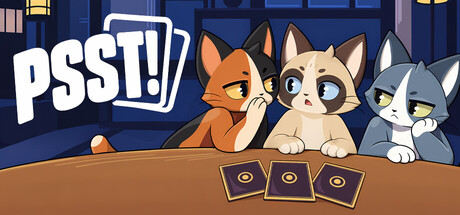
Psst! uses generative AI in two ways, and both run entirely on your own PC. Nothing you say or type is sent to a server, stored, or used to train anything.
Live voices: Bot players and the host speak their hints and table talk out loud through a text-to-speech model (Supertonic) that runs on your computer. The spoken lines come from the game's own writing and word lists. The AI only turns that text into audio.
Speech recognition: If you choose to play with your voice, a speech-to-text model (NVIDIA Parakeet) turns what you say into text so the game can read your hint or guess. This is optional, and you can always type instead.
All artwork, writing and game design were made by the developer or bought as assets with licenses.
AI tools were used only to assist with translating in-game text into supported languages. No AI-generated images, music, audio, or 3D models were used. The game does not generate AI content during gameplay.
Its creative direction and artistic content are rooted in human creativity and craftsmanship.
Generative AI was used to create various visual assets, character and environment designs, UI elements, promotional materials, and written content. Music was not generated using AI.
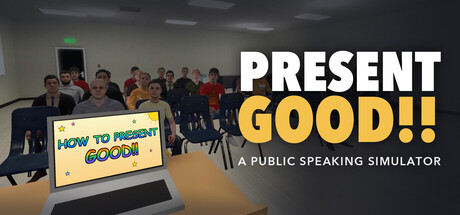
After a talk, audience questions are generated at runtime by a small open-weight language model (Qwen3) running locally on the player's computer, based on a transcript of what the player just said. Speech-to-text also runs locally (whisper.cpp). Nothing is sent to any server.
Generative AI was used to create some visual elements in certain promotional images for the Steam store page. These images are pre-generated and do not change during gameplay. The game currently does not generate AI content during gameplay or connect to external AI services.
Generative AI was used to assist in the creation of some in-game images, textures, dialogue, store page text, and localization. All AI-assisted content was reviewed, edited, and implemented by the developer. No live-generated AI content is used during gameplay.
AI tools assisted with the game's code and some written text during development. All artwork comes from the game's own engine, being web code. The music is composed by Juhani Junkala, and nothing is generated while you play.
AI-assisted tools were utilized during the development of this game (including visual art, sound design, and workflow optimization) to achieve higher quality. Every final element has been curated, reviewed, and integrated under the direct supervision of the development team.
ARIA's dialogue and speech are generated on the player's own machine at runtime by a language model and a text-to-speech voice that ship with the game. Nothing is sent to an external service and no player data leaves the machine. What ARIA says is constrained to the station's fiction and to evidence the player has actually found in-game. Some art, audio and text assets in the game were produced with AI tools and reviewed by the developer before shipping.
AI tools were used during development to assist in the creation of some visual props. All content was reviewed, edited, and integrated by the developer.
Frontier was conceived, designed, directed, and extensively play tested by a solo developer. Generative AI was used as the primary production tool to implement that vision, including programming, artwork, audio, writing, and other game assets. Every aspect of the game was developed through an iterative human-directed process, with the developer specifying requirements, reviewing results, requesting revisions, making design decisions, integrating systems, and personally testing and approving the final content. No generative AI is used during gameplay.
Peso Pena uses generative AI tools during production, under the direction and review of our team. AI was used to create pre-rendered visual assets, including character illustrations, sprites and animation frames, backgrounds, store artwork and trailer/cutscene footage, all of which were curated, edited and approved by our artists. Some in-game and store texts were drafted or translated with AI assistance and then reviewed by the team. The game does not generate any content at runtime: every image, animation, text and sound that players see is fixed and was reviewed before release.
Utilisation de l'IA pour générer certaines images, les autres sont issues d'un travail de générateur d'images de paysage développé il y a plus de 10 ans durant mon master didactique en arts numérique, la structure du code est issue d'un ancien projet étudiant
Deep Lantern contains some pre-generated visual assets created or assisted with generative AI, including certain textures, interface or illustrative visual elements, which were then reviewed, edited, and integrated manually by the developer.
The game does not use live generative AI during gameplay, and players cannot generate content in-game using AI.
This game includes pre-generated visual and auditory
assets created with the assistance of generative AI. These assets have been reviewed, edited, and integrated by the development team. The game does not use generative AI to create content while players are playing.
DAWNBLOOM uses generative AI-assisted tools during the development of certain game content. The in-game “Dawnbloom Spirit” feature connects to a generative AI service to provide real-time text responses to players’ game-related questions, including game knowledge, gameplay explanations, and general guidance. This feature generates auxiliary text content only. It does not generate or modify game code, nor does it directly control game rules, character data, or player assets.
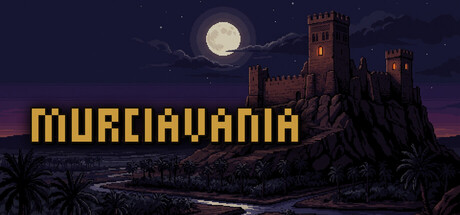
Murciavania includes visual assets and music created with the assistance of generative AI tools. Illustrations, sprites, icons, backgrounds and scenery have been reviewed, adapted and integrated during development. AI assistance has also been used for code, room design, writing and translations under the direction of Manuel Manzano (MANZASOFT), with editorial review and integration testing. Sound effects are synthesized in code. All of this content is prepared before the game is distributed: no AI content is generated during play, and the game does not connect to external AI services.
Some pre-generated 2D artwork, visual effects, icons, maps, promotional images, and achievement artwork were created or refined with generative AI during development. All AI-generated output was reviewed, edited, and integrated by the development team. The game does not use generative AI at runtime and does not generate player-facing text, images, audio, music, code, or other content while you play.