Public Steam disclosure research25,392 disclosures tracked
Where do games disclose AI use?
Search developers’ Steam disclosures, compare classified AI use across
games, and follow recorded changes.
This index adds cross-game classifications and statistics to
statements published on individual store pages.
Groups reflect automatic analysis of public disclosures; mature records are excluded. These counts do not measure AI use across all of Steam.
Missing or unclear statements cannot establish whether a game uses AI.
This game uses AI-generated content created with ChatGPT and Bing Image Creator. AI was used to help write store page text, promotional material, and generate some illustrative images. No AI is used in the game's real-time execution or gameplay code.
This game was made by a solo developer aka human being.
Some visual and audio assets were built with AI support, then refined, edited and animated by hand.
Also, code analysis and debugging (no pun intended) was done with the support of AI.
Clicked the AI tag because I used ChatGPT to help me generate code to have easier (for me) control over moving windows with the Bestiary plugin. I also used it to create the "drop % of party currency on escape" mechanic. That's all it's been used for, nothing else.
During development, illustrations (e.g., game over screen) were created using ChatGPT’s image generation features, based on hand-drawn sketches and developer-provided prompts. All AI-generated content was manually reviewed and selected by the developer. No AI is used during gameplay, and no live content or code is generated in-game.
The AI disclosure is checked per Steam policy due to placeholder images used on the store page during early development. All placeholders within the game, as well as the original store page screenshots, have since been removed and replaced with final, hand-crafted images authored by the developer.
Music (BGM & Tracks): Suno and Udio were used for initial music generation concepts. Our sound artist then refined, mixed, mastered, and remade these tracks to create the final in-game BGM and rhythm game audio. (Sound effects and other audio elements were produced directly without AI.)
Graphics (In-game Icons & Illustrations): Gemini and ChatGPT were used to generate initial drafts for select in-game icons and illustrations. Our graphic artists then directly edited, corrected, and retouched these assets to refine them for the final game.
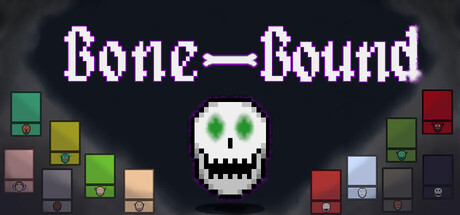
Bone-Bound uses generative AI tools for some pre-rendered artwork and music as part of a solo-development production pipeline. Final assets are manually selected, edited, redrawn, filtered, revised, and curated to fit the game's design, visual style, and tone.
All card abilities, creature mechanics, balance, progression, rules, and gameplay systems are designed by the developer. No AI-generated content is created during gameplay.
Code: Generate basic functionality code, less than 1% of the total lines of code.
Images: Generate images for reference or initial drafts, less than 5% of the total image assets.
Text: Generate text for reference, initial drafts, or polishing, less than 5% of the total text volume.
Some store assets are put together by human hands but use images generated by AI. All in-game assets, screenshots, and videos are human-made with love.
Some in-game assets are purchased from artists on itch.io, the rest are handmade.
I'm a one-person developer. That means I do everything; and some of it I'm just bad at. I use AI as a tool to cover the gaps: the tasks I hate, the stuff I'd waste hours on just to replace later. The tools don't make the art. Every idea and decision, everything that made it into this game came from me.
I'm a one-person developer. That means I do everything; and some of it I'm just bad at. I use AI as a tool to cover the gaps: the tasks I hate, the stuff I'd waste hours on just to replace later. The tools don't make the art. Every idea and decision, everything that made it into this game came from me.
AI is used to quickly sketch out coding systems and is refined by an experienced human developer to finalize the code. Some art is also generated making use of AI, but again, a human refines and touches up the art to import assets into the game.
Some store copy and achievement images make use of AI as well and is also reviewed by humans prior to submission.
While AI is used to augment the development and marketing process, a human has touched and reviewed all aspects to the best of their ability to insure no copyrights or trademarks have been violated in its use.
AI was used to assist the translation of the Brazilian text in both game and marketing copy.
It was also used during coding as an assistant in solving some bugs.
This game uses AI to assist with the creation of certain visual and audio elements, such as icons, sound effects, and music.
AI was utilized to enhance production speed and development efficiency, but it does not generate content in real time during gameplay.
All AI use is limited to pre-release asset creation to improve overall quality.
AI is a tool just as any other, as a solo dev, I'm certainly going to make use of it to try to give you more of a variety of content without having to raise the price of the game due to having to hire many extra hands.
Some AI generated music compositions.
Some generated icons as well as some base art that is heavily modified.
This game includes a few character illustrations generated by ChatGPT. No other content—such as images, sounds, or text—has been created with generative AI. All other elements were produced and reviewed by humans.
- The developer initially generated base code using ChatGPT, through which they learned C# and Unity. This code was then manually edited and expanded by hand.
- For the music, the developer received guidance from ChatGPT on composition methods, such as chord progressions, and composed the music manually.
- While the developer received advice from ChatGPT on how to create pixel art, no AI was used in the actual drawing process.
This game uses pre-rendered AI-generated content. AI was used to create some static visual assets, including the main menu artwork and base models for in-game avatars. These assets are not generated at runtime. Gameplay systems, logic, and final implementation are authored by the developer, with AI also used as a coding assistance tool during development.
Music and some images, especially the erotic artwork, were created using AI as a visual supplement to the game.
I chosed to use AI-generated visuals as it allowed me to dedicate more time and budget to what truly matters - funny and long gameplay.
This game’s development process involved the use of artificial intelligence technology to assist in the completion of certain portions of the programming code.
We used generative AI to generate placeholder art for the players and enemies, which we plan to replace before the full release.
We also generated sprites for various items.
The developer describes how AI-generated content is used in the game as follows
- Game Title Idea
- Base of Main Character Design Concepts
- Background Music (BGM)
- Some Sound Effects (SFX)
All in-game assets are handcrafted without using AI generation. Several game store pages visual assets originate from limited AI-generated concept prototypes, subsequently enhanced through handcraft painting techniques to ensure stylistic cohesion and emotional depth.
This game uses AI-generated content created with ChatGPT and Bing Image Creator. AI was used to help write store page text, promotional material, and generate some illustrative images. No AI is used in the game's real-time execution or gameplay code.
This game was made by a solo developer aka human being.
Some visual and audio assets were built with AI support, then refined, edited and animated by hand.
Also, code analysis and debugging (no pun intended) was done with the support of AI.
Clicked the AI tag because I used ChatGPT to help me generate code to have easier (for me) control over moving windows with the Bestiary plugin. I also used it to create the "drop % of party currency on escape" mechanic. That's all it's been used for, nothing else.
During development, illustrations (e.g., game over screen) were created using ChatGPT’s image generation features, based on hand-drawn sketches and developer-provided prompts. All AI-generated content was manually reviewed and selected by the developer. No AI is used during gameplay, and no live content or code is generated in-game.
The AI disclosure is checked per Steam policy due to placeholder images used on the store page during early development. All placeholders within the game, as well as the original store page screenshots, have since been removed and replaced with final, hand-crafted images authored by the developer.
Music (BGM & Tracks): Suno and Udio were used for initial music generation concepts. Our sound artist then refined, mixed, mastered, and remade these tracks to create the final in-game BGM and rhythm game audio. (Sound effects and other audio elements were produced directly without AI.)
Graphics (In-game Icons & Illustrations): Gemini and ChatGPT were used to generate initial drafts for select in-game icons and illustrations. Our graphic artists then directly edited, corrected, and retouched these assets to refine them for the final game.
Bone-Bound uses generative AI tools for some pre-rendered artwork and music as part of a solo-development production pipeline. Final assets are manually selected, edited, redrawn, filtered, revised, and curated to fit the game's design, visual style, and tone.
All card abilities, creature mechanics, balance, progression, rules, and gameplay systems are designed by the developer. No AI-generated content is created during gameplay.
Code: Generate basic functionality code, less than 1% of the total lines of code.
Images: Generate images for reference or initial drafts, less than 5% of the total image assets.
Text: Generate text for reference, initial drafts, or polishing, less than 5% of the total text volume.
Some store assets are put together by human hands but use images generated by AI. All in-game assets, screenshots, and videos are human-made with love.
Some in-game assets are purchased from artists on itch.io, the rest are handmade.
I'm a one-person developer. That means I do everything; and some of it I'm just bad at. I use AI as a tool to cover the gaps: the tasks I hate, the stuff I'd waste hours on just to replace later. The tools don't make the art. Every idea and decision, everything that made it into this game came from me.
I'm a one-person developer. That means I do everything; and some of it I'm just bad at. I use AI as a tool to cover the gaps: the tasks I hate, the stuff I'd waste hours on just to replace later. The tools don't make the art. Every idea and decision, everything that made it into this game came from me.
AI is used to quickly sketch out coding systems and is refined by an experienced human developer to finalize the code. Some art is also generated making use of AI, but again, a human refines and touches up the art to import assets into the game.
Some store copy and achievement images make use of AI as well and is also reviewed by humans prior to submission.
While AI is used to augment the development and marketing process, a human has touched and reviewed all aspects to the best of their ability to insure no copyrights or trademarks have been violated in its use.
AI was used to assist the translation of the Brazilian text in both game and marketing copy.
It was also used during coding as an assistant in solving some bugs.
This game uses AI to assist with the creation of certain visual and audio elements, such as icons, sound effects, and music.
AI was utilized to enhance production speed and development efficiency, but it does not generate content in real time during gameplay.
All AI use is limited to pre-release asset creation to improve overall quality.
AI is a tool just as any other, as a solo dev, I'm certainly going to make use of it to try to give you more of a variety of content without having to raise the price of the game due to having to hire many extra hands.
Some AI generated music compositions.
Some generated icons as well as some base art that is heavily modified.
This game includes a few character illustrations generated by ChatGPT. No other content—such as images, sounds, or text—has been created with generative AI. All other elements were produced and reviewed by humans.
- The developer initially generated base code using ChatGPT, through which they learned C# and Unity. This code was then manually edited and expanded by hand.
- For the music, the developer received guidance from ChatGPT on composition methods, such as chord progressions, and composed the music manually.
- While the developer received advice from ChatGPT on how to create pixel art, no AI was used in the actual drawing process.
This game uses pre-rendered AI-generated content. AI was used to create some static visual assets, including the main menu artwork and base models for in-game avatars. These assets are not generated at runtime. Gameplay systems, logic, and final implementation are authored by the developer, with AI also used as a coding assistance tool during development.
Music and some images, especially the erotic artwork, were created using AI as a visual supplement to the game.
I chosed to use AI-generated visuals as it allowed me to dedicate more time and budget to what truly matters - funny and long gameplay.
This game’s development process involved the use of artificial intelligence technology to assist in the completion of certain portions of the programming code.
We used generative AI to generate placeholder art for the players and enemies, which we plan to replace before the full release.
We also generated sprites for various items.
The developer describes how AI-generated content is used in the game as follows
- Game Title Idea
- Base of Main Character Design Concepts
- Background Music (BGM)
- Some Sound Effects (SFX)
All in-game assets are handcrafted without using AI generation. Several game store pages visual assets originate from limited AI-generated concept prototypes, subsequently enhanced through handcraft painting techniques to ensure stylistic cohesion and emotional depth.