Public Steam disclosure research27,951 disclosures tracked
Where do games disclose AI use?
Search developers’ Steam disclosures, compare classified AI use across
games, and follow recorded changes.
This index adds cross-game classifications and statistics to
statements published on individual store pages.
Groups reflect automatic analysis of public disclosures; mature records are excluded. These counts do not measure AI use across all of Steam.
Missing or unclear statements cannot establish whether a game uses AI.
During the development process, we may use procedural- and AI-based tools to assist with content creation. In all such cases, the final product reflects the creativity and expression of our own development team.
Some audio assets and store/marketing visuals were generated or assisted using AI during development.
All gameplay content is static — no AI content is generated at runtime.
Pre-generated voice cloning/Text-To-Speech where it makes sense creatively.
Placeholders will be replaced by real voice acting as development continues.
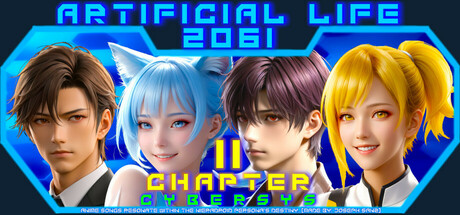
I added scenes and images improved with Generative Artificial Intelligence.
They are locally generated using Stable diffusion, without resorting to paying any generative AI company. Although paying them could have given me better tools and results, I decided not to pay for their use to support the claim of artists for fair royalties. (It is not possible to discuss such a complex issue here, but I will consider opening a discussion on the topic in the game forum, follow my game to be notified if it is created)
Most of the artistic content in the game, mainly music, is compensated in various ways depending on the case to its artists.
My original content is registered, but the images generated by AI are essentially treated as 'creative commons' and I consider them fanarts of my characters.
All added scenes and backgrounds are of high quality and maintain good coherence, avoiding deformities in hands, eyes, etc., and without annoying or confusing shapes.
All AI-generated images are generated, selected, and edited exclusively by me, the creator of the game, to reflect my original vision, previously inaccessible due to high costs.
I have sought to include only select content that enriches the narrative and immersion of the game.
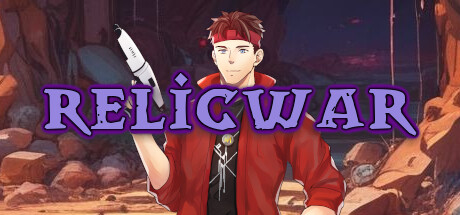
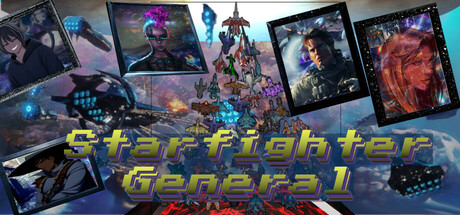
The package image of this game was created using multiple AI tools.
Part of the background image and background character: Created using Stable Diffusion and provided under the CreativeML Open RAIL-M license.
Part of the logo design: Created by Sonic-Alpha using OpenAI's generative AI, "ChatGPT," under the paid "ChatGPT Plus" plan.
No AI-generated elements are included in the main game or in-game content.
1. We used ChatGPT-4 to make some custom javascript plugins.
2. Used ChatGPT-4/DALL-E3 to generate some of the faces of NPC's, also some icons for the system menu.
During the beta phase of Steel Hunters, we may use AI-generated voices for certain in-game characters, including the announcer, to support our development process. The majority of the voices in the game are performed by real voice actors, and AI-generated voices will be replaced with human voices before the official launch. This helps us focus on delivering the best experience while the game is still in development.
The audio for the voicelines for CARA (suit voice) and the ship announcer was generated by text to speech AI and then post-processed manually through an effect chain to sound immersive.
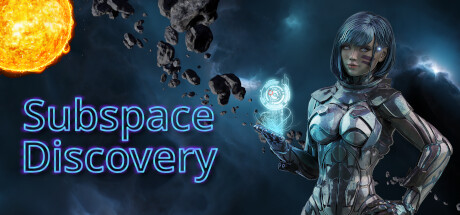
AI was used only to help generate some of the props for the game's cover, as well as to create text-to-voice lines for a couple of the robotic characters in the game.
We use generative AI for some in-game voices (Tona, enemy cyborgs and English dubbing), for part of the in-game music (the bar and the radio stations), and to assist with the translation of in-game text.
- We use AI as a supportive tool for localization
- The voice for the "Spaceship Robot Assistant" was synthesized and processed by Sound Designers
- Visual drafts for some of the secondary, smaller props were generated and reworked by Artists
We use prerendered AI generated voices for in-game voice overs for dialogue.
It is a paid asset on the Unity Asset Store: https://assetstore.unity.com/packages/tools/generative-ai/deepvoice-ai-text-to-voice-251738
Artificial intelligence is used solely for minor content improvements and to speed up certain tasks in the development process. It is not used in any way to create original content.
AI Voice generation was used to generate voice of the in-game AI character (AI assistant ZERA is speaking to the player).
AI was used to help the human editor person to correct dialogues written by a human.
This game used AI to help quickly iterate through designs for some UI elements using our own artwork as a baseline. AI is also used to help translate the game.
The vast majority of the game is handcrafted. AI tools were used to assist in the creation of 2D character dialogue portraits and some minor environment textures.
This game features voice acting and ambient music created using ElevenLabs. We exclusively use Professional Voice Clones (PVC) from the ElevenLabs Voice Library, which are created with the explicit consent and verification of the original voice actors. Through ElevenLabs’ Royalty Sharing program, the voice artists are financially compensated for their work used in this project.
We use a limited amount of pre-rendered AI generated content in our game. The background announcers in the hub and gameplay announcer were made using text to speech generation.
As much as we love handcrafted assets and visuals, we are only a two-person team. Some images, icons, and parts of the localization were created with the help of AI. This is a temporary solution, and our goal is to move away from AI-generated content entirely in the future.
We employ generative AI technologies during the creation of some assets. Typically this involves the ideation of content and visual reference material. These elements represent a minor component of the overall development. AI has been used to generate voices for an AI antagonist and a player advisor.
Some of our card art was produced with AI-generated images which our artists painted over and edited before animating the finished card. Some older marketing and website material has been AI-generated as well.
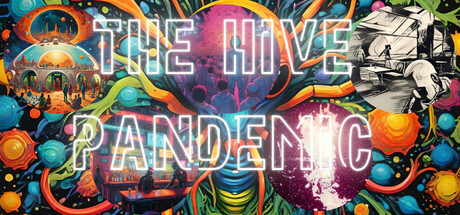
AI-Powered Cinematics & Immersion
To bring the world of The Hive Pandemic to life, we’ve integrated cutting-edge AI technology to enhance both visuals and audio.
🎙️ AI Voice Generation – Leveraging Eleven Labs, we crafted realistic, emotive voice performances that breathe life into our characters, from the cold directives of corporate leaders to the haunting whispers of the Hive.
🎵 AI-Generated Music & Soundscapes – Using Suno, we designed dynamic, immersive soundscapes that evolve with the game’s intense action and eerie mind sequences.
🎨 AI-Assisted Cutscenes – Our art editor, combined with AI enhancements, has helped create stunning cinematic sequences, blending hand-crafted art with AI-powered refinements for a truly unique visual experience.
By combining traditional artistry with AI-driven tools, The Hive Pandemic delivers a deeply atmospheric, story-rich experience that blurs the line between technology and creativity—just like the world it portrays.
AI-assisted tools may also be used during development for temporary voice-over drafts, sound exploration, and visual concept iteration, strictly as part of the production workflow.
Final voice acting, sound effects, music selection, visual assets, and UI elements are curated, edited, or replaced by the developer before release to meet quality, consistency, and licensing standards.
No AI systems generate live audio, voices, images, or visual content during gameplay.
All final in-game audiovisual content is authored, validated, and intentionally integrated into the game experience.
This game was initially developed without using Artificial Intelligence.
Later, I added scenes and images improved with Generative Artificial Intelligence.
They are locally generated using Stable diffusion, without resorting to paying any generative AI company. Although paying them could have given me better tools and results, I decided not to pay for their use to support the claim of artists for fair royalties. (It is not possible to discuss such a complex issue here, but I will consider opening a discussion on the topic in the game forum, follow my game to be notified if it is created)
Most of the artistic content in the game, mainly music, is compensated in various ways depending on the case to its artists.
My original content is registered, but the images generated by AI are essentially treated as 'creative commons' and I consider them fanarts of my characters.
All added scenes and backgrounds are of high quality and maintain good coherence, avoiding deformities in hands, eyes, etc., and without annoying or confusing shapes.
All AI-generated images are generated, selected, and edited exclusively by me, the creator of the game, to reflect my original vision, previously inaccessible due to high costs.
I have sought to include only select content that enriches the narrative and immersion of the game.