Public Steam disclosure research27,951 disclosures tracked
Where do games disclose AI use?
Search developers’ Steam disclosures, compare classified AI use across
games, and follow recorded changes.
This index adds cross-game classifications and statistics to
statements published on individual store pages.
Groups reflect automatic analysis of public disclosures; mature records are excluded. These counts do not measure AI use across all of Steam.
Missing or unclear statements cannot establish whether a game uses AI.
Some in-game or store assets might be produced through processes involving the use of AI filters or AI generated elements merged with other sources. Whenever using a generative AI, we exclusively use private models trained with licensed sets of data.
All of the images in this game are generated by neural networks trained on images (aka “AI generated”). If you choose to boycott all AI generated material, please do not buy this game. If you are uncomfortable with the thought but are interested in my game, please read on.
The aesthetic of this game had to come from the strange, uncanny look of AI. There is a heartlessness to the visuals that is intentional. I am not trying to copy the look of other artists. The only tool capable of producing the look I was going for was a malfunctioning AI. Ironically, I have had a number of people tell me that it looks much more realistic than standard AI. I am assuming this is because of how I tried to reproduce the look of old media.
All images, aside from the title screen, credits and some of the video shot on camcorder were generated by AI prompts. It took several days of exploring before I began generating images that fit the aesthetic I was looking for. I have heard AI described as a slot machine, and I think the metaphor is somewhat accurate. I think of this as similar to indeterminacy in music. Using random number generators can produce interesting outputs, but you need to refine and direct the system to do so.
I started my process in Midjourney. My ratio of usable images was around 100 to 1; for every 100 images I generated, I found one usable piece for the game. I created an automated process to transform these images to 16:9 widescreen in Photoshop Beta. Some of these images I touched up manually or regenerated sections of the image. There are some real images and hand painted imagery within the AI elements. Often, I would have to generate the sides of the image multiple times because photoshop didn’t generate what I needed.
To those concerned about not paying artists: I understand this, but I want to be clear that this was not created to replace the work of artists, any more than the synthesized scores to horror films were about replacing orchestras. These are tools that do different things. Rather than some sort of lazy shortcut, the use of AI imagery is essential to the aesthetic and narrative of the Path of Veins.
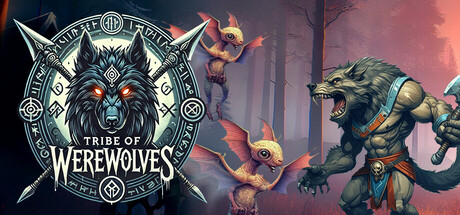
In "Lone Howl", artificial intelligence is utilised carefully and responsibly to enhance the player's experience in various aspects of the game:
Images and Banners: We have used AI beforehand to create some of the banners and loading screen images you will encounter throughout the game. This allows us to generate unique visuals that capture the dark and mystical atmosphere of the "Lone Howl" universe. It’s important to note that these images were generated prior to release and do not involve any adaptation or analysis based on player behaviour.
Translations: AI is also employed to assist with the translation of the game into different languages, ensuring that the narrative and dialogues maintain their essence and fluency, regardless of the language in which the game is played.
Dialogue and Voices: Some of the characters' dialogue and voices were generated or enhanced using AI. This allowed us to bring characters and creatures to life with a vocal diversity that enriches the player's immersion.
It’s important to highlight that we do not use algorithms that study or analyse players. All AI use in "Lone Howl" is applied statically, with the goal of complementing the experience without compromising privacy or the authenticity of the content.
Some of the game icons and music used in the DEMO version were generated by AI. In the official release, we will replace these assets.The localized translation of the game is done using AI.
The backgrounds of the game's start screen and pick screen were pre-generated by me via AI, and some of the in-game icons were generated by the author via AI. Here is their license:
License: Assets can be used personally and commercially. You can modify the asset. You cannot re-distribute the files, even modified versions.
Beneath The Six features an AI narrator who serves as a dungeon master to guide you and comment on your experiences in the daily generated content.
We commissioned actor Tom Canton (The Witcher TV series) to record a library of dialogue. This was then used by ElevenLabs to train the AI voice. Both Magicave and ElevenLabs have a commitment to ensuring the rights of voice actors are protected. Magicave has assigned ownership of the AI voice to Tom Canton, licensing it from him for use in the game, while allowing him the freedom to use his AI voice in other media – whether games, voiceovers, animations, audiobooks or movies (https://www.gamewatcher.com/news/beneath-the-six-turn-based-roguelike).
Each day we generate new daily content for the dungeon and arena. As part of this we pass the generation data to an LLM to create dialogue for the AI narrator so they can comment on the content included for that day.
Some of the daily generated content for the arena and dungeon modes use an LLM to create names for two other purposes. One is for creating the name of any Champion enemies which appear in the dungeon. The other is for creating a name for the daily arena run.
Some of the images on our Storepage are AI generated and then manually reworked (namely the rats athletes). We might also use some AI generated images as the basis for some of the game art, in which case they will be hand-modified before inclusion, alongside hand-drawn art.
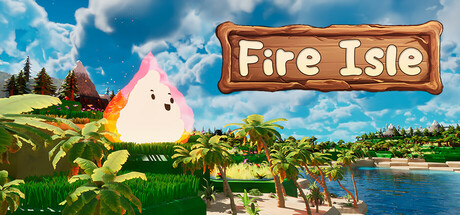
Some aspects of Fire Isle's art were initially created using Adobe Firefly and Claude generated images and 3D models as a base. I then personally edited all of this art in Photoshop and similar software to better match the game's art style. I am actively in the process of replacing all of the game's AI-generated art with entirely hand-made art.
Metal Thunder is made by a solo developer, and AI tools are part of how one person can build and compete at this scale. AI was used for some store page assets and for select in-game art in supporting roles, never as the focal point. Nothing was dropped in as-is. Every asset was directed, edited, designed and placed with human intent.
During the development process, we may use AI-based tools to assist with content creation.
In those cases, the final product reflects our creativity and expression.
Hand tweaked and adjusted Midjourney AI renders have been used for generating certain in game background graphics, marketing materials and cover.
Deepvoice has been used for multiple ingame announcers(ie commercials, news etc)