Public Steam disclosure research25,380 disclosures tracked
Where do games disclose AI use?
Search developers’ Steam disclosures, compare classified AI use across
games, and follow recorded changes.
This index adds cross-game classifications and statistics to
statements published on individual store pages.
Groups reflect automatic analysis of public disclosures; mature records are excluded. These counts do not measure AI use across all of Steam.
Missing or unclear statements cannot establish whether a game uses AI.
In my game development process, I used GitHub Copilot to enhance coding efficiency.
During the creation of promotional images and videos, I may have used images generated by Stable Diffusion or music generated by Suno.
But these assets will NOT appear in the actual game!
We used AI for some detail optimization in our artwork, but we guarantee that the majority of the art assets are handcrafted.
We will never use 100% AI-generated artwork for profit. Everything you see has been manually redrawn at least once.
The grapics on the shop page is ai generated. Most of the texture in the game are hand-drawn, but some of them are ai-generated.
All game levels are hand-crafted in the level editor (everybody who owns the game can do that, too).
Enemy behaviour is deterministic and sometimes random; no ai used here.
Some jumpscare effects and item visuals make limited use of AI-assisted generation, followed by manual editing. All content is curated, integrated, and polished by the development team.
We used AI-assisted tools to enhance poster art and user interface elements, starting from custom designs created in Photoshop or purchased. AI was used to refine the material look, adding depth, texture, and polish to existing artwork—helping elevate the game's presentation while staying true to its original style. Every asset was directed and crafted by hand, with AI used as a supportive tool for enhancement, not generation from scratch.
Some pictures are drawn twice based on the reference of artificial intelligence painting, and some music creation is assisted by artificial intelligence arrangement.
In "Lone Howl", artificial intelligence is utilised carefully and responsibly to enhance the player's experience in various aspects of the game:
Images and Banners: We have used AI beforehand to create some of the banners and loading screen images you will encounter throughout the game. This allows us to generate unique visuals that capture the dark and mystical atmosphere of the "Lone Howl" universe. It’s important to note that these images were generated prior to release and do not involve any adaptation or analysis based on player behaviour.
Translations: AI is also employed to assist with the translation of the game into different languages, ensuring that the narrative and dialogues maintain their essence and fluency, regardless of the language in which the game is played.
Dialogue and Voices: Some of the characters' dialogue and voices were generated or enhanced using AI. This allowed us to bring characters and creatures to life with a vocal diversity that enriches the player's immersion.
It’s important to highlight that we do not use algorithms that study or analyse players. All AI use in "Lone Howl" is applied statically, with the goal of complementing the experience without compromising privacy or the authenticity of the content.
Many images that take place in game, representing towns and cities were created with the help of artificial intelligence. Generated pieces were not directly taken place in game but used advisory/recommendation manner (eg. to illustrate how a North West city looks in 1940s).
I used AI in the following way:
- creating the voices of Ben and Jane
- creating a base for further processing and overpainting (images in the intro scene)
MI:ND is a game that could not exist before AI. In every interaction you can say or do whatever you want, and the game will respond with a completely unique interaction and dialogue directly to you.
I enjoy crafting dozens of background images in the game, from personal travel photos of varied scenery,
drawings, and patiently process and mash them using AI and non AI tools. The art for the board games themselves (pawns, tiles) is abstract and simply done with gimp (traditional 2D image editor)
All main character illustrations and story CGs in the game are hand-drawn by artists.
Some background images use free AI-generated background assets licensed for commercial use.
In addition, AI was used as a supplementary reference during the creation of certain scene assets.
The game uses artificial intelligence (AI) as assistance for language translations and the creation of some secondary character avatars. All main story content, dialogue, and core design elements were handcrafted by our team.
This game does not use generative AI to create live gameplay content or code.
However, during development and marketing, certain assets were created or assisted using AI tools:
Visual assets:
Some in-game artwork, UI elements (including icons, buttons, and portraits), as well as promotional visuals used on the Steam store page were initially generated or assisted using AI image generation tools.
In addition, achievement icons were created with the help of AI and later manually refined and finalized by the developer to ensure consistency with the game’s artistic direction.
Localizations:
All translations (except Russian and Ukrainian) were produced using AI-powered translation services without human proofreading.
Audio assets:
A portion of the sound effects was generated or assisted using AI tools and then mixed, processed, and adjusted by the developer.
All AI-assisted content was manually reviewed, edited, and approved by the developer to ensure it aligns with the game’s visual style, tone, and quality standards.
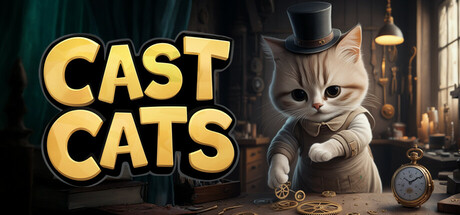
In the creation of Cast Cats, AI was used as an auxiliary tool. Almost all images (including the logo), sounds and music were created by the AI, and later were delicately and manually processed in various editors. Our goal is, first of all, a pleasant aesthetic appearance. And secondly, to show how AI can help to create a beautiful game.
But most importantly: All players should feel comfortable and have fun playing the game.
Some basic components like door opening and closing, and light switching were automatically mounted by Yahaha Studio's AI tools (a UGC game editor).
The 3D scenes were constructed using Yahaha Studio's AI tools (a UGC game editor), with art assets recognized and used by the AI tools being copyright-compliant.
In my game development process, I used GitHub Copilot to enhance coding efficiency.
During the creation of promotional images and videos, I may have used images generated by Stable Diffusion or music generated by Suno.
But these assets will NOT appear in the actual game!
We used AI for some detail optimization in our artwork, but we guarantee that the majority of the art assets are handcrafted.
We will never use 100% AI-generated artwork for profit. Everything you see has been manually redrawn at least once.
The grapics on the shop page is ai generated. Most of the texture in the game are hand-drawn, but some of them are ai-generated.
All game levels are hand-crafted in the level editor (everybody who owns the game can do that, too).
Enemy behaviour is deterministic and sometimes random; no ai used here.
Some jumpscare effects and item visuals make limited use of AI-assisted generation, followed by manual editing. All content is curated, integrated, and polished by the development team.
We used AI-assisted tools to enhance poster art and user interface elements, starting from custom designs created in Photoshop or purchased. AI was used to refine the material look, adding depth, texture, and polish to existing artwork—helping elevate the game's presentation while staying true to its original style. Every asset was directed and crafted by hand, with AI used as a supportive tool for enhancement, not generation from scratch.
Some pictures are drawn twice based on the reference of artificial intelligence painting, and some music creation is assisted by artificial intelligence arrangement.
In "Lone Howl", artificial intelligence is utilised carefully and responsibly to enhance the player's experience in various aspects of the game:
Images and Banners: We have used AI beforehand to create some of the banners and loading screen images you will encounter throughout the game. This allows us to generate unique visuals that capture the dark and mystical atmosphere of the "Lone Howl" universe. It’s important to note that these images were generated prior to release and do not involve any adaptation or analysis based on player behaviour.
Translations: AI is also employed to assist with the translation of the game into different languages, ensuring that the narrative and dialogues maintain their essence and fluency, regardless of the language in which the game is played.
Dialogue and Voices: Some of the characters' dialogue and voices were generated or enhanced using AI. This allowed us to bring characters and creatures to life with a vocal diversity that enriches the player's immersion.
It’s important to highlight that we do not use algorithms that study or analyse players. All AI use in "Lone Howl" is applied statically, with the goal of complementing the experience without compromising privacy or the authenticity of the content.
Many images that take place in game, representing towns and cities were created with the help of artificial intelligence. Generated pieces were not directly taken place in game but used advisory/recommendation manner (eg. to illustrate how a North West city looks in 1940s).
I used AI in the following way:
- creating the voices of Ben and Jane
- creating a base for further processing and overpainting (images in the intro scene)
MI:ND is a game that could not exist before AI. In every interaction you can say or do whatever you want, and the game will respond with a completely unique interaction and dialogue directly to you.
I enjoy crafting dozens of background images in the game, from personal travel photos of varied scenery,
drawings, and patiently process and mash them using AI and non AI tools. The art for the board games themselves (pawns, tiles) is abstract and simply done with gimp (traditional 2D image editor)
All main character illustrations and story CGs in the game are hand-drawn by artists.
Some background images use free AI-generated background assets licensed for commercial use.
In addition, AI was used as a supplementary reference during the creation of certain scene assets.
The game uses artificial intelligence (AI) as assistance for language translations and the creation of some secondary character avatars. All main story content, dialogue, and core design elements were handcrafted by our team.
This game does not use generative AI to create live gameplay content or code.
However, during development and marketing, certain assets were created or assisted using AI tools:
Visual assets:
Some in-game artwork, UI elements (including icons, buttons, and portraits), as well as promotional visuals used on the Steam store page were initially generated or assisted using AI image generation tools.
In addition, achievement icons were created with the help of AI and later manually refined and finalized by the developer to ensure consistency with the game’s artistic direction.
Localizations:
All translations (except Russian and Ukrainian) were produced using AI-powered translation services without human proofreading.
Audio assets:
A portion of the sound effects was generated or assisted using AI tools and then mixed, processed, and adjusted by the developer.
All AI-assisted content was manually reviewed, edited, and approved by the developer to ensure it aligns with the game’s visual style, tone, and quality standards.
In the creation of Cast Cats, AI was used as an auxiliary tool. Almost all images (including the logo), sounds and music were created by the AI, and later were delicately and manually processed in various editors. Our goal is, first of all, a pleasant aesthetic appearance. And secondly, to show how AI can help to create a beautiful game.
But most importantly: All players should feel comfortable and have fun playing the game.
Some basic components like door opening and closing, and light switching were automatically mounted by Yahaha Studio's AI tools (a UGC game editor).
The 3D scenes were constructed using Yahaha Studio's AI tools (a UGC game editor), with art assets recognized and used by the AI tools being copyright-compliant.