Public Steam disclosure research25,519 disclosures tracked
Where do games disclose AI use?
Search developers’ Steam disclosures, compare classified AI use across
games, and follow recorded changes.
This index adds cross-game classifications and statistics to
statements published on individual store pages.
Groups reflect automatic analysis of public disclosures; mature records are excluded. These counts do not measure AI use across all of Steam.
Missing or unclear statements cannot establish whether a game uses AI.
Some of the artwork in ChessTan was created with the help of generative AI tools. This includes in-game graphics (unit and board art) and the store page / marketing images. All AI-generated art was reviewed, edited, and curated by the developer before use. No AI-generated content is produced live during gameplay. Music is licensed royalty-free stock (not AI-generated), and AI coding assistants were used only for development, not to generate player-facing content
Generative AI tools were used to assist with some UI artwork and localization.
All AI-assisted content is pre-generated and reviewed before being included in the game or its store materials.
Development tools assisted with localization and the creation and refinement of some visual content. All resulting content was reviewed and edited by the developer before being included in the game.
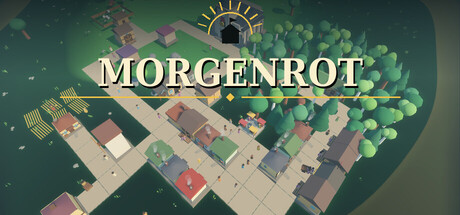
Generative AI tools were used during the development of Morgenrot to assist with programming, brainstorming, text creation, translation, and the creation of some visual assets. The game does not use generative AI to dynamically generate content during gameplay.
Pre-generated 2D marketing artwork and Steam store assets were created with assistance from OpenAI image-generation tools during development. All outputs were reviewed and selected by the developer. The game itself does not include AI-generated content, generate AI content at runtime, or connect to AI services.
Some visual assets and portions of the game’s code were created with the assistance of generative AI. All AI-assisted content was reviewed and edited by the developer before being included in the game. The game does not generate AI content during gameplay.
Generative AI was used to create initial artwork for the in-game VHS covers. All generated images were subsequently manually edited and refined by the development team.
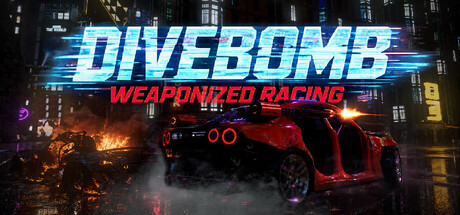
Some pre-rendered content was created with the help of generative AI tools: the music tracks, the game logo and store/marketing artwork, and the store page texts including localization. All gameplay, graphics and race simulation are deterministic and hand-coded; no content is generated by AI at runtime.
Generative AI was used to create portions of the pre-rendered promotional trailer and to assist with the production of some visual assets. No content is generated during gameplay, and the game does not connect to external AI services.
Generative AI was used as a development aid to create and modify program code, produce some visual assets, and draft localized text. All AI-generated content has been reviewed, edited, and adjusted by the developer. No AI content is generated while the game is running.
Some of this game’s art assets (such as characters, environments, and UI icons) were initially created with the assistance of generative AI tools, which were used to produce concept art or source drafts. All assets were then manually reworked by the developers in software such as GIMP, including redrawing outlines, adjusting colors, correcting details, and unifying the art style. The game does not use AI to generate content in real time during gameplay.
Generative AI was used to assist in creating some UI graphics, equipment graphic assets, and music, as well as to assist with programming. All generated content was reviewed and edited as needed by the developer. No live-generated AI content is used while the game is running.
AI tools were used during development to assist with coding, 3D modeling, and sound effect creation. All AI-generated content was reviewed and edited by the developer.
Generative AI tools were used to assist in the creation of some pre-generated visual assets for this game, including character and enemy artwork, scene and interface backgrounds, item and skill icons, and some promotional artwork for the Steam store. All such assets were manually selected, edited, cropped, adjusted, and reviewed by the developer before being integrated into the game.
We use generative AI to create promotional artwork only. The store capsules, library assets, and page background were generated with an image model using our own gameplay captures and in-house masters as the only references.
Generative AI tools were used during development to create selected pre-generated content, including character and environment artwork, some user interface artwork, music, some voice-over audio, and localization. The visual assets were subsequently edited and customized by the developer. All AI-assisted content is selected, reviewed, and integrated by the developer before inclusion. The game does not generate content during gameplay or connect to external AI services.
Generative AI was used to assist in creating certain decorative user interface elements, and background graphics. All gameplay systems, mechanics, programming, game design, and core game content were created and curated by the development team.
Urban Bus Simulator includes some content created with the assistance of generative AI. AI-generated content is used for certain HUD elements, menu/interface visuals, and promotional or illustrative images related to vehicle brands. These AI-generated assets are used as part of the game's visual presentation and user interface.
This game uses AI to analyze the meaning and intent of players’ natural-language input in real time, enabling players to interact with characters using their own words. AI is used solely for input analysis during gameplay. All dialogue and narrative content are written by the development team and are not generated by AI.
Protocell's soundtrack was generated with an AI music tool, and a few interface layouts were explored with the help of AI image tool. Everything else — the code, the design, the pixel art and the procedurally generated creatures — is hand-crafted or produced by the game's own engine. No generative AI runs in real time while you play.
Coppersmog is a game created independently by me, a father, a husband and a video game hobbyist.
I'm proud to say that I designed the game, directed it, and decided what made it fun to play.
I also built it with the help of generative AI.
I wanted to tell you this fact plainly so that my honesty could help bridge your concerns and inform your choice to play this game.
Here is what the AI contribution actually means in this game and with me specifically.
Every decision in this game is mine. The world, the rules, how a room feels, what a blorb is, and what's allowed to happen to one, I set it all.
To be honest, I throw away most of what AI generates because it just doesn't "get it" most of the time.
AI has no taste. It cannot tell when something is right, funny, or profound. It can make an enormous number of things, but it cannot decide which of them belongs in Coppersmog. That judgement is the heart of the job. That judgement is my most important aspect of what I do.
AI gives me is attempts, drafts and options.
It writes code segments, runs thousands of fight simulations, and fixes my grammar and then I cut, change, reject, and try again.
AI is wrong constantly.
Sometimes it builds a second version of something the game already has. Sometimes it forgets a decision we made weeks ago. Sometimes it writes code that looks perfect and never runs. There's a lot of invisible work to keep those pieces pointed in the same direction. Orchestrating it all falls to me.
I know that AI integration is not acceptable to everyone and so I wanted to be honest about how I'm using it to give you a chance to make an informed decision.
If you read all of this and decide that Coppersmog is not for you, that's a completely fair choice. I want you to make choices that are best for you, using the facts in front of you.
One thing that brings me comfort as I wrestle with where I want AI to be in my life is that this is a hobby project that made me smile quite a bit. I'm proud of my little world. Thank you.
Art: AI image tools assisted with 2D assets/icons; all final art was will be replaced by our artists based on original designs and concept.
Localization: Core languages were translated by our team; additional languages use AI-assisted translation.
This currently includes some 2D art assets (character, enemy, maps, and environment artwork and a few remaining icons), achievement icons and store artwork, and AI-assisted translation of the game's text into languages beyond the original Arabic & English, with human review. The in-game credits include an AI usage disclosure.
The game does not generate any content at runtime (no live AI-generated content)
Note: We are deliberately moving away from AI-generated assets. The AI-generated UI art set (themed frames, buttons and panel artwork) has already been removed from the build because it did not fit the game's art direction, and the interface now uses normal unity built elements; we will share that set only as a design concept while we look for an artist to rebuild the interface art from scratch. Our intent is to replace the remaining AI-generated images with original, non-AI artwork. We currently rely on AI only as a temporary baseline until we can work with experienced artists in Middle Eastern art to create the final assets.
We use AI tools during development to help write and debug code, and to help produce some art assets. Everything AI-assisted is made during development and reviewed by us before it ships.
We also use third-party assets bought from the Unity Asset Store. These are sold to us as human-made, and we have no reason to doubt that, but we cannot independently verify how each one was produced. Character animation uses Mixamo.
Generative AI was used to assist with the composition of some concept artwork, a small number of promotional video shots, and multilingual localization. All related content was reviewed, edited, and finally approved by the development team before use.
AI was used for some store Art, random game Events, as well as assistance when coding. All artwork in game was created by artist, and all AI artwork in the store we plan to replace. Some to Half of the AI Random events will stay. We will continue to use AI to speed up development, but are also striving for the best quality on release.
This game includes limited use of generative artificial intelligence in the creation of certain visual and audio assets. These AI-assisted elements were used to support the development process and are integrated alongside original, human-created content. All assets have been reviewed and curated to ensure they meet the quality and artistic standards of the game.
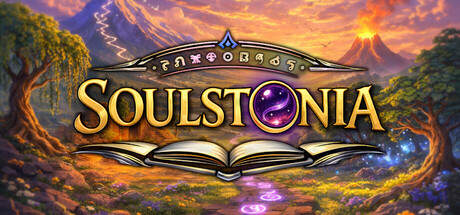
Generative AI tools were used during development to assist with creating and refining select 2D artwork, icons, and marketing materials, as well as game and marketing copy localization. All AI-assisted content is reviewed, edited, and curated by the developer before being included in the game. Soulstonia does not use generative AI to create content live during gameplay.
An AI-assisted tool was used to create a preliminary translation pass that was reviewed and revised by human localization professionals.
AI was not and will not be used to generate in-game art, audio, narrative, or gameplay elements.
We may use AI-based tools during development to assist with content creation. In all such cases, the final game mirrors our dev team's creativity and expression.
Generative AI tools were used during development to assist in creating selected pre-generated 3D assets and visual artwork used in the game. All generated outputs were reviewed, edited, and integrated by the developer. The game does not generate AI content during gameplay or connect to external AI services.
No Generative AI art was used in-game or in any of the promotional material. However, ai-assisted tools were used in development for coding assistance and image editing tasks such as upscaling and cleanup of screenshots to be used in capsule arts.
“AI tools were used to upscale/enhance original artwork created by the developer. The resulting assets were subsequently manually reworked and edited to match the game's intended art direction.”
Some of the game's 2D artwork, including character, enemy and boss sprites, item icons, and backgrounds, was created using generative AI tools. All such assets were individually reviewed, selected, polished and integrated by the development team.
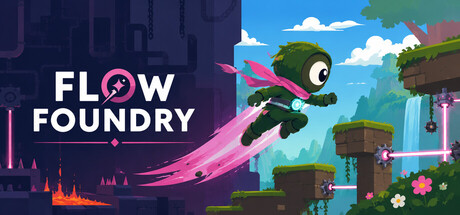
Generative AI was used as part of the development process to assist with the creation of some visual and audio assets. AI-generated outputs are reviewed, selected, edited and integrated by the developer to fit the game's visual and creative direction. Flow Foundry does not use generative AI to create content live during gameplay.
Some 2D art assets in this game — a portion of the character portraits, unit sprites, and city illustration backgrounds — were created with the assistance of AI image-generation tools (Google Gemini) during development. All such assets are pre-generated, then reviewed and curated by the developer before being included in the build; the game does not generate any AI content live at runtime. Game text, design, code, and systems are authored by the developer without live AI generation.
Some of the artwork in ChessTan was created with the help of generative AI tools. This includes in-game graphics (unit and board art) and the store page / marketing images. All AI-generated art was reviewed, edited, and curated by the developer before use. No AI-generated content is produced live during gameplay. Music is licensed royalty-free stock (not AI-generated), and AI coding assistants were used only for development, not to generate player-facing content
Generative AI tools were used to assist with some UI artwork and localization.
All AI-assisted content is pre-generated and reviewed before being included in the game or its store materials.
Development tools assisted with localization and the creation and refinement of some visual content. All resulting content was reviewed and edited by the developer before being included in the game.
Generative AI tools were used during the development of Morgenrot to assist with programming, brainstorming, text creation, translation, and the creation of some visual assets. The game does not use generative AI to dynamically generate content during gameplay.
Pre-generated 2D marketing artwork and Steam store assets were created with assistance from OpenAI image-generation tools during development. All outputs were reviewed and selected by the developer. The game itself does not include AI-generated content, generate AI content at runtime, or connect to AI services.
Some visual assets and portions of the game’s code were created with the assistance of generative AI. All AI-assisted content was reviewed and edited by the developer before being included in the game. The game does not generate AI content during gameplay.
Generative AI was used to create initial artwork for the in-game VHS covers. All generated images were subsequently manually edited and refined by the development team.
Some pre-rendered content was created with the help of generative AI tools: the music tracks, the game logo and store/marketing artwork, and the store page texts including localization. All gameplay, graphics and race simulation are deterministic and hand-coded; no content is generated by AI at runtime.
Generative AI was used to create portions of the pre-rendered promotional trailer and to assist with the production of some visual assets. No content is generated during gameplay, and the game does not connect to external AI services.
Generative AI was used as a development aid to create and modify program code, produce some visual assets, and draft localized text. All AI-generated content has been reviewed, edited, and adjusted by the developer. No AI content is generated while the game is running.
Some of this game’s art assets (such as characters, environments, and UI icons) were initially created with the assistance of generative AI tools, which were used to produce concept art or source drafts. All assets were then manually reworked by the developers in software such as GIMP, including redrawing outlines, adjusting colors, correcting details, and unifying the art style. The game does not use AI to generate content in real time during gameplay.
Generative AI was used to assist in creating some UI graphics, equipment graphic assets, and music, as well as to assist with programming. All generated content was reviewed and edited as needed by the developer. No live-generated AI content is used while the game is running.
AI tools were used during development to assist with coding, 3D modeling, and sound effect creation. All AI-generated content was reviewed and edited by the developer.
Generative AI tools were used to assist in the creation of some pre-generated visual assets for this game, including character and enemy artwork, scene and interface backgrounds, item and skill icons, and some promotional artwork for the Steam store. All such assets were manually selected, edited, cropped, adjusted, and reviewed by the developer before being integrated into the game.
We use generative AI to create promotional artwork only. The store capsules, library assets, and page background were generated with an image model using our own gameplay captures and in-house masters as the only references.
Generative AI tools were used during development to create selected pre-generated content, including character and environment artwork, some user interface artwork, music, some voice-over audio, and localization. The visual assets were subsequently edited and customized by the developer. All AI-assisted content is selected, reviewed, and integrated by the developer before inclusion. The game does not generate content during gameplay or connect to external AI services.
Generative AI was used to assist in creating certain decorative user interface elements, and background graphics. All gameplay systems, mechanics, programming, game design, and core game content were created and curated by the development team.
Urban Bus Simulator includes some content created with the assistance of generative AI. AI-generated content is used for certain HUD elements, menu/interface visuals, and promotional or illustrative images related to vehicle brands. These AI-generated assets are used as part of the game's visual presentation and user interface.
This game uses AI to analyze the meaning and intent of players’ natural-language input in real time, enabling players to interact with characters using their own words. AI is used solely for input analysis during gameplay. All dialogue and narrative content are written by the development team and are not generated by AI.
Protocell's soundtrack was generated with an AI music tool, and a few interface layouts were explored with the help of AI image tool. Everything else — the code, the design, the pixel art and the procedurally generated creatures — is hand-crafted or produced by the game's own engine. No generative AI runs in real time while you play.
Coppersmog is a game created independently by me, a father, a husband and a video game hobbyist.
I'm proud to say that I designed the game, directed it, and decided what made it fun to play.
I also built it with the help of generative AI.
I wanted to tell you this fact plainly so that my honesty could help bridge your concerns and inform your choice to play this game.
Here is what the AI contribution actually means in this game and with me specifically.
Every decision in this game is mine. The world, the rules, how a room feels, what a blorb is, and what's allowed to happen to one, I set it all.
To be honest, I throw away most of what AI generates because it just doesn't "get it" most of the time.
AI has no taste. It cannot tell when something is right, funny, or profound. It can make an enormous number of things, but it cannot decide which of them belongs in Coppersmog. That judgement is the heart of the job. That judgement is my most important aspect of what I do.
AI gives me is attempts, drafts and options.
It writes code segments, runs thousands of fight simulations, and fixes my grammar and then I cut, change, reject, and try again.
AI is wrong constantly.
Sometimes it builds a second version of something the game already has. Sometimes it forgets a decision we made weeks ago. Sometimes it writes code that looks perfect and never runs. There's a lot of invisible work to keep those pieces pointed in the same direction. Orchestrating it all falls to me.
I know that AI integration is not acceptable to everyone and so I wanted to be honest about how I'm using it to give you a chance to make an informed decision.
If you read all of this and decide that Coppersmog is not for you, that's a completely fair choice. I want you to make choices that are best for you, using the facts in front of you.
One thing that brings me comfort as I wrestle with where I want AI to be in my life is that this is a hobby project that made me smile quite a bit. I'm proud of my little world. Thank you.
Art: AI image tools assisted with 2D assets/icons; all final art was will be replaced by our artists based on original designs and concept.
Localization: Core languages were translated by our team; additional languages use AI-assisted translation.
This currently includes some 2D art assets (character, enemy, maps, and environment artwork and a few remaining icons), achievement icons and store artwork, and AI-assisted translation of the game's text into languages beyond the original Arabic & English, with human review. The in-game credits include an AI usage disclosure.
The game does not generate any content at runtime (no live AI-generated content)
Note: We are deliberately moving away from AI-generated assets. The AI-generated UI art set (themed frames, buttons and panel artwork) has already been removed from the build because it did not fit the game's art direction, and the interface now uses normal unity built elements; we will share that set only as a design concept while we look for an artist to rebuild the interface art from scratch. Our intent is to replace the remaining AI-generated images with original, non-AI artwork. We currently rely on AI only as a temporary baseline until we can work with experienced artists in Middle Eastern art to create the final assets.
We use AI tools during development to help write and debug code, and to help produce some art assets. Everything AI-assisted is made during development and reviewed by us before it ships.
We also use third-party assets bought from the Unity Asset Store. These are sold to us as human-made, and we have no reason to doubt that, but we cannot independently verify how each one was produced. Character animation uses Mixamo.
Generative AI was used to assist with the composition of some concept artwork, a small number of promotional video shots, and multilingual localization. All related content was reviewed, edited, and finally approved by the development team before use.
AI was used for some store Art, random game Events, as well as assistance when coding. All artwork in game was created by artist, and all AI artwork in the store we plan to replace. Some to Half of the AI Random events will stay. We will continue to use AI to speed up development, but are also striving for the best quality on release.
This game includes limited use of generative artificial intelligence in the creation of certain visual and audio assets. These AI-assisted elements were used to support the development process and are integrated alongside original, human-created content. All assets have been reviewed and curated to ensure they meet the quality and artistic standards of the game.
Generative AI tools were used during development to assist with creating and refining select 2D artwork, icons, and marketing materials, as well as game and marketing copy localization. All AI-assisted content is reviewed, edited, and curated by the developer before being included in the game. Soulstonia does not use generative AI to create content live during gameplay.
An AI-assisted tool was used to create a preliminary translation pass that was reviewed and revised by human localization professionals.
AI was not and will not be used to generate in-game art, audio, narrative, or gameplay elements.
We may use AI-based tools during development to assist with content creation. In all such cases, the final game mirrors our dev team's creativity and expression.
Generative AI tools were used during development to assist in creating selected pre-generated 3D assets and visual artwork used in the game. All generated outputs were reviewed, edited, and integrated by the developer. The game does not generate AI content during gameplay or connect to external AI services.
No Generative AI art was used in-game or in any of the promotional material. However, ai-assisted tools were used in development for coding assistance and image editing tasks such as upscaling and cleanup of screenshots to be used in capsule arts.
“AI tools were used to upscale/enhance original artwork created by the developer. The resulting assets were subsequently manually reworked and edited to match the game's intended art direction.”
Some of the game's 2D artwork, including character, enemy and boss sprites, item icons, and backgrounds, was created using generative AI tools. All such assets were individually reviewed, selected, polished and integrated by the development team.
Generative AI was used as part of the development process to assist with the creation of some visual and audio assets. AI-generated outputs are reviewed, selected, edited and integrated by the developer to fit the game's visual and creative direction. Flow Foundry does not use generative AI to create content live during gameplay.
Some 2D art assets in this game — a portion of the character portraits, unit sprites, and city illustration backgrounds — were created with the assistance of AI image-generation tools (Google Gemini) during development. All such assets are pre-generated, then reviewed and curated by the developer before being included in the build; the game does not generate any AI content live at runtime. Game text, design, code, and systems are authored by the developer without live AI generation.