Public Steam disclosure research25,383 disclosures tracked
Where do games disclose AI use?
Search developers’ Steam disclosures, compare classified AI use across
games, and follow recorded changes.
This index adds cross-game classifications and statistics to
statements published on individual store pages.
Groups reflect automatic analysis of public disclosures; mature records are excluded. These counts do not measure AI use across all of Steam.
Missing or unclear statements cannot establish whether a game uses AI.
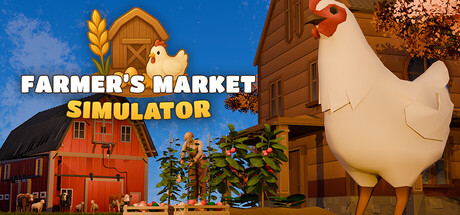
The vast majority of the artwork in the game was created by our team of artists, hired freelancers or purchased on market places. In some cases, AI was used to generate reference images to assist with the creative process, but all final assets were either fully redrawn or significantly refined by human artists to ensure quality and originality.
We use AI to let our robots express themselves!
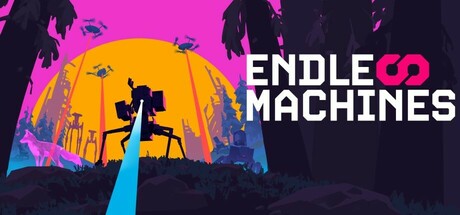
If a robot became alive, it wouldn’t come pre-programmed with the perfect way to express its thoughts or emotions — it would have to figure it out along the way. That’s why the hero robots in Endless Machines use AI to give voice to their thoughts and feelings.
What they say isn’t always polished or logical. It's quirky, weird, funny, and sometimes unexpectedly touching. It’s not a scripted, perfect dialogue. It’s more like a robot trying to make sense of the world — and itself — in real time.
This approach makes their personalities dynamic and unpredictable. For us, that’s what makes AI-driven dialogue a perfect fit for the game: It’s about learning, exploring, and growing — just like the robots themselves.
Under the hood, the game runs a small language model that has been custom fine-tuned for each robot's personality. It is instructed to speak through prompt engineering, ensuring the robot stays in character and relates to the game's lore. The model does not require online access.
We chose to use SmolLM because we were looking for a language model where the training background, technical setup, and use of data are transparent (open source and based on publicly available texts), and where the model can be run locally. We use this locally hosted language model (LLM) to generate text content during gameplay.
What the robots say in the game is defined and moderated by us. We have written a set of foundational texts that form the basis for each robot’s personality, tone, and way of expressing itself. From that foundation, they “build” further and develop over time. Endless Machines does not and cannot collect any data from the person playing the game.
All outputs are guided by custom prompt engineering, custom fine-tuning, and are controlled by local code at runtime to ensure appropriate content. More details on the model architecture and dataset can be found here:
🔗 https://huggingface.co/datasets/HuggingFaceTB/smoltalk
This game contains Audio and / or Artwork customized with the help of AI tools by our artists, derived from artwork we own commercial rights to use, or artwork done by our own studio.
We pay our artists, and we DO NOT use stolen Artwork.
Some promotional artwork and character portrait illustrations were created with AI assistance. All gameplay systems and code were written by the developer.
This game makes limited use of generative AI tools. Some texts, such as tooltips, short descriptions, or inspirational drafts, were partially created with ChatGPT and then manually edited. Adobe Firefly was used to generate early concept images, which were further processed and stylistically refined in Photoshop. All final assets have been thoroughly reviewed and manually adjusted. The game does not include any generative AI functionality during runtime.
Some character dialogue and the text information for player-created characters are generated by AI based on user input.
Additionally, some of the images and music used in the game were created using AI.
AI tools were used during development to assist in generating early draft concepts for some environmental assets.
All final in-game content, visuals, audio, and text were manually created, refined, and validated by the development team.
No AI tools are available to players, and no AI generates content during gameplay.
Some background images in this game are sourced from the AIPICT library, which may use generative AI to create its content and is labeled for free commercial use. We ensure that these materials comply with legal usage standards.
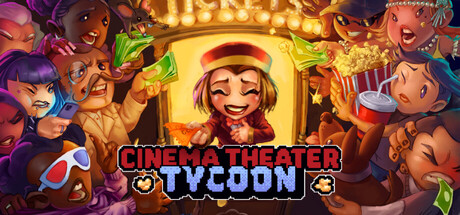
The game includes over 1,000 movie posters that were converted into pixel-art using an AI tool and then manually retouched by the team. This approach was chosen because pixeling each poster entirely by hand would have been too time-consuming for a small team. All other visuals and animations in the game were drawn and animated entirely by hand.
In the long run, the team plans to gradually replace these posters with original, hand-drawn artwork after the game’s release.
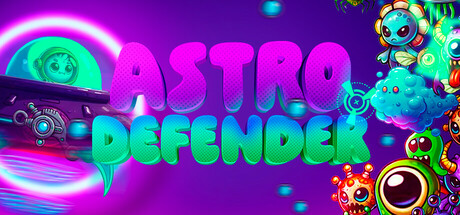
Astro Defender features art direction powered by Artificial Intelligence, delivering stunning visuals and unique environments. Every detail is crafted to provide an immersive experience, blending human creativity with cutting-edge technology to bring the universe of Zytherion to life.
The vast majority of the artwork in the game was created by our team of artists, hired freelancers or purchased on market places. In some cases, AI was used to generate reference images to assist with the creative process, but all final assets were either fully redrawn or significantly refined by human artists to ensure quality and originality.
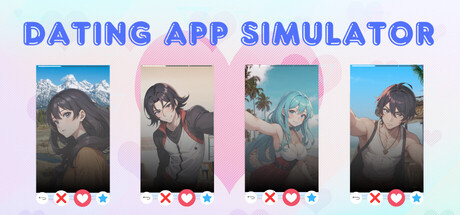
Our game uses AI to make the experience more engaging. Some character images were created with AI and then polished by our artists to fit perfectly with the game’s style. We also use AI for a limited live chat feature, allowing you to have fun, interactive conversations with one of the characters.
Artificial intelligence was used to create concept images of the girls from the game and promotional materials that were then finalized by artists and animators. One of the background locations was also created
Generative AI was used to create the logo and marketing materials for the game. Some of the in-game units were also pre-rendered using a generative AI template.
BEFORE PATCH 1.2.0 : The capsule art was partially created using generative AI tools and then edited and refined manually. The logo was not generated by AI. No in-game content was created using AI.
SINCE PATCH 1.2.0 : The game is 100% hand made : The new HAND-DRAWN key art is there, as requested by some players. I didn't think it would be such a big deal for some people at first. The old cover was ok but not great indeed. Now I realise it was a mistake, and it was my bad. From now on I'll either draw them myself to the best of my abilities, or hire a pro if I can afford it.
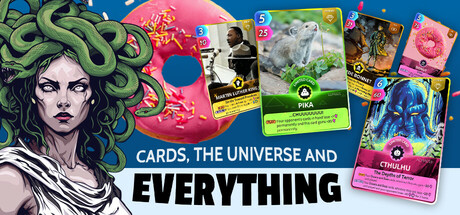
We use a mix of sources for our artwork, including licensed image banks, public domain material, and commissioned photography and illustrations. We do not intentionally use AI-generated content on the cards themselves. In some cases, we use AI-powered content creation tools, Photoshop, Illustrator, and similar software, to help extend or enhance artwork that we originally created. These tools support the design process but are not used to generate standalone content.
During the development process, I may use procedural- and AI-based tools to assist with content creation. In all such cases, the final product reflects the creativity and expression of myself.
The vast majority of the artwork in the game was created by our team of artists, hired freelancers or purchased on market places. In some cases, AI was used to generate reference images to assist with the creative process, but all final assets were either fully redrawn or significantly refined by human artists to ensure quality and originality.
We use AI to let our robots express themselves!
If a robot became alive, it wouldn’t come pre-programmed with the perfect way to express its thoughts or emotions — it would have to figure it out along the way. That’s why the hero robots in Endless Machines use AI to give voice to their thoughts and feelings.
What they say isn’t always polished or logical. It's quirky, weird, funny, and sometimes unexpectedly touching. It’s not a scripted, perfect dialogue. It’s more like a robot trying to make sense of the world — and itself — in real time.
This approach makes their personalities dynamic and unpredictable. For us, that’s what makes AI-driven dialogue a perfect fit for the game: It’s about learning, exploring, and growing — just like the robots themselves.
Under the hood, the game runs a small language model that has been custom fine-tuned for each robot's personality. It is instructed to speak through prompt engineering, ensuring the robot stays in character and relates to the game's lore. The model does not require online access.
We chose to use SmolLM because we were looking for a language model where the training background, technical setup, and use of data are transparent (open source and based on publicly available texts), and where the model can be run locally. We use this locally hosted language model (LLM) to generate text content during gameplay.
What the robots say in the game is defined and moderated by us. We have written a set of foundational texts that form the basis for each robot’s personality, tone, and way of expressing itself. From that foundation, they “build” further and develop over time. Endless Machines does not and cannot collect any data from the person playing the game.
All outputs are guided by custom prompt engineering, custom fine-tuning, and are controlled by local code at runtime to ensure appropriate content. More details on the model architecture and dataset can be found here:
🔗 https://huggingface.co/datasets/HuggingFaceTB/smoltalk
This game contains Audio and / or Artwork customized with the help of AI tools by our artists, derived from artwork we own commercial rights to use, or artwork done by our own studio.
We pay our artists, and we DO NOT use stolen Artwork.
Some promotional artwork and character portrait illustrations were created with AI assistance. All gameplay systems and code were written by the developer.
This game makes limited use of generative AI tools. Some texts, such as tooltips, short descriptions, or inspirational drafts, were partially created with ChatGPT and then manually edited. Adobe Firefly was used to generate early concept images, which were further processed and stylistically refined in Photoshop. All final assets have been thoroughly reviewed and manually adjusted. The game does not include any generative AI functionality during runtime.
Some character dialogue and the text information for player-created characters are generated by AI based on user input.
Additionally, some of the images and music used in the game were created using AI.
AI tools were used during development to assist in generating early draft concepts for some environmental assets.
All final in-game content, visuals, audio, and text were manually created, refined, and validated by the development team.
No AI tools are available to players, and no AI generates content during gameplay.
Some background images in this game are sourced from the AIPICT library, which may use generative AI to create its content and is labeled for free commercial use. We ensure that these materials comply with legal usage standards.
The game includes over 1,000 movie posters that were converted into pixel-art using an AI tool and then manually retouched by the team. This approach was chosen because pixeling each poster entirely by hand would have been too time-consuming for a small team. All other visuals and animations in the game were drawn and animated entirely by hand.
In the long run, the team plans to gradually replace these posters with original, hand-drawn artwork after the game’s release.
Astro Defender features art direction powered by Artificial Intelligence, delivering stunning visuals and unique environments. Every detail is crafted to provide an immersive experience, blending human creativity with cutting-edge technology to bring the universe of Zytherion to life.
The vast majority of the artwork in the game was created by our team of artists, hired freelancers or purchased on market places. In some cases, AI was used to generate reference images to assist with the creative process, but all final assets were either fully redrawn or significantly refined by human artists to ensure quality and originality.
Our game uses AI to make the experience more engaging. Some character images were created with AI and then polished by our artists to fit perfectly with the game’s style. We also use AI for a limited live chat feature, allowing you to have fun, interactive conversations with one of the characters.
Artificial intelligence was used to create concept images of the girls from the game and promotional materials that were then finalized by artists and animators. One of the background locations was also created
Generative AI was used to create the logo and marketing materials for the game. Some of the in-game units were also pre-rendered using a generative AI template.
BEFORE PATCH 1.2.0 : The capsule art was partially created using generative AI tools and then edited and refined manually. The logo was not generated by AI. No in-game content was created using AI.
SINCE PATCH 1.2.0 : The game is 100% hand made : The new HAND-DRAWN key art is there, as requested by some players. I didn't think it would be such a big deal for some people at first. The old cover was ok but not great indeed. Now I realise it was a mistake, and it was my bad. From now on I'll either draw them myself to the best of my abilities, or hire a pro if I can afford it.
We use a mix of sources for our artwork, including licensed image banks, public domain material, and commissioned photography and illustrations. We do not intentionally use AI-generated content on the cards themselves. In some cases, we use AI-powered content creation tools, Photoshop, Illustrator, and similar software, to help extend or enhance artwork that we originally created. These tools support the design process but are not used to generate standalone content.
During the development process, I may use procedural- and AI-based tools to assist with content creation. In all such cases, the final product reflects the creativity and expression of myself.