Public Steam disclosure research25,376 disclosures tracked
Where do games disclose AI use?
Search developers’ Steam disclosures, compare classified AI use across
games, and follow recorded changes.
This index adds cross-game classifications and statistics to
statements published on individual store pages.
Groups reflect automatic analysis of public disclosures; mature records are excluded. These counts do not measure AI use across all of Steam.
Missing or unclear statements cannot establish whether a game uses AI.
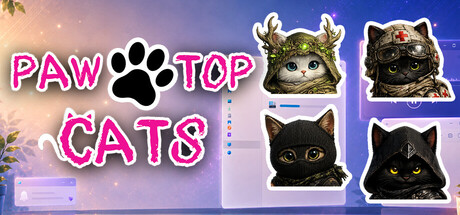
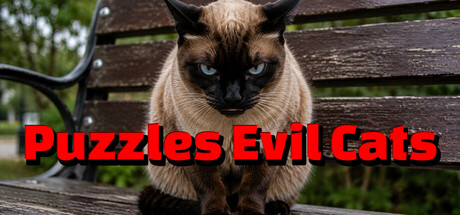
Some cosmetic cat skins and visual assets were created with the assistance of generative AI tools. All final assets are manually reviewed, edited, and integrated by the developer. The game does not generate AI content during gameplay.
Some visual assets were created or assisted with generative AI tools, then selected and edited by the developer. Gameplay, rules, and the opponent AI are not generative AI.
During the development of this game, we utilized generative AI tools to assist in the following areas:
Code Development: Portions of game logic and system code were generated with AI assistance. All AI-generated code has been manually reviewed, adjusted, and integrated into the final product to ensure stability and performance.
Multilingual Text Translation (English): The English localization—including UI, dialogues, and prompts—was initially drafted using AI translation. These drafts were then proofread and polished by professional translators to ensure natural language flow and cultural appropriateness.
All AI-generated content has undergone rigorous human review and testing to meet our quality standards and deliver a great player experience. If you have any questions, please feel free to contact the developers.
Some of the background music in Aquora was produced using a generative audio tool. Those tracks are placeholder. They are being replaced with commissioned
original music, and any remaining generated audio will be phased out of the game over time.
All visual art in Aquora is procedurally generated by the developer's own custom tooling, drawn from hand-authored colour palettes, explicit shape instructions
and seeded random number generation. No image generation model is involved at any point in the art pipeline, and no AI generated images appear in the game.
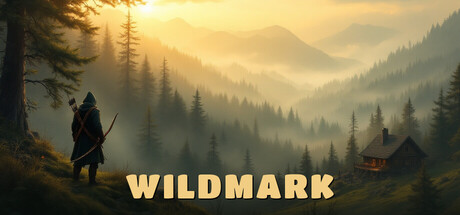
Wildmark was made by one person. The story and all of its dialogue are my own, written by me. But without a studio's budget to commission artists, composers, and voice actors, I used generative AI tools to help create much of what you see. Nothing ships as a raw, untouched generation: every asset was hand-directed, chosen, refined, and assembled to fit a single cohesive, hand-crafted style and world, and reviewed by me to make sure it belonged. In the end, what matters is whether the game is enjoyable and worth your time, not which tools helped build it.
I’m a web designer by day, and making a game has been a childhood dream of mine. I used generative AI as part of my development process, including helping with code, visual and audio assets. Every asset included in the final game was personally selected, refined by hand, placed, and directed by me to match the game’s overall vision.
Some visual assets in this demo are AI-generated placeholders, used temporarily due to budget constraints as a solo developer. These are planned to be replaced with final hand-crafted art before the game's full release.
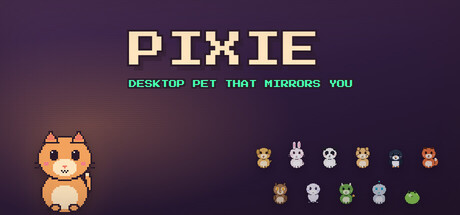
Live-generated: Pixie's chat feature generates the pet's replies with a language model that ships inside the product and runs entirely on the player's own computer. There is no third-party AI service, no API key and no account of any kind; the feature makes no network requests at all and works with the machine fully offline. The model is Gemma 4 E2B, licensed under the Apache License 2.0 and redistributed with the notices required by that license.
Pre-generated: written text in the product and on this store page — including the interface strings and their translations into the supported languages — was produced with the help of an AI writing assistant.
All art, animation and characters are hand-made: every sprite is drawn at runtime by a parametric pixel renderer written for this project, with no generative AI involved at any stage.
Camera and microphone input are processed entirely on-device (MediaPipe) and are never sent to any server.
During development, generative AI tools were used in the production of selected character sprites, backgrounds, CG illustrations, UI artwork, title logos, icons, and music. All AI-assisted assets were generated before release. The developer selected, directed, edited, composited, resized, recolored, and integrated these assets into the final game. Some production assets were also created directly or obtained from commercially licensed stock sources.
No generative AI runs during gameplay, and players cannot generate AI content through the game.
During development, generative AI tools were used to help create some visual design elements and background music.
The game engine and all gameplay systems are originally developed by the creator. AI-generated content is reviewed and refined to ensure consistency and quality.
The game does not use AI-driven systems during gameplay.
Generative AI tools were used to assist with drafting and editing Steam store page text and marketing copy. The game does not use generative AI to create live gameplay content.
Generative AI was used as a collaborative programming assistant to help write game code, structure gameplay logic, and assist with optimization. Additionally, it was utilized to help draft and refine marketing copy for the store page. All visual assets, 3D models, animations, and creative direction are completely hand-crafted by a solo human artist.
During the game's development process, the Generative AI was used as a development aid. AI was used in some game image production and code review and improvement proposals, and all final images and codes included in the game were reviewed, modified, and quality checked by developers. The AI-generated results were not used without review, and verification procedures were performed to ensure that they did not infringe copyright and third-party rights. In addition, AI does not generate content or code in real time during gameplay.
Generative tools were used to create and refine selected 2D illustrations, music, sound effects, localization, and store text. All materials were reviewed and edited by the developer. The game does not generate content using AI or connect to generative AI services during gameplay.
This game was originally written in Chinese, and all non-Chinese localizations were created with the assistance of AI translation.
A part of game music was created by AI.
All other content — artwork, game design — was created by the development team without the use of generative AI.
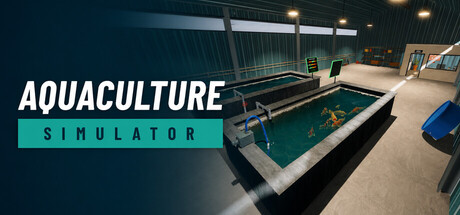
Some of this game's assets were created with generative AI tools and then integrated by hand: the fish models, the facility hall, and the tanks. Some in-game text, the tutorial and the customer emails, was written with the help of an AI language model. All other assets (music, sound, icons, textures, remaining UI) are hand-made or CC0. Every game system, the water simulation, koi grading, economy, customer and calendar logic, is hand-written code. No generative AI runs at runtime; nothing is generated live while you play.
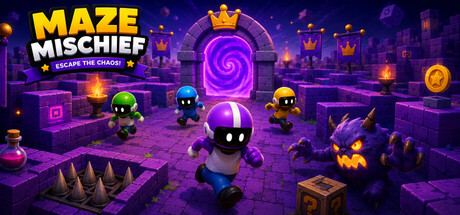
Some promotional images and marketing content for Maze Mischief were created with the assistance of generative artificial intelligence tools and subsequently reviewed and adjusted by the developer.
Pre-generated AI: GPT Image 2 was used during development to create 2D paper-cut-style images included in the app, including weather phenomena, collectible visitors, ecosystem entities, Steam achievement icons, and key art for Steam store capsules and library assets. The developer selected and edited these images, including cropping, background removal, color and alpha cleanup, and export. The app does not use generative AI at runtime.
This game uses generative AI for some pre-generated content. Specifically, generative AI tools were used in the creation of some in-game background/wallpaper assets and some in-game background music. All such content has been reviewed, selected, and edited by the developer before being included in the game. The game does not use live-generated AI content during gameplay.
Some visuals (backgrounds, characters, icons, interface) and sounds (music, effects) were created using generative AI tools, then selected and integrated by the developer. No generation happens in real time during play.
Although AI tools were used during the making of this game for efficiency, we have put our love, care, and effort into every part of it so players can experience the game as intended.
AI was used only as a support tool where helpful, and its use was kept minimal. All creative decisions, final content, and gameplay direction were reviewed and shaped by the developer to make sure nothing takes away from the intended player experience.
Generative AI tools were used during development to create and manually refine some illustrations, store page artwork, and music tracks, as well as to assist with text preparation and localization. The game does not generate any AI content in real time.
Generative AI tools are used to create some background images and marketing materials, as well as to assist with the animation production process. The final assets are adjusted by the development team.
This game was developed based on the concept of creating a Steam game with AI and Unity. Some in-game 3D models, images/artwork, UI elements, sounds, text, and multilingual localization copy were generated or assisted by generative AI tools, then directly edited, arranged, implemented, and finalized by the developer in Unity.
The game does not generate new AI content in real time during gameplay. All AI-generated or AI-assisted elements were created, reviewed, and edited in advance before being included as part of the game content.
Yes – The game contains AI-generated visuals, including card illustrations, background artwork, UI panels, and store page assets (capsules, icons, screenshots), created using AI image generation tools and curated by the developer.
Generative AI tools were used as part of the visual development workflow, mainly to assist with concept exploration and selected artwork for the game and store page. All final assets were reviewed, selected, edited, and integrated by the developer. The game does not generate AI content during gameplay.
Some cosmetic cat skins and visual assets were created with the assistance of generative AI tools. All final assets are manually reviewed, edited, and integrated by the developer. The game does not generate AI content during gameplay.
Some visual assets were created or assisted with generative AI tools, then selected and edited by the developer. Gameplay, rules, and the opponent AI are not generative AI.
During the development of this game, we utilized generative AI tools to assist in the following areas:
Code Development: Portions of game logic and system code were generated with AI assistance. All AI-generated code has been manually reviewed, adjusted, and integrated into the final product to ensure stability and performance.
Multilingual Text Translation (English): The English localization—including UI, dialogues, and prompts—was initially drafted using AI translation. These drafts were then proofread and polished by professional translators to ensure natural language flow and cultural appropriateness.
All AI-generated content has undergone rigorous human review and testing to meet our quality standards and deliver a great player experience. If you have any questions, please feel free to contact the developers.
Some of the background music in Aquora was produced using a generative audio tool. Those tracks are placeholder. They are being replaced with commissioned
original music, and any remaining generated audio will be phased out of the game over time.
All visual art in Aquora is procedurally generated by the developer's own custom tooling, drawn from hand-authored colour palettes, explicit shape instructions
and seeded random number generation. No image generation model is involved at any point in the art pipeline, and no AI generated images appear in the game.
Wildmark was made by one person. The story and all of its dialogue are my own, written by me. But without a studio's budget to commission artists, composers, and voice actors, I used generative AI tools to help create much of what you see. Nothing ships as a raw, untouched generation: every asset was hand-directed, chosen, refined, and assembled to fit a single cohesive, hand-crafted style and world, and reviewed by me to make sure it belonged. In the end, what matters is whether the game is enjoyable and worth your time, not which tools helped build it.
I’m a web designer by day, and making a game has been a childhood dream of mine. I used generative AI as part of my development process, including helping with code, visual and audio assets. Every asset included in the final game was personally selected, refined by hand, placed, and directed by me to match the game’s overall vision.
Some visual assets in this demo are AI-generated placeholders, used temporarily due to budget constraints as a solo developer. These are planned to be replaced with final hand-crafted art before the game's full release.
Live-generated: Pixie's chat feature generates the pet's replies with a language model that ships inside the product and runs entirely on the player's own computer. There is no third-party AI service, no API key and no account of any kind; the feature makes no network requests at all and works with the machine fully offline. The model is Gemma 4 E2B, licensed under the Apache License 2.0 and redistributed with the notices required by that license.
Pre-generated: written text in the product and on this store page — including the interface strings and their translations into the supported languages — was produced with the help of an AI writing assistant.
All art, animation and characters are hand-made: every sprite is drawn at runtime by a parametric pixel renderer written for this project, with no generative AI involved at any stage.
Camera and microphone input are processed entirely on-device (MediaPipe) and are never sent to any server.
During development, generative AI tools were used in the production of selected character sprites, backgrounds, CG illustrations, UI artwork, title logos, icons, and music. All AI-assisted assets were generated before release. The developer selected, directed, edited, composited, resized, recolored, and integrated these assets into the final game. Some production assets were also created directly or obtained from commercially licensed stock sources.
No generative AI runs during gameplay, and players cannot generate AI content through the game.
During development, generative AI tools were used to help create some visual design elements and background music.
The game engine and all gameplay systems are originally developed by the creator. AI-generated content is reviewed and refined to ensure consistency and quality.
The game does not use AI-driven systems during gameplay.
Generative AI tools were used to assist with drafting and editing Steam store page text and marketing copy. The game does not use generative AI to create live gameplay content.
Generative AI was used as a collaborative programming assistant to help write game code, structure gameplay logic, and assist with optimization. Additionally, it was utilized to help draft and refine marketing copy for the store page. All visual assets, 3D models, animations, and creative direction are completely hand-crafted by a solo human artist.
During the game's development process, the Generative AI was used as a development aid. AI was used in some game image production and code review and improvement proposals, and all final images and codes included in the game were reviewed, modified, and quality checked by developers. The AI-generated results were not used without review, and verification procedures were performed to ensure that they did not infringe copyright and third-party rights. In addition, AI does not generate content or code in real time during gameplay.
Generative tools were used to create and refine selected 2D illustrations, music, sound effects, localization, and store text. All materials were reviewed and edited by the developer. The game does not generate content using AI or connect to generative AI services during gameplay.
This game was originally written in Chinese, and all non-Chinese localizations were created with the assistance of AI translation.
A part of game music was created by AI.
All other content — artwork, game design — was created by the development team without the use of generative AI.
Some of this game's assets were created with generative AI tools and then integrated by hand: the fish models, the facility hall, and the tanks. Some in-game text, the tutorial and the customer emails, was written with the help of an AI language model. All other assets (music, sound, icons, textures, remaining UI) are hand-made or CC0. Every game system, the water simulation, koi grading, economy, customer and calendar logic, is hand-written code. No generative AI runs at runtime; nothing is generated live while you play.
Some promotional images and marketing content for Maze Mischief were created with the assistance of generative artificial intelligence tools and subsequently reviewed and adjusted by the developer.
Pre-generated AI: GPT Image 2 was used during development to create 2D paper-cut-style images included in the app, including weather phenomena, collectible visitors, ecosystem entities, Steam achievement icons, and key art for Steam store capsules and library assets. The developer selected and edited these images, including cropping, background removal, color and alpha cleanup, and export. The app does not use generative AI at runtime.
This game uses generative AI for some pre-generated content. Specifically, generative AI tools were used in the creation of some in-game background/wallpaper assets and some in-game background music. All such content has been reviewed, selected, and edited by the developer before being included in the game. The game does not use live-generated AI content during gameplay.
Some visuals (backgrounds, characters, icons, interface) and sounds (music, effects) were created using generative AI tools, then selected and integrated by the developer. No generation happens in real time during play.
Although AI tools were used during the making of this game for efficiency, we have put our love, care, and effort into every part of it so players can experience the game as intended.
AI was used only as a support tool where helpful, and its use was kept minimal. All creative decisions, final content, and gameplay direction were reviewed and shaped by the developer to make sure nothing takes away from the intended player experience.
Generative AI tools were used during development to create and manually refine some illustrations, store page artwork, and music tracks, as well as to assist with text preparation and localization. The game does not generate any AI content in real time.
Generative AI tools are used to create some background images and marketing materials, as well as to assist with the animation production process. The final assets are adjusted by the development team.
This game was developed based on the concept of creating a Steam game with AI and Unity. Some in-game 3D models, images/artwork, UI elements, sounds, text, and multilingual localization copy were generated or assisted by generative AI tools, then directly edited, arranged, implemented, and finalized by the developer in Unity.
The game does not generate new AI content in real time during gameplay. All AI-generated or AI-assisted elements were created, reviewed, and edited in advance before being included as part of the game content.
Yes – The game contains AI-generated visuals, including card illustrations, background artwork, UI panels, and store page assets (capsules, icons, screenshots), created using AI image generation tools and curated by the developer.
Generative AI tools were used as part of the visual development workflow, mainly to assist with concept exploration and selected artwork for the game and store page. All final assets were reviewed, selected, edited, and integrated by the developer. The game does not generate AI content during gameplay.