Public Steam disclosure research25,380 disclosures tracked
Where do games disclose AI use?
Search developers’ Steam disclosures, compare classified AI use across
games, and follow recorded changes.
This index adds cross-game classifications and statistics to
statements published on individual store pages.
Groups reflect automatic analysis of public disclosures; mature records are excluded. These counts do not measure AI use across all of Steam.
Missing or unclear statements cannot establish whether a game uses AI.
This game contains generative AI content. Some visual/visual arts materials were assisted by generative AI tools during development and were manually selected, edited, and reviewed by the development team before being used in the game or Steam store page.
The game features optional real-time AI chat and voice interaction functions. Players can interact with in-game pets through text or voice input, and the backend AI generates text responses based on player input, current game state, and context. Some responses may be delivered via voice.
We employ input filtering, output filtering, safety prompts, rate limiting, and abuse detection to minimize the generation of illegal, infringing, explicit, hateful, harassing, or otherwise inappropriate content.
Generative AI tools were used during development for photos and videos of characters, as well as for development support such as code suggestions and iteration.
All AI-assisted assets and code are fixed, reviewed, and integrated by the developer prior to release. The game does not use generative AI to produce live or dynamic content, text, images, audio, or code during gameplay.
Even if we prefer manual craft & procedural generation, some 3d Models/Cinematics in this game were created with the assistance of AI generative tools during production. However, think AI more as an automation/interpolation tool to win time and focus on gamers really want: innovative gameplay and FUN!
The art, music, and writing in this game were created with AI tools during development, directed by the developer through written prompts. The development process is documented publicly, prompt by prompt. The shipped game contains no live or runtime AI generation — the in-game assistant “Aya” is a hand-authored, deterministic simulation, and the game makes no network or model calls during play.
We have used AI as a translation tool to translate this game from Japanese to English.
As a result, some parts of the text may contain unnatural phrasing or content that differs from the original intent.
This game uses generative AI for the translation of in-game text.
AI-generated translations are reviewed using translation services and human editing, and are revised or expanded as needed.
Generative AI is also used as a production aid for some UI images. Generated materials are manually edited and adjusted by humans.
Generative AI is not used to generate content while the game is running.
This game includes pre-generated content made with the assistance of generative AI tools during development. AI tools were used to help create and iterate some static story illustrations, character and store-art references, voice and sound-effect materials, texture details, copy polishing, and localization drafts. All such content is selected, edited, assembled, and manually reviewed by the developer before shipping. The game does not connect to a live generative AI service during play and does not generate new player-facing AI content at runtime.
This game uses generative AI to assist with the creation of some visual, audio, text, and localization assets. All AI-assisted content is reviewed and edited by the development team before being included in the game.
Generative AI was used during parts of the production process for the game’s graphics, music, and narrative content.
AI-generated outputs were edited, revised, and restructured by the developer and were not used in the game without modification.
The final gameplay experience, narrative structure, character portrayal, and presentation were designed, curated, and supervised by the developer.
AI-assisted tools were only used during the creation of certain visual assets. These assets were reviewed, edited, modified, and integrated by the developer. The game's story, characters, world, gameplay design, dialogue, and creative direction were entirely created by the developer.
Utilizing artificial intelligence, we enhanced vintage photographs and photographs of the development team to align with the game’s aesthetic for paintings in game.
Generative AI was used to assist in creating some visual assets during development. All final in-game artwork was manually retouched and finalized by human artists.
Generative AI tools were used during development to assist in the creation of certain visual assets, including Steam store capsules, and some UI button icons (keyboard and controller prompts). AI was also used to assist with text translation, writing improvements, and programming assistance during development. All AI-assisted content has been reviewed, edited, and integrated by the developer before being included in the game or on the Steam store page. The game does not generate AI content during gameplay.
Some album artwork and illustrations are created with the assistance of AI generation tools during the production process. AI-generated outputs are used only as drafts or production aids. All such materials are carefully selected, modified, edited, and post-processed by our development team to create the final content. Every AI-assisted asset included in the game is finalized through the creative judgment and thorough review of our development team.
AI tools are used only as internal support during the development process, such as checking dialogue for typos, missing words, and the correctness of text-effect tags, as well as providing programming support.
Generative AI was used as a production tool to help create and refine some static visual assets, including illustrations, backgrounds, CG images, promotional artwork, and Steam library images. It was also used to assist with translation drafts. All final assets and text were reviewed and edited manually before being included in the game.
This game uses curated, pre-generated AI-assisted artwork and audio. These assets are created before release, then reviewed, edited, processed, and integrated by the developer as fixed in-game images, ambience, and related store or marketing materials.
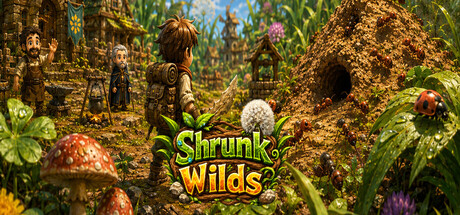
Some visual assets and artwork used during the development of Shrunk Wilds were created with the assistance of AI image generation tools. All generated assets are manually reviewed, modified, and curated by the developer before being implemented into the game. Players do not interact with AI systems during gameplay, and the game does not generate content in real time.
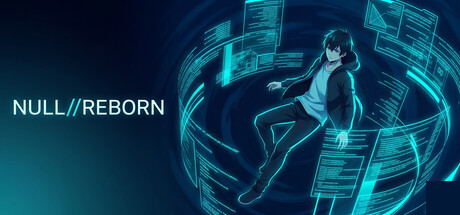
NULL//REBORN was built with agentic AI as a creative partner throughout the entire pipeline.
I designed the vision, story outline, musical direction, and game logic — then used AI to bring each piece to life:
- generating the art,
- fleshing out the script,
- composing the music, and writing the code.
Every element was guided by human intent and shaped by AI execution.
This game's development uses generative AI tools in the following ways:
Image assets: generating some artwork and image materials (directed and curated by the developer; final design decisions and adjustments are made by a human).
Coding: assisting with implementation and development (design decisions and final code review are done by a human).
No content is generated by AI at runtime.
Players can freely converse with NPCs, and the game generates dialogue in real time based on the NPCs’ personalities and memories.
The main storyline will be handled by AI agents, which will generate plots consistent with the game’s world-building.
AI assists in creating CG scenes, background images, and character portraits.
During development, we used generative AI tools to assist in creating certain game content. This includes using AI to generate base concepts and visual assets for specific in-game items or backgrounds (which were subsequently refined manually), as well as using AI for multilingual localization and text polishing.
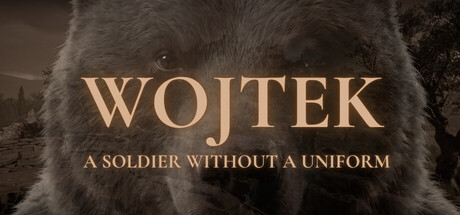
Generative AI technology was used to create high-quality voice-overs for the game's characters. This allowed this independent project to feature full voice acting, providing a more immersive narrative experience and bringing the historical journey of Wojtek the Bear to life. All AI-generated audio assets are pre-rendered and have been manually reviewed and edited to ensure high quality and consistency with the game's emotional tone.
This game uses AI-generated images for some of its 2D artwork, character
scenes, and store page visuals. All AI-generated content is reviewed, edited,
and curated by our team to fit the game's historical setting. The game's
design, writing, story, and code are created by human developers.
This game uses AI-generated art assets (ComfyUI / Stable Diffusion XL) and music (AceStep). All AI-generated content was created during development and is fixed in the final build. No AI APIs are
called at runtime.
Cavernreach contains very limited AI-assisted content, including some music/audio assets and promotional artwork. All gameplay, environments, programming, story content, voice acting, level design, and game implementation were created by the developer. Any AI-assisted assets used during development for testing or reference purposes have been replaced, recreated, or removed from the full release where applicable.
Kıvam's core — its ebru (paper marbling) simulation, gameplay, design, and direction — is authored by the developer. Generative AI tools were used as assistants in producing some supporting content: store page and marketing imagery, certain visual assets, and drafting/editing of written text, which was then reviewed and finalized by the developer. No AI-generated voice or music is used. The marbling you create in-game is produced by the game's own simulation, not by generative AI.
Generative AI tools were used during the development of this game to assist with the creation and refinement of some visual assets, background artwork, character-related images, audio elements, voice content, narrative-related materials, localization, and programming code. All AI-assisted content was reviewed, selected, edited, and integrated by the developer to ensure that it fits the game’s artistic direction, narrative, and technical requirements. The game does not generate new AI content while it is running, and players do not directly interact with any live generative AI system.
By My Side is developed by a small independent studio, and we use generative AI as part of our content pipeline:
- 3D models — many in-game models (crops, props, buildings, devices and characters) are generated with Meshy AI, then adjusted, scaled and integrated by hand.
- Music & sound — parts of the soundtrack and sound effects are created with AI audio tools and curated by us.
- Localization — translations are drafted with AI assistance and reviewed before release.
All AI-generated content is reviewed, edited and curated by the developer before it ships. No generative AI runs live during gameplay — everything is pre-generated and fixed.
This game contains generative AI content. Some visual/visual arts materials were assisted by generative AI tools during development and were manually selected, edited, and reviewed by the development team before being used in the game or Steam store page.
The game features optional real-time AI chat and voice interaction functions. Players can interact with in-game pets through text or voice input, and the backend AI generates text responses based on player input, current game state, and context. Some responses may be delivered via voice.
We employ input filtering, output filtering, safety prompts, rate limiting, and abuse detection to minimize the generation of illegal, infringing, explicit, hateful, harassing, or otherwise inappropriate content.
Generative AI tools were used during development for photos and videos of characters, as well as for development support such as code suggestions and iteration.
All AI-assisted assets and code are fixed, reviewed, and integrated by the developer prior to release. The game does not use generative AI to produce live or dynamic content, text, images, audio, or code during gameplay.
Even if we prefer manual craft & procedural generation, some 3d Models/Cinematics in this game were created with the assistance of AI generative tools during production. However, think AI more as an automation/interpolation tool to win time and focus on gamers really want: innovative gameplay and FUN!
The art, music, and writing in this game were created with AI tools during development, directed by the developer through written prompts. The development process is documented publicly, prompt by prompt. The shipped game contains no live or runtime AI generation — the in-game assistant “Aya” is a hand-authored, deterministic simulation, and the game makes no network or model calls during play.
We have used AI as a translation tool to translate this game from Japanese to English.
As a result, some parts of the text may contain unnatural phrasing or content that differs from the original intent.
This game uses generative AI for the translation of in-game text.
AI-generated translations are reviewed using translation services and human editing, and are revised or expanded as needed.
Generative AI is also used as a production aid for some UI images. Generated materials are manually edited and adjusted by humans.
Generative AI is not used to generate content while the game is running.
This game includes pre-generated content made with the assistance of generative AI tools during development. AI tools were used to help create and iterate some static story illustrations, character and store-art references, voice and sound-effect materials, texture details, copy polishing, and localization drafts. All such content is selected, edited, assembled, and manually reviewed by the developer before shipping. The game does not connect to a live generative AI service during play and does not generate new player-facing AI content at runtime.
This game uses generative AI to assist with the creation of some visual, audio, text, and localization assets. All AI-assisted content is reviewed and edited by the development team before being included in the game.
Generative AI was used during parts of the production process for the game’s graphics, music, and narrative content.
AI-generated outputs were edited, revised, and restructured by the developer and were not used in the game without modification.
The final gameplay experience, narrative structure, character portrayal, and presentation were designed, curated, and supervised by the developer.
AI-assisted tools were only used during the creation of certain visual assets. These assets were reviewed, edited, modified, and integrated by the developer. The game's story, characters, world, gameplay design, dialogue, and creative direction were entirely created by the developer.
Utilizing artificial intelligence, we enhanced vintage photographs and photographs of the development team to align with the game’s aesthetic for paintings in game.
Generative AI was used to assist in creating some visual assets during development. All final in-game artwork was manually retouched and finalized by human artists.
Generative AI tools were used during development to assist in the creation of certain visual assets, including Steam store capsules, and some UI button icons (keyboard and controller prompts). AI was also used to assist with text translation, writing improvements, and programming assistance during development. All AI-assisted content has been reviewed, edited, and integrated by the developer before being included in the game or on the Steam store page. The game does not generate AI content during gameplay.
Some album artwork and illustrations are created with the assistance of AI generation tools during the production process. AI-generated outputs are used only as drafts or production aids. All such materials are carefully selected, modified, edited, and post-processed by our development team to create the final content. Every AI-assisted asset included in the game is finalized through the creative judgment and thorough review of our development team.
AI tools are used only as internal support during the development process, such as checking dialogue for typos, missing words, and the correctness of text-effect tags, as well as providing programming support.
Generative AI was used as a production tool to help create and refine some static visual assets, including illustrations, backgrounds, CG images, promotional artwork, and Steam library images. It was also used to assist with translation drafts. All final assets and text were reviewed and edited manually before being included in the game.
This game uses curated, pre-generated AI-assisted artwork and audio. These assets are created before release, then reviewed, edited, processed, and integrated by the developer as fixed in-game images, ambience, and related store or marketing materials.
Some visual assets and artwork used during the development of Shrunk Wilds were created with the assistance of AI image generation tools. All generated assets are manually reviewed, modified, and curated by the developer before being implemented into the game. Players do not interact with AI systems during gameplay, and the game does not generate content in real time.
NULL//REBORN was built with agentic AI as a creative partner throughout the entire pipeline.
I designed the vision, story outline, musical direction, and game logic — then used AI to bring each piece to life:
- generating the art,
- fleshing out the script,
- composing the music, and writing the code.
Every element was guided by human intent and shaped by AI execution.
This game's development uses generative AI tools in the following ways:
Image assets: generating some artwork and image materials (directed and curated by the developer; final design decisions and adjustments are made by a human).
Coding: assisting with implementation and development (design decisions and final code review are done by a human).
No content is generated by AI at runtime.
Players can freely converse with NPCs, and the game generates dialogue in real time based on the NPCs’ personalities and memories.
The main storyline will be handled by AI agents, which will generate plots consistent with the game’s world-building.
AI assists in creating CG scenes, background images, and character portraits.
During development, we used generative AI tools to assist in creating certain game content. This includes using AI to generate base concepts and visual assets for specific in-game items or backgrounds (which were subsequently refined manually), as well as using AI for multilingual localization and text polishing.
Generative AI technology was used to create high-quality voice-overs for the game's characters. This allowed this independent project to feature full voice acting, providing a more immersive narrative experience and bringing the historical journey of Wojtek the Bear to life. All AI-generated audio assets are pre-rendered and have been manually reviewed and edited to ensure high quality and consistency with the game's emotional tone.
This game uses AI-generated images for some of its 2D artwork, character
scenes, and store page visuals. All AI-generated content is reviewed, edited,
and curated by our team to fit the game's historical setting. The game's
design, writing, story, and code are created by human developers.
This game uses AI-generated art assets (ComfyUI / Stable Diffusion XL) and music (AceStep). All AI-generated content was created during development and is fixed in the final build. No AI APIs are
called at runtime.
Cavernreach contains very limited AI-assisted content, including some music/audio assets and promotional artwork. All gameplay, environments, programming, story content, voice acting, level design, and game implementation were created by the developer. Any AI-assisted assets used during development for testing or reference purposes have been replaced, recreated, or removed from the full release where applicable.
Kıvam's core — its ebru (paper marbling) simulation, gameplay, design, and direction — is authored by the developer. Generative AI tools were used as assistants in producing some supporting content: store page and marketing imagery, certain visual assets, and drafting/editing of written text, which was then reviewed and finalized by the developer. No AI-generated voice or music is used. The marbling you create in-game is produced by the game's own simulation, not by generative AI.
Generative AI tools were used during the development of this game to assist with the creation and refinement of some visual assets, background artwork, character-related images, audio elements, voice content, narrative-related materials, localization, and programming code. All AI-assisted content was reviewed, selected, edited, and integrated by the developer to ensure that it fits the game’s artistic direction, narrative, and technical requirements. The game does not generate new AI content while it is running, and players do not directly interact with any live generative AI system.
By My Side is developed by a small independent studio, and we use generative AI as part of our content pipeline:
- 3D models — many in-game models (crops, props, buildings, devices and characters) are generated with Meshy AI, then adjusted, scaled and integrated by hand.
- Music & sound — parts of the soundtrack and sound effects are created with AI audio tools and curated by us.
- Localization — translations are drafted with AI assistance and reviewed before release.
All AI-generated content is reviewed, edited and curated by the developer before it ships. No generative AI runs live during gameplay — everything is pre-generated and fixed.