Public Steam disclosure research25,380 disclosures tracked
Where do games disclose AI use?
Search developers’ Steam disclosures, compare classified AI use across
games, and follow recorded changes.
This index adds cross-game classifications and statistics to
statements published on individual store pages.
Groups reflect automatic analysis of public disclosures; mature records are excluded. These counts do not measure AI use across all of Steam.
Missing or unclear statements cannot establish whether a game uses AI.
GRIDFALL was developed with extensive AI assistance (Anthropic's Claude): the game's code — including the procedural generators that produce all in-game art (pre-baked at build time) and synthesize all audio and music at runtime — was written with AI pair-programming under human direction and review. The game contains no pre-rendered AI-generated images or audio files; all art and audio assets are produced by deterministic code, and the sole third-party asset is the SIL-licensed Noto Sans UI font. Story, dialogue, and text were authored with AI assistance under human editorial control.
BirdBots uses generative AI tools during development to assist in the creation of certain promotional images, visual concepts, illustrations, and marketing materials. All AI-generated content has been reviewed, edited, and integrated by the developer. AI is not used during gameplay and does not affect the game's mechanics.
The voice of R.E.I.K.A, the AI companion character, is generated using AI text-to-speech technology same as the voice lines of the end dialogue; all other game content — code, art, design, and writing — is handmade.
Some promotional and store page artwork was created with the assistance of generative AI tools. All in-game art, audio, and text is human-authored. Nothing is generated by AI while you play.
During development we used generative AI in a few places. A large language model helped write some of the game's text (in-game descriptions, events, and store copy). The music and many of the sound effects were created with Adobe Firefly, while some other sounds are generated in real time by the game's own code. The app icon was also created with Adobe Firefly. The in-game graphics are drawn procedurally by the game's code and are not AI-generated. Nothing is generated by AI while you play: every AI-assisted asset is created during development and shipped as a fixed file. The generative AI tools used (Adobe Firefly) grant commercial usage rights.
Some 2D art assets in this game (such as item and relic icons) were created with the assistance of generative AI image tools. All AI-assisted assets are reviewed and edited by the developer before being included in the game. No AI content is generated during gameplay.
Pre-generated AI tools were used as part of the development workflow for selected visual and audio source materials. These materials were subsequently edited, refined, animated, and integrated by the developer. The game does not generate AI content during gameplay.
Mars Directive features autonomous AI characters powered by Large Language Models. They don't just generate dialogue—they can observe their surroundings, reason about situations, make independent decisions, interact with the environment, and communicate naturally with both the player and each other. Their behavior is guided by character definitions, gameplay context, and behavioral rules to ensure a consistent gameplay experience.
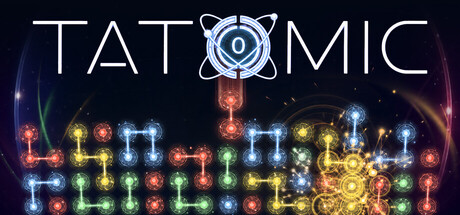
Tatomic was originally created in 2008 for the first-generation iPhone, with artwork designed for its 480 × 320 display.
Generative AI was used only to upscale and recreate the original artwork at higher resolutions while preserving the game’s original visual style. No generative AI was used to create the game’s design, gameplay, sound effects, music, or original art direction.
During the process of production, generative AI may be used in following processes: coding and debugging, production of conceptual art of game assets, production of rough models of game assets, production of simple animation effects, restoration of image, audio or video quality, localization and translation. All AI generated game assets that appear directly in game are revised and finalized by real human artists.
Generative AI was used only for creating some logos and images. All generated assets were reviewed and refined by the developer before being included in the game.
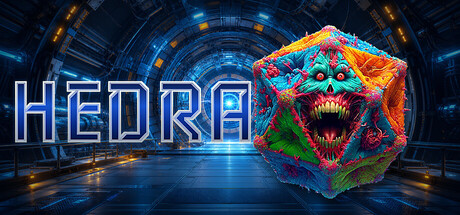
Hedra began as a physical board game designed and refined by one human developer over ten years. Nearly all of the tabletop game was created without generative AI; AI had a limited role in balance analysis. For the digital edition, AI tools played a substantial role in programming and technical development, including the original web app and its conversion into a desktop game. Most of Hedra's visual artwork was created with generative AI tools, then selected, reviewed, and integrated by the developer. The game contains pre-generated AI-assisted content. It does not generate artwork, text, audio, or other content while you play.
Generative AI was used during development to create 22 music tracks with AI music-generation tools licensed for commercial use and to draft portions of the non-English localization and store-page text. All AI-assisted material has been reviewed and finalized by the developer. The game does not generate content or code with AI during play and does not connect to external AI services at runtime.
The game's concept, worldbuilding, narrative, game design, and art direction were planned and developed directly by the development team.
Generative AI was used as an assistive tool in the production and refinement of pre-generated content, including character and environment imagery, cinematic sequences, anomaly effects, and selected music.
All content, including AI-assisted outputs, was curated, edited, composited, and post-processed by the development team to align with the game's creative intent and quality standards.
The game does not use generative AI at runtime, and no player input or personal data is sent to AI services.
This game is intended as a criticism of generative AI. The main premise of the game is fighting AI Slop as such we used existing AI images for the enemies and environment. We did not generate any of these images ourselves. All AI art used in the game is pre-existing and found on the internet.
Some visual assets in the game were created with the assistance of generative AI tools. All gameplay systems, mechanics, and interactive content were developed by the team.
AI was used to troubleshoot code and to draft isolated sections of the codebase, which I then finalized.
All graphics, UI, and music are made without AI.
AI was used for initial translation from English into other languages. Many translations were then reviewed and edited by native speakers.
During the development of this game, artificial intelligence tools were used strictly for pre-generated content. Specifically, AI was utilized to assist with code refinement, the creation of initial concept art, and the design of certain user interface (UI) elements. All AI-assisted assets and code were thoroughly reviewed, modified, and integrated manually to ensure they meet the game's specific style and technical requirements.
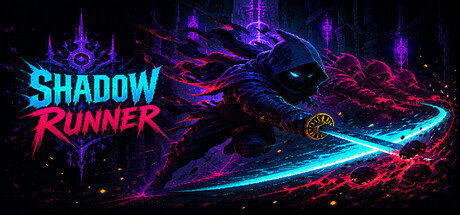
Shadow Runner uses AI image-generation tools to create a portion of the game's 2D visual art. AI was used as a starting point for:
• Store assets — capsule, header, and marketing images.
• In-game illustrations — chapter cutscene art and non-interactive background/scene imagery.
• Achievement icons.
All AI-generated images were produced with commercial text-to-image models (Midjourney / Stable Diffusion / DALL·E), then reviewed, edited, composited, and color-corrected by the developer before shipping. Pixel-art sprites, all gameplay elements, UI, visual effects, audio, and code are hand-authored and not AI-generated. Audio is procedural (Web Audio), not AI.
The game contains no live/runtime AI: nothing is generated on the player's machine during play, and no player data is sent to any AI service.
The developer has confirmed the generated images do not depict real, identifiable people or third-party IP, and holds commercial-use rights under each tool's license.
Some fixed music tracks and selected pre-rendered promotional and manual artwork were created with generative AI tools. No AI content is generated during gameplay.
This game uses generative AI tools during development to assist in creating some 2D textures and 3D models. These AI-generated assets have been manually reviewed, edited, and integrated into the final game build.
Currently, the game uses around 10% conceptual/placeholder AI-generated textures. All of these placeholders will be completely replaced prior to the 1.0 full release.
The following are temporary AI placeholder textures:
- Most UI buttons
- Vehicle textures
- The home screen
- The mouse cursor
- Most of the shop scene
- All bridges
The following are NOT AI textures (100% custom-made):
- All enemy models and textures (minus the boss "evil reforged bot mk9001")
- All item icons and textures
- All levels (except for the underground bunker and frozen ridge, which temporarily share the home screen texture)
Some of concept art and in-game promotional materials on the game's Steam store page were created using generative artificial intelligence tools. The game's coding and script were entirely written by developer.
Some of the art assets in this game (such as sprites, icons, and background images) were created with the help of AI generation tools during development. All AI-generated content was reviewed, edited, and curated by the developer to ensure it is appropriate and fits the game. No AI-generated content is created during gameplay.
Some pre-rendered assets in this game and on its store page, including artwork, music, and sound effects, were created with the assistance of generative AI tools. All AI-assisted content was directed, reviewed, and edited by the developer. No content is generated by AI during gameplay.
Gameplay, visuals, and code were built by hand. Only the bundled soundtrack used AI-assisted music tools, all of which I reviewed. Soundway is made for your own music — the built-in tracks just get you started.
Generative AI was used during the development of this game to assist with the creation of certain visual assets and to help with portions of the programming process. All gameplay mechanics, game design, story, progression, and creative direction were designed and implemented by the developer.
Pre-rendered AI imagery was used to create some background looping elements, for example an in-game TV screen. All other artwork, narrative and character art and animation is created by hand.
It was found that some character art pieces in the game used AI references after artists received explicit instruction and legal binding not to use AI.
This will be rectified in the future. I am committed to providing a game without AI usage.
This game's code was written with the assistance of generative AI. No AI-generated artwork or audio is used.
The visuals are hand-coded by the developer and the music is procedurally generated. AI also assisted with some in-game text and its French translation.
Generative AI tools were used during development to assist with visual assets, in-game text, localization, and programming. All AI-assisted content was reviewed, edited, tested, and integrated by the developer. No generative AI is used while the game is running.
Selected background elements, tilesets, and player and boss character models used AI-generated source material that was manually reworked and adapted. Translations were created and edited with AI assistance. Part of the game's logic was developed with AI assistance. All design and gameplay decisions were made by the developer.
GRIDFALL was developed with extensive AI assistance (Anthropic's Claude): the game's code — including the procedural generators that produce all in-game art (pre-baked at build time) and synthesize all audio and music at runtime — was written with AI pair-programming under human direction and review. The game contains no pre-rendered AI-generated images or audio files; all art and audio assets are produced by deterministic code, and the sole third-party asset is the SIL-licensed Noto Sans UI font. Story, dialogue, and text were authored with AI assistance under human editorial control.
BirdBots uses generative AI tools during development to assist in the creation of certain promotional images, visual concepts, illustrations, and marketing materials. All AI-generated content has been reviewed, edited, and integrated by the developer. AI is not used during gameplay and does not affect the game's mechanics.
The voice of R.E.I.K.A, the AI companion character, is generated using AI text-to-speech technology same as the voice lines of the end dialogue; all other game content — code, art, design, and writing — is handmade.
Some promotional and store page artwork was created with the assistance of generative AI tools. All in-game art, audio, and text is human-authored. Nothing is generated by AI while you play.
During development we used generative AI in a few places. A large language model helped write some of the game's text (in-game descriptions, events, and store copy). The music and many of the sound effects were created with Adobe Firefly, while some other sounds are generated in real time by the game's own code. The app icon was also created with Adobe Firefly. The in-game graphics are drawn procedurally by the game's code and are not AI-generated. Nothing is generated by AI while you play: every AI-assisted asset is created during development and shipped as a fixed file. The generative AI tools used (Adobe Firefly) grant commercial usage rights.
Some 2D art assets in this game (such as item and relic icons) were created with the assistance of generative AI image tools. All AI-assisted assets are reviewed and edited by the developer before being included in the game. No AI content is generated during gameplay.
Pre-generated AI tools were used as part of the development workflow for selected visual and audio source materials. These materials were subsequently edited, refined, animated, and integrated by the developer. The game does not generate AI content during gameplay.
Mars Directive features autonomous AI characters powered by Large Language Models. They don't just generate dialogue—they can observe their surroundings, reason about situations, make independent decisions, interact with the environment, and communicate naturally with both the player and each other. Their behavior is guided by character definitions, gameplay context, and behavioral rules to ensure a consistent gameplay experience.
Tatomic was originally created in 2008 for the first-generation iPhone, with artwork designed for its 480 × 320 display.
Generative AI was used only to upscale and recreate the original artwork at higher resolutions while preserving the game’s original visual style. No generative AI was used to create the game’s design, gameplay, sound effects, music, or original art direction.
During the process of production, generative AI may be used in following processes: coding and debugging, production of conceptual art of game assets, production of rough models of game assets, production of simple animation effects, restoration of image, audio or video quality, localization and translation. All AI generated game assets that appear directly in game are revised and finalized by real human artists.
Generative AI was used only for creating some logos and images. All generated assets were reviewed and refined by the developer before being included in the game.
Hedra began as a physical board game designed and refined by one human developer over ten years. Nearly all of the tabletop game was created without generative AI; AI had a limited role in balance analysis. For the digital edition, AI tools played a substantial role in programming and technical development, including the original web app and its conversion into a desktop game. Most of Hedra's visual artwork was created with generative AI tools, then selected, reviewed, and integrated by the developer. The game contains pre-generated AI-assisted content. It does not generate artwork, text, audio, or other content while you play.
Generative AI was used during development to create 22 music tracks with AI music-generation tools licensed for commercial use and to draft portions of the non-English localization and store-page text. All AI-assisted material has been reviewed and finalized by the developer. The game does not generate content or code with AI during play and does not connect to external AI services at runtime.
The game's concept, worldbuilding, narrative, game design, and art direction were planned and developed directly by the development team.
Generative AI was used as an assistive tool in the production and refinement of pre-generated content, including character and environment imagery, cinematic sequences, anomaly effects, and selected music.
All content, including AI-assisted outputs, was curated, edited, composited, and post-processed by the development team to align with the game's creative intent and quality standards.
The game does not use generative AI at runtime, and no player input or personal data is sent to AI services.
This game is intended as a criticism of generative AI. The main premise of the game is fighting AI Slop as such we used existing AI images for the enemies and environment. We did not generate any of these images ourselves. All AI art used in the game is pre-existing and found on the internet.
Some visual assets in the game were created with the assistance of generative AI tools. All gameplay systems, mechanics, and interactive content were developed by the team.
AI was used to troubleshoot code and to draft isolated sections of the codebase, which I then finalized.
All graphics, UI, and music are made without AI.
AI was used for initial translation from English into other languages. Many translations were then reviewed and edited by native speakers.
During the development of this game, artificial intelligence tools were used strictly for pre-generated content. Specifically, AI was utilized to assist with code refinement, the creation of initial concept art, and the design of certain user interface (UI) elements. All AI-assisted assets and code were thoroughly reviewed, modified, and integrated manually to ensure they meet the game's specific style and technical requirements.
Shadow Runner uses AI image-generation tools to create a portion of the game's 2D visual art. AI was used as a starting point for:
• Store assets — capsule, header, and marketing images.
• In-game illustrations — chapter cutscene art and non-interactive background/scene imagery.
• Achievement icons.
All AI-generated images were produced with commercial text-to-image models (Midjourney / Stable Diffusion / DALL·E), then reviewed, edited, composited, and color-corrected by the developer before shipping. Pixel-art sprites, all gameplay elements, UI, visual effects, audio, and code are hand-authored and not AI-generated. Audio is procedural (Web Audio), not AI.
The game contains no live/runtime AI: nothing is generated on the player's machine during play, and no player data is sent to any AI service.
The developer has confirmed the generated images do not depict real, identifiable people or third-party IP, and holds commercial-use rights under each tool's license.
Some fixed music tracks and selected pre-rendered promotional and manual artwork were created with generative AI tools. No AI content is generated during gameplay.
This game uses generative AI tools during development to assist in creating some 2D textures and 3D models. These AI-generated assets have been manually reviewed, edited, and integrated into the final game build.
Currently, the game uses around 10% conceptual/placeholder AI-generated textures. All of these placeholders will be completely replaced prior to the 1.0 full release.
The following are temporary AI placeholder textures:
- Most UI buttons
- Vehicle textures
- The home screen
- The mouse cursor
- Most of the shop scene
- All bridges
The following are NOT AI textures (100% custom-made):
- All enemy models and textures (minus the boss "evil reforged bot mk9001")
- All item icons and textures
- All levels (except for the underground bunker and frozen ridge, which temporarily share the home screen texture)
Some of concept art and in-game promotional materials on the game's Steam store page were created using generative artificial intelligence tools. The game's coding and script were entirely written by developer.
Some of the art assets in this game (such as sprites, icons, and background images) were created with the help of AI generation tools during development. All AI-generated content was reviewed, edited, and curated by the developer to ensure it is appropriate and fits the game. No AI-generated content is created during gameplay.
Some pre-rendered assets in this game and on its store page, including artwork, music, and sound effects, were created with the assistance of generative AI tools. All AI-assisted content was directed, reviewed, and edited by the developer. No content is generated by AI during gameplay.
Gameplay, visuals, and code were built by hand. Only the bundled soundtrack used AI-assisted music tools, all of which I reviewed. Soundway is made for your own music — the built-in tracks just get you started.
Generative AI was used during the development of this game to assist with the creation of certain visual assets and to help with portions of the programming process. All gameplay mechanics, game design, story, progression, and creative direction were designed and implemented by the developer.
Pre-rendered AI imagery was used to create some background looping elements, for example an in-game TV screen. All other artwork, narrative and character art and animation is created by hand.
It was found that some character art pieces in the game used AI references after artists received explicit instruction and legal binding not to use AI.
This will be rectified in the future. I am committed to providing a game without AI usage.
This game's code was written with the assistance of generative AI. No AI-generated artwork or audio is used.
The visuals are hand-coded by the developer and the music is procedurally generated. AI also assisted with some in-game text and its French translation.
Generative AI tools were used during development to assist with visual assets, in-game text, localization, and programming. All AI-assisted content was reviewed, edited, tested, and integrated by the developer. No generative AI is used while the game is running.
Selected background elements, tilesets, and player and boss character models used AI-generated source material that was manually reworked and adapted. Translations were created and edited with AI assistance. Part of the game's logic was developed with AI assistance. All design and gameplay decisions were made by the developer.