Public Steam disclosure research25,380 disclosures tracked
Where do games disclose AI use?
Search developers’ Steam disclosures, compare classified AI use across
games, and follow recorded changes.
This index adds cross-game classifications and statistics to
statements published on individual store pages.
Groups reflect automatic analysis of public disclosures; mature records are excluded. These counts do not measure AI use across all of Steam.
Missing or unclear statements cannot establish whether a game uses AI.
Most of the game's visual art and sound was pre-generated with AI tools and then selected, edited and placed by the developer: the dungeon panoramas, room props, floors, town and building plates, character portraits, walk and combat sprite sheets, monster, boss and villager sprites, item, skill and stack icons, combat and reward effects, and the store page art were generated with the FLUX.1 image model through fal.ai and animated with AutoSprite; the sound effects, ambience beds, voice barks and music were generated with ElevenLabs. Every generated file, the tool that made it and the prompt that asked for it are recorded in the game's files (assets/README.md and assets/PROMPTS.md). All game text, design, rules and code are written by people. Nothing is generated while you play: the game contains no live AI generation and calls no AI service at runtime.
DEADLUCK V was created using generative AI, including its artwork, music, sound effects and written content. This content was generated during development. The game does not generate AI content or connect to AI services during gameplay.
Generative AI was used as a development tool while making this game, for code assistance only. All dialogue and in-game text was written by hand.
No AI-generated images, audio or text are included, and no content is generated by AI while the game is running.
Some promotional images on the store page were generated with AI and are used only to represent the game’s overall mood and visual direction. They may not fully reflect the final in-game content. The game’s visuals, gameplay, and assets are still in development and may change before release.
Coding was done with help of generative artificial intelligence. Music was downloaded online from copyright free assets. Art was done by myself with some vfx done with help of generative artificial intelligence.
All translations were done by AI, because I don't speak that many languages... I hope in future people can help me translate all these
Generative AI was only utilized to assist with programming and coding during development. No AI-generated assets, such as images, graphics, or audio, were used in this game.
Generative AI assisted in creating some in-game art and visual-effect assets, Steam store promotional images, background music, and some localized text. The developer reviewed and selected these materials, editing them where needed before including them in the game or store page. The game does not use generative AI to create content at runtime.
Generative AI tools were used to assist with some promotional/store artwork, minor code edits, and the improvement and iteration of some music. AI-generated content is not created dynamically during gameplay.
Hexpanse is a solo developer's experiment in building a game 100% with AI, and it is developed with AI assistance (including its source code). The game itself is built almost entirely from procedural, code-generated pixel art and synthesized audio — produced algorithmically by our own code, not by AI. Generative AI was used in two limited, pre-rendered ways: (1) as a starting point for some ship and station part illustrations, later cleaned up, processed and integrated by hand; and (2) to produce the neural text-to-speech voice-over of the intro cinematic. In Early Access, the community feedback I find relevant feeds the AI-assisted development. No generative AI runs while you play — nothing is generated live in-game.
Generative AI tools were used during development to create and revise some character artwork, backgrounds, icons, visual-effect assets, and promotional images, and to assist with localization. These assets and texts are prepared before release. The game does not generate AI content during gameplay or connect to a generative AI service during gameplay.
The use of AI is limited to select visual assets, which were manually reviewed, repainted, and integrated to fit the art direction. The project features original artwork hand-drawn by my artistic partner alongside an original acoustic piano score, entirely composed and performed by me.
This is an independent, completely free passion project with zero monetization, made out of a genuine love for game development. Thank you for playing.
Generative AI tools were used to assist with localization during development. All in-game art assets were hand-drawn, manually edited, and refined by the creator. No generative AI is used while the game is running.
Some in-game assets were created with the assistance of generative AI tools during development. All AI-assisted content has been reviewed, edited, and curated by our team before being included in the game. The game does not use generative AI at runtime — no content is generated while you play.
Character, enemy and environment art were generated with AI tools, then curated, edited and integrated by the developer. Music and sound are procedurally composed in-engine (not AI-generated). Code was written by the developer with AI assistance. The game contains no live/runtime AI generation.
Some icons and character sprites were created with the assistance of generative AI, then edited and refined by hand. The remaining artwork consists of pre-made assets and hand-drawn work.
A handful of key art pieces, concept illustrations, and store-page graphics were generated with AI image-generation software to help communicate. This use of AI is limited strictly to marketing materials.
I'm a solo developer, not an artist or musician. So I used AI to help create some of the artwork and music for this game. Everything else (code, game system, UI design, mission design, story planning, and overall creative direction) is entirely my own work. I also reused some hand-drawn pixel art from my previous game, created entirely without AI. If you prefer games made without generative AI, please check out my previous release. It's entirely human-made, with deeper mechanics and more systems to explore!
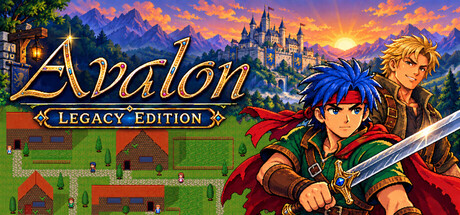
The original 1998 version of Avalon was created entirely by hand, including its graphics, music, story, gameplay, game engine and even its custom music software. Avalon: Legacy Edition retains many of these original assets. Generative AI was used to create or refine much of the updated visual, audio and written content. No content is generated live during gameplay.
Some of the pre-made content in this game (such as artwork, audio and/or text) was created with the help of generative AI tools and was reviewed and edited by the developer. No AI content is generated during gameplay.
We use generative AI for player-facing content: in-game art (sprites, UI, backgrounds) and marketing (Steam capsules, store images). Some store-page translations may also be AI-assisted. We select, review, and place everything ourselves — nothing is generated while the game is running. Gameplay, timing, and controls are designed by us. AI coding tools are used internally only and do not create runtime game content.
Some in-game assets were created with the assistance of generative AI tools during development. All AI-assisted content has been reviewed, edited, and curated by our team before being included in the game. The game does not use generative AI at runtime — no content is generated while you play.
Visual Arts: Generative AI tools were used solely to create early-concept drafts and visual inspiration for certain art assets. All final in-game graphics, UI, and pixel art were manually redesigned, drawn, and polished by human artists.
Localization: Generative AI tools were used to assist with the initial translation of supported non-primary languages. While we have conducted basic checks, these translations may still contain errors or awkward phrasing. We warmly welcome community feedback to help us improve localization over time!
Some shipped artwork, visual effects, interface assets, and audio were created or modified with generative AI tools during development. All such content is pre-generated, selected and reviewed by the development team, and included as fixed game assets. The game does not generate AI content while running.
AI tools were used internally to assist with text translation. All final text was reviewed and edited by humans.
No AI-generated assets(art, audio, code) are included.
The tower and building art began as 3D models made with AI tools and inside Blender. I edited many of them by hand, then turned them into pixel art with our own pipeline. The characters are drawn by hand in Aseprite. Some in-game text and the translations were written with AI assistance.
All graphics in the game are hand-pixelled. The soundtrack was created with generative AI. Some images for the Steam store and library were expanded using AI to fit the required aspect ratios. No content is generated by AI during gameplay.
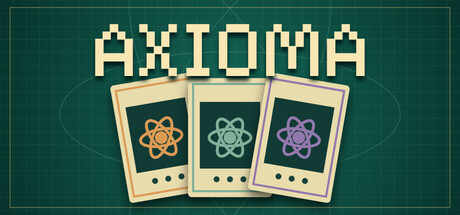
Generative AI assisted the creation of scientific illustrations, scientist portraits, felt textures, card-pack art, text and translations. These are fixed assets included in the game. There is no live AI generation during play.
The game includes pre-generated sound effects created with generative AI. Some store and promotional artwork was also created with AI tools. No content is generated by AI during gameplay.
Pre-generated AI was used to create background music with Suno, localized in-game text for supported languages, and artwork for the Steam store page, library assets, and other marketing materials. No AI-generated images are used during gameplay. All AI-generated content is created before release and does not change during play. The game does not use live-generated AI.
Generative AI tools were used during development to assist with debugging. AI-assisted content included in the final game was reviewed and edited by the developer. No content is generated by AI during gameplay.
The music in this game was created using the Suno AI music generation tool. All other content — including all art and pixel art, level and puzzle design, mechanics, writing, — was created by hand by the developer, without generative AI.
Some of this game's art was stylized or created with AI image generation tools from original prompts and project reference material: character portraits, tables, backgrounds, and Steam store and community artwork. Initial translations were AI-assisted. All of it was edited and reviewed before shipping. The soundtrack is chip-synth music generated at build time by the game's own code, no audio model and no sampled audio in the shipped files. Several tracks are AI-stylized arrangements of original songs written by a member of the development team; others were composed with AI assistance to our direction. Nothing is generated by AI while you play.
Generative AI tools were used during development to help create artwork, including character and environment art, music, voice narration, story text, and promotional materials. These are pre-generated assets included in the game or its marketing. The game does not generate AI content during gameplay or connect to external AI services while playing.
The game's pixel art sprites and visual effects, the store capsule art and logo, and the music were created with the help of generative AI tools, then selected, edited and integrated by the developer. The store page text and its Chinese translation were drafted with AI assistance and reviewed by the developer. All content is pre-generated; nothing is generated while the game is running.
In-game text (bee facts, item descriptions, achievement lines) and store page copy were written with the assistance of an AI writing tool, under the developer's direction and review. All artwork is pixel art drawn by the game's own code, and all audio is synthesized or CC0 field recordings — no AI-generated images, audio, or music.
This game was created as a personal challenge to myself to see if i could solo dev a game and release it the same day as GTA 6.
I wanted to see what the highest quality final release consumer ready product I could create with only 69 days and a 200 dollar per month codex pro plan as the budget.
While the majority of implementation and art assets were llm derived, the architecture, game design, card concepts and overall vision of the project remain the product of my own efforts.
Most of the game's visual art and sound was pre-generated with AI tools and then selected, edited and placed by the developer: the dungeon panoramas, room props, floors, town and building plates, character portraits, walk and combat sprite sheets, monster, boss and villager sprites, item, skill and stack icons, combat and reward effects, and the store page art were generated with the FLUX.1 image model through fal.ai and animated with AutoSprite; the sound effects, ambience beds, voice barks and music were generated with ElevenLabs. Every generated file, the tool that made it and the prompt that asked for it are recorded in the game's files (assets/README.md and assets/PROMPTS.md). All game text, design, rules and code are written by people. Nothing is generated while you play: the game contains no live AI generation and calls no AI service at runtime.
DEADLUCK V was created using generative AI, including its artwork, music, sound effects and written content. This content was generated during development. The game does not generate AI content or connect to AI services during gameplay.
Generative AI was used as a development tool while making this game, for code assistance only. All dialogue and in-game text was written by hand.
No AI-generated images, audio or text are included, and no content is generated by AI while the game is running.
Some promotional images on the store page were generated with AI and are used only to represent the game’s overall mood and visual direction. They may not fully reflect the final in-game content. The game’s visuals, gameplay, and assets are still in development and may change before release.
Coding was done with help of generative artificial intelligence. Music was downloaded online from copyright free assets. Art was done by myself with some vfx done with help of generative artificial intelligence.
All translations were done by AI, because I don't speak that many languages... I hope in future people can help me translate all these
Generative AI was only utilized to assist with programming and coding during development. No AI-generated assets, such as images, graphics, or audio, were used in this game.
Generative AI assisted in creating some in-game art and visual-effect assets, Steam store promotional images, background music, and some localized text. The developer reviewed and selected these materials, editing them where needed before including them in the game or store page. The game does not use generative AI to create content at runtime.
Generative AI tools were used to assist with some promotional/store artwork, minor code edits, and the improvement and iteration of some music. AI-generated content is not created dynamically during gameplay.
Hexpanse is a solo developer's experiment in building a game 100% with AI, and it is developed with AI assistance (including its source code). The game itself is built almost entirely from procedural, code-generated pixel art and synthesized audio — produced algorithmically by our own code, not by AI. Generative AI was used in two limited, pre-rendered ways: (1) as a starting point for some ship and station part illustrations, later cleaned up, processed and integrated by hand; and (2) to produce the neural text-to-speech voice-over of the intro cinematic. In Early Access, the community feedback I find relevant feeds the AI-assisted development. No generative AI runs while you play — nothing is generated live in-game.
Generative AI tools were used during development to create and revise some character artwork, backgrounds, icons, visual-effect assets, and promotional images, and to assist with localization. These assets and texts are prepared before release. The game does not generate AI content during gameplay or connect to a generative AI service during gameplay.
The use of AI is limited to select visual assets, which were manually reviewed, repainted, and integrated to fit the art direction. The project features original artwork hand-drawn by my artistic partner alongside an original acoustic piano score, entirely composed and performed by me.
This is an independent, completely free passion project with zero monetization, made out of a genuine love for game development. Thank you for playing.
Generative AI tools were used to assist with localization during development. All in-game art assets were hand-drawn, manually edited, and refined by the creator. No generative AI is used while the game is running.
Some in-game assets were created with the assistance of generative AI tools during development. All AI-assisted content has been reviewed, edited, and curated by our team before being included in the game. The game does not use generative AI at runtime — no content is generated while you play.
Character, enemy and environment art were generated with AI tools, then curated, edited and integrated by the developer. Music and sound are procedurally composed in-engine (not AI-generated). Code was written by the developer with AI assistance. The game contains no live/runtime AI generation.
Some icons and character sprites were created with the assistance of generative AI, then edited and refined by hand. The remaining artwork consists of pre-made assets and hand-drawn work.
A handful of key art pieces, concept illustrations, and store-page graphics were generated with AI image-generation software to help communicate. This use of AI is limited strictly to marketing materials.
I'm a solo developer, not an artist or musician. So I used AI to help create some of the artwork and music for this game. Everything else (code, game system, UI design, mission design, story planning, and overall creative direction) is entirely my own work. I also reused some hand-drawn pixel art from my previous game, created entirely without AI. If you prefer games made without generative AI, please check out my previous release. It's entirely human-made, with deeper mechanics and more systems to explore!
The original 1998 version of Avalon was created entirely by hand, including its graphics, music, story, gameplay, game engine and even its custom music software. Avalon: Legacy Edition retains many of these original assets. Generative AI was used to create or refine much of the updated visual, audio and written content. No content is generated live during gameplay.
Some of the pre-made content in this game (such as artwork, audio and/or text) was created with the help of generative AI tools and was reviewed and edited by the developer. No AI content is generated during gameplay.
We use generative AI for player-facing content: in-game art (sprites, UI, backgrounds) and marketing (Steam capsules, store images). Some store-page translations may also be AI-assisted. We select, review, and place everything ourselves — nothing is generated while the game is running. Gameplay, timing, and controls are designed by us. AI coding tools are used internally only and do not create runtime game content.
Some in-game assets were created with the assistance of generative AI tools during development. All AI-assisted content has been reviewed, edited, and curated by our team before being included in the game. The game does not use generative AI at runtime — no content is generated while you play.
Visual Arts: Generative AI tools were used solely to create early-concept drafts and visual inspiration for certain art assets. All final in-game graphics, UI, and pixel art were manually redesigned, drawn, and polished by human artists.
Localization: Generative AI tools were used to assist with the initial translation of supported non-primary languages. While we have conducted basic checks, these translations may still contain errors or awkward phrasing. We warmly welcome community feedback to help us improve localization over time!
Some shipped artwork, visual effects, interface assets, and audio were created or modified with generative AI tools during development. All such content is pre-generated, selected and reviewed by the development team, and included as fixed game assets. The game does not generate AI content while running.
AI tools were used internally to assist with text translation. All final text was reviewed and edited by humans.
No AI-generated assets(art, audio, code) are included.
The tower and building art began as 3D models made with AI tools and inside Blender. I edited many of them by hand, then turned them into pixel art with our own pipeline. The characters are drawn by hand in Aseprite. Some in-game text and the translations were written with AI assistance.
All graphics in the game are hand-pixelled. The soundtrack was created with generative AI. Some images for the Steam store and library were expanded using AI to fit the required aspect ratios. No content is generated by AI during gameplay.
Generative AI assisted the creation of scientific illustrations, scientist portraits, felt textures, card-pack art, text and translations. These are fixed assets included in the game. There is no live AI generation during play.
The game includes pre-generated sound effects created with generative AI. Some store and promotional artwork was also created with AI tools. No content is generated by AI during gameplay.
Pre-generated AI was used to create background music with Suno, localized in-game text for supported languages, and artwork for the Steam store page, library assets, and other marketing materials. No AI-generated images are used during gameplay. All AI-generated content is created before release and does not change during play. The game does not use live-generated AI.
Generative AI tools were used during development to assist with debugging. AI-assisted content included in the final game was reviewed and edited by the developer. No content is generated by AI during gameplay.
The music in this game was created using the Suno AI music generation tool. All other content — including all art and pixel art, level and puzzle design, mechanics, writing, — was created by hand by the developer, without generative AI.
Some of this game's art was stylized or created with AI image generation tools from original prompts and project reference material: character portraits, tables, backgrounds, and Steam store and community artwork. Initial translations were AI-assisted. All of it was edited and reviewed before shipping. The soundtrack is chip-synth music generated at build time by the game's own code, no audio model and no sampled audio in the shipped files. Several tracks are AI-stylized arrangements of original songs written by a member of the development team; others were composed with AI assistance to our direction. Nothing is generated by AI while you play.
Generative AI tools were used during development to help create artwork, including character and environment art, music, voice narration, story text, and promotional materials. These are pre-generated assets included in the game or its marketing. The game does not generate AI content during gameplay or connect to external AI services while playing.
The game's pixel art sprites and visual effects, the store capsule art and logo, and the music were created with the help of generative AI tools, then selected, edited and integrated by the developer. The store page text and its Chinese translation were drafted with AI assistance and reviewed by the developer. All content is pre-generated; nothing is generated while the game is running.
In-game text (bee facts, item descriptions, achievement lines) and store page copy were written with the assistance of an AI writing tool, under the developer's direction and review. All artwork is pixel art drawn by the game's own code, and all audio is synthesized or CC0 field recordings — no AI-generated images, audio, or music.
This game was created as a personal challenge to myself to see if i could solo dev a game and release it the same day as GTA 6.
I wanted to see what the highest quality final release consumer ready product I could create with only 69 days and a 200 dollar per month codex pro plan as the budget.
While the majority of implementation and art assets were llm derived, the architecture, game design, card concepts and overall vision of the project remain the product of my own efforts.