Public Steam disclosure research25,380 disclosures tracked
Where do games disclose AI use?
Search developers’ Steam disclosures, compare classified AI use across
games, and follow recorded changes.
This index adds cross-game classifications and statistics to
statements published on individual store pages.
Groups reflect automatic analysis of public disclosures; mature records are excluded. These counts do not measure AI use across all of Steam.
Missing or unclear statements cannot establish whether a game uses AI.
This game uses generative AI tools during development only.
AI is used to support the creative process, such as early prototyping, idea iteration, and auxiliary development materials.
All content present in the final game — including gameplay, visuals, audio, and narrative elements — is designed, reviewed, and approved by the developers.
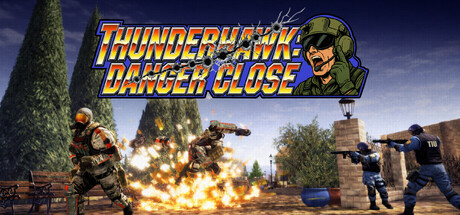
Thunderhawk: Danger Close uses a minimal amount of AI generated assets, including a handful of textures, marketing art, and dialog. Roughly 95% of the game's total content is human-authored, including all models, sound effects, music, and code. A detailed AI-generated content disclosure can be found on our website.
Some elements of the game's store page, including the short and full descriptions, as well as parts of the capsule image, were created with the assistance of generative AI tools. All AI-generated content was reviewed and edited by the developer to ensure accuracy and alignment with the game's design and vision.
Some minor 2D decorative images and a limited number of ambient sound elements were generated using AI-assisted tools during development. These assets are primarily non-core visual or atmospheric elements. All core gameplay systems, design, programming, balance, mechanics, and the overall creative direction of the game were developed by the human development team.
This game was built using a blend of digital tools, custom created datasets and software, and AI asset generation.
Human creativity and ingenuity can be positively amplified using AI. I hope this game can inspire independent creators and game designers to realize their own magic fairy fun dreams.
– Some textures in the game were initially AI-generated and then significantly refined by hand in a graphics editor.
– Certain 3D assets began as AI-generated concepts but were readjusted or fully reworked in a 3D modeling tool to fit the game’s aesthetic.
– The promotional artwork on this Steam page was AI-assisted and then heavily edited to match the game’s visual identity.
I used BEZI and AI to help write scripts because im literally only one person and it would take 15 years and potentially cost hundreds of thousands of dollars to create this if i didnt have AI assistants.
Some artwork used on the Steam store page and marketing materials for this game was created with the assistance of generative AI tools. The game itself does not contain any AI-generated or AI-driven content.
Some visual assets on the store page and parts of the in-game art were created with the assistance of generative AI tools and then curated, edited, and integrated by the developer (Cag).
Portions of the store page text and the game’s music were created with the assistance of generative AI tools.
Currently, AI-generated content is being used for the store page, marketing materials, and/or community center materials to showcase a general vision of the game's future during the early development phase (game screenshots are labeled as "Prototype"), but with the subsequent removal and implementation of original content.
We use AI tools to generate initial character concepts and static base sprites. These generated images serve as a foundation and are subsequently manually edited, processed, rigged, and animated by hand using 2D animation software to create the final assets seen in the game.
Human touch + AI. Artificial Intelligence (AI) was used to enhance code efficiency and optimize selected graphical elements, improving the overall performance and visual quality of the project — while preserving its handcrafted style and unique artistic identity.
All images used for the game's visuals were generated using the Bing Image Creator (Microsoft Copilot Designer).
The background music includes tracks that were created and mastered using generative AI.
No AI was involved in coding or core game design
Generative artificial intelligence tools were used in a limited capacity during development to assist with asset creation and efficiency. In-game content and materials were manually reviewed, refined, and finalized by the developer.
Use of AI:
1. AI is used for creative concepts during the art design phase, while final production is completed manually.
2. AI is used for creative concepts in data naming.
3. AI is used for bulk generation of icon assets, followed by manual style unification and refinement.
4. AI is used to generate portions of the background music, which are then manually adjusted.
Pre-generated only. The game contains artwork and music created with generative AI before release. All visuals were edited and finalized by the developer in Photoshop. Music was generated with Suno and mastered for in-game use.
No runtime AI is used — the game does not generate content while running. No user prompts or uploads are accepted.
AI is used to translate Japanese text into other languages, primarily for settings screens and tutorials. I plan to hire professional localization services once I have the funds.
This game uses generative AI only to create a player character’s 3D head. The AI uses a fixed set of pre-approved traits and does not allow text prompts, user uploads, copyrighted references, brands, or trademarked characters.
All outputs are controlled and reviewed to ensure they follow Steam’s guidelines.
This game uses generative AI tools during development only.
AI is used to support the creative process, such as early prototyping, idea iteration, and auxiliary development materials.
All content present in the final game — including gameplay, visuals, audio, and narrative elements — is designed, reviewed, and approved by the developers.
Thunderhawk: Danger Close uses a minimal amount of AI generated assets, including a handful of textures, marketing art, and dialog. Roughly 95% of the game's total content is human-authored, including all models, sound effects, music, and code. A detailed AI-generated content disclosure can be found on our website.
Some elements of the game's store page, including the short and full descriptions, as well as parts of the capsule image, were created with the assistance of generative AI tools. All AI-generated content was reviewed and edited by the developer to ensure accuracy and alignment with the game's design and vision.
Some minor 2D decorative images and a limited number of ambient sound elements were generated using AI-assisted tools during development. These assets are primarily non-core visual or atmospheric elements. All core gameplay systems, design, programming, balance, mechanics, and the overall creative direction of the game were developed by the human development team.
This game was built using a blend of digital tools, custom created datasets and software, and AI asset generation.
Human creativity and ingenuity can be positively amplified using AI. I hope this game can inspire independent creators and game designers to realize their own magic fairy fun dreams.
– Some textures in the game were initially AI-generated and then significantly refined by hand in a graphics editor.
– Certain 3D assets began as AI-generated concepts but were readjusted or fully reworked in a 3D modeling tool to fit the game’s aesthetic.
– The promotional artwork on this Steam page was AI-assisted and then heavily edited to match the game’s visual identity.
I used BEZI and AI to help write scripts because im literally only one person and it would take 15 years and potentially cost hundreds of thousands of dollars to create this if i didnt have AI assistants.
Some artwork used on the Steam store page and marketing materials for this game was created with the assistance of generative AI tools. The game itself does not contain any AI-generated or AI-driven content.
Some visual assets on the store page and parts of the in-game art were created with the assistance of generative AI tools and then curated, edited, and integrated by the developer (Cag).
Portions of the store page text and the game’s music were created with the assistance of generative AI tools.
Currently, AI-generated content is being used for the store page, marketing materials, and/or community center materials to showcase a general vision of the game's future during the early development phase (game screenshots are labeled as "Prototype"), but with the subsequent removal and implementation of original content.
We use AI tools to generate initial character concepts and static base sprites. These generated images serve as a foundation and are subsequently manually edited, processed, rigged, and animated by hand using 2D animation software to create the final assets seen in the game.
Human touch + AI. Artificial Intelligence (AI) was used to enhance code efficiency and optimize selected graphical elements, improving the overall performance and visual quality of the project — while preserving its handcrafted style and unique artistic identity.
All images used for the game's visuals were generated using the Bing Image Creator (Microsoft Copilot Designer).
The background music includes tracks that were created and mastered using generative AI.
No AI was involved in coding or core game design
Generative artificial intelligence tools were used in a limited capacity during development to assist with asset creation and efficiency. In-game content and materials were manually reviewed, refined, and finalized by the developer.
Use of AI:
1. AI is used for creative concepts during the art design phase, while final production is completed manually.
2. AI is used for creative concepts in data naming.
3. AI is used for bulk generation of icon assets, followed by manual style unification and refinement.
4. AI is used to generate portions of the background music, which are then manually adjusted.
Pre-generated only. The game contains artwork and music created with generative AI before release. All visuals were edited and finalized by the developer in Photoshop. Music was generated with Suno and mastered for in-game use.
No runtime AI is used — the game does not generate content while running. No user prompts or uploads are accepted.
AI is used to translate Japanese text into other languages, primarily for settings screens and tutorials. I plan to hire professional localization services once I have the funds.
This game uses generative AI only to create a player character’s 3D head. The AI uses a fixed set of pre-approved traits and does not allow text prompts, user uploads, copyrighted references, brands, or trademarked characters.
All outputs are controlled and reviewed to ensure they follow Steam’s guidelines.