Public Steam disclosure research25,380 disclosures tracked
Where do games disclose AI use?
Search developers’ Steam disclosures, compare classified AI use across
games, and follow recorded changes.
This index adds cross-game classifications and statistics to
statements published on individual store pages.
Groups reflect automatic analysis of public disclosures; mature records are excluded. These counts do not measure AI use across all of Steam.
Missing or unclear statements cannot establish whether a game uses AI.
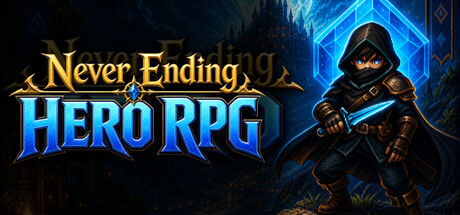
This game uses generative AI only for content prepared prior to release, not while you play.
• Store and marketing images (such as library artwork and app icons) may include elements created with generative image tools, then reviewed and edited by the developer.
• Non-English interface text and localized Steam store descriptions may be produced or assisted by machine translation (including automated translation services), then reviewed where possible.
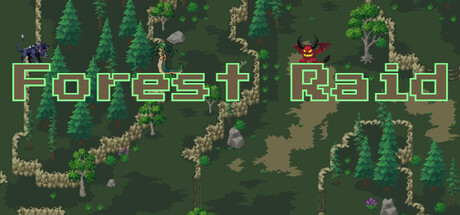
Gameplay visuals are primarily programmatic pixel-style graphics generated by the game engine. Zone layouts are procedurally arranged by game logic, not by a generative AI model during play.
The game does not use generative AI to create new images, audio, or narrative for you during gameplay, and it does not connect to third-party generative AI services while you are playing.
Some visual assets used in the game and store page were created using a combination of licensed art assets, generative AI-assisted imagery, and manual editing by the developer.
All AI-assisted content was reviewed and modified before being included in the final project.
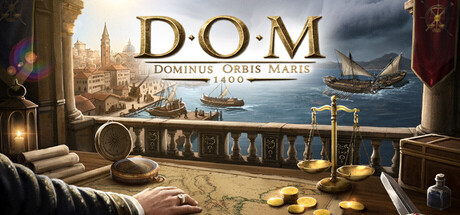
This game uses generative AI tools to create certain static visual assets, including background images, loading screens, character portraits, marketing materials, and ship illustrations.
No generative AI is used during gameplay to create game mechanics, simulations, text content, or dynamic systems. All gameplay mechanics and simulation systems are entirely handcrafted and deterministic.
Generative AI was used as an assistive tool during development to draft text and translations, and to create some 2D images and graphical assets. As there is currently no budget to hire a dedicated artist, certain visual elements are initially generated with AI and then manually modified and refined. No AI content is generated live at runtime.
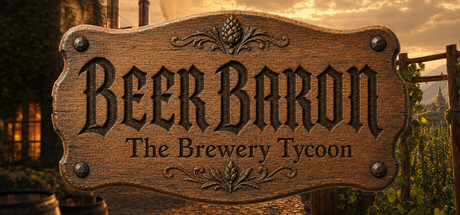
This game uses generative AI in the following areas:
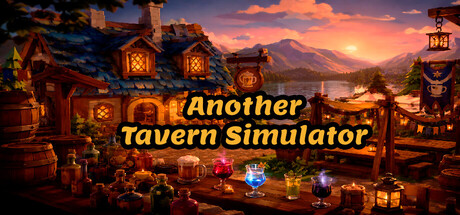
• Background artwork: All static background images displayed in menus and screen backdrops (e.g. brewery interior, fields, market, taverns) were created using generative AI. All images were carefully curated, selected, and post-processed by the developer to fit the game's "Soft Cinematic" 19th-century Belle Époque visual style.
• Sound effects and ambient audio: Some in-game sounds were generated using AI audio tools under appropriate commercial licenses. All sounds were reviewed and selected by the developer.
• Mission and narrative text: The campaign concept, story arc, and game design are the original work of the developer. Some campaign mission descriptions and in-game event texts were initially drafted with AI assistance based on the developer's outlines, and then reviewed, edited, and adapted to fit the game's tone and historical setting.
No generative AI is used during gameplay. All gameplay logic, mechanics, character behaviors, and AI competitor strategies are implemented as deterministic code that does not generate content at runtime. The game does not connect to any external AI services.
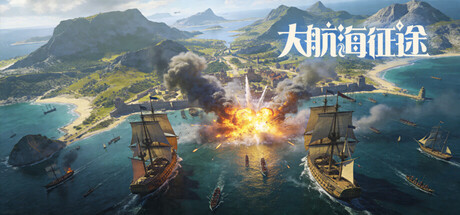
AI tools were used to generate some store icons and capsule-style promotional images. No AI-generated content is used as core gameplay, game code, or customer-facing interactive systems.
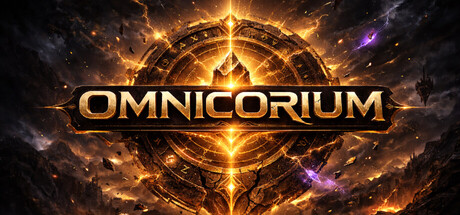
Some visual assets in OMNICORIUM were generated using AI tools, either directly during development or sourced from third-party creators who used AI-assisted generation.
AI is used exclusively for selected visual assets. It is not used for gameplay systems, player interactions, procedural mechanics, or dynamic content generation.
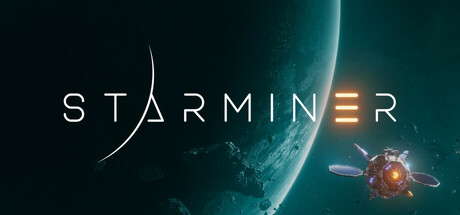
Some NPC portraits and player character face options in Starminer were created with the assistance of generative AI image tools during development. Generative AI was also used to help generate some informational dialogue, help texts, and tooltips. All AI-generated assets and text were reviewed, curated, and edited by our team before being integrated into the final build. No generative AI is used at runtime. All content shipped in the game is static and pre-authored.
Some 2D art (such as cosmetic items) and the background music were created using generative AI tools based on developer reference images, then reviewed and edited by the developer. No AI runs during gameplay.
Generative AI tools were used to assist with localization drafts, wording review, store text preparation, research into real-world goods and price references, code debugging, and optimization suggestions. All final text, translations, game design, data, UI implementation, pricing decisions, and release decisions are reviewed and controlled by the developer.
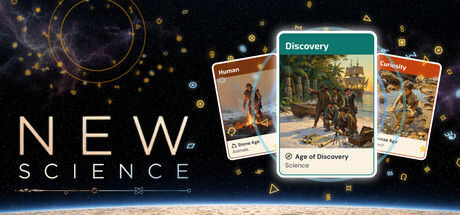
New Science uses generative AI as a core part of its discovery system. When a player attempts a combination, an AI model may be used to determine whether the two selected objects can logically produce a new result. Generative AI is also used to create an illustration for newly discovered objects. Known discoveries are stored and reused, so the same established combination does not need to be generated again for every player. This system allows New Science to support open-ended experimentation beyond a small, completely predefined recipe list. Players may therefore encounter newly generated combinations and images that have not previously been seen by the development team.
Generative AI tools are used in this project. Claude and ChatGPT assist with drafting store page copy and marketing media. Some in-game visual assets are created with AI image generation.
AI tools were used to assist with code generation. All visual art is hand-drawn by the developer. All AI-assisted content has been manually reviewed and refined.
All visuals in MEMORY DEALER are procedural; there is no AI-generated art. The English and French text was written by the developer. The German, Spanish (Latin America), Brazilian Portuguese and Simplified Chinese localizations were produced with generative AI.
This game uses AI-generated content for certain store page artworks, promotional images, and visual marketing assets, including some capsule images created during development. No AI-generated content is created during gameplay.
The game contains in-game narrative and dialogue text that was created with the assistance of generative AI and then reviewed by the developer. All artwork and music are human-created.
Billionaire MAX is an indie game where the core game design, mechanics, balance, and creative direction were authored by the developer, while the implementation work was assisted by AI tools.
The following content was created with AI assistance:
- Source code: Game logic, UI, networking, and other code was written with the help of AI coding assistants. All code was reviewed, tested, and integrated by the developer.
- Visual assets: Achievement icons, sector illustrations, and in-game card art were generated with AI image generation tools. The developer curated, edited, and selected every asset before inclusion.
- Sound effects: Created with AI audio generation tools. The developer curated and selected each sound effect before inclusion.
- Localization: Initial drafts of English, Korean, and Simplified Chinese translations were produced with AI assistance, then proofread and refined by the developer.
The following content was NOT created with AI:
- Game design and rules
- Music
- Final QA and gameplay tuning
No AI generation occurs at runtime. The game does not invoke any AI service during gameplay; players never see content produced live by AI.
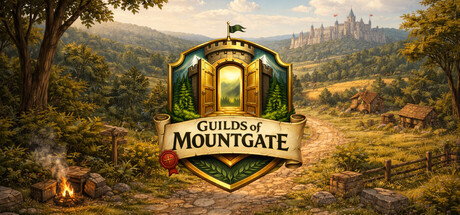
Guilds of Mountgate currently uses AI-generated visual assets during Early Access, primarily for environmental backgrounds and UI-related imagery.
All assets are individually selected and refined to ensure visual consistency within the game world.
This approach allows development to focus on the core systems that define the game — including progression, economy and world simulation.
As development continues, many of these assets — especially location backgrounds — are planned to be replaced with handcrafted, pre-rendered 3D scenes created in Blender for the full release (v1.0).
Generative AI tools were used during development to assist with the creation of some pre-generated 2D artwork and static visual assets included in the game, Steam store page, and marketing materials. AI tools were also used as development assistance for portions of the code. All resulting content was completed and integrated before release. The game does not use generative AI during gameplay, does not connect to external generative AI services, and does not generate text, images, audio, or other content at runtime.
Peter the Stash Hunter has been mostly designed and coded by hand by a single developer using traditional methods. AI tools were used in the development process only in two supporting roles:
- Translating store descriptions and in-game text into different languages
- Acting as a helper assistant during code writing
All AI outputs have been reviewed and edited by the developer. Translations are planned to be improved over time based on community feedback. None of the game's visuals, story, characters, music, sound effects, gameplay mechanics, or design decisions have been generated by AI. There is also no AI system running inside the game.
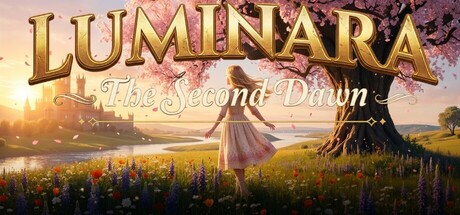
Luminara: The Second Dawn was created by a solo developer with the help of AI tools to bring the game to life. Every piece of content—art, music, story, and code—has been personally reviewed, curated, and directed by me to ensure it fits the game's vision and quality standards.
Some of the visual assets in this game (such as concept arts, UI elements, and store capsules) and the initial ideation processes were developed with the assistance of generative AI tools. All AI-generated concepts were manually edited, refined, and integrated into the game by the developer. The game does not contain any live, real-time generative AI systems that react to player interactions.
We have utilized AI tools during development to help make our peaceful sanctuary accessible to players worldwide in their native languages. All AI-assisted elements fall under pre-generated content:
In-Game Translations: Game texts and quests were translated from the Slovak original using AI. We actively work with community volunteers to review these. Any languages that have not yet undergone human verification are clearly marked within the game settings as AI/machine translations.
Marketing Copy: AI was used extensively to draft and translate store descriptions and marketing materials for international storefronts (without subsequent human verification).
The core game design, mechanics, storyline, and atmosphere are entirely our own original work. AI served purely as a technical tool to deliver faster localization.
This game uses generative AI only for content prepared prior to release, not while you play.
• Store and marketing images (such as library artwork and app icons) may include elements created with generative image tools, then reviewed and edited by the developer.
• Non-English interface text and localized Steam store descriptions may be produced or assisted by machine translation (including automated translation services), then reviewed where possible.
Gameplay visuals are primarily programmatic pixel-style graphics generated by the game engine. Zone layouts are procedurally arranged by game logic, not by a generative AI model during play.
The game does not use generative AI to create new images, audio, or narrative for you during gameplay, and it does not connect to third-party generative AI services while you are playing.
Some visual assets used in the game and store page were created using a combination of licensed art assets, generative AI-assisted imagery, and manual editing by the developer.
All AI-assisted content was reviewed and modified before being included in the final project.
This game uses generative AI tools to create certain static visual assets, including background images, loading screens, character portraits, marketing materials, and ship illustrations.
No generative AI is used during gameplay to create game mechanics, simulations, text content, or dynamic systems. All gameplay mechanics and simulation systems are entirely handcrafted and deterministic.
Generative AI was used as an assistive tool during development to draft text and translations, and to create some 2D images and graphical assets. As there is currently no budget to hire a dedicated artist, certain visual elements are initially generated with AI and then manually modified and refined. No AI content is generated live at runtime.
This game uses generative AI in the following areas:
• Background artwork: All static background images displayed in menus and screen backdrops (e.g. brewery interior, fields, market, taverns) were created using generative AI. All images were carefully curated, selected, and post-processed by the developer to fit the game's "Soft Cinematic" 19th-century Belle Époque visual style.
• Sound effects and ambient audio: Some in-game sounds were generated using AI audio tools under appropriate commercial licenses. All sounds were reviewed and selected by the developer.
• Mission and narrative text: The campaign concept, story arc, and game design are the original work of the developer. Some campaign mission descriptions and in-game event texts were initially drafted with AI assistance based on the developer's outlines, and then reviewed, edited, and adapted to fit the game's tone and historical setting.
No generative AI is used during gameplay. All gameplay logic, mechanics, character behaviors, and AI competitor strategies are implemented as deterministic code that does not generate content at runtime. The game does not connect to any external AI services.
AI tools were used to generate some store icons and capsule-style promotional images. No AI-generated content is used as core gameplay, game code, or customer-facing interactive systems.
Some visual assets in OMNICORIUM were generated using AI tools, either directly during development or sourced from third-party creators who used AI-assisted generation.
AI is used exclusively for selected visual assets. It is not used for gameplay systems, player interactions, procedural mechanics, or dynamic content generation.
Some NPC portraits and player character face options in Starminer were created with the assistance of generative AI image tools during development. Generative AI was also used to help generate some informational dialogue, help texts, and tooltips. All AI-generated assets and text were reviewed, curated, and edited by our team before being integrated into the final build. No generative AI is used at runtime. All content shipped in the game is static and pre-authored.
Some 2D art (such as cosmetic items) and the background music were created using generative AI tools based on developer reference images, then reviewed and edited by the developer. No AI runs during gameplay.
Generative AI tools were used to assist with localization drafts, wording review, store text preparation, research into real-world goods and price references, code debugging, and optimization suggestions. All final text, translations, game design, data, UI implementation, pricing decisions, and release decisions are reviewed and controlled by the developer.
New Science uses generative AI as a core part of its discovery system. When a player attempts a combination, an AI model may be used to determine whether the two selected objects can logically produce a new result. Generative AI is also used to create an illustration for newly discovered objects. Known discoveries are stored and reused, so the same established combination does not need to be generated again for every player. This system allows New Science to support open-ended experimentation beyond a small, completely predefined recipe list. Players may therefore encounter newly generated combinations and images that have not previously been seen by the development team.
Generative AI tools are used in this project. Claude and ChatGPT assist with drafting store page copy and marketing media. Some in-game visual assets are created with AI image generation.
AI tools were used to assist with code generation. All visual art is hand-drawn by the developer. All AI-assisted content has been manually reviewed and refined.
All visuals in MEMORY DEALER are procedural; there is no AI-generated art. The English and French text was written by the developer. The German, Spanish (Latin America), Brazilian Portuguese and Simplified Chinese localizations were produced with generative AI.
This game uses AI-generated content for certain store page artworks, promotional images, and visual marketing assets, including some capsule images created during development. No AI-generated content is created during gameplay.
The game contains in-game narrative and dialogue text that was created with the assistance of generative AI and then reviewed by the developer. All artwork and music are human-created.
Billionaire MAX is an indie game where the core game design, mechanics, balance, and creative direction were authored by the developer, while the implementation work was assisted by AI tools.
The following content was created with AI assistance:
- Source code: Game logic, UI, networking, and other code was written with the help of AI coding assistants. All code was reviewed, tested, and integrated by the developer.
- Visual assets: Achievement icons, sector illustrations, and in-game card art were generated with AI image generation tools. The developer curated, edited, and selected every asset before inclusion.
- Sound effects: Created with AI audio generation tools. The developer curated and selected each sound effect before inclusion.
- Localization: Initial drafts of English, Korean, and Simplified Chinese translations were produced with AI assistance, then proofread and refined by the developer.
The following content was NOT created with AI:
- Game design and rules
- Music
- Final QA and gameplay tuning
No AI generation occurs at runtime. The game does not invoke any AI service during gameplay; players never see content produced live by AI.
Guilds of Mountgate currently uses AI-generated visual assets during Early Access, primarily for environmental backgrounds and UI-related imagery.
All assets are individually selected and refined to ensure visual consistency within the game world.
This approach allows development to focus on the core systems that define the game — including progression, economy and world simulation.
As development continues, many of these assets — especially location backgrounds — are planned to be replaced with handcrafted, pre-rendered 3D scenes created in Blender for the full release (v1.0).
Generative AI tools were used during development to assist with the creation of some pre-generated 2D artwork and static visual assets included in the game, Steam store page, and marketing materials. AI tools were also used as development assistance for portions of the code. All resulting content was completed and integrated before release. The game does not use generative AI during gameplay, does not connect to external generative AI services, and does not generate text, images, audio, or other content at runtime.
Peter the Stash Hunter has been mostly designed and coded by hand by a single developer using traditional methods. AI tools were used in the development process only in two supporting roles:
- Translating store descriptions and in-game text into different languages
- Acting as a helper assistant during code writing
All AI outputs have been reviewed and edited by the developer. Translations are planned to be improved over time based on community feedback. None of the game's visuals, story, characters, music, sound effects, gameplay mechanics, or design decisions have been generated by AI. There is also no AI system running inside the game.
Luminara: The Second Dawn was created by a solo developer with the help of AI tools to bring the game to life. Every piece of content—art, music, story, and code—has been personally reviewed, curated, and directed by me to ensure it fits the game's vision and quality standards.
Some of the visual assets in this game (such as concept arts, UI elements, and store capsules) and the initial ideation processes were developed with the assistance of generative AI tools. All AI-generated concepts were manually edited, refined, and integrated into the game by the developer. The game does not contain any live, real-time generative AI systems that react to player interactions.
We have utilized AI tools during development to help make our peaceful sanctuary accessible to players worldwide in their native languages. All AI-assisted elements fall under pre-generated content:
In-Game Translations: Game texts and quests were translated from the Slovak original using AI. We actively work with community volunteers to review these. Any languages that have not yet undergone human verification are clearly marked within the game settings as AI/machine translations.
Marketing Copy: AI was used extensively to draft and translate store descriptions and marketing materials for international storefronts (without subsequent human verification).
The core game design, mechanics, storyline, and atmosphere are entirely our own original work. AI served purely as a technical tool to deliver faster localization.