Public Steam disclosure research25,376 disclosures tracked
Where do games disclose AI use?
Search developers’ Steam disclosures, compare classified AI use across
games, and follow recorded changes.
This index adds cross-game classifications and statistics to
statements published on individual store pages.
Groups reflect automatic analysis of public disclosures; mature records are excluded. These counts do not measure AI use across all of Steam.
Missing or unclear statements cannot establish whether a game uses AI.
This game uses generative AI only for in-game character dialogue. Players can communicate with certain characters using natural language, and the AI generates text responses based on the game's setting and the current conversation context. Apart from character dialogue text, the game's artwork, music, sound effects, code, store page assets, and marketing materials are not generated by AI.
Some promotional images and marketing content for Maze Mischief were created with the assistance of generative artificial intelligence tools and subsequently reviewed and adjusted by the developer.
Pre-generated AI: GPT Image 2 was used during development to create 2D paper-cut-style images included in the app, including weather phenomena, collectible visitors, ecosystem entities, Steam achievement icons, and key art for Steam store capsules and library assets. The developer selected and edited these images, including cropping, background removal, color and alpha cleanup, and export. The app does not use generative AI at runtime.
AI tools were used in writing the game's code. No AI generated images, music, audio, or models were used. All artwork is Public-Domain paintings from famous, historical artists.
"AI offered the seeds, but I am the one who selected them with care, nurtured them with devotion, and waited for them to bloom.
I serve as a humble gardener, cultivating a flower that never fades, right there on your desktop. Within this space lies the fruit of countless nights at my desk; it holds the tenderness I wish to share—a sincere greeting to every lonely soul. May this bloom rest quietly on your screen, bringing a breath of peace and fragrance to your day."
The game includes pre-generated visual and audio assets created with the assistance of generative AI tools. These include character artwork, environmental backgrounds, music, and singing vocals. All lyrics were written entirely by the developer without the use of generative AI, while the music and vocals were created through a collaborative process involving human creative direction and generative AI tools. All AI-assisted outputs were reviewed, selected, edited, and integrated by the developer. The game does not generate content during gameplay and does not send player input to any AI service.
Every visual asset in the game is an open-source, licensed, open-source pixel icon, or a real in-game render. no AI image production. Some of the game codes were written with AI-assisted development tools under the direct supervision of the developer, and localization was human-inspired for all sentences after machine translation initials. There is no real-time AI creation in the game
Fish species artwork in Swimcraft is pre-rendered AI-generated imagery. All venue photography is the developer's own, and all audio, UI and game code are non-generated. No AI content is generated live during play.
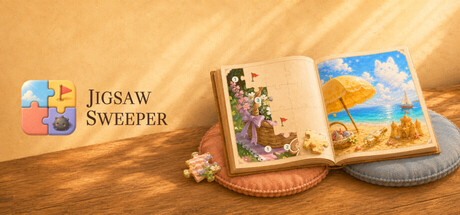
Some static visual assets used for Jigsaw Sweeper were created or refined with generative AI under developer direction, then manually selected, reviewed, edited, and integrated by the developer. This includes Steam achievement icons and may include selected store or marketing artwork.
The game does not generate AI content during gameplay, does not use AI to respond to player input, and does not connect to any external AI service while the game is running.
The Custom Image Puzzle feature lets players import local images from their own device. These images are not generated by the game, are not processed by an AI service, and are not shared through an online service.
During the development of this game, some codes, texture materials and background music were produced with the help of AI, and all related contents were reviewed and adjusted by the developers.
Some visual assets (creature sprites, plant and background illustrations, and tarot card art, including some store page images) were created using generative AI tools and then curated, edited, and art-directed by the developer. No AI content is generated during gameplay.
This game uses AI-generated content in the following ways:
Images: AI tools were used to help compose the wine bottle label artwork.
Music: AI tools were used to compose the in-game radio music and sound effects.
Generative AI was used during development to assist in creating certain visual assets, dialogue drafts, event text, and marketing artwork. All AI-generated content has been reviewed, edited, and integrated by the developer before being included in the game. The game does not use live-generated AI content during gameplay.
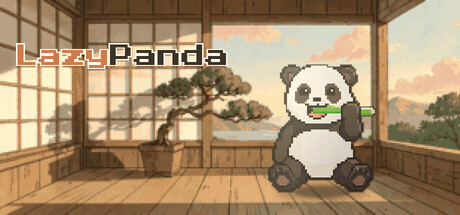
Some of the assets and background were made with some use of AI - The rest drawn by hand using Asprite!
The goal of lazypanda is to give a worm expirience to our users.
AI Usage helped with speeding up creation of some assets.
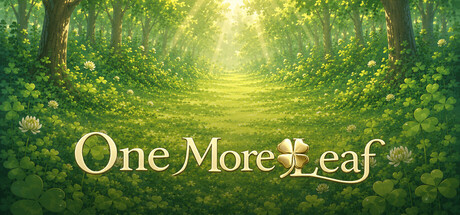
This game's development made partial use of generative AI tools. Generative AI (ChatGPT and ElevenLabs' image generation features) was used to create some artwork, including the title screen and field background images, the title logo, and some of the special clover and UI icons. ElevenLabs' audio generation features were used for the BGM and sound effects. Generative AI was also used to help localize the game into languages other than Japanese (English, Simplified Chinese, Traditional Chinese, Korean, Russian, Spanish, Brazilian Portuguese, German, and French). All AI-generated assets and translations were reviewed and adjusted by the developer before being incorporated into the game.
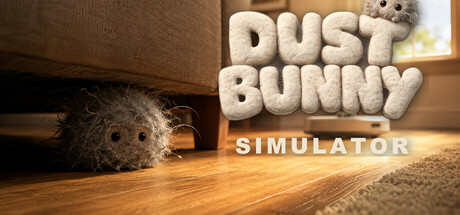
2D artwork for this game and its Steam store page — including the logo, store capsules, key art, and in-game textures — was created using generative AI image tools, generated ahead of time during development. The 3D models are stock/CC0 assets and the dust-bunny character is procedural/code-generated. Screenshots are captures of actual gameplay. No generative AI runs at runtime. All AI-generated images were reviewed to ensure they do not reproduce third-party intellectual property.
I don't know how to code, and I only speak two languages (both badly, if I'm being honest). To actually get this game running properly and make it playable, I had to use AI as a technical assistant.
I wrestled with the ethics of this because I care deeply about the line between tools and art. If this game makes any money, it will go straight into hiring professional programmers, artists, and translators.
Thank you.
This project includes limited use of AI generated content. AI tools were used to create certain background imagery and placeholder visual assets during development.
Additionally, AI-assisted tools were utilized in a supplementary capacity during parts of the coding process to support development efficiency.
All AI-generated content has been reviewed, modified, and integrated by the developer to ensure it aligns with the project’s overall quality and artistic direction.
This game uses generative AI ONLY to assist with translations for some supported languages.
Gameplay, puzzles, artwork, characters, and game design are created by the development team.
Some visual assets used in the game, including selected 2D artwork and UI graphics, were created with the assistance of generative AI. All AI-generated content has been reviewed, edited, and integrated by the developer to ensure consistency with the game's artistic vision.
This game and its store page may include pre-generated AI-assisted content, such as visual assets, store artwork, marketing images, text drafts and localization support. All AI-assisted content is reviewed, selected and edited manually before inclusion.
The game does not use live-generated AI during gameplay.
We used a Gen AI powered tool to localize the following:
- (in some languages) In-game text
- (in some languages) Steam store descriptions
We plan to replace these with human translation and LQA when we can afford it.
Until then, we are using Gen AI temporarily.
We used a Gen AI powered tool to localize the following:
- (in some languages) In-game text
- (in some languages) Steam store descriptions
We plan to replace these with human translation and LQA when we can afford it.
Until then, we are using Gen AI temporarily.
Some of this game's art, including certain item icons, UI elements, and the store/library and promotional images was created with the help of generative AI tools. Some background music was generated with AI and edited by the developer. All AI-generated content was reviewed by the developer for quality and to ensure it doesn't infringe third-party rights. No AI content is generated live during gameplay.
AI-assisted tools were only used during the creation of certain visual assets. These assets were reviewed, edited, modified, and integrated by the developer. The game's story, characters, world, gameplay design, dialogue, and creative direction were entirely created by the developer.
AI tools were used strictly as a minor supplementary aid for light editing of select images and textures. Additionally, AI was partially utilized to generate specific ambient sound effects and assist with voiceover processing. All core game mechanics, 3D models, and primary assets were created manually by the developer.
Some of this game's code and the tools that procedurally generate its visual assets were created with the assistance of an AI development assistant. All output was reviewed, edited, and tested by the developer. The game contains no AI-generated artwork from image-generation models, and no AI runs during gameplay.
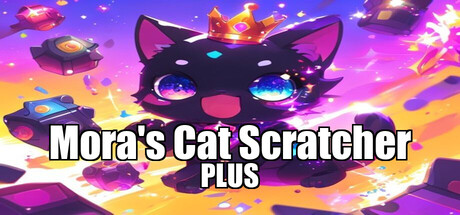
Cat & Fox Studios used generative AI image tools (Pollinations FLUX) to create the store-page art assets for this game, including:
the Main Capsule, Library Hero, Library Logo, Vertical Capsule, Page Background, small/header capsules, and the character illustrations of Mora the cat shown on the store page and in gallery posts.
These AI-generated assets are used for marketing imagery and Steam store presentation only. The original music in the game was composed by Dr. Jenna Fox of Cat & Fox Studios.
The game itself does not call any AI service during gameplay — all play is fully deterministic.
This work incorporates the use of generative artificial intelligence (AI) in the following areas: Parts of the artwork, parts of the sound, and localization.
This game uses AI-generated art assets (ComfyUI / Stable Diffusion XL) and music (AceStep). All AI-generated content was created during development and is fixed in the final build. No AI APIs are
called at runtime.
This work incorporates the use of generative artificial intelligence (AI) in the following areas:
Parts of the artwork, parts of the sound, and localization.
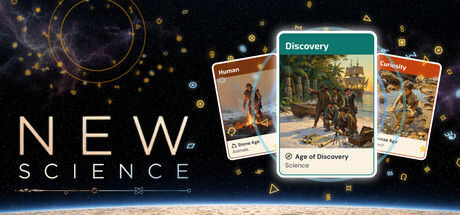
New Science uses generative AI as a core part of its discovery system. When a player attempts a combination, an AI model may be used to determine whether the two selected objects can logically produce a new result. Generative AI is also used to create an illustration for newly discovered objects. Known discoveries are stored and reused, so the same established combination does not need to be generated again for every player. This system allows New Science to support open-ended experimentation beyond a small, completely predefined recipe list. Players may therefore encounter newly generated combinations and images that have not previously been seen by the development team.
This game uses generative AI only for in-game character dialogue. Players can communicate with certain characters using natural language, and the AI generates text responses based on the game's setting and the current conversation context. Apart from character dialogue text, the game's artwork, music, sound effects, code, store page assets, and marketing materials are not generated by AI.
Some promotional images and marketing content for Maze Mischief were created with the assistance of generative artificial intelligence tools and subsequently reviewed and adjusted by the developer.
Pre-generated AI: GPT Image 2 was used during development to create 2D paper-cut-style images included in the app, including weather phenomena, collectible visitors, ecosystem entities, Steam achievement icons, and key art for Steam store capsules and library assets. The developer selected and edited these images, including cropping, background removal, color and alpha cleanup, and export. The app does not use generative AI at runtime.
AI tools were used in writing the game's code. No AI generated images, music, audio, or models were used. All artwork is Public-Domain paintings from famous, historical artists.
"AI offered the seeds, but I am the one who selected them with care, nurtured them with devotion, and waited for them to bloom.
I serve as a humble gardener, cultivating a flower that never fades, right there on your desktop. Within this space lies the fruit of countless nights at my desk; it holds the tenderness I wish to share—a sincere greeting to every lonely soul. May this bloom rest quietly on your screen, bringing a breath of peace and fragrance to your day."
The game includes pre-generated visual and audio assets created with the assistance of generative AI tools. These include character artwork, environmental backgrounds, music, and singing vocals. All lyrics were written entirely by the developer without the use of generative AI, while the music and vocals were created through a collaborative process involving human creative direction and generative AI tools. All AI-assisted outputs were reviewed, selected, edited, and integrated by the developer. The game does not generate content during gameplay and does not send player input to any AI service.
Every visual asset in the game is an open-source, licensed, open-source pixel icon, or a real in-game render. no AI image production. Some of the game codes were written with AI-assisted development tools under the direct supervision of the developer, and localization was human-inspired for all sentences after machine translation initials. There is no real-time AI creation in the game
Fish species artwork in Swimcraft is pre-rendered AI-generated imagery. All venue photography is the developer's own, and all audio, UI and game code are non-generated. No AI content is generated live during play.
Some static visual assets used for Jigsaw Sweeper were created or refined with generative AI under developer direction, then manually selected, reviewed, edited, and integrated by the developer. This includes Steam achievement icons and may include selected store or marketing artwork.
The game does not generate AI content during gameplay, does not use AI to respond to player input, and does not connect to any external AI service while the game is running.
The Custom Image Puzzle feature lets players import local images from their own device. These images are not generated by the game, are not processed by an AI service, and are not shared through an online service.
During the development of this game, some codes, texture materials and background music were produced with the help of AI, and all related contents were reviewed and adjusted by the developers.
Some visual assets (creature sprites, plant and background illustrations, and tarot card art, including some store page images) were created using generative AI tools and then curated, edited, and art-directed by the developer. No AI content is generated during gameplay.
This game uses AI-generated content in the following ways:
Images: AI tools were used to help compose the wine bottle label artwork.
Music: AI tools were used to compose the in-game radio music and sound effects.
Generative AI was used during development to assist in creating certain visual assets, dialogue drafts, event text, and marketing artwork. All AI-generated content has been reviewed, edited, and integrated by the developer before being included in the game. The game does not use live-generated AI content during gameplay.
Some of the assets and background were made with some use of AI - The rest drawn by hand using Asprite!
The goal of lazypanda is to give a worm expirience to our users.
AI Usage helped with speeding up creation of some assets.
This game's development made partial use of generative AI tools. Generative AI (ChatGPT and ElevenLabs' image generation features) was used to create some artwork, including the title screen and field background images, the title logo, and some of the special clover and UI icons. ElevenLabs' audio generation features were used for the BGM and sound effects. Generative AI was also used to help localize the game into languages other than Japanese (English, Simplified Chinese, Traditional Chinese, Korean, Russian, Spanish, Brazilian Portuguese, German, and French). All AI-generated assets and translations were reviewed and adjusted by the developer before being incorporated into the game.
2D artwork for this game and its Steam store page — including the logo, store capsules, key art, and in-game textures — was created using generative AI image tools, generated ahead of time during development. The 3D models are stock/CC0 assets and the dust-bunny character is procedural/code-generated. Screenshots are captures of actual gameplay. No generative AI runs at runtime. All AI-generated images were reviewed to ensure they do not reproduce third-party intellectual property.
I don't know how to code, and I only speak two languages (both badly, if I'm being honest). To actually get this game running properly and make it playable, I had to use AI as a technical assistant.
I wrestled with the ethics of this because I care deeply about the line between tools and art. If this game makes any money, it will go straight into hiring professional programmers, artists, and translators.
Thank you.
This project includes limited use of AI generated content. AI tools were used to create certain background imagery and placeholder visual assets during development.
Additionally, AI-assisted tools were utilized in a supplementary capacity during parts of the coding process to support development efficiency.
All AI-generated content has been reviewed, modified, and integrated by the developer to ensure it aligns with the project’s overall quality and artistic direction.
This game uses generative AI ONLY to assist with translations for some supported languages.
Gameplay, puzzles, artwork, characters, and game design are created by the development team.
Some visual assets used in the game, including selected 2D artwork and UI graphics, were created with the assistance of generative AI. All AI-generated content has been reviewed, edited, and integrated by the developer to ensure consistency with the game's artistic vision.
This game and its store page may include pre-generated AI-assisted content, such as visual assets, store artwork, marketing images, text drafts and localization support. All AI-assisted content is reviewed, selected and edited manually before inclusion.
The game does not use live-generated AI during gameplay.
We used a Gen AI powered tool to localize the following:
- (in some languages) In-game text
- (in some languages) Steam store descriptions
We plan to replace these with human translation and LQA when we can afford it.
Until then, we are using Gen AI temporarily.
We used a Gen AI powered tool to localize the following:
- (in some languages) In-game text
- (in some languages) Steam store descriptions
We plan to replace these with human translation and LQA when we can afford it.
Until then, we are using Gen AI temporarily.
Some of this game's art, including certain item icons, UI elements, and the store/library and promotional images was created with the help of generative AI tools. Some background music was generated with AI and edited by the developer. All AI-generated content was reviewed by the developer for quality and to ensure it doesn't infringe third-party rights. No AI content is generated live during gameplay.
AI-assisted tools were only used during the creation of certain visual assets. These assets were reviewed, edited, modified, and integrated by the developer. The game's story, characters, world, gameplay design, dialogue, and creative direction were entirely created by the developer.
AI tools were used strictly as a minor supplementary aid for light editing of select images and textures. Additionally, AI was partially utilized to generate specific ambient sound effects and assist with voiceover processing. All core game mechanics, 3D models, and primary assets were created manually by the developer.
Some of this game's code and the tools that procedurally generate its visual assets were created with the assistance of an AI development assistant. All output was reviewed, edited, and tested by the developer. The game contains no AI-generated artwork from image-generation models, and no AI runs during gameplay.
Cat & Fox Studios used generative AI image tools (Pollinations FLUX) to create the store-page art assets for this game, including:
the Main Capsule, Library Hero, Library Logo, Vertical Capsule, Page Background, small/header capsules, and the character illustrations of Mora the cat shown on the store page and in gallery posts.
These AI-generated assets are used for marketing imagery and Steam store presentation only. The original music in the game was composed by Dr. Jenna Fox of Cat & Fox Studios.
The game itself does not call any AI service during gameplay — all play is fully deterministic.
This work incorporates the use of generative artificial intelligence (AI) in the following areas: Parts of the artwork, parts of the sound, and localization.
This game uses AI-generated art assets (ComfyUI / Stable Diffusion XL) and music (AceStep). All AI-generated content was created during development and is fixed in the final build. No AI APIs are
called at runtime.
This work incorporates the use of generative artificial intelligence (AI) in the following areas:
Parts of the artwork, parts of the sound, and localization.
New Science uses generative AI as a core part of its discovery system. When a player attempts a combination, an AI model may be used to determine whether the two selected objects can logically produce a new result. Generative AI is also used to create an illustration for newly discovered objects. Known discoveries are stored and reused, so the same established combination does not need to be generated again for every player. This system allows New Science to support open-ended experimentation beyond a small, completely predefined recipe list. Players may therefore encounter newly generated combinations and images that have not previously been seen by the development team.