Public Steam disclosure research24,658 disclosures tracked
Where do games disclose AI use?
Search developers’ Steam disclosures, compare classified AI use across
games, and follow recorded changes.
This index adds cross-game classifications and statistics to
statements published on individual store pages.
Groups reflect automatic analysis of public disclosures; mature records are excluded. These counts do not measure AI use across all of Steam.
Missing or unclear statements cannot establish whether a game uses AI.
The key art used for the store capsules and the title screen background was generated with image models run locally and then hand-edited. The Spanish, Portuguese (Brazil), German and Simplified Chinese translations and drafts of the store page text were produced with the help of an AI assistant. Everything you see during gameplay (the beetle, the tree, its surfaces and all animation) is drawn procedurally in code. Sound effects are CC0 recordings; no AI-generated voice or music is used, and no generative AI runs while you play.
This game uses Generative AI tools during development to assist with asset, text, or code generation. All AI-generated content has been manually reviewed, edited, and integrated by the developers.
Desert Springs uses AI-assisted tools in parts of its development: some UI icons and Images were made with AI image generation. All of it was reviewed and edited by the developer. 2D art, level design, game design and codes are human made. No content is generated by AI while the game runs.
Generative AI was used to assist in the creation and iteration of selected visual assets and marketing materials. All final content was reviewed, selected, and integrated by the developer. No generative AI is used during gameplay.
The game's three music tracks were generated with Suno (a generative AI tool) from prompts written for the game. The game's text and this store page were written with the help of an AI assistant, then reviewed by the team. No AI generates content while you play.
No AI image generators were used for the game's visuals. The clover, trees, and ground were modeled and textured in the 3D software Blender from the developer's own photos of the real thing, then assembled into a forest in Unity. The concept, the photography, and the decisions about how the game looks were all the developer's own.
Made with help from AI
• The game's code and the Blender scripts that build the shapes and textures. The developer checked the finished visuals side by side with the photos of the real thing.
• The text in the game and on the store page, and its translation from Japanese into 10 languages, including English. The translations were made by AI and checked by a different AI. No native speaker has reviewed them, so if you spot a mistranslation, please report it through the support contact.
The sounds are nature recordings made by other creators and released as CC0 or public domain. No AI runs while you play.
Generative AI was used during development to create, pixel artwork, music and written content under our concept and design direction. The game contains pre-generated content only; it does not generate AI content during play.
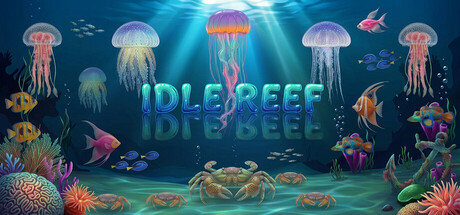
During the development of our game, generative AI tools were used to assist in creating certain 2D underwater background visuals, store page graphics. Additionally, AI-based language models were utilized for writing the store page descriptions and localizing the game into various languages. All AI-generated content was manually reviewed and edited before being implemented into the game or the store page.
All character and monster art is hand-drawn pixel art (MiniKyara by Atelier Pixerelia), not AI-generated. AI helped with the text, translations and sound. Nothing is generated by AI while you play.
The store page capsule and library images (key art and logo) were created with the help of an AI image generator as temporary placeholders. They will be replaced with hand-made artwork in the future. The game itself does not use generative AI.
Some text in this game — the store page, in-game UI labels and menus, and the English translation — was drafted with the help of an AI assistant and then reviewed and edited by the developer. AI coding assistants were also used during development. All in-game art, 3D models, textures and sounds are hand-made, generated procedurally by the game's own code, or licensed third-party assets; none of them are AI-generated. No AI is used to generate content during gameplay.
Part of the game were created with the help of generative AI tools, then reviewed, edited and assembled by the developer:
• visual art — the ambient background images and the animated background loop
• audio — background music and sound effects
Generative AI is used only during development to produce these assets. The game does NOT use any AI at runtime — there is no live AI generation while you play.
Puzzles and word lists are hand-curated, and level layouts are produced by our own deterministic algorithm (not AI).
AI-assisted coding and editor automation tools were used during development for workflow efficiency.
Most of the art was hand-made by me. The remaining art generated by AI tools like icons or textures will be swapped to human-made art in the near future.
AI translation tools were used to create localization drafts, that are being reviewed by speakers of the language.
This game utilizes AI technology for some of its translations and content creation.
While we make every effort to review and refine the content, some translations or expressions may contain inaccuracies or unnatural wording.
If you notice any issues or have any feedback, we will work to address and improve them through future updates. Thank you for your understanding.
Generative AI was used as a tool during production. AI assisted with portions of the game's script writing, some of the original music (vocal music only), voice production, and some images used in the game and store materials. All AI-generated content was reviewed, edited, integrated, and approved by the developer before inclusion in the final product.
Generative AI tools were used to assist in creating some pre-generated 3D models, textures, visual assets, and promotional artwork. All content is generated before gameplay, reviewed by the developer, and integrated into the finished game. No generative AI is used live during gameplay.
The character art, idle animations, icons and store images were created with locally run AI image tools, then selected and retouched by hand. Nothing is generated by AI while the game runs.
Portions of this game's code and dialogue were written with the assistance of AI tools and then reviewed and edited by the developer. All art, 3D models, music and sound effects are human-made assets (Quaternius, Kay Lousberg, Kenney, omfgdude and SubspaceAudio, all CC0). Nothing is generated by AI while you play.
Our logo and key art were created with the help of AI image generation tools and edited by us. All gameplay, 3D models, and audio were made by our team.
An AI assistant (Claude) was used during development. It wrote the in-game text translations, the store page text, and the scripts that build many of the game's 3D models, animations and textures, all under the developer's direction and review. Nothing is generated by AI while you play. All sounds are real recordings from CC0 libraries.
Part of the game's text, including the German, French and Spanish translations, and the store page descriptions were written with the help of AI tools. The paintings are public-domain works by real artists.
Generative AI tools were used during development to create artwork, icons, 3D assets, written content, and trailer narration. This content is reviewed, refined, and integrated under the developer’s creative direction. The game does not generate AI content during gameplay.
Brine & Brass is a solo project by Remoria, assisted by AI. GPT assisted with game programming, in-game writing, artwork-drawing scripts, and procedural music and sound code. The artwork is rendered from project drawing code, and the audio uses local waveform synthesis. No generative AI model or online AI service runs during gameplay.
Pre-generated content (created during development, not generated while playing):
- The ending theme song "さくら色の上履き" was created with Suno.
- The title logos were generated with an AI image tool and reviewed by the developer.
- Game artwork (scenes, character art and illustrations) was created with the help of AI image generation and upscaled with Real-ESRGAN, then selected and edited by the developer.
- AI assistants (Codex, Claude) were used to help write code and to draft/translate some text; all story text was reviewed by the developer.
The game does not generate any content with AI at runtime.
We use generative AI across all disciplines of game development, most often with heavy amounts of human editing. That involves audio and visual art, 3D models, our logo, and localization. We use it as a productivity tool so we can achieve a higher level of quality, faster, than we would have been able to.
This game utilizes AI for the localization and translation of language content, and employs AI to generate the basic materials for in-game graphic resources (requiring manual post-processing). Additionally, the music in the game is also generated using AI
This game includes content created with the help of generative AI. The base 3D animal models were generated using an AI 3D-modeling tool and then rigged, animated, and hand-finished by the developer. Non-English translations were initially AI-drafted and then reviewed and corrected by the developer. All content is final and reviewed before release — no AI content is generated while you play.
Our visual style relies on a blend of commissioned artwork, curated assets, and custom designs. We occasionally use AI generation as a tool in our creative process, but never as a final product. Every AI-assisted asset is either fully redrawn or heavily refined by human artists before making its way into the game.
Generative AI was used during development to create some store page artwork and in-game icons. All generated content was reviewed before being included in the final product.
Pre-generated: The game's code, the drawing code for its characters and scenery (all art is
drawn by code at runtime, with no image files), and parts of the story text and store
description were created with the help of an AI assistant, then reviewed, edited and
directed by the developer.
Live-generated: None. The game does not use AI to generate anything while it is being played.
Parts of Howling Woods were made with generative AI during development: its music and sound effects, its interface icons and store art, some of its set-piece models, and parts of its code. All of it was reviewed and reworked by hand, and nothing is generated while you play.
Generative AI tools were used during development to create visual assets, including character and enemy artwork, environmental backgrounds, user interface graphics, item textures, and promotional artwork. ChatGPT also assisted with dialogue and educational text. The developer directed, selected, and reviewed this content for inclusion in the game. All AI-generated content was created before release; the game does not generate AI content during gameplay.
We used AI-assisted tools to help create and refine a small selection of visual assets. Each one was reviewed and adjusted by hand before it was used.
AI also helped us tidy up the grammar and wording in a small amount of in-game and store-page text. We checked and edited every final line ourselves.
For us, AI is simply a supporting tool. Dino Dome: Tidy Up! is still shaped by our own ideas, judgement, and hands-on creative work.
Some sprite artwork was pre-generated with AI assistance, then manually selected, edited, and integrated into the shipped game. No AI-generated content is created during gameplay.