Public Steam disclosure research25,695 disclosures tracked
Where do games disclose AI use?
Search developers’ Steam disclosures, compare classified AI use across
games, and follow recorded changes.
This index adds cross-game classifications and statistics to
statements published on individual store pages.
Groups reflect automatic analysis of public disclosures; mature records are excluded. These counts do not measure AI use across all of Steam.
Missing or unclear statements cannot establish whether a game uses AI.
The Steam library and store pages use AI generated graphic elements, but the game itself doesn't. All graphics in the game are hand made, created by our graphics designer in our self developed editor.
During the period from Early Access to Launch this title may use AI for voice in quest dialog as placeholders, prior to launch all AI elements shall be removed should they have existed and replaced.
Generative AI was used to create several environmental textures (such as stone and ground textures), some ui elements (such as buttons and icons), Capsule and Library images in Steam. All AI-generated content was manually reviewed and refined by the developer to ensure quality and compliance.
Some visible in-game assets, including but not limited to cutscenes, characters, environments, and UI elements, were created or visually enhanced with the help of AI, including generation based on white model references.
Some store page assets were also created or visually enhanced with the help of AI, including generation based on white model references.
Some music and sound effects were generated with the help of AI.
Some localized language content was translated with the help of AI.
This game currently includes a few 2D Image AI-generated assets (those include 5 of the slot machine's icons, 7 character portraits displayed on the main hallway, the main menu background image & current thumbnail) used as placeholders during the Early Access phase. These assets are scheduled to be replaced with original, non-AI artwork in a future content update. No AI tools are used for live, runtime content generation.
This game uses AI to assist in generating [art assets/localized text/voice dubbing]. All AI-generated content has been manually reviewed and modified to ensure compliance with regulations and the game's world setting.
We are a small studio with only six people actively involved in development. For teams like ours, generative AI is a supportive tool that helps us realize a creative vision that would otherwise be completely out of reach within our budget.
Here is exactly how we utilized generative AI in our game:
• We used generative AI during the prototyping and concept art phases. Every AI-generated image was manually modified, iterated upon, and finalized by our artist.
• The sea shanties in the game feature AI-generated vocals and music, but the lyrics are original and written by our team.
• Certain voice-over (VO) lines were generated using AI.
Generative AI was used to create certain 2D background assets within the game world. This includes some family group photographs used as props, visuals shown on in-game television screens, and decorative wall posters. These AI-generated elements are static environmental assets only and were not used for in-game cinematics, character models, or animations.
This project incorporates the use of artificial intelligence tools to assist in development. AI was used to help generate portions of the C# codebase, streamlining implementation and problem-solving, as well as to create some textures used within the game. All AI-generated content was reviewed, adapted, and integrated to fit the overall design and functionality of the project
All art is hand drawn by the developer.
All creative direction, original writing, and final dialogue are by the developer.
AI tools were used during the writing process as an editorial partner reviewing drafts for continuity, character voice consistency, and story structure.
None of the assets seen or heard in the game have been generated by AI, but AI generated images and music have been used when ideating the finished content created by humans.
AI has been used to help in the coding process and localisation, but everything has been always checked (if not created) by at least one human. Localisations usually have been created by one person and checked by another to assure quality of translations.
Some of the store images and promotional artwork for Egg Hunter were created using AI tools. This was only used for visual marketing materials—everything in the actual game (gameplay, levels, mechanics) is original and made by the developer.
Some of the music/sound effects in this game were arranged or edited with the assistance of generative AI tools. All AI-generated audio was reviewed and curated by the development team.
The steam shop page features some language translations that were generated with the help of DeepL.
The game itself does not use any AI generated translations or any other AI generated assets or code.
This game uses pre-generated visual assets, including images and cinematic sequences created with external tools. These assets are used for environmental storytelling and menu presentation, and do not involve real-time AI generation.
Some visual assets and UI elements were originally created by a human designer and later refined with the assistance of AI tools to improve clarity and polish.
In addition, some background music was created with the assistance of AI tools and then edited and integrated by the developer.
All final assets were reviewed, modified, and implemented by the development team.
Certain visual and audio assets were created with the assistance of generative AI tools during development and were manually edited and refined by the developer. All gameplay content is handcrafted, and no generative AI is used during gameplay.
When creating this game, our team utilized the support from Trippo AI for modeling, and Doubao for concept artist. We finally created the whole level design by UE5.
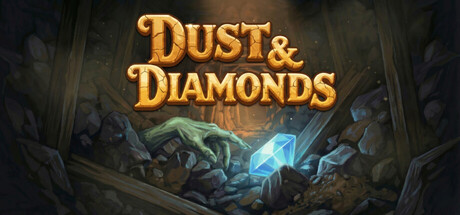
Dust & Diamonds is a 100% solo project.
The idea for this game came to me a few days after my son was born — my first child. I was celebrating with my cousin and bet him I could build something like Motherload in two weeks. As you've probably guessed, I lost that bet spectacularly. I'm writing this almost a year later, and my son turns one in a few days.
I have a degree in computer game engineering, but I live in a small town with no game studios — so I drive a pallet jack around a warehouse by day and build this game after hours. I can't afford to hire an artist or a composer. To bring this world to life at all, I turned to generative AI tools. I'm not going to hide that.
How does the game use AI?
Graphics (2D): A significant portion of the visual assets — character portraits, environment elements, buildings — was generated using AI, then manually retouched, edited, and assembled by me in the engine into a cohesive style with a parallax system.
Music and sound: The musical tracks in the game were generated by AI. Fittingly, this ties directly into the game's lore — the "Relics of the Old World" (our 21st century) collected by the goblins are canonically works created by AI before the great cataclysm, carrying the lost wisdom of humanity.
What's mine in this game is the design: how the economy works, how water behaves in a flooded shaft, when a ceiling collapses, what the old man says across the counter. I came up with each of these systems, wrote them out, tested them, and reworked them a dozen times until they behaved the way I wanted.
I'm just a regular guy who had an idea for a game about digging in the dirt and was stubborn enough to see it through. Thank you for your understanding and support.
During the early prototyping phase, I use AI tools to visualize initial concepts and create temporary placeholders. All of these have been completely replaced in the final game with hand-crafted art created by myself and talented freelancers.
Generative AI was used to aid in the preparation of store visuals and multi-language localization. The final content is not entirely AI-generated, as it has undergone significant manual inspection, confirmation, and refinement to ensure quality.
AI is only used to create art assets, backgrounds, and visual materials during the development of the game. It is not used for any in-game mechanics, NPC behaviors, or real-time interactions with players.
I used AI for debugging game build errors. Going through thousands lines of error logs and call stacks is not a total nightmare once I get pointed to the right direction.
I also localized steam page using it to some languages.
This app includes pre-generated content created or assisted using generative AI.
This includes the game logo, title screen, certain story-related images used during key moments of the game, a majority of item-related visuals (such as weapons, armors, accessories, and quest items), and approximately 60% of character portraits used in dialogue.
All such content was selected, reviewed, and in many cases manually edited and integrated by the developer before being included in the game or on the store page.
Additionally, most of the game's plugins were developed with the assistance of AI tools. No AI is used at runtime or during gameplay.
Generative AI was utilized in the process of creating and optimizing UI background images and certain in-game text content, such as item descriptions and lore. All AI-generated assets were carefully reviewed, retouched, and edited by the developer to ensure they align with the game's unique atmosphere and artistic vision.
The game's translation was partially assisted by AI, but all in-game text was created and edited by real people. AI was used to enhance a small portion of the textures, but these were always manually refined afterward and served only as one method to make the textures sharper alongside other hand-made improvements in graphic editors. All images, including signs and drawings on the walls, were commissioned from real artists.
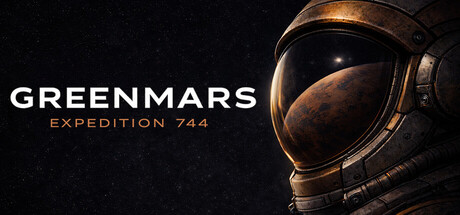
GreenMars: Expedition 744 is a solo-led independent project.
Generative AI tools are used occasionally as production support for certain pre-rendered content and communication materials. The artistic direction, original designs, and core creative decisions remain fully defined internally by human authors.
The game does not use generative AI during gameplay.
Generative AI was used to create several pre-generated assets within the game, including:
- Environmental assets such as in-game posters.
- Character face textures.
- Voice-over audio for English and Chinese languages.
These assets were generated during the development process and are included as static files in the game build. No AI content is generated in real-time during gameplay.
This game uses generative AI for a limited amount of pre-made content created during development, including some achievement icons and certain voice lines we could not perform ourselves. No AI-generated content is created during gameplay, and the game does not connect to any external third-party AI services while you play.
Some background scenes, supporting character artwork, music, and localization text in this game were created with the assistance of AI generation tools. All main character artwork, UI design, and core visual assets were created by human artists.
Artificial: Proxy Bar uses artificial intelligence to generate dynamic dialogue content in real time.
The game integrates AI technologies including Ollama, OpenAI Whisper (speech recognition), and Google Gemma language models. Because of this, in-game conversations and responses are generated automatically and may be unpredictable.
AI-generated content may be inaccurate, nonsensical, inappropriate, or offensive. The developer does not guarantee the accuracy or suitability of AI-generated content and is not responsible for outputs produced by the AI systems.
By using the AI features in the game, players acknowledge that they interact with AI-generated content at their own discretion and risk.
The Steam library and store pages use AI generated graphic elements, but the game itself doesn't. All graphics in the game are hand made, created by our graphics designer in our self developed editor.
During the period from Early Access to Launch this title may use AI for voice in quest dialog as placeholders, prior to launch all AI elements shall be removed should they have existed and replaced.
Generative AI was used to create several environmental textures (such as stone and ground textures), some ui elements (such as buttons and icons), Capsule and Library images in Steam. All AI-generated content was manually reviewed and refined by the developer to ensure quality and compliance.
Some visible in-game assets, including but not limited to cutscenes, characters, environments, and UI elements, were created or visually enhanced with the help of AI, including generation based on white model references.
Some store page assets were also created or visually enhanced with the help of AI, including generation based on white model references.
Some music and sound effects were generated with the help of AI.
Some localized language content was translated with the help of AI.
This game currently includes a few 2D Image AI-generated assets (those include 5 of the slot machine's icons, 7 character portraits displayed on the main hallway, the main menu background image & current thumbnail) used as placeholders during the Early Access phase. These assets are scheduled to be replaced with original, non-AI artwork in a future content update. No AI tools are used for live, runtime content generation.
This game uses AI to assist in generating [art assets/localized text/voice dubbing]. All AI-generated content has been manually reviewed and modified to ensure compliance with regulations and the game's world setting.
We are a small studio with only six people actively involved in development. For teams like ours, generative AI is a supportive tool that helps us realize a creative vision that would otherwise be completely out of reach within our budget.
Here is exactly how we utilized generative AI in our game:
• We used generative AI during the prototyping and concept art phases. Every AI-generated image was manually modified, iterated upon, and finalized by our artist.
• The sea shanties in the game feature AI-generated vocals and music, but the lyrics are original and written by our team.
• Certain voice-over (VO) lines were generated using AI.
Generative AI was used to create certain 2D background assets within the game world. This includes some family group photographs used as props, visuals shown on in-game television screens, and decorative wall posters. These AI-generated elements are static environmental assets only and were not used for in-game cinematics, character models, or animations.
This project incorporates the use of artificial intelligence tools to assist in development. AI was used to help generate portions of the C# codebase, streamlining implementation and problem-solving, as well as to create some textures used within the game. All AI-generated content was reviewed, adapted, and integrated to fit the overall design and functionality of the project
All art is hand drawn by the developer.
All creative direction, original writing, and final dialogue are by the developer.
AI tools were used during the writing process as an editorial partner reviewing drafts for continuity, character voice consistency, and story structure.
None of the assets seen or heard in the game have been generated by AI, but AI generated images and music have been used when ideating the finished content created by humans.
AI has been used to help in the coding process and localisation, but everything has been always checked (if not created) by at least one human. Localisations usually have been created by one person and checked by another to assure quality of translations.
Some of the store images and promotional artwork for Egg Hunter were created using AI tools. This was only used for visual marketing materials—everything in the actual game (gameplay, levels, mechanics) is original and made by the developer.
Some of the music/sound effects in this game were arranged or edited with the assistance of generative AI tools. All AI-generated audio was reviewed and curated by the development team.
The steam shop page features some language translations that were generated with the help of DeepL.
The game itself does not use any AI generated translations or any other AI generated assets or code.
This game uses pre-generated visual assets, including images and cinematic sequences created with external tools. These assets are used for environmental storytelling and menu presentation, and do not involve real-time AI generation.
Some visual assets and UI elements were originally created by a human designer and later refined with the assistance of AI tools to improve clarity and polish.
In addition, some background music was created with the assistance of AI tools and then edited and integrated by the developer.
All final assets were reviewed, modified, and implemented by the development team.
Certain visual and audio assets were created with the assistance of generative AI tools during development and were manually edited and refined by the developer. All gameplay content is handcrafted, and no generative AI is used during gameplay.
When creating this game, our team utilized the support from Trippo AI for modeling, and Doubao for concept artist. We finally created the whole level design by UE5.
Dust & Diamonds is a 100% solo project.
The idea for this game came to me a few days after my son was born — my first child. I was celebrating with my cousin and bet him I could build something like Motherload in two weeks. As you've probably guessed, I lost that bet spectacularly. I'm writing this almost a year later, and my son turns one in a few days.
I have a degree in computer game engineering, but I live in a small town with no game studios — so I drive a pallet jack around a warehouse by day and build this game after hours. I can't afford to hire an artist or a composer. To bring this world to life at all, I turned to generative AI tools. I'm not going to hide that.
How does the game use AI?
Graphics (2D): A significant portion of the visual assets — character portraits, environment elements, buildings — was generated using AI, then manually retouched, edited, and assembled by me in the engine into a cohesive style with a parallax system.
Music and sound: The musical tracks in the game were generated by AI. Fittingly, this ties directly into the game's lore — the "Relics of the Old World" (our 21st century) collected by the goblins are canonically works created by AI before the great cataclysm, carrying the lost wisdom of humanity.
What's mine in this game is the design: how the economy works, how water behaves in a flooded shaft, when a ceiling collapses, what the old man says across the counter. I came up with each of these systems, wrote them out, tested them, and reworked them a dozen times until they behaved the way I wanted.
I'm just a regular guy who had an idea for a game about digging in the dirt and was stubborn enough to see it through. Thank you for your understanding and support.
During the early prototyping phase, I use AI tools to visualize initial concepts and create temporary placeholders. All of these have been completely replaced in the final game with hand-crafted art created by myself and talented freelancers.
Generative AI was used to aid in the preparation of store visuals and multi-language localization. The final content is not entirely AI-generated, as it has undergone significant manual inspection, confirmation, and refinement to ensure quality.
AI is only used to create art assets, backgrounds, and visual materials during the development of the game. It is not used for any in-game mechanics, NPC behaviors, or real-time interactions with players.
I used AI for debugging game build errors. Going through thousands lines of error logs and call stacks is not a total nightmare once I get pointed to the right direction.
I also localized steam page using it to some languages.
This app includes pre-generated content created or assisted using generative AI.
This includes the game logo, title screen, certain story-related images used during key moments of the game, a majority of item-related visuals (such as weapons, armors, accessories, and quest items), and approximately 60% of character portraits used in dialogue.
All such content was selected, reviewed, and in many cases manually edited and integrated by the developer before being included in the game or on the store page.
Additionally, most of the game's plugins were developed with the assistance of AI tools. No AI is used at runtime or during gameplay.
Generative AI was utilized in the process of creating and optimizing UI background images and certain in-game text content, such as item descriptions and lore. All AI-generated assets were carefully reviewed, retouched, and edited by the developer to ensure they align with the game's unique atmosphere and artistic vision.
The game's translation was partially assisted by AI, but all in-game text was created and edited by real people. AI was used to enhance a small portion of the textures, but these were always manually refined afterward and served only as one method to make the textures sharper alongside other hand-made improvements in graphic editors. All images, including signs and drawings on the walls, were commissioned from real artists.
GreenMars: Expedition 744 is a solo-led independent project.
Generative AI tools are used occasionally as production support for certain pre-rendered content and communication materials. The artistic direction, original designs, and core creative decisions remain fully defined internally by human authors.
The game does not use generative AI during gameplay.
Generative AI was used to create several pre-generated assets within the game, including:
- Environmental assets such as in-game posters.
- Character face textures.
- Voice-over audio for English and Chinese languages.
These assets were generated during the development process and are included as static files in the game build. No AI content is generated in real-time during gameplay.
This game uses generative AI for a limited amount of pre-made content created during development, including some achievement icons and certain voice lines we could not perform ourselves. No AI-generated content is created during gameplay, and the game does not connect to any external third-party AI services while you play.
Some background scenes, supporting character artwork, music, and localization text in this game were created with the assistance of AI generation tools. All main character artwork, UI design, and core visual assets were created by human artists.
Artificial: Proxy Bar uses artificial intelligence to generate dynamic dialogue content in real time.
The game integrates AI technologies including Ollama, OpenAI Whisper (speech recognition), and Google Gemma language models. Because of this, in-game conversations and responses are generated automatically and may be unpredictable.
AI-generated content may be inaccurate, nonsensical, inappropriate, or offensive. The developer does not guarantee the accuracy or suitability of AI-generated content and is not responsible for outputs produced by the AI systems.
By using the AI features in the game, players acknowledge that they interact with AI-generated content at their own discretion and risk.