Public Steam disclosure research25,376 disclosures tracked
Where do games disclose AI use?
Search developers’ Steam disclosures, compare classified AI use across
games, and follow recorded changes.
This index adds cross-game classifications and statistics to
statements published on individual store pages.
Groups reflect automatic analysis of public disclosures; mature records are excluded. These counts do not measure AI use across all of Steam.
Missing or unclear statements cannot establish whether a game uses AI.
This software uses DDPG and TD3 self-learning algorithms to train virtual lifeforms to control their bodies. These algorithms only learn from experiences collected by their organisms over the course of their lifetimes and use no other data.
In the future, we plan to introduce the recombination engine - a generative AI that will analyse genetic data from lifeforms based on viability and use the results to create new, more capable species of offspring, simulating an accelerated evolutionary process. User-created lifeforms may be used for this as well as those, generated by the engine. Only those lifeforms, explicitly shared by the user, will be utilized for this purpose.
Both processes are initiated by the user with their direct permission.
Note: AI survival or pre-rendered content is included in the game
as follows:
1, In-game character voice-overs
2、Character stand-up drawings (and modified by the artist)
3, Pictures from the game event cards
4 designs used in the game were pleasantly given to me by people in the community. 3 of these authors just told me they used AI to make the designs.
UPDATE: More designs were given to me by people in the community which are made by AI.
Please be aware that some assets in the game are made by AI, along with some images on the store page.
I use AI for the character portrait graphics and for artwork images. As a solo developer, AI presents numerous opportunities to develop my project in a cost-effective, swift, and efficient manner. Some components of this game feature a mix of human and AI-generated content; nothing is solely produced by AI. It's important to me to use as little AI as possible, ensuring that 95 percent of my content is generated without AI.
Art and visual assets were created with AI-assisted tools as part of a custom development pipeline. All assets are manually reviewed, edited, and refined to meet the game’s creative vision and maintain stylistic consistency. The game does not use AI to generate content at runtime.
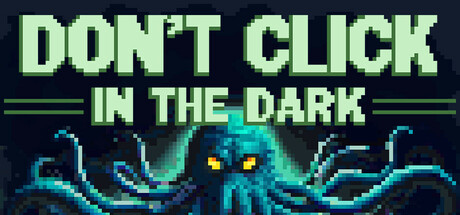
In "Don't Click in The Dark," we utilize AI-generated graphics as a foundation for our creative process. The AI helps generate base images, which we then use as inspiration to create detailed pixel art. These AI-generated visuals serve as a starting point, allowing our artists to craft unique, atmospheric environments and characters. Additionally, we animate these pixel art assets.
Some of the art assets in the game are drawn using ai, this game is made by me alone throughout, as a fresh college student, financial resources and knowledge reserves are still insufficient, want to make a game of their own, have no choice but to use ai to assist in the production of the game, I know that the true artist in their own works on the emotions and ideas given by ai can not be compared. I apologise profusely if the use of ai in this game has troubled you.
I hope players will try to understand my reasons for using ai./(ㄒoㄒ)/~~
The majority of the game's pixel art assets (approx. 80%) are hand-drawn. Generative AI tools were used to assist in creating certain background elements, icons, and character variations. Specifically, all illustrative images used for in-game 'events' and case files are AI-generated. Additionally, approximately 90% of the game's music tracks were generated using AI tools. All AI-generated assets, including the music, have been manually reviewed, retouched, and edited by the developer to ensure they fit the game's consistent artistic style and quality standards.
DALL-E was used in the creation of some of the enemy battle sprites, character portraits, parallax backgrounds (4 total), and the in-game polaroid pictures. All generated images were further modified by the developer.
An AI tool has been used to create background sketches of the main character. Aesthetic modifications have been made to remove artifacts generated by this application.
The main capsule image that appears in the card when sharing Battle Marine's store page URL on social media such as Twitter is created using a generative AI.
The draft of the logo was generated with Dall-E and then edited by me.
I also plan to use PixelLab to help generating some alternating tilesets and nyamon creatures and NPC; also surely edited by me to ensure consistency.
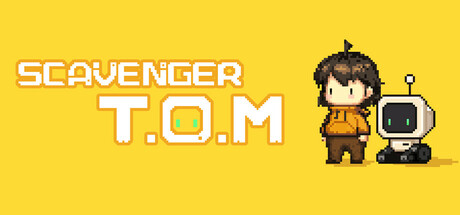
Scavenger T.O.M utilizes AI-based environment generation technology to explore and reconstruct the radiation-ravaged surface in real-time. In hazardous areas where players cannot venture directly, AI acts as T.O.M’s eyes and analytical core, dynamically processing the environment based on movement paths.
The Diffusion model-based AI system goes beyond simple image generation, creating explorable spaces at the object level and seamlessly integrating them into the game environment to enhance interactivity.
Through this technology, Scavenger T.O.M provides a unique survival environment that evolves with the player's exploration. Step into the AI-generated wasteland and craft your own survival strategy.
I've used AI to generate landscapes used in the "battle" cards within the game, that were then touched up by hand. The rest of the art in the game is licensed from artists.
Generative AI was only used to create image references during the creation of promotionnal artworks :
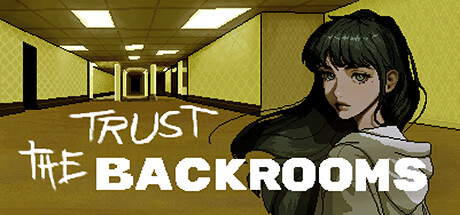
The main promotional artwork shows a hallway where the pillars and the lights are arranged to form the word : DON'T.
The artist who drew these promotional artworks used generative AI to get reference images on how to integrate text with natural elements of a scene so that the elements of the scene seems to be forming letters.
The final artwork is purely derivative and original and was made by the artist from zero, with the help of the AI generated images as inspiration for placing the letters on the final drawing.
This software uses DDPG and TD3 self-learning algorithms to train virtual lifeforms to control their bodies. These algorithms only learn from experiences collected by their organisms over the course of their lifetimes and use no other data.
In the future, we plan to introduce the recombination engine - a generative AI that will analyse genetic data from lifeforms based on viability and use the results to create new, more capable species of offspring, simulating an accelerated evolutionary process. User-created lifeforms may be used for this as well as those, generated by the engine. Only those lifeforms, explicitly shared by the user, will be utilized for this purpose.
Both processes are initiated by the user with their direct permission.
Note: AI survival or pre-rendered content is included in the game
as follows:
1, In-game character voice-overs
2、Character stand-up drawings (and modified by the artist)
3, Pictures from the game event cards
4 designs used in the game were pleasantly given to me by people in the community. 3 of these authors just told me they used AI to make the designs.
UPDATE: More designs were given to me by people in the community which are made by AI.
Please be aware that some assets in the game are made by AI, along with some images on the store page.
I use AI for the character portrait graphics and for artwork images. As a solo developer, AI presents numerous opportunities to develop my project in a cost-effective, swift, and efficient manner. Some components of this game feature a mix of human and AI-generated content; nothing is solely produced by AI. It's important to me to use as little AI as possible, ensuring that 95 percent of my content is generated without AI.
Art and visual assets were created with AI-assisted tools as part of a custom development pipeline. All assets are manually reviewed, edited, and refined to meet the game’s creative vision and maintain stylistic consistency. The game does not use AI to generate content at runtime.
In "Don't Click in The Dark," we utilize AI-generated graphics as a foundation for our creative process. The AI helps generate base images, which we then use as inspiration to create detailed pixel art. These AI-generated visuals serve as a starting point, allowing our artists to craft unique, atmospheric environments and characters. Additionally, we animate these pixel art assets.
Some of the art assets in the game are drawn using ai, this game is made by me alone throughout, as a fresh college student, financial resources and knowledge reserves are still insufficient, want to make a game of their own, have no choice but to use ai to assist in the production of the game, I know that the true artist in their own works on the emotions and ideas given by ai can not be compared. I apologise profusely if the use of ai in this game has troubled you.
I hope players will try to understand my reasons for using ai./(ㄒoㄒ)/~~
The majority of the game's pixel art assets (approx. 80%) are hand-drawn. Generative AI tools were used to assist in creating certain background elements, icons, and character variations. Specifically, all illustrative images used for in-game 'events' and case files are AI-generated. Additionally, approximately 90% of the game's music tracks were generated using AI tools. All AI-generated assets, including the music, have been manually reviewed, retouched, and edited by the developer to ensure they fit the game's consistent artistic style and quality standards.
DALL-E was used in the creation of some of the enemy battle sprites, character portraits, parallax backgrounds (4 total), and the in-game polaroid pictures. All generated images were further modified by the developer.
An AI tool has been used to create background sketches of the main character. Aesthetic modifications have been made to remove artifacts generated by this application.
The main capsule image that appears in the card when sharing Battle Marine's store page URL on social media such as Twitter is created using a generative AI.
The draft of the logo was generated with Dall-E and then edited by me.
I also plan to use PixelLab to help generating some alternating tilesets and nyamon creatures and NPC; also surely edited by me to ensure consistency.
Scavenger T.O.M utilizes AI-based environment generation technology to explore and reconstruct the radiation-ravaged surface in real-time. In hazardous areas where players cannot venture directly, AI acts as T.O.M’s eyes and analytical core, dynamically processing the environment based on movement paths.
The Diffusion model-based AI system goes beyond simple image generation, creating explorable spaces at the object level and seamlessly integrating them into the game environment to enhance interactivity.
Through this technology, Scavenger T.O.M provides a unique survival environment that evolves with the player's exploration. Step into the AI-generated wasteland and craft your own survival strategy.
I've used AI to generate landscapes used in the "battle" cards within the game, that were then touched up by hand. The rest of the art in the game is licensed from artists.
Generative AI was only used to create image references during the creation of promotionnal artworks :
The main promotional artwork shows a hallway where the pillars and the lights are arranged to form the word : DON'T.
The artist who drew these promotional artworks used generative AI to get reference images on how to integrate text with natural elements of a scene so that the elements of the scene seems to be forming letters.
The final artwork is purely derivative and original and was made by the artist from zero, with the help of the AI generated images as inspiration for placing the letters on the final drawing.