Public Steam disclosure research25,394 disclosures tracked
Where do games disclose AI use?
Search developers’ Steam disclosures, compare classified AI use across
games, and follow recorded changes.
This index adds cross-game classifications and statistics to
statements published on individual store pages.
Groups reflect automatic analysis of public disclosures; mature records are excluded. These counts do not measure AI use across all of Steam.
Missing or unclear statements cannot establish whether a game uses AI.
We use AI to let our robots express themselves!
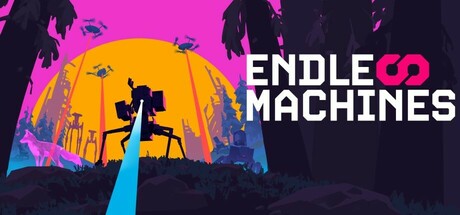
If a robot became alive, it wouldn’t come pre-programmed with the perfect way to express its thoughts or emotions — it would have to figure it out along the way. That’s why the hero robots in Endless Machines use AI to give voice to their thoughts and feelings.
What they say isn’t always polished or logical. It's quirky, weird, funny, and sometimes unexpectedly touching. It’s not a scripted, perfect dialogue. It’s more like a robot trying to make sense of the world — and itself — in real time.
This approach makes their personalities dynamic and unpredictable. For us, that’s what makes AI-driven dialogue a perfect fit for the game: It’s about learning, exploring, and growing — just like the robots themselves.
Under the hood, the game runs a small language model that has been custom fine-tuned for each robot's personality. It is instructed to speak through prompt engineering, ensuring the robot stays in character and relates to the game's lore. The model does not require online access.
We chose to use SmolLM because we were looking for a language model where the training background, technical setup, and use of data are transparent (open source and based on publicly available texts), and where the model can be run locally. We use this locally hosted language model (LLM) to generate text content during gameplay.
What the robots say in the game is defined and moderated by us. We have written a set of foundational texts that form the basis for each robot’s personality, tone, and way of expressing itself. From that foundation, they “build” further and develop over time. Endless Machines does not and cannot collect any data from the person playing the game.
All outputs are guided by custom prompt engineering, custom fine-tuning, and are controlled by local code at runtime to ensure appropriate content. More details on the model architecture and dataset can be found here:
🔗 https://huggingface.co/datasets/HuggingFaceTB/smoltalk
Some of the game’s loading screens and UI icons / character portraits were created using AI tools during development. These assets are pre-generated (i.e. not generated in real-time during gameplay), are original, and do not depict real people or copyrighted material.
All rights are retained by the developer.
AI was used as a supportive tool in creating some textures, sprites, and translations. All materials have been ultimately reviewed and finalized by human creators.
This game uses generative AI tools in the creation of certain assets:
Some character and environment art assets were generated using developer-trained AI models;
Some ambient background music (non-vocal) was generated using commercially available AI models with proper commercial licenses;
In addition, the Steam store capsule image was also generated with the help of AI tools.
All AI-generated content is static, manually reviewed and edited by the developer prior to release, and does not involve any post-release dynamic generation.
AI tools were used during development to assist in generating early draft concepts for some environmental assets.
All final in-game content, visuals, audio, and text were manually created, refined, and validated by the development team.
No AI tools are available to players, and no AI generates content during gameplay.
I use the service to generate artificial intelligence voices for characters. The voice generation process does not occur in real-time, but rather beforehand, allowing me to test and evaluate the content before using it in the game. Additionally, I implement appropriate preventive measures to ensure that the generated content is suitable and compliant with legal requirements and Steam standards.
This game does not generate or modify content at runtime.
A small portion of assets (around 20%) was created with generative AI tools during development.
All such assets were manually edited, reviewed, and finalized to ensure originality, quality, and compliance with copyright and safety standards
How is AI used in gameplay?
AI may be used to generate the faces of non-existent people in cutscenes and subtitles, adding realism and depth to the game.
Some visual elements in this game, such as textures and illustrations, were partially generated or enhanced using artificial intelligence tools, and then manually refined and integrated by the development team.
ChatGPT was used solely to improve sentence structure and correct grammar. All game design and content decisions were made by the developer. No AI-generated images or artwork were used.
We used Canva’s generative AI tools to assist with certain marketing materials, such as promotional images and background textures. No AI was used in the gameplay, story writing, or audio design.
This game uses artificial intelligence only for narrative content creation.
All dialogue, descriptions, and text were generated with the help of AI during development, with manual review to ensure quality, cohesion, and originality.
AI is not used in real time during gameplay and does not interact directly with the player. All final content was carefully integrated into the game before release.
The current version of the game is using some audio and visual materials generated by AI, then processed by a human. The final version of the game will have have such assets either completely redone by a human or very heavily processed by a human. Translations to some of the languages are done using AI tools.
The vast majority of the artwork in the game was created by our team of artists, hired freelancers or purchased on market places. In some cases, AI was used to generate reference images to assist with the creative process, but all final assets were either fully redrawn or significantly refined by human artists to ensure quality and originality.
As a solo indie developer, I used AI tools to generate some of the in-game voices. These voices were carefully selected and refined to fit the game's vision and deliver a unique experience.
We use AI to let our robots express themselves!
If a robot became alive, it wouldn’t come pre-programmed with the perfect way to express its thoughts or emotions — it would have to figure it out along the way. That’s why the hero robots in Endless Machines use AI to give voice to their thoughts and feelings.
What they say isn’t always polished or logical. It's quirky, weird, funny, and sometimes unexpectedly touching. It’s not a scripted, perfect dialogue. It’s more like a robot trying to make sense of the world — and itself — in real time.
This approach makes their personalities dynamic and unpredictable. For us, that’s what makes AI-driven dialogue a perfect fit for the game: It’s about learning, exploring, and growing — just like the robots themselves.
Under the hood, the game runs a small language model that has been custom fine-tuned for each robot's personality. It is instructed to speak through prompt engineering, ensuring the robot stays in character and relates to the game's lore. The model does not require online access.
We chose to use SmolLM because we were looking for a language model where the training background, technical setup, and use of data are transparent (open source and based on publicly available texts), and where the model can be run locally. We use this locally hosted language model (LLM) to generate text content during gameplay.
What the robots say in the game is defined and moderated by us. We have written a set of foundational texts that form the basis for each robot’s personality, tone, and way of expressing itself. From that foundation, they “build” further and develop over time. Endless Machines does not and cannot collect any data from the person playing the game.
All outputs are guided by custom prompt engineering, custom fine-tuning, and are controlled by local code at runtime to ensure appropriate content. More details on the model architecture and dataset can be found here:
🔗 https://huggingface.co/datasets/HuggingFaceTB/smoltalk
Some of the game’s loading screens and UI icons / character portraits were created using AI tools during development. These assets are pre-generated (i.e. not generated in real-time during gameplay), are original, and do not depict real people or copyrighted material.
All rights are retained by the developer.
AI was used as a supportive tool in creating some textures, sprites, and translations. All materials have been ultimately reviewed and finalized by human creators.
This game uses generative AI tools in the creation of certain assets:
Some character and environment art assets were generated using developer-trained AI models;
Some ambient background music (non-vocal) was generated using commercially available AI models with proper commercial licenses;
In addition, the Steam store capsule image was also generated with the help of AI tools.
All AI-generated content is static, manually reviewed and edited by the developer prior to release, and does not involve any post-release dynamic generation.
AI tools were used during development to assist in generating early draft concepts for some environmental assets.
All final in-game content, visuals, audio, and text were manually created, refined, and validated by the development team.
No AI tools are available to players, and no AI generates content during gameplay.
I use the service to generate artificial intelligence voices for characters. The voice generation process does not occur in real-time, but rather beforehand, allowing me to test and evaluate the content before using it in the game. Additionally, I implement appropriate preventive measures to ensure that the generated content is suitable and compliant with legal requirements and Steam standards.
This game does not generate or modify content at runtime.
A small portion of assets (around 20%) was created with generative AI tools during development.
All such assets were manually edited, reviewed, and finalized to ensure originality, quality, and compliance with copyright and safety standards
How is AI used in gameplay?
AI may be used to generate the faces of non-existent people in cutscenes and subtitles, adding realism and depth to the game.
Some visual elements in this game, such as textures and illustrations, were partially generated or enhanced using artificial intelligence tools, and then manually refined and integrated by the development team.
ChatGPT was used solely to improve sentence structure and correct grammar. All game design and content decisions were made by the developer. No AI-generated images or artwork were used.
We used Canva’s generative AI tools to assist with certain marketing materials, such as promotional images and background textures. No AI was used in the gameplay, story writing, or audio design.
This game uses artificial intelligence only for narrative content creation.
All dialogue, descriptions, and text were generated with the help of AI during development, with manual review to ensure quality, cohesion, and originality.
AI is not used in real time during gameplay and does not interact directly with the player. All final content was carefully integrated into the game before release.
The current version of the game is using some audio and visual materials generated by AI, then processed by a human. The final version of the game will have have such assets either completely redone by a human or very heavily processed by a human. Translations to some of the languages are done using AI tools.
The vast majority of the artwork in the game was created by our team of artists, hired freelancers or purchased on market places. In some cases, AI was used to generate reference images to assist with the creative process, but all final assets were either fully redrawn or significantly refined by human artists to ensure quality and originality.
As a solo indie developer, I used AI tools to generate some of the in-game voices. These voices were carefully selected and refined to fit the game's vision and deliver a unique experience.