Public Steam disclosure research25,380 disclosures tracked
Where do games disclose AI use?
Search developers’ Steam disclosures, compare classified AI use across
games, and follow recorded changes.
This index adds cross-game classifications and statistics to
statements published on individual store pages.
Groups reflect automatic analysis of public disclosures; mature records are excluded. These counts do not measure AI use across all of Steam.
Missing or unclear statements cannot establish whether a game uses AI.
Generative AI was used to create of the music included in the game, as well as marketing and promotional materials for Steam.
AI tools were also used for programming and development.
There is no AI used in the gameplay - no content is dynamically generated.
Generative AI is used to assist with the translation and localization of in-game text and Steam store page content from the original Japanese into other supported languages.
"Generative AI tools were used to create 2D promotional images and capsule artwork for the Steam store page. The game itself does not use real-time AI generation during gameplay."
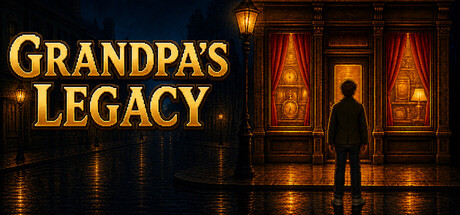
Some visual assets in Grandpa's Legacy (including expedition artwork and selected store/marketing images) were created or assisted with generative AI tools, then curated and edited by the development team. No generative AI runs during gameplay, and the game does not connect to external AI services while you play.
AI was used during development to create portions of the game’s pre-generated artwork, characters, animations, music, voices, and sound effects. These assets are included in the finished game. No AI content is generated live during gameplay.
I'm a solo developer, and I'd rather be upfront about where AI tools were used.
The character base meshes and some of their textures were generated with AI.
Every one of them was then brought into Blender and worked over by hand. Cleaned up, edited, re-textured and animated before it went anywhere near the game.
They're all rendered with a toon shader I wrote myself.
Everything else is made by hand.
The tavern, the props and the whole environment are hand modeled.
Other than that, everything else in the game was made by me.
AI-generated content in this project is limited to the store page and marketing materials. The game build itself contains no AI-generated content.
Store page text: The store description and Early Access questionnaire answers were drafted with the assistance of a large language model, then reviewed and edited by the developer.
Not AI-generated: All in-game art, models, textures and animation. 3D assets are CC0-licensed (Kenney) or built by the developer in Blender; textures are CC0/licensed sets from Poly Haven, ambientCG and Poliigon. All screenshots and capsule images are real frames captured from the game's renderer, composited with the game's own title typography. No image generation model was used to produce any art in the game or on the store page.
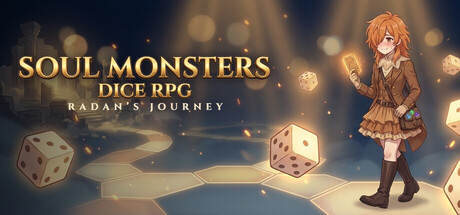
Some of the 2D artwork in this game — character portraits, monster illustrations, board tiles, backgrounds and store art — was created with the help of generative AI image tools, then reviewed, edited and assembled by the developer. All generated assets were checked before shipping. The game does not generate any content live during play: everything is pre-rendered and included in the build. Game design, rules, code, text and level layout were authored by the developer.
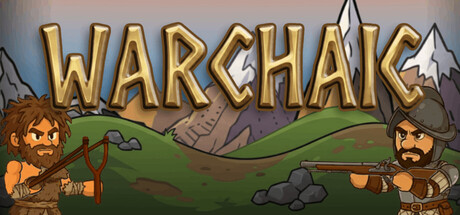
Generative AI was used to assist in the creation of some visual assets, UI elements, sound effects, and music featured in Warchaic. Software development was handled by our development team, while animations and visual effects (VFX) were either created by our team or sourced from licensed asset packages.
During development of this game, generative AI was used for the creation of some sound effects and background music, localization.
Generative AI was not used in the creation of the game's artwork or story.
We used generative AI tools during development to help create pre-rendered assets: part of the visual art (environments, buildings, characters and interface elements), the music, and store page artwork. All AI-generated content was reviewed, edited and assembled by us. Generative AI is not used at runtime — the game generates no AI content while you play.
Some of this game's assets were made with the help of generative AI tools and then edited by hand: the in-game notebook UI sprites, a few background props and set-dressing models, some texture work, and the English localization, which was drafted from our Korean original and reviewed by us.
The original Korean writing, the characters, the level design, and all gameplay systems were made without generative AI. Nothing is generated while you play.
AI tools were used to assist in creating the game logo, marketing artwork, and some 2D in-game assets such as item icons and illustrations. All AI-generated content is pre-generated (nothing is generated at runtime) and was manually reviewed and edited. All 3D models, gameplay, code, and game design are hand-crafted.
Some art assets in the game and on the store page (story character portraits, some icons, backgrounds, and capsule images) were created with AI image generation tools, then manually curated and edited by the developer. All gameplay, code, and written story content is human-made. No AI content is generated at runtime.
Generative AI was used during development to assist in creating some pre-generated 2D artwork and written text used in the game. All AI-assisted content was reviewed, edited, and integrated by the developers. The game does not use generative AI to create new content at runtime.
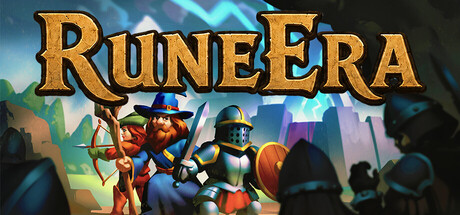
Generative AI tools were used during development to assist with portions of selected sprite artwork and to create some sound effects and background music. All AI-assisted content was generated before release, reviewed and curated by the developer, and edited or integrated into the final game as appropriate. RuneEra does not use AI to generate content while the game is running.
The game is developed entirely by a solo developer. AI has therefore only been leveraged as a tool for productivity and efficiency - the overall game is fully imagined, designed, and brought together by the developer.
Standard C++ game code, written during development with the assistance of an AI programming assistant, used as a pair-programming tool. This includes gameplay systems (crafting, inventory, world simulation), rendering and UI code, and development tooling. It is ordinary, static game logic.
AI assistance was used only during development, directed by myself through specific requests, with every change reviewed, tested, and committed to version control by myself.
The shipped game contains no AI models and does not execute or generate any code or content via AI at runtime. The game is a fully offline, single-player experience.
During development we used generative AI tools to create the some of this game's assets. This includes 2D art and audios. All AI-generated assets were produced during development, reviewed by us, and ship as fixed files in the build. Some were hand-edited, recoloured, composited or retimed afterwards. Game code, design, writing and dialogue are authored by us.
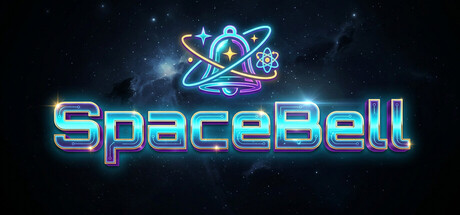
SpaceBell was Agentically Engineered! The custom engine, game loop, and the entire process to make the game is documented on the studios' X page. Far from vibed, the game has been in active dev for 2yrs.
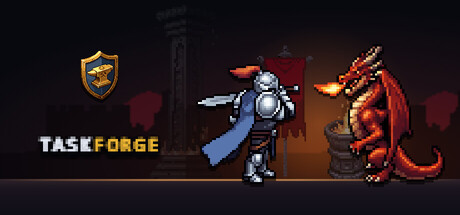
The pixel art in Taskforge — character and enemy sprites, animation frames, item and UI icons, scenery pieces and the game's emblem — was produced with the help of an AI image generation tool during development. Every generated asset was reviewed, selected, edited and assembled by hand, and ships as a fixed image file. Nothing is generated while you play: the game contains only static assets and never calls an AI service at runtime. Code, game design, balance data and all written text were made by the developer.
Generative AI tools were used during development to assist with selected 2D and 3D visual assets, sounds, localization, and marketing materials.
All AI-assisted content was reviewed, edited, and integrated by the developer to ensure consistency with the game's visual style and intended design.
This game used generative AI tools during development to assist with a limited portion of visual and audio asset creation. All AI-assisted content was reviewed and curated by the developer before release. No AI content is generated live during gameplay.
Some of this game's assets were made with the assistance of generative AI tools and were reviewed, curated and hand-finished by the developer. No content is generated while you play.
Generative AI tools were utilized for auxiliary purposes in the production of some assets. These assets were modified and supplemented by professional art personnel and were finally applied to the game.
Some placeholder assets in the current build (terrain textures and sound effects) were AI-generated and are being replaced with human-made and procedural versions. All models, writing, characters, and design are human-made.
Some 2D art assets (backgrounds, characters, UI icons) were created with the assistance of generative AI tools and then edited, cropped and assembled manually. Localization text for some supported languages was assisted by AI translation. All generated content was reviewed by the developer.
Generative AI was used during development to create a small amount of temporary placeholder imagery. AI-generated content is limited to pre-generated visual assets and no AI content is generated during gameplay.
During development, we used AI tools to assist in creating some art assets, voice acting, and dialogue. All AI-assisted content is pre-generated before release — the game does not generate content with AI in real time while you play. All such content is reviewed and refined by our team to ensure quality and originality, and to avoid generic-looking characters.
The game's surface textures — the colour and relief maps applied to parts,
buildings, terrain and visual effects — and its sound effects were created
with generative AI tools during development. They are generated ahead of
time, reviewed and integrated by hand, and ship with the game as ordinary
image and audio files.
Nothing is generated while you play, and the game never connects to an AI
service.
The simulation itself — orbital mechanics, aerodynamics, the production chains — is written by hand.
Aftergrowth's code was written with the help of an AI coding assistant, and some of the game's text — including parts of this store page — was first drafted with it and then edited by hand.
Nothing you see or hear is AI-generated. Every sprite, tile and icon is drawn by deterministic Python scripts rather than by an image model. The music is synthesised and the sound effects are CC0 recordings by Kenney, both credited in the game's CREDITS file. No generative AI runs while you play: nothing is generated live, and the game makes no request to any AI service.
Some art, music and sound effects were created with the assistance of generative AI tools, under the creative direction of the developer. All AI-assisted content was reviewed and curated before inclusion. The game does not use AI to generate content during gameplay.
Generative AI is used to assist with research or as rough internal placeholders. No AI-generated art, animation, music, text, or in-game live generation is used. All game content is created, shaped, reviewed, and approved by our team.
CrystalCanvas uses generative AI in parts of its development process.
For the sound effects played when placing voxels, we aimed to create sounds that remain pleasant and unobtrusive even during extended play sessions. After exploring a variety of sound assets and recordings, we ultimately used generative AI as part of the sound design process to achieve the desired result.
Generative AI is also used as a development aid through Claude Code for generating and assisting with parts of the code related to voxel space management and rendering.
Generative AI is not used to generate the voxel artwork or gameplay content itself.
Some visual assets in the game, including certain card illustrations and UI elements, were created with the assistance of generative AI tools. These assets were generated during development and are included as pre-generated content in the game.
We integrate artificial intelligence solely as a creative assistance tool during pre-production and artistic exploration phases.
Specifically, we use image generators to produce preliminary concept art, explore different visual directions, and accelerate iteration on our graphic ideas.
AI serves only as a source of inspiration, while the entire final content is fully created, curated, and refined by our human team.
Generated images are never used as-is in the final product.
Every visual element in the game (textures, characters, environments, illustrations, etc.) is recreated, retouched, painted, recomposed, or manually validated by our artists to ensure:
originality of the content,
respect for copyright,
artistic consistency,
and compliance with Steam/Valve guidelines.
AI does not contribute to the generation of final assets, 3D models, animations, sounds, or any other elements directly integrated into the game.
Its role is strictly limited to providing visual references, aesthetic guidance, and starting points to help our team work more efficiently.
This approach allows us to maintain a strong and authentic artistic identity while benefiting from a more fluid, inspiring, and innovative creation process — directly reflected in the quality, coherence, and originality of our game.
We use AI as a technical tool to support our human developers. While all of our 3D game models, environments, and core game art are hand-crafted by our artists, we use AI to assist with 2D rendering and localization. For 2D promotional art, AI is used to composite, light, and polish images based strictly on our original in-game assets. We also utilize AI-assisted translation pipelines to help localize our massive world into multiple languages for our global community.
Generative AI was used to create of the music included in the game, as well as marketing and promotional materials for Steam.
AI tools were also used for programming and development.
There is no AI used in the gameplay - no content is dynamically generated.
Generative AI is used to assist with the translation and localization of in-game text and Steam store page content from the original Japanese into other supported languages.
"Generative AI tools were used to create 2D promotional images and capsule artwork for the Steam store page. The game itself does not use real-time AI generation during gameplay."
Some visual assets in Grandpa's Legacy (including expedition artwork and selected store/marketing images) were created or assisted with generative AI tools, then curated and edited by the development team. No generative AI runs during gameplay, and the game does not connect to external AI services while you play.
AI was used during development to create portions of the game’s pre-generated artwork, characters, animations, music, voices, and sound effects. These assets are included in the finished game. No AI content is generated live during gameplay.
I'm a solo developer, and I'd rather be upfront about where AI tools were used.
The character base meshes and some of their textures were generated with AI.
Every one of them was then brought into Blender and worked over by hand. Cleaned up, edited, re-textured and animated before it went anywhere near the game.
They're all rendered with a toon shader I wrote myself.
Everything else is made by hand.
The tavern, the props and the whole environment are hand modeled.
Other than that, everything else in the game was made by me.
AI-generated content in this project is limited to the store page and marketing materials. The game build itself contains no AI-generated content.
Store page text: The store description and Early Access questionnaire answers were drafted with the assistance of a large language model, then reviewed and edited by the developer.
Not AI-generated: All in-game art, models, textures and animation. 3D assets are CC0-licensed (Kenney) or built by the developer in Blender; textures are CC0/licensed sets from Poly Haven, ambientCG and Poliigon. All screenshots and capsule images are real frames captured from the game's renderer, composited with the game's own title typography. No image generation model was used to produce any art in the game or on the store page.
Some of the 2D artwork in this game — character portraits, monster illustrations, board tiles, backgrounds and store art — was created with the help of generative AI image tools, then reviewed, edited and assembled by the developer. All generated assets were checked before shipping. The game does not generate any content live during play: everything is pre-rendered and included in the build. Game design, rules, code, text and level layout were authored by the developer.
Generative AI was used to assist in the creation of some visual assets, UI elements, sound effects, and music featured in Warchaic. Software development was handled by our development team, while animations and visual effects (VFX) were either created by our team or sourced from licensed asset packages.
During development of this game, generative AI was used for the creation of some sound effects and background music, localization.
Generative AI was not used in the creation of the game's artwork or story.
We used generative AI tools during development to help create pre-rendered assets: part of the visual art (environments, buildings, characters and interface elements), the music, and store page artwork. All AI-generated content was reviewed, edited and assembled by us. Generative AI is not used at runtime — the game generates no AI content while you play.
Some of this game's assets were made with the help of generative AI tools and then edited by hand: the in-game notebook UI sprites, a few background props and set-dressing models, some texture work, and the English localization, which was drafted from our Korean original and reviewed by us.
The original Korean writing, the characters, the level design, and all gameplay systems were made without generative AI. Nothing is generated while you play.
AI tools were used to assist in creating the game logo, marketing artwork, and some 2D in-game assets such as item icons and illustrations. All AI-generated content is pre-generated (nothing is generated at runtime) and was manually reviewed and edited. All 3D models, gameplay, code, and game design are hand-crafted.
Some art assets in the game and on the store page (story character portraits, some icons, backgrounds, and capsule images) were created with AI image generation tools, then manually curated and edited by the developer. All gameplay, code, and written story content is human-made. No AI content is generated at runtime.
Generative AI was used during development to assist in creating some pre-generated 2D artwork and written text used in the game. All AI-assisted content was reviewed, edited, and integrated by the developers. The game does not use generative AI to create new content at runtime.
Generative AI tools were used during development to assist with portions of selected sprite artwork and to create some sound effects and background music. All AI-assisted content was generated before release, reviewed and curated by the developer, and edited or integrated into the final game as appropriate. RuneEra does not use AI to generate content while the game is running.
The game is developed entirely by a solo developer. AI has therefore only been leveraged as a tool for productivity and efficiency - the overall game is fully imagined, designed, and brought together by the developer.
Standard C++ game code, written during development with the assistance of an AI programming assistant, used as a pair-programming tool. This includes gameplay systems (crafting, inventory, world simulation), rendering and UI code, and development tooling. It is ordinary, static game logic.
AI assistance was used only during development, directed by myself through specific requests, with every change reviewed, tested, and committed to version control by myself.
The shipped game contains no AI models and does not execute or generate any code or content via AI at runtime. The game is a fully offline, single-player experience.
During development we used generative AI tools to create the some of this game's assets. This includes 2D art and audios. All AI-generated assets were produced during development, reviewed by us, and ship as fixed files in the build. Some were hand-edited, recoloured, composited or retimed afterwards. Game code, design, writing and dialogue are authored by us.
SpaceBell was Agentically Engineered! The custom engine, game loop, and the entire process to make the game is documented on the studios' X page. Far from vibed, the game has been in active dev for 2yrs.
The pixel art in Taskforge — character and enemy sprites, animation frames, item and UI icons, scenery pieces and the game's emblem — was produced with the help of an AI image generation tool during development. Every generated asset was reviewed, selected, edited and assembled by hand, and ships as a fixed image file. Nothing is generated while you play: the game contains only static assets and never calls an AI service at runtime. Code, game design, balance data and all written text were made by the developer.
Generative AI tools were used during development to assist with selected 2D and 3D visual assets, sounds, localization, and marketing materials.
All AI-assisted content was reviewed, edited, and integrated by the developer to ensure consistency with the game's visual style and intended design.
This game used generative AI tools during development to assist with a limited portion of visual and audio asset creation. All AI-assisted content was reviewed and curated by the developer before release. No AI content is generated live during gameplay.
Some of this game's assets were made with the assistance of generative AI tools and were reviewed, curated and hand-finished by the developer. No content is generated while you play.
Generative AI tools were utilized for auxiliary purposes in the production of some assets. These assets were modified and supplemented by professional art personnel and were finally applied to the game.
Some placeholder assets in the current build (terrain textures and sound effects) were AI-generated and are being replaced with human-made and procedural versions. All models, writing, characters, and design are human-made.
Some 2D art assets (backgrounds, characters, UI icons) were created with the assistance of generative AI tools and then edited, cropped and assembled manually. Localization text for some supported languages was assisted by AI translation. All generated content was reviewed by the developer.
Generative AI was used during development to create a small amount of temporary placeholder imagery. AI-generated content is limited to pre-generated visual assets and no AI content is generated during gameplay.
During development, we used AI tools to assist in creating some art assets, voice acting, and dialogue. All AI-assisted content is pre-generated before release — the game does not generate content with AI in real time while you play. All such content is reviewed and refined by our team to ensure quality and originality, and to avoid generic-looking characters.
The game's surface textures — the colour and relief maps applied to parts,
buildings, terrain and visual effects — and its sound effects were created
with generative AI tools during development. They are generated ahead of
time, reviewed and integrated by hand, and ship with the game as ordinary
image and audio files.
Nothing is generated while you play, and the game never connects to an AI
service.
The simulation itself — orbital mechanics, aerodynamics, the production chains — is written by hand.
Aftergrowth's code was written with the help of an AI coding assistant, and some of the game's text — including parts of this store page — was first drafted with it and then edited by hand.
Nothing you see or hear is AI-generated. Every sprite, tile and icon is drawn by deterministic Python scripts rather than by an image model. The music is synthesised and the sound effects are CC0 recordings by Kenney, both credited in the game's CREDITS file. No generative AI runs while you play: nothing is generated live, and the game makes no request to any AI service.
Some art, music and sound effects were created with the assistance of generative AI tools, under the creative direction of the developer. All AI-assisted content was reviewed and curated before inclusion. The game does not use AI to generate content during gameplay.
Generative AI is used to assist with research or as rough internal placeholders. No AI-generated art, animation, music, text, or in-game live generation is used. All game content is created, shaped, reviewed, and approved by our team.
CrystalCanvas uses generative AI in parts of its development process.
For the sound effects played when placing voxels, we aimed to create sounds that remain pleasant and unobtrusive even during extended play sessions. After exploring a variety of sound assets and recordings, we ultimately used generative AI as part of the sound design process to achieve the desired result.
Generative AI is also used as a development aid through Claude Code for generating and assisting with parts of the code related to voxel space management and rendering.
Generative AI is not used to generate the voxel artwork or gameplay content itself.
Some visual assets in the game, including certain card illustrations and UI elements, were created with the assistance of generative AI tools. These assets were generated during development and are included as pre-generated content in the game.
We integrate artificial intelligence solely as a creative assistance tool during pre-production and artistic exploration phases.
Specifically, we use image generators to produce preliminary concept art, explore different visual directions, and accelerate iteration on our graphic ideas.
AI serves only as a source of inspiration, while the entire final content is fully created, curated, and refined by our human team.
Generated images are never used as-is in the final product.
Every visual element in the game (textures, characters, environments, illustrations, etc.) is recreated, retouched, painted, recomposed, or manually validated by our artists to ensure:
originality of the content,
respect for copyright,
artistic consistency,
and compliance with Steam/Valve guidelines.
AI does not contribute to the generation of final assets, 3D models, animations, sounds, or any other elements directly integrated into the game.
Its role is strictly limited to providing visual references, aesthetic guidance, and starting points to help our team work more efficiently.
This approach allows us to maintain a strong and authentic artistic identity while benefiting from a more fluid, inspiring, and innovative creation process — directly reflected in the quality, coherence, and originality of our game.
We use AI as a technical tool to support our human developers. While all of our 3D game models, environments, and core game art are hand-crafted by our artists, we use AI to assist with 2D rendering and localization. For 2D promotional art, AI is used to composite, light, and polish images based strictly on our original in-game assets. We also utilize AI-assisted translation pipelines to help localize our massive world into multiple languages for our global community.