








Disclosure
This game's code and music were developed with the assistance of generative AI tools.
- Creator
- Roulianos
- Reviews
- -
- Added
- Sep 21, 2026
Public Steam disclosure research 25,380 disclosures tracked
Search developers’ Steam disclosures, compare classified AI use across games, and follow recorded changes. This index adds cross-game classifications and statistics to statements published on individual store pages.
Code help, debugging and other development work.
Capsule art, trailers and promotional material.
Pre-made art, audio, writing and other game assets.
Interactive or runtime AI features disclosed by the developer.
Groups reflect automatic analysis of public disclosures; mature records are excluded. These counts do not measure AI use across all of Steam. Missing or unclear statements cannot establish whether a game uses AI.
This game's code and music were developed with the assistance of generative AI tools.
Generative AI was used for most in-game voice lines and sound effects, and for some 3D props.
Generative AI assisted with selected store and library artwork and some localization text. This content was created before release; the game does not use real-time AI generation.
Generative AI tools were used during development to create or assist with 3D models, voice audio, and translations/localization. Generative AI was also used to create and edit promotional artwork for the Steam store and library, including capsule images, backgrounds, and logo artwork.
AI Generated Content Disclosure Generative AI tools were used to create some of the game's visual assets, audio elements, and code during development: Visuals & Art: Title artwork, in-game graphic assets. Audio: Background music (BGM) and sound effects (SFX). Code: Generative AI was used to assist in writing parts of the code.
Localisations and localized narrations are done with AI. Some graphical elements and videos are rendered with AI tools.
This game uses generative AI tools in production, under human direction. Part of the 2D art (characters, backgrounds, icons, interface) and part of the text go through these tools, always from direction, references and rules I define, and always reviewed, corrected and approved piece by piece before entering the game. Other art and text in the game were made by hand. All decisions about story, script, scene design, mechanics and art direction are mine. The game has no voice acting, and no AI-generated voice. Nothing is generated while you play: everything the game shows is a fixed file in the package.
Used standard commercial AI image generators (Stable Diffusion/Midjourney) to create some environmental assets and wall decorations.
Generative AI was used as an assistive tool to create and edit store page descriptions and marketing text. All generated content was reviewed and edited by the developer before publication. No generative AI is used during gameplay.
AI were used to assist with programming, asset creation, and text preparation.
We use generative AI across all disciplines of game development most often with heavy amounts of human editing. That involves audio and visual art, our logo, and localization. We use it as a productivity tool so we can achieve a higher level of quality, faster, than we would have been able to.
AI was used only for localization and for generating some assets outside the game. The game itself does not use or integrate AI. Any AI use described in the game refers to players using their own external tools.
AI tools were used during development solely to assist with coding, including identifying and fixing bugs and making minor code corrections and improvements. AI does not generate any content for players during gameplay.
Some store-page and marketing artwork for AVALANCHE was created or edited using generative AI. The game does not generate content during gameplay and does not connect to external AI services.
Generative AI tools were used during the development of LOCKDOWN to assist in the creation of some artwork and music featured in the game. All AI-assisted content was reviewed, selected, edited, and integrated by the development team. Generative AI is not used to generate content in real time during gameplay.
We want to be transparent about our use of AI. AI was used only as a supporting tool for selected textures and sounds. Due to our limited budget, it helped us create visual assets that would otherwise have been difficult to produce within our resources. We deeply respect the work of real artists. The game’s concept, creative direction, design, and programming were created entirely by humans. AI was used only as a supplementary tool in a limited part of the audio/visual production process.
Generative AI was used to create cover textures for the game's fictional movies, games and VHS tapes, as well as some movie posters and video content. As a solo indie developer, I used these tools to make a cover library of this scale feasible.
AI has been used to enhance the quality of some store and marketing elements.
AI-generated images are used for the main menu background and loading screens. No other in-game content is AI-generated.
Some scenes cleaned up
Generative AI tools were used during development to assist with programming, debugging, and creating or refining some in-game assets.
The poster collectibles and a small number of icons in the game were generated with AI assistance
Gemini was used to create two backgrounds that I later blurred and two non-blurred backgrounds for the game's menus. I'm a one-person developer. That means I do everything; and some of it I'm just bad at. I use AI as a tool to cover the gaps: the tasks I hate, the stuff I'd waste hours on just to replace later. The tools don't make the art. Every idea and decision, everything that made it into this game came from me.
Pre-rendered art, sound effects, music
Helped create base assets from generative AI. Base assets are then edited, remixed, reworked or replaced to increase dev speed.
Generative AI tools were used during development to assist with programming, debugging, and development iteration. No generative AI is used during gameplay, no live AI-generated content is produced, and the game does not connect to external AI services during play.
AI was used to create some artwork and assist with text and translations. No AI content is generated during gameplay.
Shiny Gen ships over thirty original games and scenes. Their art, animation frames, music and sound effects were produced with the same AI generation tools the product offers to players, using the third party services listed in our Live-Generated answer. All of it was directed, reviewed and assembled by us before it shipped, and the game code itself is authored and hand edited by our team. No pre generated content in the shipping build is produced from a player's input, and none of it is generated at runtime from our side. Shiny Gen is a game creation tool, so live generation is the product rather than a feature of it. When a player asks for something, we call third party AI services to generate game code, images, animation frames, music, sound effects and 3D models from the text they type. Generation always happens at the player's explicit request, never in the background, and always requires a free Shiny Gen account and an internet connection. Every request goes to an established commercial AI provider: Anthropic, OpenAI, Google, OpenRouter, Cloudflare Workers AI, Runware, Retro Diffusion, Replicate and ElevenLabs. Each request is governed by that provider's usage policy and runs under the provider's own built-in safety systems at their default settings. We never disable, weaken or opt out of a provider's safety system anywhere in our product. OpenAI image generation runs under OpenAI's default moderation, and Google image generation carries Google's SynthID provenance watermarking. Guardrails on our side: - Our Community Rules, which are binding under our Terms of Service and published on our website, set out what may not be generated or shared. They prohibit, among other things, any sexual content involving a minor and sexual imagery of a real person without their consent, and they treat a prompt asking for prohibited content as a breach whether or not the model produces it. - Generation requires a signed in Shiny Gen account. There is no anonymous generation, so every request is attributable to an account. - Generation is rate limited per account and per address, and it is metered against a paid credit balance, so volume abuse is bounded rather than free. - The prompt and the resulting asset are retained against the account that made them, which is what lets us act on a report. - Anyone can report content to support@shinygen.ai. A person on our team reviews each report and can remove the content and close the account responsible. - The in app feed cannot receive player made content. It is served from our own catalogue and is enforced in code: the publish endpoint refuses any caller that is not our own account. Nothing a player generates can appear in another player's feed. - Multiplayer contains no free text channel of any kind. Communication is a closed set of eight fixed emotes, so there is no user to user text surface to moderate. - Player made games are never separate programs. They run as interpreted scripts inside our own sandbox, which is an allowlist: it has no filesystem, network, process or operating system access, and no reflection or dynamic dispatch. A generated game cannot execute native code, start a process, reach the network or read the player's files. We do not permit and do not support the generation of Adult Only sexual content, and we will act on reports received through Steam's in game reporting system and at support@shinygen.ai.
Hexcavate uses AI-assisted tools in parts of its development: some UI icons and Images were made with AI image generation. All of it was reviewed and edited by the developer. 2D art, level design, game design and codes are human made or licensed. No content is generated by AI while the game runs.
Some of the code and artwork are created using artificial intelligence
Some pre-rendered visual assets and music were created with generative AI tools, then curated, edited, and integrated by the developer. No AI content is generated during gameplay, and the game does not connect to external AI services.
Parts of the soundtrack were created with AI-assisted music generation, then edited, mixed and mastered by hand. Some of the game's code and store text were also written with AI assistance. All art, level design and gameplay are hand-made. No content is generated while you play.
Generative AI was used to brainstorm some character images (but not directly used), and to render some static backgrounds. I also argued with it about coding bugs. It was helpful but not smart.
Artificial Intelligence was used in the programming process and creation of Steam store assets.
Our team uses AI tools to assist development of some in-game content. The final product reflects the creativity and expression of our own development team.
Generative AI was used to assist in the creation of some in-game graphical assets and to generate or process some voice audio. All AI-assisted content was created and reviewed during development. The game does not generate AI content during gameplay.
The artwork in the game includes pieces generated by AI.
In this project, we are using generative AI to brainstorm ideas for character designs and to localize text.
Some visual assets and all story voice-over audio in this game were generated using AI tools, then curated and edited by the developer. Some store page and marketing assets were also AI-assisted.
Graphics & Concepts: Generative AI was used to design and refine initial concept art, textures, and UI elements. Texts & Dialogues: Portions of the lore, background stories, and dialogue scripts were conceptualized using AI language models and subsequently revised manually. Code & Optimization: AI-assisted tools were utilized to optimize programming code and assist in debugging. Note: All final assets in the game have been thoroughly reviewed, edited, and curated by the developer.
Some of Tessera's assets - including monster and character artwork, background art, gem and tile art, certain UI icons, and some audio - were created with the assistance of generative AI tools (Google Gemini) during development. These assets were reviewed, edited, curated, and integrated by the developer. Tessera does NOT generate any AI content live during gameplay; all AI-assisted content is pre-made and fixed in the build.
Part of the assets on the store page have been optimized with AI.
IA used for localization
All 3D models, music, and UI icons were created by humans. Generative AI was used for some in-game textures, localization, and translation.
Generative AI tools were used during development to assist with code optimization and UI icon prototyping. All content is safe for all audiences and does not infringe any copyrights.
AI is used in early visual concept explorations for certain environments. Every aspect of the game at runtime including the story, visuals, environments, dialogues and music is all handcrafted with utmost human care.
The game had used AI tools for localization and dialogue voice lines. The game does not use any generative AI or any sort of AI during gameplay.
Steam store page logo and cover art made with ai tools
Generative AI was used to help create capsule and library artwork, store descriptions, and screenshot accessibility text. The game itself does not use generative AI.
As a small development team of just two people, we used generative AI tools in limited cases to assist with the production of certain visual assets and help manage the scope of development. All AI-assisted assets were carefully reviewed, edited, refined, and finalized by us to fit the game's established art style and direction. Generative AI was used as a supporting tool during development, rather than to define the creative direction of the game.
| Title⇅ | Disclosure | Creator⇅ | Src | Reviews⇅ | Added↓ |
|---|---|---|---|---|---|
 Peagle XP Dev only code | This game's code and music were developed with the assistance of generative AI tools. | Roulianos | - | Sep 21, 2026 | |
 Tutorial Hell In-game content audioart | Generative AI was used for most in-game voice lines and sound effects, and for some 3D props. | Alfamonk | - | Sep 20, 2026 | |
 The 31st Student In-game content arttext | Generative AI assisted with selected store and library artwork and some localization text. This content was created before release; the game does not use real-time AI generation. | Threshold Echo | - | Sep 19, 2026 | |
 Orange Wiki In-game content artaudiotext | Generative AI tools were used during development to create or assist with 3D models, voice audio, and translations/localization. Generative AI was also used to create and edit promotional artwork for the Steam store and library, including capsule images, backgrounds, and logo artwork. | Clusion Games | - | Sep 19, 2026 | |
 WRITE HOUSE In-game content artaudiocode | AI Generated Content Disclosure
Generative AI tools were used to create some of the game's visual assets, audio elements, and code during development:
Visuals & Art: Title artwork, in-game graphic assets.
Audio: Background music (BGM) and sound effects (SFX).
Code: Generative AI was used to assist in writing parts of the code. | Studio Writehouse | - | Sep 19, 2026 | |
 Sherlock Mysteries: Victorian Investigations In-game content textartaudio | Localisations and localized narrations are done with AI. Some graphical elements and videos are rendered with AI tools. | Socrates Games Studio | - | Sep 19, 2026 | |
 Água Suja (Nobody Dies Here) In-game content arttext | This game uses generative AI tools in production, under human direction. Part of the 2D art (characters, backgrounds, icons, interface) and part of the text go through these tools, always from direction, references and rules I define, and always reviewed, corrected and approved piece by piece before entering the game. Other art and text in the game were made by hand. All decisions about story, script, scene design, mechanics and art direction are mine. The game has no voice acting, and no AI-generated voice. Nothing is generated while you play: everything the game shows is a fixed file in the package. | B&B Studios | - | Sep 19, 2026 | |
 Anomaly Archives In-game content art | Used standard commercial AI image generators (Stable Diffusion/Midjourney) to create some environmental assets and wall decorations. | Yousf Jawhar | - | Sep 19, 2026 | |
 Teleport Master Store/marketing text | Generative AI was used as an assistive tool to create and edit store page descriptions and marketing text. All generated content was reviewed and edited by the developer before publication. No generative AI is used during gameplay. | Fluffy Games | - | Sep 19, 2026 | |
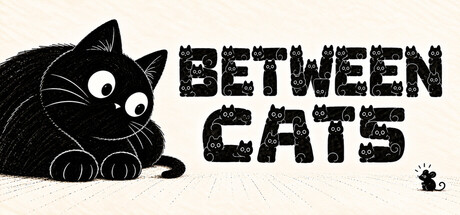 Between Cats Unclear codearttext | AI were used to assist with programming, asset creation, and text preparation. | Maymaybe | - | Sep 19, 2026 | |
 Tidy Up the Flower Shop In-game content artaudiotext | We use generative AI across all disciplines of game development most often with heavy amounts of human editing. That involves audio and visual art, our logo, and localization. We use it as a productivity tool so we can achieve a higher level of quality, faster, than we would have been able to. | Over The Moon | - | Sep 19, 2026 | |
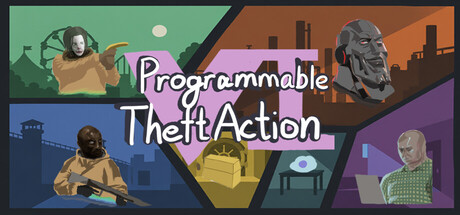 Programmable Theft Action VI / 拼题猎码手 VI In-game content textart | AI was used only for localization and for generating some assets outside the game. The game itself does not use or integrate AI. Any AI use described in the game refers to players using their own external tools. | GreatZaochen | - | Sep 19, 2026 | |
 Christmas Mystery: 100 Hidden Cats Dev only code | AI tools were used during development solely to assist with coding, including identifying and fixing bugs and making minor code corrections and improvements. AI does not generate any content for players during gameplay. | ArPeaKK Games | - | Sep 19, 2026 | |
 AVALANCHE Store/marketing art | Some store-page and marketing artwork for AVALANCHE was created or edited using generative AI. The game does not generate content during gameplay and does not connect to external AI services. | SGGame | - | Sep 19, 2026 | |
 LOCKDOWN In-game content artaudio | Generative AI tools were used during the development of LOCKDOWN to assist in the creation of some artwork and music featured in the game. All AI-assisted content was reviewed, selected, edited, and integrated by the development team. Generative AI is not used to generate content in real time during gameplay. | M1G GAMES STUDIOS | - | Sep 19, 2026 | |
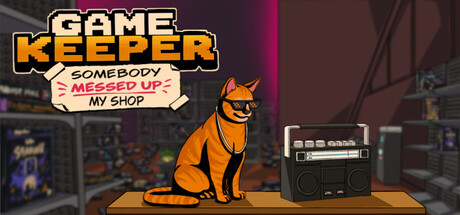 Game Keeper: Somebody Messed Up My Shop! In-game content artaudio | We want to be transparent about our use of AI.
AI was used only as a supporting tool for selected textures and sounds. Due to our limited budget, it helped us create visual assets that would otherwise have been difficult to produce within our resources.
We deeply respect the work of real artists. The game’s concept, creative direction, design, and programming were created entirely by humans. AI was used only as a supplementary tool in a limited part of the audio/visual production process. | VeinStudios | - | Sep 19, 2026 | |
 Video Store Chaos In-game content art | Generative AI was used to create cover textures for the game's fictional movies, games and VHS tapes, as well as some movie posters and video content. As a solo indie developer, I used these tools to make a cover library of this scale feasible. | neovio | - | Sep 19, 2026 | |
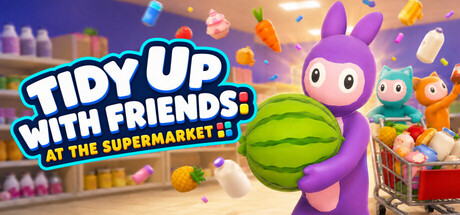 Tidy Up Together: At the Supermarket Store/marketing arttext | AI has been used to enhance the quality of some store and marketing elements. | Kavari Studio | - | Sep 19, 2026 | |
 Dude, Trust Me In-game content art | AI-generated images are used for the main menu background and loading screens. No other in-game content is AI-generated. | Sefik Studios | - | Sep 19, 2026 | |
 Vacation Adventures: Cruise Director Mega Bundle Unclear art | Some scenes cleaned up | Casual Arts | - | Sep 19, 2026 | |
 Pocket Parade In-game content artcode | Generative AI tools were used during development to assist with programming, debugging, and creating or refining some in-game assets. | Digital Mishappp | - | Sep 19, 2026 | |
 购物车管理员 In-game content art | The poster collectibles and a small number of icons in the game were generated with AI assistance | Jack Li | - | Sep 19, 2026 | |
 Puzzle Arcade Pals In-game content art | Gemini was used to create two backgrounds that I later blurred and two non-blurred backgrounds for the game's menus.
I'm a one-person developer. That means I do everything; and some of it I'm just bad at. I use AI as a tool to cover the gaps: the tasks I hate, the stuff I'd waste hours on just to replace later. The tools don't make the art. Every idea and decision, everything that made it into this game came from me. | ERMedia | - | Sep 19, 2026 | |
 Russpuppy Play & Learn artaudio | Pre-rendered art, sound effects, music | russpuppy | - | Sep 18, 2026 | |
 Rollamon In-game content art | Helped create base assets from generative AI.
Base assets are then edited, remixed, reworked or replaced to increase dev speed. | Happy Horns | - | Sep 18, 2026 | |
 Where's WigglyJiggly Dev only code | Generative AI tools were used during development to assist with programming, debugging, and development iteration. No generative AI is used during gameplay, no live AI-generated content is produced, and the game does not connect to external AI services during play. | CurlyGames | - | Sep 18, 2026 | |
 ÓRBITA · La gran tirada In-game content arttext | AI was used to create some artwork and assist with text and translations. No AI content is generated during gameplay. | Berialabs | - | Sep 18, 2026 | |
 Shiny Gen Live AI artaudiotextcode | Shiny Gen ships over thirty original games and scenes. Their art, animation frames, music and sound effects were produced with the same AI generation tools the product offers to players, using the third party services listed in our Live-Generated answer. All of it was directed, reviewed and assembled by us before it shipped, and the game code itself is authored and hand edited by our team. No pre generated content in the shipping build is produced from a player's input, and none of it is generated at runtime from our side.
Shiny Gen is a game creation tool, so live generation is the product rather than a feature of it. When a player asks for something, we call third party AI services to generate game code, images, animation frames, music, sound effects and 3D models from the text they type. Generation always happens at the player's explicit request, never in the background, and always requires a free Shiny Gen account and an internet connection.
Every request goes to an established commercial AI provider: Anthropic, OpenAI, Google, OpenRouter, Cloudflare Workers AI, Runware, Retro Diffusion, Replicate and ElevenLabs. Each request is governed by that provider's usage policy and runs under the provider's own built-in safety systems at their default settings. We never disable, weaken or opt out of a provider's safety system anywhere in our product. OpenAI image generation runs under OpenAI's default moderation, and Google image generation carries Google's SynthID provenance watermarking.
Guardrails on our side:
- Our Community Rules, which are binding under our Terms of Service and published on our website, set out what may not be generated or shared. They prohibit, among other things, any sexual content involving a minor and sexual imagery of a real person without their consent, and they treat a prompt asking for prohibited content as a breach whether or not the model produces it.
- Generation requires a signed in Shiny Gen account. There is no anonymous generation, so every request is attributable to an account.
- Generation is rate limited per account and per address, and it is metered against a paid credit balance, so volume abuse is bounded rather than free.
- The prompt and the resulting asset are retained against the account that made them, which is what lets us act on a report.
- Anyone can report content to support@shinygen.ai. A person on our team reviews each report and can remove the content and close the account responsible.
- The in app feed cannot receive player made content. It is served from our own catalogue and is enforced in code: the publish endpoint refuses any caller that is not our own account. Nothing a player generates can appear in another player's feed.
- Multiplayer contains no free text channel of any kind. Communication is a closed set of eight fixed emotes, so there is no user to user text surface to moderate.
- Player made games are never separate programs. They run as interpreted scripts inside our own sandbox, which is an allowlist: it has no filesystem, network, process or operating system access, and no reflection or dynamic dispatch. A generated game cannot execute native code, start a process, reach the network or read the player's files.
We do not permit and do not support the generation of Adult Only sexual content, and we will act on reports received through Steam's in game reporting system and at support@shinygen.ai. | David Walter | - | Sep 18, 2026 | |
 Hexcavate In-game content art | Hexcavate uses AI-assisted tools in parts of its development: some UI icons and Images were made with AI image generation. All of it was reviewed and edited by the developer. 2D art, level design, game design and codes are human made or licensed. No content is generated by AI while the game runs. | Robo Sombrero Studios | - | Sep 18, 2026 | |
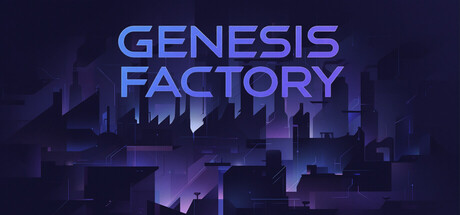 Genesis Factory Unclear artcode | Some of the code and artwork are created using artificial intelligence | qm_mofan | - | Sep 18, 2026 | |
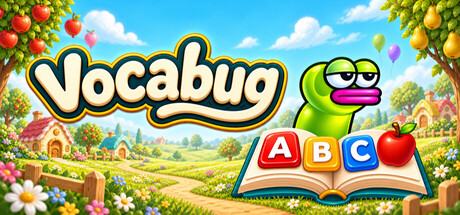 Vocabug In-game content artaudio | Some pre-rendered visual assets and music were created with generative AI tools, then curated, edited, and integrated by the developer. No AI content is generated during gameplay, and the game does not connect to external AI services. | Rovshan Garayev | - | Sep 18, 2026 | |
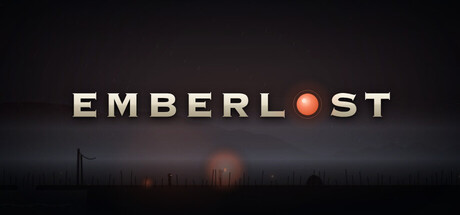 EMBERLOST In-game content audiocodetext | Parts of the soundtrack were created with AI-assisted music generation, then edited, mixed and mastered by hand. Some of the game's code and store text were also written with AI assistance. All art, level design and gameplay are hand-made. No content is generated while you play. | TSD Games | - | Sep 18, 2026 | |
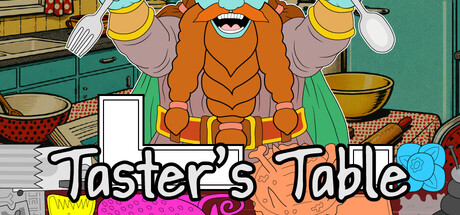 Taster's Table In-game content artcode | Generative AI was used to brainstorm some character images (but not directly used), and to render some static backgrounds. I also argued with it about coding bugs. It was helpful but not smart. | Michael Balamotis | - | Sep 18, 2026 | |
 Minefield Mayhem Store/marketing codeart | Artificial Intelligence was used in the programming process and creation of Steam store assets. | David Allendorfer | - | Sep 18, 2026 | |
 GARAKEI | ガラケー general | Our team uses AI tools to assist development of some in-game content. The final product reflects the creativity and expression of our own development team. | SATEKI GAMES | - | Sep 18, 2026 | |
 LOVE COMPANY: A Romance Escape In-game content artaudio | Generative AI was used to assist in the creation of some in-game graphical assets and to generate or process some voice audio. All AI-assisted content was created and reviewed during development. The game does not generate AI content during gameplay. | jbdjgames | - | Sep 18, 2026 | |
 Minesweeper Scapes In-game content art | The artwork in the game includes pieces generated by AI. | 16F | - | Sep 18, 2026 | |
 贋作・掟の門(習作) Dev only text | In this project, we are using generative AI to brainstorm ideas for character designs and to localize text. | ILCA, Inc. | - | Sep 18, 2026 | |
 Code Grid In-game content artaudiotext | Some visual assets and all story voice-over audio in this game were generated using AI tools, then curated and edited by the developer. Some store page and marketing assets were also AI-assisted. | NanQi | - | Sep 18, 2026 | |
 Art Fraud In-game content arttextcode | Graphics & Concepts: Generative AI was used to design and refine initial concept art, textures, and UI elements.
Texts & Dialogues: Portions of the lore, background stories, and dialogue scripts were conceptualized using AI language models and subsequently revised manually.
Code & Optimization: AI-assisted tools were utilized to optimize programming code and assist in debugging.
Note: All final assets in the game have been thoroughly reviewed, edited, and curated by the developer. | teaspoonstudios | - | Sep 18, 2026 | |
 Tessera In-game content artaudio | Some of Tessera's assets - including monster and character artwork, background art, gem and tile art, certain UI icons, and some audio - were created with the assistance of generative AI tools (Google Gemini) during development. These assets were reviewed, edited, curated, and integrated by the developer. Tessera does NOT generate any AI content live during gameplay; all AI-assisted content is pre-made and fixed in the build. | Peace War Found | - | Sep 18, 2026 | |
 散人大极品 Store/marketing art | Part of the assets on the store page have been optimized with AI. | 散人大极品 | - | Sep 18, 2026 | |
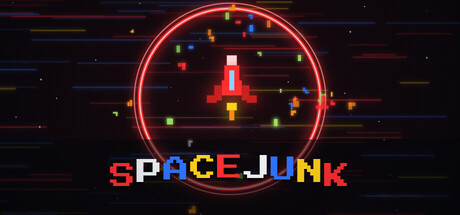 Spacejunk In-game content text | IA used for localization | Fax3D Games | - | Sep 18, 2026 | |
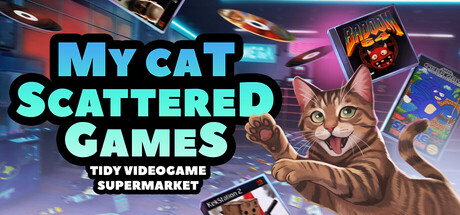 Save Game: Tidy Videogame Supermarket In-game content arttext | All 3D models, music, and UI icons were created by humans. Generative AI was used for some in-game textures, localization, and translation. | ODIUS | - | Sep 18, 2026 | |
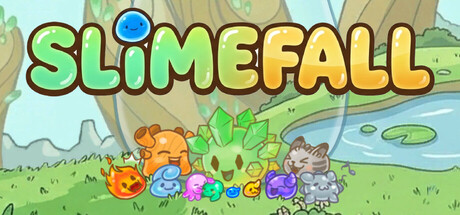 Slimefall In-game content codeart | Generative AI tools were used during development to assist with code optimization and UI icon prototyping. All content is safe for all audiences and does not infringe any copyrights. | Funny Turtle Games | - | Sep 18, 2026 | |
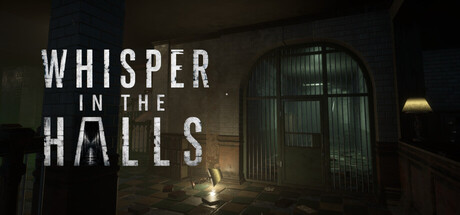 Whisper in the Halls In-game content art | AI is used in early visual concept explorations for certain environments.
Every aspect of the game at runtime including the story, visuals, environments, dialogues and music is all handcrafted with utmost human care. | FreakGang Interactive | - | Sep 18, 2026 | |
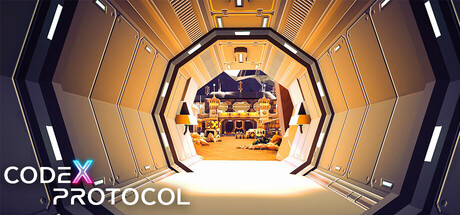 CodeX Protocol In-game content textaudio | The game had used AI tools for localization and dialogue voice lines. The game does not use any generative AI or any sort of AI during gameplay. | CodingKraft | - | Sep 17, 2026 | |
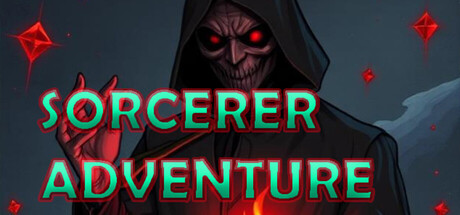 Sorcerer Adventure Store/marketing art | Steam store page logo and cover art made with ai tools | Marcello Studios | - | Sep 16, 2026 | |
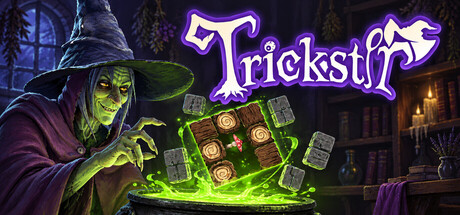 Trickstir Store/marketing arttext | Generative AI was used to help create capsule and library artwork, store descriptions, and screenshot accessibility text. The game itself does not use generative AI. | Trickstir | - | Sep 16, 2026 | |
 Somewhere Else In-game content art | As a small development team of just two people, we used generative AI tools in limited cases to assist with the production of certain visual assets and help manage the scope of development.
All AI-assisted assets were carefully reviewed, edited, refined, and finalized by us to fit the game's established art style and direction. Generative AI was used as a supporting tool during development, rather than to define the creative direction of the game. | Milecode | - | Sep 16, 2026 |


