Public Steam disclosure research25,380 disclosures tracked
Where do games disclose AI use?
Search developers’ Steam disclosures, compare classified AI use across
games, and follow recorded changes.
This index adds cross-game classifications and statistics to
statements published on individual store pages.
Groups reflect automatic analysis of public disclosures; mature records are excluded. These counts do not measure AI use across all of Steam.
Missing or unclear statements cannot establish whether a game uses AI.
Generative AI tools are used during development to assist with selected art production and localization. All AI-assisted outputs are reviewed, edited, and approved by the development team before being integrated into the game. The game does not use generative AI at runtime, and no content is generated live or delivered directly to players as unreviewed AI output.
Yes, we used AI to translate our game into several languages other than French and English, in order to make it accessible to a wider international audience.
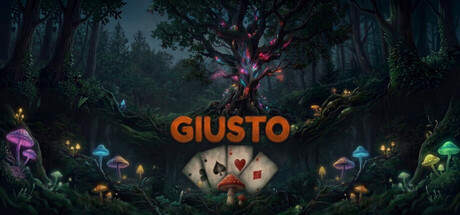
Character artwork for Giusto’s characters that represent each tier of the player’s journey began as AI-generated concept art, conceptualized, directed and reviewed by our team to match the the art direction of the game. 3D character models were generated from this concept art using Tripo AI’s image-to-3D tool, then reviewed and integrated into the game by our development team. From which, the final 3D models were designed and styled within Unreal Engine 5 to fit the feel of our game. All game design, music and other content were built directly by our team and purchased and licensed human-made asset packs.
Some game assets - including certain 3D models, sound effects, images and music - were created with the assistance of generative AI tools and then reviewed, edited, and integrated by the developer. The game does not generate AI content at runtime.
I’m a solo developer. At this stage, generative AI is used only for some character artwork shown in the game’s trailer and promotional material. These assets are temporary and are not used in the game itself.
As a one-person studio, I’m using temporary AI-generated artwork to gauge interest in the game before committing significant time or money to producing the final character art. I plan to replace this artwork with original/non-AI assets before release and will update this disclosure when that happens.
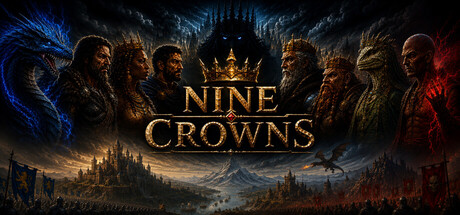
Nine Crowns uses generative AI as part of its art development process. AI-assisted tools are used to create and refine some character art, environments, sprites, and promotional artwork. These assets are selected, directed, edited, and reviewed by the development team before being included in the game. No AI content is generated during gameplay.
Pre-rendered Content:
Generative AI tools and agentic AI development workflows were utilized during the creation of this game to assist in:
- Code & Systems: Writing and optimizing core gameplay logic, typescript structures, and simulation algorithms.
- Visual Assets: Creating and pre-rendering all visual assets used in-game, including boot screen artworks, drive interfaces, and graphical components.
- Localization: Translating and reviewing in-game text and UI labels.
Please note that all AI-assisted assets and code were pre-rendered and compiled during the development phase. The game runs entirely locally and does not perform any real-time (live) AI generation, nor does it connect to any external AI APIs or services during gameplay.
In early development, the game included some AI-generated graphical elements while I waited for a professional artist's work. I am now gradually integrating that work, but the process is not yet finished. AI also generated the game's English, German, and French localizations from the original Ukrainian text, and later proofread by a human.
Art direction steered asset creation, SFX, store capsule artwork and the logo were produced with generative AI assistance then hand-edited. No generative AI runs at runtime; the game generates no content live.
Generative AI tools were used during development to assist in the creation of certain game assets. For visual assets such as units and characters, the developer first created original line art manually, then used AI-assisted coloring as part of the workflow, followed by additional manual editing and refinement. For music, AI was used to generate an initial melodic idea, which was then manually edited, arranged, and refined by the developer in LMMS. All AI-assisted content is pre-generated and reviewed by the developer before being included in the game. The game does not use live-generated AI during gameplay.
AI was used during development to create portions of the game’s pre-generated artwork, characters, animations, music, voices, and sound effects. These assets are included in the finished game. No AI content is generated live during gameplay.
Generative AI tools were used during development to create certain visual and audio assets:
- 2D Visual Assets: Some 2D icons, UI symbols, and graphic elements were generated or assisted using AI image generation tools and polished for final in-game use.
- Audio (BGM): Background music (BGM) tracks were generated with the assistance of generative AI music tools.
This game uses generative AI tools as part of its art creation process. Visual assets — including background and environment art, character and unit art, and card illustrations — were generated with the assistance of AI and then reviewed and refined by hand. All AI-assisted content is checked to ensure it meets our quality and originality standards.
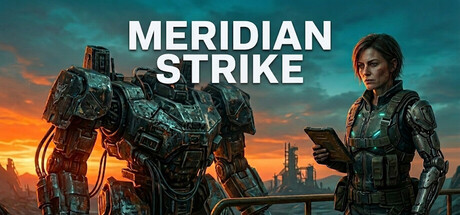
Generative AI tools were used during development to create certain pre-generated visual and audio assets, including character portraits and video sequences, mech and environment artwork, synthetic voice-over, and some sound effects. All generated assets were reviewed and curated by the developer. The game does not generate content during gameplay, and no player input is sent to generative AI services.
Generative AI is used in a supplementary capacity, at two points. First, as a drafting step for some of the game's 2D illustrations: every such asset is then rebuilt through our own production pipeline — reduced to a strict 1-bit black-and-white format, curated, and animated frame by frame with in-house tools — so that it matches our art direction. Second, the game is written in French, and its translations into the eight other supported languages are AI-assisted. No generative AI runs in the game itself: all content ships fixed with the build.
Some small props and interface icons in this game began as AI-generated meshes and textures (text-to-3D / image-to-3D), which were then reworked by hand, retopologised, re-scaled, colour-graded and assembled before shipping. All other art comes from licensed asset packs and hand kitbashing. Nothing is generated live: no AI runs during play, and no player input is sent to an AI service.
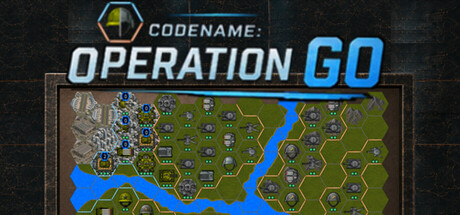
Some of the placeholder unit and terrain sprites that I'm using while the game is in development were generated with the help of AI (with a lot of manual curation and editing... I promise that you will not be confronted by any noticeably ugly slop).
Initial sales will contribute toward creating hand-drawn, unique sprites for as many units as possible.
Some pre-generated artwork and audio included in MyHiStory were created with the assistance of generative AI during development. These assets were selected, reviewed, and curated by the developer before inclusion in the game. MyHiStory does not use generative AI to generate content or code while the game is running.
We used generative AI on fighter portraits for deeper immersion and as a pre-production tool for early concept layouts. From there, all character assets and visual elements were extensively edited and manually hand-painted by human artists to ensure high visual quality and artistic control.
Pre-generated AI-assisted visual content is used in this game. AI was used to create and iterate on card illustrations, character portraits, backgrounds, icons, and selected promotional artwork. AI was used to generate source video clips for pre-rendered chapter cinematics. These assets were selected, edited, composited, cropped, color-adjusted, and integrated by the developer. The game does not generate AI content during play, does not accept player prompts, and does not connect to an external AI service at runtime.
Generative AI was used during development as a coding assistant and to assist with drafting and translating store-page and marketing text. Some pixel-art assets were rendered by deterministic drawing code written with AI assistance; the final images were not directly output by a text-to-image or diffusion model. All shipped and published content was reviewed and edited by the developer. No generative AI runs in the game, and no content is generated from player input.
This game was developed with the assistance of generative AI tools. Some graphical assets were created using AI and then reviewed, edited, and integrated by the developer. AI tools were also used to assist with writing code. All game design, gameplay mechanics, and final content decisions were made by the developer. The game does not generate AI content at runtime.
During development, generative tools were used for selected textures and supporting visual elements in the game and store artwork. These assets were reviewed and integrated by the developer. All content is fixed in the shipped game; nothing is generated during gameplay.
Some of this game's art and audio assets were created using generative AI tools, from the studio's own prompts and under our tool licenses, then curated and edited by the team. All game code and text were written by hand.
Some of this game's pre-generated assets were created by Meridian Studios using generative AI tools, from our own prompts and under our licenses: 2D art (illustrations, backgrounds, character and enemy tokens, icons, and store art) generated with FLUX via the Replicate API, and a portion of the sound effects generated with ElevenLabs. All AI-assisted assets were reviewed, curated, and integrated by the studio. No AI-generated content is produced live during gameplay, and no player data is sent to any AI service.
Generative AI was used selectively as a development tool to assist with some textures and selected 3D assets. All assets were reviewed, refined where needed, and integrated by the developer. The game does not use live-generated AI content.
Generative AI was used during development to create the game’s pre-generated 2D visual assets, including card illustrations, backgrounds, UI decorative elements, and Steam marketing materials. It was also used to assist with portions of the store text and localization. All AI-assisted content was selected, edited, and reviewed by the developer before publication. The game does not use generative AI to generate content at runtime.
We use generative AI in two limited ways.
Translation. Simplified Chinese, German, Japanese, and Brazilian Portuguese were machine-translated so the story reaches more players. English, Turkish, French, and Spanish were localized by our international friends and us. However, AI translation can miss nuance, so we warmly welcome player feedback to improve it.
Placeholder art. Three images are AI-generated: the Prologue background and the Mentor and Player portraits. They are placeholders. We believe in human expression and will replace them with commissioned art once the game has an audience.
Everything else (code, design, and all other artwork) is made by human hands.
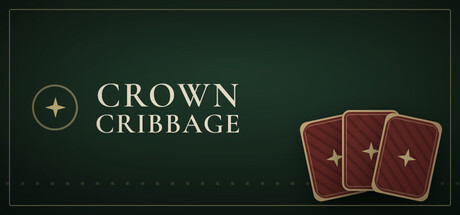
Some assets in Crown Cribbage were made with the help of generative AI tools:
- in-game music was generated with AI music tools
- capsule/key art
- marketing copy drafts
- assistance with programming
One point of emphasis:
The computer opponents in this game are not generative AI. They are hand-written heuristics, a fixed set of rules for discarding and pegging, tuned by
difficulty.
They see only what you see. They do not look at your hand, and nothing about them is generated while you play.
No AI content of any kind is created during a match.
Generative AI tools were used during development to assist with creating and refining some 2D artwork, visual assets, and promotional images. All AI-assisted content is pre-generated, reviewed, and edited by the developer before inclusion. The game does not generate AI content during gameplay and does not send player data to generative AI services.
Generative AI tools were used during development to create or process some pre-generated voice audio and selected 2D visual assets, including stylized character and news-related images.
All AI-assisted content is created before release and manually reviewed, edited, and curated by the developer before being included in the game.
No generative AI runs during gameplay, and no player input or data is sent to generative AI services.
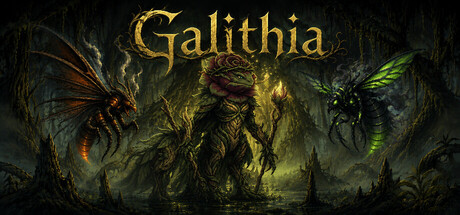
Galithia uses generative AI during development for some concepting, visual iteration, and content support. Any AI-assisted assets or materials are reviewed, modified, and integrated by the developer, with final approval and creative direction remaining fully human-led. Gameplay systems, combat balance, encounter design, and final implementation are developer-controlled.
Generative AI tools are used during development to assist with selected art production and localization. All AI-assisted outputs are reviewed, edited, and approved by the development team before being integrated into the game. The game does not use generative AI at runtime, and no content is generated live or delivered directly to players as unreviewed AI output.
Yes, we used AI to translate our game into several languages other than French and English, in order to make it accessible to a wider international audience.
Character artwork for Giusto’s characters that represent each tier of the player’s journey began as AI-generated concept art, conceptualized, directed and reviewed by our team to match the the art direction of the game. 3D character models were generated from this concept art using Tripo AI’s image-to-3D tool, then reviewed and integrated into the game by our development team. From which, the final 3D models were designed and styled within Unreal Engine 5 to fit the feel of our game. All game design, music and other content were built directly by our team and purchased and licensed human-made asset packs.
Some game assets - including certain 3D models, sound effects, images and music - were created with the assistance of generative AI tools and then reviewed, edited, and integrated by the developer. The game does not generate AI content at runtime.
I’m a solo developer. At this stage, generative AI is used only for some character artwork shown in the game’s trailer and promotional material. These assets are temporary and are not used in the game itself.
As a one-person studio, I’m using temporary AI-generated artwork to gauge interest in the game before committing significant time or money to producing the final character art. I plan to replace this artwork with original/non-AI assets before release and will update this disclosure when that happens.
Nine Crowns uses generative AI as part of its art development process. AI-assisted tools are used to create and refine some character art, environments, sprites, and promotional artwork. These assets are selected, directed, edited, and reviewed by the development team before being included in the game. No AI content is generated during gameplay.
Pre-rendered Content:
Generative AI tools and agentic AI development workflows were utilized during the creation of this game to assist in:
- Code & Systems: Writing and optimizing core gameplay logic, typescript structures, and simulation algorithms.
- Visual Assets: Creating and pre-rendering all visual assets used in-game, including boot screen artworks, drive interfaces, and graphical components.
- Localization: Translating and reviewing in-game text and UI labels.
Please note that all AI-assisted assets and code were pre-rendered and compiled during the development phase. The game runs entirely locally and does not perform any real-time (live) AI generation, nor does it connect to any external AI APIs or services during gameplay.
In early development, the game included some AI-generated graphical elements while I waited for a professional artist's work. I am now gradually integrating that work, but the process is not yet finished. AI also generated the game's English, German, and French localizations from the original Ukrainian text, and later proofread by a human.
Art direction steered asset creation, SFX, store capsule artwork and the logo were produced with generative AI assistance then hand-edited. No generative AI runs at runtime; the game generates no content live.
Generative AI tools were used during development to assist in the creation of certain game assets. For visual assets such as units and characters, the developer first created original line art manually, then used AI-assisted coloring as part of the workflow, followed by additional manual editing and refinement. For music, AI was used to generate an initial melodic idea, which was then manually edited, arranged, and refined by the developer in LMMS. All AI-assisted content is pre-generated and reviewed by the developer before being included in the game. The game does not use live-generated AI during gameplay.
AI was used during development to create portions of the game’s pre-generated artwork, characters, animations, music, voices, and sound effects. These assets are included in the finished game. No AI content is generated live during gameplay.
Generative AI tools were used during development to create certain visual and audio assets:
- 2D Visual Assets: Some 2D icons, UI symbols, and graphic elements were generated or assisted using AI image generation tools and polished for final in-game use.
- Audio (BGM): Background music (BGM) tracks were generated with the assistance of generative AI music tools.
This game uses generative AI tools as part of its art creation process. Visual assets — including background and environment art, character and unit art, and card illustrations — were generated with the assistance of AI and then reviewed and refined by hand. All AI-assisted content is checked to ensure it meets our quality and originality standards.
Generative AI tools were used during development to create certain pre-generated visual and audio assets, including character portraits and video sequences, mech and environment artwork, synthetic voice-over, and some sound effects. All generated assets were reviewed and curated by the developer. The game does not generate content during gameplay, and no player input is sent to generative AI services.
Generative AI is used in a supplementary capacity, at two points. First, as a drafting step for some of the game's 2D illustrations: every such asset is then rebuilt through our own production pipeline — reduced to a strict 1-bit black-and-white format, curated, and animated frame by frame with in-house tools — so that it matches our art direction. Second, the game is written in French, and its translations into the eight other supported languages are AI-assisted. No generative AI runs in the game itself: all content ships fixed with the build.
Some small props and interface icons in this game began as AI-generated meshes and textures (text-to-3D / image-to-3D), which were then reworked by hand, retopologised, re-scaled, colour-graded and assembled before shipping. All other art comes from licensed asset packs and hand kitbashing. Nothing is generated live: no AI runs during play, and no player input is sent to an AI service.
Some of the placeholder unit and terrain sprites that I'm using while the game is in development were generated with the help of AI (with a lot of manual curation and editing... I promise that you will not be confronted by any noticeably ugly slop).
Initial sales will contribute toward creating hand-drawn, unique sprites for as many units as possible.
Some pre-generated artwork and audio included in MyHiStory were created with the assistance of generative AI during development. These assets were selected, reviewed, and curated by the developer before inclusion in the game. MyHiStory does not use generative AI to generate content or code while the game is running.
We used generative AI on fighter portraits for deeper immersion and as a pre-production tool for early concept layouts. From there, all character assets and visual elements were extensively edited and manually hand-painted by human artists to ensure high visual quality and artistic control.
Pre-generated AI-assisted visual content is used in this game. AI was used to create and iterate on card illustrations, character portraits, backgrounds, icons, and selected promotional artwork. AI was used to generate source video clips for pre-rendered chapter cinematics. These assets were selected, edited, composited, cropped, color-adjusted, and integrated by the developer. The game does not generate AI content during play, does not accept player prompts, and does not connect to an external AI service at runtime.
Generative AI was used during development as a coding assistant and to assist with drafting and translating store-page and marketing text. Some pixel-art assets were rendered by deterministic drawing code written with AI assistance; the final images were not directly output by a text-to-image or diffusion model. All shipped and published content was reviewed and edited by the developer. No generative AI runs in the game, and no content is generated from player input.
This game was developed with the assistance of generative AI tools. Some graphical assets were created using AI and then reviewed, edited, and integrated by the developer. AI tools were also used to assist with writing code. All game design, gameplay mechanics, and final content decisions were made by the developer. The game does not generate AI content at runtime.
During development, generative tools were used for selected textures and supporting visual elements in the game and store artwork. These assets were reviewed and integrated by the developer. All content is fixed in the shipped game; nothing is generated during gameplay.
Some of this game's art and audio assets were created using generative AI tools, from the studio's own prompts and under our tool licenses, then curated and edited by the team. All game code and text were written by hand.
Some of this game's pre-generated assets were created by Meridian Studios using generative AI tools, from our own prompts and under our licenses: 2D art (illustrations, backgrounds, character and enemy tokens, icons, and store art) generated with FLUX via the Replicate API, and a portion of the sound effects generated with ElevenLabs. All AI-assisted assets were reviewed, curated, and integrated by the studio. No AI-generated content is produced live during gameplay, and no player data is sent to any AI service.
Generative AI was used selectively as a development tool to assist with some textures and selected 3D assets. All assets were reviewed, refined where needed, and integrated by the developer. The game does not use live-generated AI content.
Generative AI was used during development to create the game’s pre-generated 2D visual assets, including card illustrations, backgrounds, UI decorative elements, and Steam marketing materials. It was also used to assist with portions of the store text and localization. All AI-assisted content was selected, edited, and reviewed by the developer before publication. The game does not use generative AI to generate content at runtime.
We use generative AI in two limited ways.
Translation. Simplified Chinese, German, Japanese, and Brazilian Portuguese were machine-translated so the story reaches more players. English, Turkish, French, and Spanish were localized by our international friends and us. However, AI translation can miss nuance, so we warmly welcome player feedback to improve it.
Placeholder art. Three images are AI-generated: the Prologue background and the Mentor and Player portraits. They are placeholders. We believe in human expression and will replace them with commissioned art once the game has an audience.
Everything else (code, design, and all other artwork) is made by human hands.
Some assets in Crown Cribbage were made with the help of generative AI tools:
- in-game music was generated with AI music tools
- capsule/key art
- marketing copy drafts
- assistance with programming
One point of emphasis:
The computer opponents in this game are not generative AI. They are hand-written heuristics, a fixed set of rules for discarding and pegging, tuned by
difficulty.
They see only what you see. They do not look at your hand, and nothing about them is generated while you play.
No AI content of any kind is created during a match.
Generative AI tools were used during development to assist with creating and refining some 2D artwork, visual assets, and promotional images. All AI-assisted content is pre-generated, reviewed, and edited by the developer before inclusion. The game does not generate AI content during gameplay and does not send player data to generative AI services.
Generative AI tools were used during development to create or process some pre-generated voice audio and selected 2D visual assets, including stylized character and news-related images.
All AI-assisted content is created before release and manually reviewed, edited, and curated by the developer before being included in the game.
No generative AI runs during gameplay, and no player input or data is sent to generative AI services.
Galithia uses generative AI during development for some concepting, visual iteration, and content support. Any AI-assisted assets or materials are reviewed, modified, and integrated by the developer, with final approval and creative direction remaining fully human-led. Gameplay systems, combat balance, encounter design, and final implementation are developer-controlled.