Public Steam disclosure research27,951 disclosures tracked
Where do games disclose AI use?
Search developers’ Steam disclosures, compare classified AI use across
games, and follow recorded changes.
This index adds cross-game classifications and statistics to
statements published on individual store pages.
Groups reflect automatic analysis of public disclosures; mature records are excluded. These counts do not measure AI use across all of Steam.
Missing or unclear statements cannot establish whether a game uses AI.
The in-game assets/content do not involve AI generation. The use of generative AI in this game is solely limited to assisting in the creation of concept art for community items, including trading cards and badges, which are subsequently refined and adjusted by artists.
Pre-generated voice cloning/Text-To-Speech where it makes sense creatively.
Placeholders will be replaced by real voice acting as development continues.
During the beta phase of Steel Hunters, we may use AI-generated voices for certain in-game characters, including the announcer, to support our development process. The majority of the voices in the game are performed by real voice actors, and AI-generated voices will be replaced with human voices before the official launch. This helps us focus on delivering the best experience while the game is still in development.
Political Arena is being produced by a small team on a tight budget. We’re proud to have worked with a number of gifted artists, designers, developers and other creators on many of our core systems and assets.
We have employed AI art assets only when it exceeds our budget capacity to provide fair wages for our team. We have employed AI to create or modify specialized, low-frequency art assets including art for certain event windows.
Nearly all of our game’s most visible art assets, including its UI, backgrounds and character art were all produced by experienced artists.
We use generative AI for some in-game voices (Tona, enemy cyborgs and English dubbing), for part of the in-game music (the bar and the radio stations), and to assist with the translation of in-game text.
Generative AI Integration:
During the early access phase, Morgenstern leverages generative AI to create placeholder assets, including images, sound effects, and text. This approach allows for rapid prototyping and iterative development, ensuring a dynamic and evolving gaming experience as we refine and enhance the final content.
In Zero Factory, there is no option for users to generate content using AI or other means that could infringe on intellectual property rights. The game’s content is fully curated and controlled by the development team, ensuring that any assets or user interactions within the game are legally compliant and original.
Artificial intelligence is used solely for minor content improvements and to speed up certain tasks in the development process. It is not used in any way to create original content.
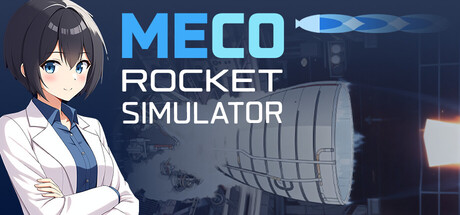
As a solo dev, I use custom-trained AI tools for a small portion of the visuals/audio, based on assets I own or created. The vast majority of my development effort goes into the realistic rocket simulation and engineering systems.
A majority of the static image content, the character portrait animations in the Character Select screen, and some flavor text on playable cards, had AI play a role in their development.
Some notable exceptions to this are:
The card frame artwork for all cards, which were created by a contracted artist.
Our capsule and header images, which were created by a contracted artist.
Some enemy portraits.
Marketing materials which include artwork from the capsule and header.
All narrative and dialogue text, which was written by the team.
We would like to extend a special thank you to the select family and friends who volunteered their likenesses for use as models for some of our main characters. It is deeply appreciated and we enjoyed working with you.
I will not directly provide any AI services, but plan to only retain the interface for external AI to take over the game logic in the game. Users can use their own trained language models, and they can only solve problems such as computing power by themselves. I plan to not allow users to enter text in the game, so that users have no chance of inducing language model generation. However, some overfitting language models will ignore the prompts and output nfsw. At the same time, I used two methods: 1. Limit the output length and suppress it from the root. 2. Keyword check to see if nfsw content exists. If someone tries to report it, he should report it to the person who gave him the language model. If the user enables AI, I will change the name of the enabled AI service into a game watermark to prove that it is the user's own problem.
The vast majority of the game is handcrafted. AI tools were used to assist in the creation of 2D character dialogue portraits and some minor environment textures.
Dialogue Generation: An on-board AI character named AURORA uses a local offline LLM to generate procedural dialogue in response to player actions or voice input. This allows for varied, context-sensitive replies that maintain the tone and lore of the game world.
Voice Interaction (optional): Players may speak to AURORA using voice recognition, which is then interpreted and processed to generate in-character responses, offering a more immersive narrative experience.
Startelf uses AI-powered tools to create some of the graphics in the game and in marketing materials (including the trailer), as well as for in-game text and localization into other languages. We select, review, and revise all content. The game does not generate any content using AI during gameplay.
AI voice cloning has been used, however, all acting has been performed by the voice actor, only the voice has been changed through AI technology.
ChatGPT was used to generate model numbers and descriptions for the in game parts store.
There are two A.I. Minds within BQ. The first mind creates the content/visuals. The second mind interacts with the player in the form of attackable NPCs or friendly NPCs. But both minds never communicate with each other, and the first mind never communicates with the player.
- Some artworks have been made with the help of the Midjourney AI tool.
- The Map Data in some countries has been generated with the help of AI technology to recognize satellite images.
The headers for the page are made using GrokAI
as well as some of the icons and parts of the code has guidance of AI too
All of the AI generated images have been modified in big ways and due to US laws all rights are still reserved for them especially since the AI code is extremely modified and only used as a guide not as a way to slack off
AI tools were used strictly in a supportive role for optimization, debugging, and polishing of a few assets. The vast majority of the game's art, logic, and design is handcrafted.