Public Steam disclosure research25,383 disclosures tracked
Where do games disclose AI use?
Search developers’ Steam disclosures, compare classified AI use across
games, and follow recorded changes.
This index adds cross-game classifications and statistics to
statements published on individual store pages.
Groups reflect automatic analysis of public disclosures; mature records are excluded. These counts do not measure AI use across all of Steam.
Missing or unclear statements cannot establish whether a game uses AI.
The game includes an unholy amount of AI-generated content, including:
- Textures
- Images
- Music
- Audio effects
- Voice lines
- Facial and body animations
- Code
Game allows player to use voice as a main input tool. To achieve great quality of speech to text, a base version of openai's whisper model is used.
The content seen in the game is not live-generated. The player's input is embedded into a vector through a small model with 278M parameters.
Model:
paraphrase-multilingual-mpnet-base-v2
(Used primarily for wide support of languages)
Then, the game uses Faiss to match the player's input to known, predefined inputs. Each of those describes a reaction and change in the state of the game.
Icon was made with local diffusion model.
All music tracks in the game were created with Udio.
Some of the voices you hear were designed using Elevenlabs.
Several images and backgrounds were generated with Stable Diffusion.
Translations were done using ChatGPT.
All pieces are entirely fictional "artworks" created by the developer "Draconum."
AI has been utilized in our game to add an extra layer of immersion. We've used AI-generated static background images to create captivating atmospheres within the game world. Additionally, AI-driven voice synthesis brings some of our characters to life, giving them unique and expressive voices. This use of AI contributes to a more engaging and dynamic experience for players.
There are a handful of times we've used AI to create details in the background of some of our scenes, but this content is rare and often temporary. We also have an instance of AI generated music - we've got a silly ambient track that plays in the game's end-game-failure-state scene.
AI is used to create the initial images. All images are then edited including upscaling, lighting and colour enhancement, detail touch up's and re-drawing of different aspects.
Some jumpscare effects and item visuals make limited use of AI-assisted generation, followed by manual editing. All content is curated, integrated, and polished by the development team.
In the game, artificial intelligence is used only in a few aspects, specifically for generating voice acting and music. All the music featured in the game, as well as the voice acting for characters, is entirely created using AI technologies.
Communication with the ghost is carried out using artificial intelligence.
Generative artificial intelligence is partly used for creation of the game key-art on the Store Page.
This game uses AI-assisted tools for localization. Some in-game translations and voice-over narration are generated with the support of artificial intelligence. While we strive for accuracy and quality, minor inconsistencies may occur.
All of the images in this game are generated by neural networks trained on images (aka “AI generated”). If you choose to boycott all AI generated material, please do not buy this game. If you are uncomfortable with the thought but are interested in my game, please read on.
The aesthetic of this game had to come from the strange, uncanny look of AI. There is a heartlessness to the visuals that is intentional. I am not trying to copy the look of other artists. The only tool capable of producing the look I was going for was a malfunctioning AI. Ironically, I have had a number of people tell me that it looks much more realistic than standard AI. I am assuming this is because of how I tried to reproduce the look of old media.
All images, aside from the title screen, credits and some of the video shot on camcorder were generated by AI prompts. It took several days of exploring before I began generating images that fit the aesthetic I was looking for. I have heard AI described as a slot machine, and I think the metaphor is somewhat accurate. I think of this as similar to indeterminacy in music. Using random number generators can produce interesting outputs, but you need to refine and direct the system to do so.
I started my process in Midjourney. My ratio of usable images was around 100 to 1; for every 100 images I generated, I found one usable piece for the game. I created an automated process to transform these images to 16:9 widescreen in Photoshop Beta. Some of these images I touched up manually or regenerated sections of the image. There are some real images and hand painted imagery within the AI elements. Often, I would have to generate the sides of the image multiple times because photoshop didn’t generate what I needed.
To those concerned about not paying artists: I understand this, but I want to be clear that this was not created to replace the work of artists, any more than the synthesized scores to horror films were about replacing orchestras. These are tools that do different things. Rather than some sort of lazy shortcut, the use of AI imagery is essential to the aesthetic and narrative of the Path of Veins.
Some of the art materials for this work were created using Stable Diffusion, including but not limited to:
"CG" used in the work;
Partial small elements.
Note: The right to interpret the AI content of this work belongs to the person in charge, Liu, and any consequences of AI painting are borne by the first responsible person, Liu.
We used AI to create the capsules and library logos for the game's store page.
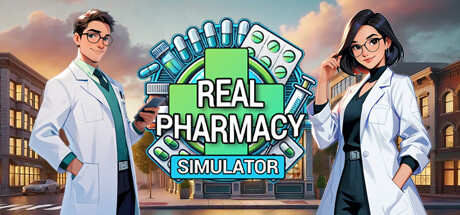
The voices in the trainer and customer dialogues were created using artificial intelligence.
Some of the images were generated by Midjourney, but were later adapted manually by the game developer; all the background musics were generated by Suno AI.
Yes, we used AI tools in a limited capacity during the development of our game. Specifically, AI was utilized for certain aspects of the game's text, such as crafting the Steam page description, and for some pieces of code. However, the core development, design, and creative processes were driven by our team(me). The use of AI was supplementary, aimed at enhancing productivity and efficiency, rather than shaping the core elements of the game.
The game includes an unholy amount of AI-generated content, including:
- Textures
- Images
- Music
- Audio effects
- Voice lines
- Facial and body animations
- Code
Game allows player to use voice as a main input tool. To achieve great quality of speech to text, a base version of openai's whisper model is used.
The content seen in the game is not live-generated. The player's input is embedded into a vector through a small model with 278M parameters.
Model:
paraphrase-multilingual-mpnet-base-v2
(Used primarily for wide support of languages)
Then, the game uses Faiss to match the player's input to known, predefined inputs. Each of those describes a reaction and change in the state of the game.
Icon was made with local diffusion model.
All music tracks in the game were created with Udio.
Some of the voices you hear were designed using Elevenlabs.
Several images and backgrounds were generated with Stable Diffusion.
Translations were done using ChatGPT.
All pieces are entirely fictional "artworks" created by the developer "Draconum."
AI has been utilized in our game to add an extra layer of immersion. We've used AI-generated static background images to create captivating atmospheres within the game world. Additionally, AI-driven voice synthesis brings some of our characters to life, giving them unique and expressive voices. This use of AI contributes to a more engaging and dynamic experience for players.
There are a handful of times we've used AI to create details in the background of some of our scenes, but this content is rare and often temporary. We also have an instance of AI generated music - we've got a silly ambient track that plays in the game's end-game-failure-state scene.
AI is used to create the initial images. All images are then edited including upscaling, lighting and colour enhancement, detail touch up's and re-drawing of different aspects.
Some jumpscare effects and item visuals make limited use of AI-assisted generation, followed by manual editing. All content is curated, integrated, and polished by the development team.
In the game, artificial intelligence is used only in a few aspects, specifically for generating voice acting and music. All the music featured in the game, as well as the voice acting for characters, is entirely created using AI technologies.
Communication with the ghost is carried out using artificial intelligence.
Generative artificial intelligence is partly used for creation of the game key-art on the Store Page.
This game uses AI-assisted tools for localization. Some in-game translations and voice-over narration are generated with the support of artificial intelligence. While we strive for accuracy and quality, minor inconsistencies may occur.
All of the images in this game are generated by neural networks trained on images (aka “AI generated”). If you choose to boycott all AI generated material, please do not buy this game. If you are uncomfortable with the thought but are interested in my game, please read on.
The aesthetic of this game had to come from the strange, uncanny look of AI. There is a heartlessness to the visuals that is intentional. I am not trying to copy the look of other artists. The only tool capable of producing the look I was going for was a malfunctioning AI. Ironically, I have had a number of people tell me that it looks much more realistic than standard AI. I am assuming this is because of how I tried to reproduce the look of old media.
All images, aside from the title screen, credits and some of the video shot on camcorder were generated by AI prompts. It took several days of exploring before I began generating images that fit the aesthetic I was looking for. I have heard AI described as a slot machine, and I think the metaphor is somewhat accurate. I think of this as similar to indeterminacy in music. Using random number generators can produce interesting outputs, but you need to refine and direct the system to do so.
I started my process in Midjourney. My ratio of usable images was around 100 to 1; for every 100 images I generated, I found one usable piece for the game. I created an automated process to transform these images to 16:9 widescreen in Photoshop Beta. Some of these images I touched up manually or regenerated sections of the image. There are some real images and hand painted imagery within the AI elements. Often, I would have to generate the sides of the image multiple times because photoshop didn’t generate what I needed.
To those concerned about not paying artists: I understand this, but I want to be clear that this was not created to replace the work of artists, any more than the synthesized scores to horror films were about replacing orchestras. These are tools that do different things. Rather than some sort of lazy shortcut, the use of AI imagery is essential to the aesthetic and narrative of the Path of Veins.
Some of the art materials for this work were created using Stable Diffusion, including but not limited to:
"CG" used in the work;
Partial small elements.
Note: The right to interpret the AI content of this work belongs to the person in charge, Liu, and any consequences of AI painting are borne by the first responsible person, Liu.
We used AI to create the capsules and library logos for the game's store page.
The voices in the trainer and customer dialogues were created using artificial intelligence.
Some of the images were generated by Midjourney, but were later adapted manually by the game developer; all the background musics were generated by Suno AI.
Yes, we used AI tools in a limited capacity during the development of our game. Specifically, AI was utilized for certain aspects of the game's text, such as crafting the Steam page description, and for some pieces of code. However, the core development, design, and creative processes were driven by our team(me). The use of AI was supplementary, aimed at enhancing productivity and efficiency, rather than shaping the core elements of the game.