Public Steam disclosure research25,706 disclosures tracked
Where do games disclose AI use?
Search developers’ Steam disclosures, compare classified AI use across
games, and follow recorded changes.
This index adds cross-game classifications and statistics to
statements published on individual store pages.
Groups reflect automatic analysis of public disclosures; mature records are excluded. These counts do not measure AI use across all of Steam.
Missing or unclear statements cannot establish whether a game uses AI.
The game's core visual presentation is built around human-created playable character sprite sheets and map artwork, while the level layouts and game design are created by the developer. Generative AI was used for selected pre-generated audio, localization, and supporting visual content such as the logo and key art. No generative AI content is generated during gameplay.
AI-assisted tools were used during development to help create and refine some visual assets, text, and audio content. All AI-assisted content was reviewed, edited, and curated by the developer before being included in the game. The game does not generate AI content dynamically during gameplay.
AI tools were used during development solely to assist with coding, including identifying and fixing bugs and making minor code corrections and improvements. AI does not generate any content for players during gameplay.
Generative AI was used during development to create all visual art assets and music featured in the game. The generated content was reviewed, selected, and integrated by the developer. The game does not generate AI content during gameplay.
This game was developed with the assistance of generative AI. Music, sound effects, translation, and some visual art were AI-generated, then curated and adjusted by the developer.
This game was developed through collaboration between the developer and AI tools across most content (art, writing, design); in-game translations were generated by AI.
Generative AI was used solely for creating the game's background music. All visual assets, gameplay design, and writing were created without generative AI.
We used AI tools (such as ChatGPT) to assist with game descriptions, promotional materials, and conceptual design. No AI is used in real-time gameplay or for generating assets during gameplay. All in-game content is manually crafted or pre-created.
Generative AI was used during development to assist with editing and reviewing some narrative text and with localization. AI-assisted text was reviewed and edited manually by the developer before being included in the game. No AI-generated content is created live during gameplay.
Artwork, music and parts of the text were created with AI tools and individually curated, refined and hand-fitted into the game by the developer. No AI content is generated at runtime.
During the development process, we may use procedural- and AI-based tools to assist with content creation. In all such cases, the final product reflects the creativity and expression of our own development team.
AI tools were used during development to assist with the creation of certain 2D visual assets. Specifically, AI was used to generate some images used on the Steam store page and to assist in creating character portrait artwork used in the game. These AI-generated assets were reviewed and incorporated into the final game by the development team.
All character sprites, enemy/boss artwork, backgrounds, effect images, UI icons and illustrations in this game were pre-generated using OpenAI's ChatGPT image generation, then curated and edited by the developer (background keying, trimming, animation assembly). All background music tracks were pre-generated using Google's Gemini music generation and curated by the developer. Sound effects are procedurally synthesized by the game's own code. Store page artwork (capsules, logo) was also pre-generated using ChatGPT. The game does not generate any AI content at runtime (no live-generated content).
During development, we used procedural and AI-assisted tools to analyze, merge, refine, and polish systems that were originally developed through years of our own experimentation, iteration, and hands-on exploration. These tools accelerated implementation and helped unify complex ideas beyond what would have been practical through manual development alone, while the underlying concepts, creative direction, design decisions, and final implementation remain the work of our development team.
Parts of this game's text were produced with the help of generative AI: the store description, and the translations of the in-game text into German, Spanish, French, Brazilian Portuguese, Russian and Simplified Chinese. The English and Turkish text was written by hand. No AI-generated art, audio or voice is used anywhere in the game, and the game does not generate anything while you play.
This game contains pre-generated content created with the assistance of generative AI, including selected visual assets, music, sound effects, and written content. All AI-assisted content is reviewed and curated by the developer before release. The game does not use generative AI to create content live while players are playing.
Trainee dialogue is generated in real time by an online AI service during gameplay. The AI produces conversation text based on each trainee's personality, history, and the player's management decisions. All management systems, music releases, chart rankings, and settlement run locally — only dialogue generation requires an internet connection.
The Rumble Pit is made by one person, and generative AI tools were part of how it was built.
Music: the tracks you hear in the menus and in the twelve dungeons were generated with a local AI music model, from a written brief for each place, then cut, looped and mixed by hand.
2D art: the interface icons, the class and specialisation emblems, the dungeon thumbnails, the illustrated boss backdrops and the logo were produced with image generation tools, then cropped, cleaned up and colour-matched by hand.
Text and code: much of the in-game text — talent names and descriptions, loot labels, boss briefings, the translation tables — and part of the source code were drafted with an AI assistant, then edited, tested and rewritten by hand.
Not AI-generated: the 3D models and animations (licensed art packs), and the sound effects (CC0 libraries).
Nothing is generated while you play. The game connects to no AI service and produces no new content at runtime — everything ships as a fixed file, checked before release.
Some store-page text and marketing images (capsules, screenshots, and similar key art) were drafted or generated with generative AI, then selected and edited by the developer.
The game itself is a hand-authored Unreal Engine title. Combat, physics, and play are not generated by AI while you play. There is no live generative AI in the build.
If later updates include AI-assisted in-game art or audio, this notice will be updated.
Pixel art assets, in-game text translation to other languages were produced with AI assistance during development and edited by the developer. No content is generated at runtime.
As a solo developer, I made use of AI for generation of models and music to act as base components. These typically went through much manual editing afterwards.
Some AI was used for testing & improvements to code in some areas
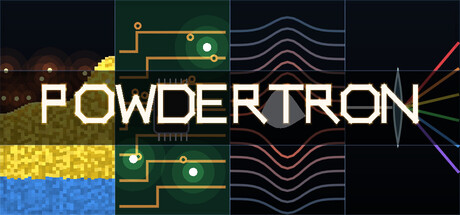
Some of Powdertron's development and marketing materials were produced with AI assistance. The store page text was drafted with an AI writing tool and edited by hand, and the capsule images and trailer were rendered by procedural code written with AI assistance, using the game's own artwork and captured gameplay footage.
The game itself contains no generative AI. Nothing is generated at runtime, no AI service is contacted while you play, and all in-game content — the materials, reaction rules, simulations and interface — is authored and deterministic.
Cover art, store page imagery and music were created with AI generation tools. All game design, writing and gameplay systems were created by the developer.
Generative AI was used during development to assist in the creation of certain pre-generated visual assets, including some UI artwork, icons, textures, and other 2D art. All AI-assisted content was reviewed and integrated by the developer before being included in the game. The game does not use live-generated AI during gameplay.
AI was utilized as a supplementary tool for the creation of some art and promotional imagery. The core game experience is entirely hand-crafted using the Godot engine with original and licensed assets. All AI-generated marketing materials underwent human curation and post-processing to ensure visual consistency with the actual gameplay and compliance with platform guidelines.
Investors and characters respond to the business idea you type, because a language model re-words our hand-written dialogue at runtime. It only changes wording — never numbers, outcomes, or anything in your save. If a generation fails, you get the hand-written line instead.
Your product illustration is generated from your own idea text.
During development, generative AI was used to create initial drafts for some in-game 2D icons, which were then manually retouched. Generative AI was also used to remix original melodies composed and whistled by the developer into background music.
Some store page text, including the game description, was drafted with the assistance of generative AI and reviewed/edited by the developer before publication. The game does not generate AI content during gameplay.
Generative AI was used during development to assist with some programming tasks, multilingual translations of in-game text, and the creation of certain graphics and sounds. All AI-assisted output was reviewed and edited by the developer. No AI content is generated in real time during gameplay.
Generative AI was used as an assistant throughout development, and the developer reviewed and approved everything before it shipped.
It helped draft part of the in-game text, some of the marketing copy, and the scripts that generate the artwork and the audio.
No image or audio file came out of a generative model: every sprite, glyph, sound effect and music track is drawn or synthesised by deterministic code, and the same script always produces the same pixels and the same samples.
The game does not generate any content with AI while you play.
Generative artificial intelligence was used during development mainly to assist with localization and code, with some 2D/3D assets, and selected audio assets. All AI-assisted content was manually reviewed, edited, and refined by the developer before use.
Generative AI was used during development to assist in creating some of the fixed decorative sculptures and decorative mosaic elements that appear within the game environment. These assets were created prior to release and are static parts of the game.
Generative AI is not used to generate content during gameplay, and players do not interact with any live generative AI systems.
Generative AI tools were used during the development of BURST NOIR to assist with the creation and refinement of certain visual assets, including branding, logo concepts, promotional graphics, and some UI-related artwork.
AI-assisted tools were also used as part of the development workflow for programming, prototyping, localization, and content production.
The core fireworks simulation, gameplay systems, and final in-game presentation are implemented as part of the game itself. The game does not generate AI content in real time during gameplay.
Parts of this game's 2D art were created with the help of generative AI, and every generated asset was reviewed, edited and approved by us before it shipped.
Specifically:
• In-game UI icons (weapon and stat icons) start as AI-generated flat silhouettes, which we then clean up, recolour and integrate by hand.
• Some marketing and store page imagery — background and atmospheric layers of our capsule art — is AI-generated.
• Parts of the source code and some store page text were written with AI assistance and then reviewed, edited and tested by the developers.
Everything else is made by hand, without generative AI: the logo, the app icon and mascot, all 3D models, materials, shaders and visual effects, level layouts.
No generative AI runs while you play. The game does not create content or code at runtime, and it never connects to an external AI service.
The game's core visual presentation is built around human-created playable character sprite sheets and map artwork, while the level layouts and game design are created by the developer. Generative AI was used for selected pre-generated audio, localization, and supporting visual content such as the logo and key art. No generative AI content is generated during gameplay.
AI-assisted tools were used during development to help create and refine some visual assets, text, and audio content. All AI-assisted content was reviewed, edited, and curated by the developer before being included in the game. The game does not generate AI content dynamically during gameplay.
AI tools were used during development solely to assist with coding, including identifying and fixing bugs and making minor code corrections and improvements. AI does not generate any content for players during gameplay.
Generative AI was used during development to create all visual art assets and music featured in the game. The generated content was reviewed, selected, and integrated by the developer. The game does not generate AI content during gameplay.
This game was developed with the assistance of generative AI. Music, sound effects, translation, and some visual art were AI-generated, then curated and adjusted by the developer.
This game was developed through collaboration between the developer and AI tools across most content (art, writing, design); in-game translations were generated by AI.
Generative AI was used solely for creating the game's background music. All visual assets, gameplay design, and writing were created without generative AI.
We used AI tools (such as ChatGPT) to assist with game descriptions, promotional materials, and conceptual design. No AI is used in real-time gameplay or for generating assets during gameplay. All in-game content is manually crafted or pre-created.
Generative AI was used during development to assist with editing and reviewing some narrative text and with localization. AI-assisted text was reviewed and edited manually by the developer before being included in the game. No AI-generated content is created live during gameplay.
Artwork, music and parts of the text were created with AI tools and individually curated, refined and hand-fitted into the game by the developer. No AI content is generated at runtime.
During the development process, we may use procedural- and AI-based tools to assist with content creation. In all such cases, the final product reflects the creativity and expression of our own development team.
AI tools were used during development to assist with the creation of certain 2D visual assets. Specifically, AI was used to generate some images used on the Steam store page and to assist in creating character portrait artwork used in the game. These AI-generated assets were reviewed and incorporated into the final game by the development team.
All character sprites, enemy/boss artwork, backgrounds, effect images, UI icons and illustrations in this game were pre-generated using OpenAI's ChatGPT image generation, then curated and edited by the developer (background keying, trimming, animation assembly). All background music tracks were pre-generated using Google's Gemini music generation and curated by the developer. Sound effects are procedurally synthesized by the game's own code. Store page artwork (capsules, logo) was also pre-generated using ChatGPT. The game does not generate any AI content at runtime (no live-generated content).
During development, we used procedural and AI-assisted tools to analyze, merge, refine, and polish systems that were originally developed through years of our own experimentation, iteration, and hands-on exploration. These tools accelerated implementation and helped unify complex ideas beyond what would have been practical through manual development alone, while the underlying concepts, creative direction, design decisions, and final implementation remain the work of our development team.
Parts of this game's text were produced with the help of generative AI: the store description, and the translations of the in-game text into German, Spanish, French, Brazilian Portuguese, Russian and Simplified Chinese. The English and Turkish text was written by hand. No AI-generated art, audio or voice is used anywhere in the game, and the game does not generate anything while you play.
This game contains pre-generated content created with the assistance of generative AI, including selected visual assets, music, sound effects, and written content. All AI-assisted content is reviewed and curated by the developer before release. The game does not use generative AI to create content live while players are playing.
Trainee dialogue is generated in real time by an online AI service during gameplay. The AI produces conversation text based on each trainee's personality, history, and the player's management decisions. All management systems, music releases, chart rankings, and settlement run locally — only dialogue generation requires an internet connection.
The Rumble Pit is made by one person, and generative AI tools were part of how it was built.
Music: the tracks you hear in the menus and in the twelve dungeons were generated with a local AI music model, from a written brief for each place, then cut, looped and mixed by hand.
2D art: the interface icons, the class and specialisation emblems, the dungeon thumbnails, the illustrated boss backdrops and the logo were produced with image generation tools, then cropped, cleaned up and colour-matched by hand.
Text and code: much of the in-game text — talent names and descriptions, loot labels, boss briefings, the translation tables — and part of the source code were drafted with an AI assistant, then edited, tested and rewritten by hand.
Not AI-generated: the 3D models and animations (licensed art packs), and the sound effects (CC0 libraries).
Nothing is generated while you play. The game connects to no AI service and produces no new content at runtime — everything ships as a fixed file, checked before release.
Some store-page text and marketing images (capsules, screenshots, and similar key art) were drafted or generated with generative AI, then selected and edited by the developer.
The game itself is a hand-authored Unreal Engine title. Combat, physics, and play are not generated by AI while you play. There is no live generative AI in the build.
If later updates include AI-assisted in-game art or audio, this notice will be updated.
Pixel art assets, in-game text translation to other languages were produced with AI assistance during development and edited by the developer. No content is generated at runtime.
As a solo developer, I made use of AI for generation of models and music to act as base components. These typically went through much manual editing afterwards.
Some AI was used for testing & improvements to code in some areas
Some of Powdertron's development and marketing materials were produced with AI assistance. The store page text was drafted with an AI writing tool and edited by hand, and the capsule images and trailer were rendered by procedural code written with AI assistance, using the game's own artwork and captured gameplay footage.
The game itself contains no generative AI. Nothing is generated at runtime, no AI service is contacted while you play, and all in-game content — the materials, reaction rules, simulations and interface — is authored and deterministic.
Cover art, store page imagery and music were created with AI generation tools. All game design, writing and gameplay systems were created by the developer.
Generative AI was used during development to assist in the creation of certain pre-generated visual assets, including some UI artwork, icons, textures, and other 2D art. All AI-assisted content was reviewed and integrated by the developer before being included in the game. The game does not use live-generated AI during gameplay.
AI was utilized as a supplementary tool for the creation of some art and promotional imagery. The core game experience is entirely hand-crafted using the Godot engine with original and licensed assets. All AI-generated marketing materials underwent human curation and post-processing to ensure visual consistency with the actual gameplay and compliance with platform guidelines.
Investors and characters respond to the business idea you type, because a language model re-words our hand-written dialogue at runtime. It only changes wording — never numbers, outcomes, or anything in your save. If a generation fails, you get the hand-written line instead.
Your product illustration is generated from your own idea text.
During development, generative AI was used to create initial drafts for some in-game 2D icons, which were then manually retouched. Generative AI was also used to remix original melodies composed and whistled by the developer into background music.
Some store page text, including the game description, was drafted with the assistance of generative AI and reviewed/edited by the developer before publication. The game does not generate AI content during gameplay.
Generative AI was used during development to assist with some programming tasks, multilingual translations of in-game text, and the creation of certain graphics and sounds. All AI-assisted output was reviewed and edited by the developer. No AI content is generated in real time during gameplay.
Generative AI was used as an assistant throughout development, and the developer reviewed and approved everything before it shipped.
It helped draft part of the in-game text, some of the marketing copy, and the scripts that generate the artwork and the audio.
No image or audio file came out of a generative model: every sprite, glyph, sound effect and music track is drawn or synthesised by deterministic code, and the same script always produces the same pixels and the same samples.
The game does not generate any content with AI while you play.
Generative artificial intelligence was used during development mainly to assist with localization and code, with some 2D/3D assets, and selected audio assets. All AI-assisted content was manually reviewed, edited, and refined by the developer before use.
Generative AI was used during development to assist in creating some of the fixed decorative sculptures and decorative mosaic elements that appear within the game environment. These assets were created prior to release and are static parts of the game.
Generative AI is not used to generate content during gameplay, and players do not interact with any live generative AI systems.
Generative AI tools were used during the development of BURST NOIR to assist with the creation and refinement of certain visual assets, including branding, logo concepts, promotional graphics, and some UI-related artwork.
AI-assisted tools were also used as part of the development workflow for programming, prototyping, localization, and content production.
The core fireworks simulation, gameplay systems, and final in-game presentation are implemented as part of the game itself. The game does not generate AI content in real time during gameplay.
Parts of this game's 2D art were created with the help of generative AI, and every generated asset was reviewed, edited and approved by us before it shipped.
Specifically:
• In-game UI icons (weapon and stat icons) start as AI-generated flat silhouettes, which we then clean up, recolour and integrate by hand.
• Some marketing and store page imagery — background and atmospheric layers of our capsule art — is AI-generated.
• Parts of the source code and some store page text were written with AI assistance and then reviewed, edited and tested by the developers.
Everything else is made by hand, without generative AI: the logo, the app icon and mascot, all 3D models, materials, shaders and visual effects, level layouts.
No generative AI runs while you play. The game does not create content or code at runtime, and it never connects to an external AI service.