Public Steam disclosure research25,380 disclosures tracked
Where do games disclose AI use?
Search developers’ Steam disclosures, compare classified AI use across
games, and follow recorded changes.
This index adds cross-game classifications and statistics to
statements published on individual store pages.
Groups reflect automatic analysis of public disclosures; mature records are excluded. These counts do not measure AI use across all of Steam.
Missing or unclear statements cannot establish whether a game uses AI.
The developers describe how their game uses AI Generated Content like this:
We used generative AI to help create the level layouts and parts of the game code. Everything was then tweaked, edited, and put together by us.
All gameplay and design decisions are fully human-made.
Some artwork and visual assets in Crowned, including
card illustrations and background graphics, were created with the assistance of generative AI tools. All content was
reviewed, curated and integrated by the developer.
Some static 2D artwork used in the game and Steam marketing materials was created with assistance from generative AI, then curated, edited, and integrated by the developer. The game does not generate AI content during gameplay and does not connect to external AI services.
Graphics & Art: Original asset concepts, sketches, and draft designs were created by the developer and subsequently rendered or refined using generative AI tools. While the underlying concepts and designs are original creations, generative AI may occasionally produce visual similarities to existing artistic styles or works.
Voice Acting: Character voices and audio narration were generated using ElevenLabs voice synthesis technology and are used in accordance with the applicable licensing and usage terms.
Some artwork in this game, including character portraits and background illustrations, was created using AI image generation tools. All AI-generated art was reviewed, curated, and integrated by the developer to match the game's Ottoman miniature painting visual style. All game design, narrative content, music, and gameplay were created by the developer.
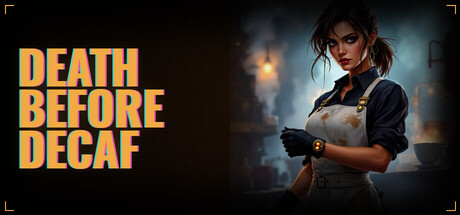
Death Before Decaf uses generative AI tools to assist with visual asset production. This includes character and enemy sprites, environment art, and marketing capsule images, all created using a fine-tuned model trained on reference materials owned by Overdose Interactive (Scenario.gg with a custom DBD LoRA, plus Replicate/Flux for select assets). All AI-generated outputs are reviewed, edited, and approved by a human art director before being shipped in the game.
The game itself does not generate any AI content at runtime: all assets are pre-rendered and bundled with the build. The game does not connect to any external AI services during gameplay.
AI image generation tools were used to create character artwork, background illustrations, and other visual assets in this game. AI coding assistance tools were used extensively throughout the development process for game logic and programming.
AI was used as a support tool across various aspects of development, particularly to assist with visuals and animations. The goal is not to replace human work, but to allow creative efforts to be focused where they matter most, ensuring the highest possible quality for the final game.
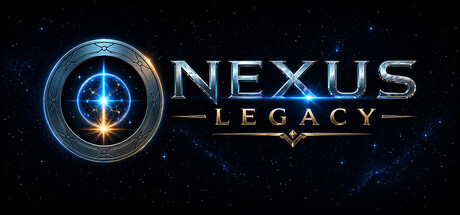
Nexus Legacy is made by a solo developer using AI-assisted production tools. These tools were used during development to help with visual iteration, asset production, prototyping and code assistance, making a larger persistent MMO possible with a small production pipeline.
The final game is not a live AI generator. Gameplay design, balance, economy, progression, PvE/PvP rules, server logic, world structure, final visuals and updates are selected, reviewed, edited and maintained by the developer.
No live generative AI is used to create player-facing content while the game is running.
Official AI Usage Statement:
Some of the soundtracks in the game have been procured from commercial music large-scale models and are accompanied by commercial licensing certificates.
The initial rough models of certain game elements were generated by commercially viable large-scale models to assist in the development process.
1. In-game artwork
Some visual assets (e.g., character/decor sprites, UI icons) are generated with Google Gemini and OpenAI ChatGPT
(image generation) and further edited, retouched, and composed by the developer in the final art pipeline.
2. Store page and marketing graphical assets
Capsule art, library hero, library capsule, and promotional images are generated with Google Gemini and OpenAI
ChatGPT, and further edited, retouched, and composed by the developer before upload.
3. In-game localization
Text translations are AI-assisted using Anthropic Claude, with developer review for tone and accuracy.
Runtime behavior:
- No generative AI models are bundled with or called from the shipped game binary.
- All AI-generated content is pre-rendered and baked into final assets at build time.
- No user inputs are sent to any AI service during gameplay.
Generative AI was used for some of the music in game. All in game art was hand drawn and vectorized by the creator. Main Theme music created by Grace Streeter. Trailer voiceover by Grace Streeter.
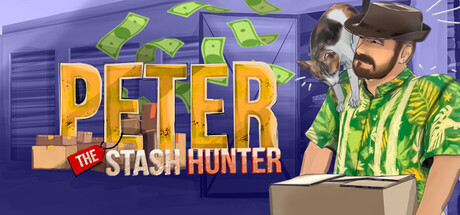
Peter the Stash Hunter has been mostly designed and coded by hand by a single developer using traditional methods. AI tools were used in the development process only in two supporting roles:
- Translating store descriptions and in-game text into different languages
- Acting as a helper assistant during code writing
All AI outputs have been reviewed and edited by the developer. Translations are planned to be improved over time based on community feedback. None of the game's visuals, story, characters, music, sound effects, gameplay mechanics, or design decisions have been generated by AI. There is also no AI system running inside the game.
Some of the game's art assets, music and sound effects are assisted by AI generation. All AI-generated content has been manually screened, revised and reviewed to ensure no infringement of third-party copyrights. No new real-time AI content will be generated during gameplay.
Somewhere Café features music generated with AI tools (Producer.ai / Lyria 3) under the creative direction of Icefield Settler Studio, and some visual assets created with Nano Banana 2. All content has been reviewed and curated by the development team.
This game uses generative AI tools to assist in the creation of certain assets, such as music and visual elements.
All content is reviewed, selected, and integrated by the developer to ensure consistency and quality.
No AI is used during gameplay, and the player experience is fully handcrafted.
This game uses AI tools to assist in generating some art assets (card illustrations, character portraits, background images) and audio assets (background music, sound effects) during development. The game does not use any AI services at runtime and does not connect to any external AI APIs. All AI-generated content is completed during development. No AI generation is involved during gameplay.
AI was used to aid in translations into 11 Languages. This game was coded by a human.
All gameplay, design, and creative direction are fully handcrafted by myself.
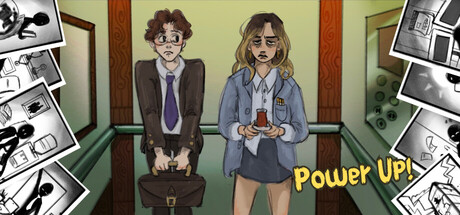
At the core of Power Up, we believe in pushing the boundaries of creativity by blending human artistry with cutting-edge technology. To deliver a truly immersive and high-energy experience, we have utilized Generative AI tools in the following areas:
Music and Soundscapes: Some of the soundtracks and ambient audio elements in the game were composed or enhanced using AI-driven music generation tools. These were used as a foundational layer, then meticulously arranged and polished by our team to ensure they perfectly match the rhythm and atmosphere of the gameplay.
Visual Assets and World-Building: Certain environmental textures, concept art, and UI elements were developed with the assistance of AI image generation to create a diverse and visually rich world.
Narrative and Dialogue: AI tools were used to brainstorm dialogue variations and assist in localization, ensuring that the world feels alive and reactive to your progress.
Developer’s Commitment: Every AI-generated asset has been hand-reviewed, edited, and refined by our developers. We use AI not as a replacement for human creativity, but as a "Power Up" for our team to bring you a larger, more polished, and more melodic gaming experience than ever before.
EcoMoguls uses generative AI as part of a small-studio production workflow for some player-facing content, including visual assets, written material, and audio. All final content included in the game and on the store page has been selected, edited, and integrated by the developer to fit the game's design, tone, and educational goals.
Art: Certain background, character, and animation assets were generated by AI, then manually cropped, composited, and post-processed.
Audio: Some in-game music and sound effects were generated by AI, then manually selected, edited, and integrated.
Code: Some foundational functional code was generated with AI assistance, then reviewed, modified, compiled, and integrated by the developers.
The core game design, gameplay logic, and final integration were all completed manually.
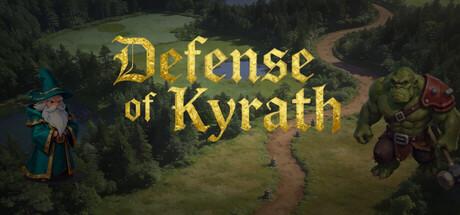
Defense of Kyrath uses AI-assisted tools in parts of its art and audio pipeline. Some character sprites, character voice lines, select background imagery, and background music are AI-generated, and refined or curated by the developer. All AI-generated content is pre-generated at authoring time. Terrain, environment art, and level layouts come from TiGen - a custom procedural generation pipeline that is purely algorithmic, not AI. All game design, writing, and gameplay systems are human-crafted.
Mix a Meow uses AI generation tools to create some assets, including character illustrations, icons, music, and sound effects. All character concepts and design directions were crafted by the developer; AI was used as a tool to bring them to life. No content is generated by AI during gameplay — all AI-assisted assets were reviewed and finalized by the developer before release.
In development and early prototyping, Rankbreaker used some generative art assets. These are being actively replaced with original work created by professional artists, and this transition is already underway.
Current contributions include:
Leonardo Veronesi: Disruptors “Void,” “Raven,” “Recoil,” and character card “Axl Rydell”
Samuele Colombini: Character cards “Bloodthirst,” “Ironjaw,” “Riff the Cat,” and “Stonewhal”
Richard Kessler: Location art “Deadspace,” “Sepulcher,” and “The Arc”
All generative assets are being phased out in favor of fully original artwork as development continues.
Some artwork used in store page capsule images and card illustrations was created with the assistance of AI image generation tools. All AI-generated assets were reviewed, curated, and edited by the developer. No AI is used during gameplay.
Some of the artworks, sounds and localizations in the game have been partially or entirely generated with the help of AI.
We strongly believe AI will help videogames reach new heights, not kill jobs nor creativity.
This game uses generative AI in the following limited ways:
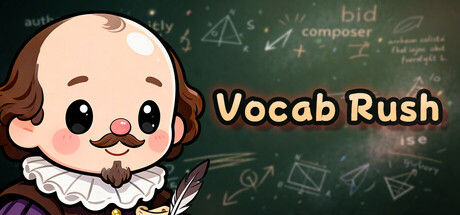
AI tools were used during development to assist in generating and organizing vocabulary word data.
AI may have been used to help draft or structure non-final text content, which has been manually reviewed and edited by the developer.
No generative AI is used in real-time gameplay, player interaction, or runtime content generation.
This game does not use external AI services during gameplay.
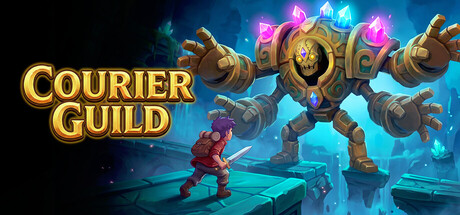
Some content in COURIER GUILD was created with the assistance of AI tools, including visual assets, music, and text. All AI-generated content has been manually reviewed, edited, and refined by the developer to fit the game's style and vision.
To further enrich the unique world and atmosphere of this game, we utilized AI technology to assist in creating the background artwork and soundtrack.
AI was primarily used as a sketching tool to draft initial ideas. All final assets implemented in the game underwent detailed retouching and careful direction by the developer, meticulously polished to seamlessly blend into the game's distinct vibe.
Regarding the use of AI, the game scenes images, character designs, and animations of monsters were generated using AI.
We will replace these with manually created resources in the official version later
The developers describe how their game uses AI Generated Content like this:
We used generative AI to help create the level layouts and parts of the game code. Everything was then tweaked, edited, and put together by us.
All gameplay and design decisions are fully human-made.
Some artwork and visual assets in Crowned, including
card illustrations and background graphics, were created with the assistance of generative AI tools. All content was
reviewed, curated and integrated by the developer.
Some static 2D artwork used in the game and Steam marketing materials was created with assistance from generative AI, then curated, edited, and integrated by the developer. The game does not generate AI content during gameplay and does not connect to external AI services.
Graphics & Art: Original asset concepts, sketches, and draft designs were created by the developer and subsequently rendered or refined using generative AI tools. While the underlying concepts and designs are original creations, generative AI may occasionally produce visual similarities to existing artistic styles or works.
Voice Acting: Character voices and audio narration were generated using ElevenLabs voice synthesis technology and are used in accordance with the applicable licensing and usage terms.
Some artwork in this game, including character portraits and background illustrations, was created using AI image generation tools. All AI-generated art was reviewed, curated, and integrated by the developer to match the game's Ottoman miniature painting visual style. All game design, narrative content, music, and gameplay were created by the developer.
Death Before Decaf uses generative AI tools to assist with visual asset production. This includes character and enemy sprites, environment art, and marketing capsule images, all created using a fine-tuned model trained on reference materials owned by Overdose Interactive (Scenario.gg with a custom DBD LoRA, plus Replicate/Flux for select assets). All AI-generated outputs are reviewed, edited, and approved by a human art director before being shipped in the game.
The game itself does not generate any AI content at runtime: all assets are pre-rendered and bundled with the build. The game does not connect to any external AI services during gameplay.
AI image generation tools were used to create character artwork, background illustrations, and other visual assets in this game. AI coding assistance tools were used extensively throughout the development process for game logic and programming.
AI was used as a support tool across various aspects of development, particularly to assist with visuals and animations. The goal is not to replace human work, but to allow creative efforts to be focused where they matter most, ensuring the highest possible quality for the final game.
Nexus Legacy is made by a solo developer using AI-assisted production tools. These tools were used during development to help with visual iteration, asset production, prototyping and code assistance, making a larger persistent MMO possible with a small production pipeline.
The final game is not a live AI generator. Gameplay design, balance, economy, progression, PvE/PvP rules, server logic, world structure, final visuals and updates are selected, reviewed, edited and maintained by the developer.
No live generative AI is used to create player-facing content while the game is running.
Official AI Usage Statement:
Some of the soundtracks in the game have been procured from commercial music large-scale models and are accompanied by commercial licensing certificates.
The initial rough models of certain game elements were generated by commercially viable large-scale models to assist in the development process.
1. In-game artwork
Some visual assets (e.g., character/decor sprites, UI icons) are generated with Google Gemini and OpenAI ChatGPT
(image generation) and further edited, retouched, and composed by the developer in the final art pipeline.
2. Store page and marketing graphical assets
Capsule art, library hero, library capsule, and promotional images are generated with Google Gemini and OpenAI
ChatGPT, and further edited, retouched, and composed by the developer before upload.
3. In-game localization
Text translations are AI-assisted using Anthropic Claude, with developer review for tone and accuracy.
Runtime behavior:
- No generative AI models are bundled with or called from the shipped game binary.
- All AI-generated content is pre-rendered and baked into final assets at build time.
- No user inputs are sent to any AI service during gameplay.
Generative AI was used for some of the music in game. All in game art was hand drawn and vectorized by the creator. Main Theme music created by Grace Streeter. Trailer voiceover by Grace Streeter.
Peter the Stash Hunter has been mostly designed and coded by hand by a single developer using traditional methods. AI tools were used in the development process only in two supporting roles:
- Translating store descriptions and in-game text into different languages
- Acting as a helper assistant during code writing
All AI outputs have been reviewed and edited by the developer. Translations are planned to be improved over time based on community feedback. None of the game's visuals, story, characters, music, sound effects, gameplay mechanics, or design decisions have been generated by AI. There is also no AI system running inside the game.
Some of the game's art assets, music and sound effects are assisted by AI generation. All AI-generated content has been manually screened, revised and reviewed to ensure no infringement of third-party copyrights. No new real-time AI content will be generated during gameplay.
Somewhere Café features music generated with AI tools (Producer.ai / Lyria 3) under the creative direction of Icefield Settler Studio, and some visual assets created with Nano Banana 2. All content has been reviewed and curated by the development team.
This game uses generative AI tools to assist in the creation of certain assets, such as music and visual elements.
All content is reviewed, selected, and integrated by the developer to ensure consistency and quality.
No AI is used during gameplay, and the player experience is fully handcrafted.
This game uses AI tools to assist in generating some art assets (card illustrations, character portraits, background images) and audio assets (background music, sound effects) during development. The game does not use any AI services at runtime and does not connect to any external AI APIs. All AI-generated content is completed during development. No AI generation is involved during gameplay.
AI was used to aid in translations into 11 Languages. This game was coded by a human.
All gameplay, design, and creative direction are fully handcrafted by myself.
At the core of Power Up, we believe in pushing the boundaries of creativity by blending human artistry with cutting-edge technology. To deliver a truly immersive and high-energy experience, we have utilized Generative AI tools in the following areas:
Music and Soundscapes: Some of the soundtracks and ambient audio elements in the game were composed or enhanced using AI-driven music generation tools. These were used as a foundational layer, then meticulously arranged and polished by our team to ensure they perfectly match the rhythm and atmosphere of the gameplay.
Visual Assets and World-Building: Certain environmental textures, concept art, and UI elements were developed with the assistance of AI image generation to create a diverse and visually rich world.
Narrative and Dialogue: AI tools were used to brainstorm dialogue variations and assist in localization, ensuring that the world feels alive and reactive to your progress.
Developer’s Commitment: Every AI-generated asset has been hand-reviewed, edited, and refined by our developers. We use AI not as a replacement for human creativity, but as a "Power Up" for our team to bring you a larger, more polished, and more melodic gaming experience than ever before.
EcoMoguls uses generative AI as part of a small-studio production workflow for some player-facing content, including visual assets, written material, and audio. All final content included in the game and on the store page has been selected, edited, and integrated by the developer to fit the game's design, tone, and educational goals.
Art: Certain background, character, and animation assets were generated by AI, then manually cropped, composited, and post-processed.
Audio: Some in-game music and sound effects were generated by AI, then manually selected, edited, and integrated.
Code: Some foundational functional code was generated with AI assistance, then reviewed, modified, compiled, and integrated by the developers.
The core game design, gameplay logic, and final integration were all completed manually.
Defense of Kyrath uses AI-assisted tools in parts of its art and audio pipeline. Some character sprites, character voice lines, select background imagery, and background music are AI-generated, and refined or curated by the developer. All AI-generated content is pre-generated at authoring time. Terrain, environment art, and level layouts come from TiGen - a custom procedural generation pipeline that is purely algorithmic, not AI. All game design, writing, and gameplay systems are human-crafted.
Mix a Meow uses AI generation tools to create some assets, including character illustrations, icons, music, and sound effects. All character concepts and design directions were crafted by the developer; AI was used as a tool to bring them to life. No content is generated by AI during gameplay — all AI-assisted assets were reviewed and finalized by the developer before release.
In development and early prototyping, Rankbreaker used some generative art assets. These are being actively replaced with original work created by professional artists, and this transition is already underway.
Current contributions include:
Leonardo Veronesi: Disruptors “Void,” “Raven,” “Recoil,” and character card “Axl Rydell”
Samuele Colombini: Character cards “Bloodthirst,” “Ironjaw,” “Riff the Cat,” and “Stonewhal”
Richard Kessler: Location art “Deadspace,” “Sepulcher,” and “The Arc”
All generative assets are being phased out in favor of fully original artwork as development continues.
Some artwork used in store page capsule images and card illustrations was created with the assistance of AI image generation tools. All AI-generated assets were reviewed, curated, and edited by the developer. No AI is used during gameplay.
Some of the artworks, sounds and localizations in the game have been partially or entirely generated with the help of AI.
We strongly believe AI will help videogames reach new heights, not kill jobs nor creativity.
This game uses generative AI in the following limited ways:
AI tools were used during development to assist in generating and organizing vocabulary word data.
AI may have been used to help draft or structure non-final text content, which has been manually reviewed and edited by the developer.
No generative AI is used in real-time gameplay, player interaction, or runtime content generation.
This game does not use external AI services during gameplay.
Some content in COURIER GUILD was created with the assistance of AI tools, including visual assets, music, and text. All AI-generated content has been manually reviewed, edited, and refined by the developer to fit the game's style and vision.
To further enrich the unique world and atmosphere of this game, we utilized AI technology to assist in creating the background artwork and soundtrack.
AI was primarily used as a sketching tool to draft initial ideas. All final assets implemented in the game underwent detailed retouching and careful direction by the developer, meticulously polished to seamlessly blend into the game's distinct vibe.
Regarding the use of AI, the game scenes images, character designs, and animations of monsters were generated using AI.
We will replace these with manually created resources in the official version later