Public Steam disclosure research25,706 disclosures tracked
Where do games disclose AI use?
Search developers’ Steam disclosures, compare classified AI use across
games, and follow recorded changes.
This index adds cross-game classifications and statistics to
statements published on individual store pages.
Groups reflect automatic analysis of public disclosures; mature records are excluded. These counts do not measure AI use across all of Steam.
Missing or unclear statements cannot establish whether a game uses AI.
Chess Master Quest was developed by a solo developer with assistance from generative AI tools during development.
• Code: AI coding assistants (GitHub Copilot, Claude) were used to help write and refine parts of the game code. All code was reviewed and tested by the developer.
• Text: AI was used to help draft and edit some in-game text, including puzzle annotations and educational commentary. All text was reviewed and edited by the developer.
No AI-generated visual art or music is used in the game. Chess piece graphics are open-source vector assets. Store capsule images and artwork were created by a professional artist. The chess engine (Stockfish) is traditional software, not generative AI. No content is generated by AI at runtime during gameplay.
AI image generation tools were used to create store page artwork (capsule images, banners). AI was also used to assist with localization for 12 supported languages. All AI-generated content was reviewed and edited by the developer. No AI was used for in-game visual assets, sound effects, or music.
AI tools were used to assist with writing game narrative and event text during development. All style guides directing tone, humor, and historical relevance were created by the developer and all content was reviewed, edited, and curated by the developer.
Some of the art assets were made using gen AI and retouched by a human artist.
Some of the translations were made using gen AI and reviewed by a human native speaker.
Generative AI is used to compose the original score (instrumental VGM only. This game doesn't include vocal music) and handle the translation (primarily for Simplified Chinese version).
This game uses AI-assisted tools in the following areas of development:
Localization: Some translations were assisted or reviewed using AI language tools.
Sound Effects: Some SFX were generated or prototyped using AI audio tools.
No in-game visuals are using AI except the main menu art as of now. Promotional materials may still have AI generated content.
All AI-assisted content was reviewed, curated, and approved by the development team. No AI content is generated at runtime.
Generative AI was used during development to help create some game artwork, store page text, translations, capsule images, and marketing materials. All final materials were reviewed, edited, and approved by the developer. No AI-generated content is created during gameplay, and the game does not connect to external AI services while running.
Some visible in-game assets, including but not limited to cutscenes, characters, environments, and UI elements, were created or visually enhanced with the help of AI, including generation based on white model references.
Some store page assets were also created or visually enhanced with the help of AI, including generation based on white model references.
Some music and sound effects were generated with the help of AI.
Some localized language content was translated with the help of AI.
AI coding tools were used during development. All visual assets, music, writing, and narrative content are human-made. An alternative wireframe visual mode is also available.
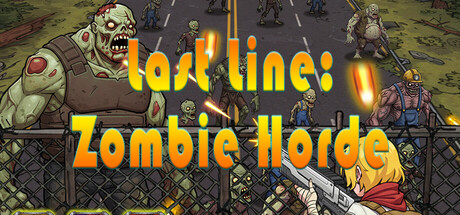
"The game uses AI to control zombie behavior, including movement, attack patterns, and spawning. All AI calculations happen before and during gameplay to create dynamic challenge for players."
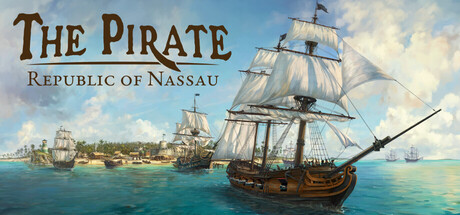
We are a small studio with only six people actively involved in development. For teams like ours, generative AI is a supportive tool that helps us realize a creative vision that would otherwise be completely out of reach within our budget.
Here is exactly how we utilized generative AI in our game:
• We used generative AI during the prototyping and concept art phases. Every AI-generated image was manually modified, iterated upon, and finalized by our artist.
• The sea shanties in the game feature AI-generated vocals and music, but the lyrics are original and written by our team.
• Certain voice-over (VO) lines were generated using AI.
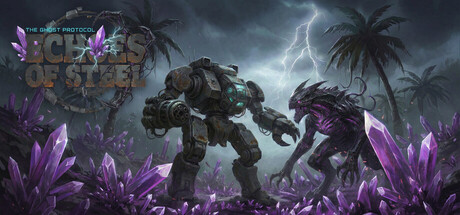
I'm building this game on my own, with generative AI tools as finishing and scaling assistants on top of my own creative foundations.
3D mech and monster meshes started as my own concept sketches; Meshy AI generated the base 3D models from those sketches, which I then refined
and animated myself in Blender.
Character voices began as dialogue I wrote and the tone I set — some are my own voice recordings, and for others I used ElevenLabs to alter the voices so they fit each character.
Music tracks each started from vocal melody references I recorded; Lyria (through Gemini) developed those references into the final orchestrated tracks.
Cinematic video sequences were generated by Veo3 from my prompts and storyboards, then fully edited by me in DaVinci Resolve.
I review every AI output before it ships in the game, and I hold commercial-use rights to all generated content per each service's paid-subscription terms.
All visual assets (sprites, terrain, UI, capsule art) were AI-generated and then manually edited in GIMP. Game design, direction, and integration were done entirely by the solo developer.
Generative AI tools were utilized during the development process to assist with code optimization and text refinement. All core gameplay mechanics, logic, and final assets were manually reviewed, implemented, and fine-tuned by the developer to ensure quality and originality. This game does not include any real-time AI generation or dynamic AI-driven interactions during gameplay.
This game uses generative AI tools during development to assist with certain artwork, localization, and written content.
All AI-assisted content has been reviewed, edited, and integrated by the developer to ensure originality, quality, and compliance with applicable rights.
Game artwork (sprites for items, enemies, characters, and UI elements) was generated using Stable Diffusion
(DreamShaper model) running locally. Sound effects and music were generated using Meta AudioCraft (AudioGen/MusicGen)
running locally. Non-English translations were generated using local LLMs (Ollama) and manually reviewed. No external AI
services are used during gameplay. All AI-generated content was produced offline during development.
Generative AI tools were used to assist in the creation of some in-game textures and visual assets. All AI-assisted content was reviewed and modified by the developer.
Some trivia questions were generated with the assistance of AI tools. However, all questions and answers have been manually reviewed, edited, and fact-checked by me before being included.
This game uses generative artificial intelligence to polish the store page description, add text to some screenshots, and compose the trailer music. No AI was used to generate core gameplay content or in-game assets.
English (recommended wording)
We used generative AI in a limited way during the development of this app and its store presence.
Store / community assets (store page presentation): We used generative AI tools to create or edit some promotional graphics used on the store page (e.g., capsule images, key art, banners). All final assets were reviewed and edited by the developer before publishing.
Audio (background music): Some in-game background music (BGM) was created with the assistance of generative-AI-based tools. The final audio was reviewed and edited (and where applicable mixed/mastered) by the developer before being included in the game.
Gameplay / features: The game does not include features that generate content for players in real time (e.g., AI chat or player-prompted content generation). The use of AI is limited to asset creation support during development.
We confirm that AI-assisted tools were used in the development of our game. The specific scope and manner of use are as follows:
1. Type of AI-Generated Content:
* Text Content: We used AI text-generation tools to assist in creating initial drafts for some of the in-game copy during the early conceptual stages of development.
* This includes content for:
* Background stories and design documents for boss characters, frigates, and other units.
* Descriptive text for player skills.
* Preliminary outlines and descriptions for the game's overall story background.
* In-game text such as enemy names and skill descriptions.
2. Our Workflow and Human Oversight (The Key Part):
* AI's role was that of an "Assistant Tool": The AI was used solely to generate preliminary, unpolished text drafts and inspiration based on core ideas and directions provided by our producers.
* Deep Human Optimization and Review: All AI-generated text underwent strict review, selection, rewriting, and optimization by our producers and development team. We ensured:
* Creative Direction: The final design direction and core ideas were entirely determined by the human team.
* Content Ownership: We hold full and legal rights to all final content included in the game. The content, after profound human modification and optimization, is no longer a purely AI-generated product but the intellectual property of our team.
* Quality and Compliance Control: We ensured all textual content met our quality standards and Steam's distribution rules, containing no infringing, offensive, or inappropriate material.
3. Commitment and Assurance:
* We guarantee that the final version of the game does not directly include any unmodified AI-generated output.
* We take full responsibility for all content in our game.
In Summary: AI was used as a tool for assistance and inspiration during the design phase, but the final generation, approval, and copyright of all game content are the sole responsibility of our human development team.
Pre-Generated: Source code generated with AI coding assistance (Claude Code by Anthropic), directed and reviewed by the developer. A portion of visual assets generated with AI image tools, edited and integrated by the developer.
Live-Generated: None.
This game uses AI to generate design drafts and sketches for some characters and scenes. All final in-game assets have been manually adjusted, revised, and finalized by the development team. Additionally, some in-game music and voice lines are AI-synthesized, all of which have undergone full manual editing and post-processing by our audio team.
Some of the store images and promotional artwork for Egg Hunter were created using AI tools. This was only used for visual marketing materials—everything in the actual game (gameplay, levels, mechanics) is original and made by the developer.
Chess Master Quest was developed by a solo developer with assistance from generative AI tools during development.
• Code: AI coding assistants (GitHub Copilot, Claude) were used to help write and refine parts of the game code. All code was reviewed and tested by the developer.
• Text: AI was used to help draft and edit some in-game text, including puzzle annotations and educational commentary. All text was reviewed and edited by the developer.
No AI-generated visual art or music is used in the game. Chess piece graphics are open-source vector assets. Store capsule images and artwork were created by a professional artist. The chess engine (Stockfish) is traditional software, not generative AI. No content is generated by AI at runtime during gameplay.
AI image generation tools were used to create store page artwork (capsule images, banners). AI was also used to assist with localization for 12 supported languages. All AI-generated content was reviewed and edited by the developer. No AI was used for in-game visual assets, sound effects, or music.
AI tools were used to assist with writing game narrative and event text during development. All style guides directing tone, humor, and historical relevance were created by the developer and all content was reviewed, edited, and curated by the developer.
Some of the art assets were made using gen AI and retouched by a human artist.
Some of the translations were made using gen AI and reviewed by a human native speaker.
Generative AI is used to compose the original score (instrumental VGM only. This game doesn't include vocal music) and handle the translation (primarily for Simplified Chinese version).
This game uses AI-assisted tools in the following areas of development:
Localization: Some translations were assisted or reviewed using AI language tools.
Sound Effects: Some SFX were generated or prototyped using AI audio tools.
No in-game visuals are using AI except the main menu art as of now. Promotional materials may still have AI generated content.
All AI-assisted content was reviewed, curated, and approved by the development team. No AI content is generated at runtime.
Generative AI was used during development to help create some game artwork, store page text, translations, capsule images, and marketing materials. All final materials were reviewed, edited, and approved by the developer. No AI-generated content is created during gameplay, and the game does not connect to external AI services while running.
Some visible in-game assets, including but not limited to cutscenes, characters, environments, and UI elements, were created or visually enhanced with the help of AI, including generation based on white model references.
Some store page assets were also created or visually enhanced with the help of AI, including generation based on white model references.
Some music and sound effects were generated with the help of AI.
Some localized language content was translated with the help of AI.
AI coding tools were used during development. All visual assets, music, writing, and narrative content are human-made. An alternative wireframe visual mode is also available.
"The game uses AI to control zombie behavior, including movement, attack patterns, and spawning. All AI calculations happen before and during gameplay to create dynamic challenge for players."
We are a small studio with only six people actively involved in development. For teams like ours, generative AI is a supportive tool that helps us realize a creative vision that would otherwise be completely out of reach within our budget.
Here is exactly how we utilized generative AI in our game:
• We used generative AI during the prototyping and concept art phases. Every AI-generated image was manually modified, iterated upon, and finalized by our artist.
• The sea shanties in the game feature AI-generated vocals and music, but the lyrics are original and written by our team.
• Certain voice-over (VO) lines were generated using AI.
I'm building this game on my own, with generative AI tools as finishing and scaling assistants on top of my own creative foundations.
3D mech and monster meshes started as my own concept sketches; Meshy AI generated the base 3D models from those sketches, which I then refined
and animated myself in Blender.
Character voices began as dialogue I wrote and the tone I set — some are my own voice recordings, and for others I used ElevenLabs to alter the voices so they fit each character.
Music tracks each started from vocal melody references I recorded; Lyria (through Gemini) developed those references into the final orchestrated tracks.
Cinematic video sequences were generated by Veo3 from my prompts and storyboards, then fully edited by me in DaVinci Resolve.
I review every AI output before it ships in the game, and I hold commercial-use rights to all generated content per each service's paid-subscription terms.
All visual assets (sprites, terrain, UI, capsule art) were AI-generated and then manually edited in GIMP. Game design, direction, and integration were done entirely by the solo developer.
Generative AI tools were utilized during the development process to assist with code optimization and text refinement. All core gameplay mechanics, logic, and final assets were manually reviewed, implemented, and fine-tuned by the developer to ensure quality and originality. This game does not include any real-time AI generation or dynamic AI-driven interactions during gameplay.
This game uses generative AI tools during development to assist with certain artwork, localization, and written content.
All AI-assisted content has been reviewed, edited, and integrated by the developer to ensure originality, quality, and compliance with applicable rights.
Game artwork (sprites for items, enemies, characters, and UI elements) was generated using Stable Diffusion
(DreamShaper model) running locally. Sound effects and music were generated using Meta AudioCraft (AudioGen/MusicGen)
running locally. Non-English translations were generated using local LLMs (Ollama) and manually reviewed. No external AI
services are used during gameplay. All AI-generated content was produced offline during development.
Generative AI tools were used to assist in the creation of some in-game textures and visual assets. All AI-assisted content was reviewed and modified by the developer.
Some trivia questions were generated with the assistance of AI tools. However, all questions and answers have been manually reviewed, edited, and fact-checked by me before being included.
This game uses generative artificial intelligence to polish the store page description, add text to some screenshots, and compose the trailer music. No AI was used to generate core gameplay content or in-game assets.
English (recommended wording)
We used generative AI in a limited way during the development of this app and its store presence.
Store / community assets (store page presentation): We used generative AI tools to create or edit some promotional graphics used on the store page (e.g., capsule images, key art, banners). All final assets were reviewed and edited by the developer before publishing.
Audio (background music): Some in-game background music (BGM) was created with the assistance of generative-AI-based tools. The final audio was reviewed and edited (and where applicable mixed/mastered) by the developer before being included in the game.
Gameplay / features: The game does not include features that generate content for players in real time (e.g., AI chat or player-prompted content generation). The use of AI is limited to asset creation support during development.
We confirm that AI-assisted tools were used in the development of our game. The specific scope and manner of use are as follows:
1. Type of AI-Generated Content:
* Text Content: We used AI text-generation tools to assist in creating initial drafts for some of the in-game copy during the early conceptual stages of development.
* This includes content for:
* Background stories and design documents for boss characters, frigates, and other units.
* Descriptive text for player skills.
* Preliminary outlines and descriptions for the game's overall story background.
* In-game text such as enemy names and skill descriptions.
2. Our Workflow and Human Oversight (The Key Part):
* AI's role was that of an "Assistant Tool": The AI was used solely to generate preliminary, unpolished text drafts and inspiration based on core ideas and directions provided by our producers.
* Deep Human Optimization and Review: All AI-generated text underwent strict review, selection, rewriting, and optimization by our producers and development team. We ensured:
* Creative Direction: The final design direction and core ideas were entirely determined by the human team.
* Content Ownership: We hold full and legal rights to all final content included in the game. The content, after profound human modification and optimization, is no longer a purely AI-generated product but the intellectual property of our team.
* Quality and Compliance Control: We ensured all textual content met our quality standards and Steam's distribution rules, containing no infringing, offensive, or inappropriate material.
3. Commitment and Assurance:
* We guarantee that the final version of the game does not directly include any unmodified AI-generated output.
* We take full responsibility for all content in our game.
In Summary: AI was used as a tool for assistance and inspiration during the design phase, but the final generation, approval, and copyright of all game content are the sole responsibility of our human development team.
Pre-Generated: Source code generated with AI coding assistance (Claude Code by Anthropic), directed and reviewed by the developer. A portion of visual assets generated with AI image tools, edited and integrated by the developer.
Live-Generated: None.
This game uses AI to generate design drafts and sketches for some characters and scenes. All final in-game assets have been manually adjusted, revised, and finalized by the development team. Additionally, some in-game music and voice lines are AI-synthesized, all of which have undergone full manual editing and post-processing by our audio team.
Some of the store images and promotional artwork for Egg Hunter were created using AI tools. This was only used for visual marketing materials—everything in the actual game (gameplay, levels, mechanics) is original and made by the developer.