Public Steam disclosure research26,639 disclosures tracked
Where do games disclose AI use?
Search developers’ Steam disclosures, compare classified AI use across
games, and follow recorded changes.
This index adds cross-game classifications and statistics to
statements published on individual store pages.
Groups reflect automatic analysis of public disclosures; mature records are excluded. These counts do not measure AI use across all of Steam.
Missing or unclear statements cannot establish whether a game uses AI.
Generative AI tools were used during development to help produce some of the game's sprite art and to assist with translations for some of the supported languages. All AI-assisted content was reviewed and edited by the developer before being included in the game.
AI tools were used during development to help create pre-generated content including pixel artwork, character and boss sprites, some written narrative and interface text, and original synthesized music and sound arrangements. These assets are included in the installed game. Gameplay does not generate content through an AI service at runtime.
Usage of AI-assisted coding tools were used to help debug, and write some lengthy aspects of the game. But all creative work (art, animation, music, sound effects, and all writing and dialogue) is made by hand, without any generative AI whatsoever.
Some store-page and marketing artwork (capsule images, key art) was created with the help of generative AI tools. Some in-game sprite/visual assets were also produced or upscaled with AI-assisted tools as part of the HD remaster. All AI-assisted content is reviewed, edited and curated by the developer. The game does not use any live or real-time generative AI during gameplay, no AI content is generated on the fly for players.
Generative AI tools were used during the development process to assist in creating pre-rendered visual assets, including character portraits and certain user interface (UI) icons.
Art assets in this game - the fish, environments, UI icons, achievement icons
and store page artwork - were created with the help of generative AI tools.
Every asset was then hand-picked, edited, resized and colour-corrected before
being brought into the game, and all of it was checked against a fixed art
direction and a locked colour palette.
Some of the code was written with AI assistance. All of it was reviewed by the
developer and is covered by automated tests.
The game itself never generates anything while you play, and never connects to
an AI service. Everything you see ships with the build and is the same for
every player.
Some icons, UI elements and text were created with the help of AI tools during development, then reviewed and edited by hand. Nothing is generated while you play.
Some art assets and marketing images were created or assisted with generative AI during development, then curated and edited for the final game. The game does not generate AI content in real time during play.
Generative AI is used as a development aid for research, information analysis, routine technical tasks, and assistance with drafting and editing text for the Steam store page. No AI-generated 2D or 3D artwork, audio, or live-generated content is included in the game. The game's concept, creative direction, design, and implementation are the work of the developer.
Generative AI tools were used during development to assist with the creation of visual assets (backgrounds, character art, and UI elements), draft narrative ideas, and compose the background music. All generated visual and text materials were curated, manually edited, and refined by the developer.
Some in-game models and music were created with generative AI. Our original cover illustrations and title lettering are handmade; selected store-art adaptations and the app icon used AI tools. Optional chat uses a lightweight AI model running entirely on your computer to answer small everyday questions. You can turn chat off at any time.
Generative AI assisted with SystemChart's branding and store descriptions. The optional assistant uses a user-configured model to select diagnostic tools. In the Steam app, SystemChart writes the displayed summaries from validated tool results; free-form model text is not displayed. External AI clients connected through the optional tool server control their own responses. Core capture and charts do not require AI. No model or hosted inference service is included.
Generative AI was used during development to assist in creating some pre-generated visual assets and marketing materials. All AI-assisted content was reviewed, selected, and adjusted by the developer before being included in the game or on its Steam store page. The game does not use generative AI to create content during gameplay.
This game has been created by a solo developer with 30 years of experience. It is not until now with the assistance of generative AI coding that I have been able to truly bring my visions to life in a timely manor. I hope you enjoy it.
AI was used as a coding assistant during development, and for translations.
I’m a software engineer with 25 years of programming experience. I used AI to help with technical implementation while I focused on the game’s design, systems, balance, and overall feel.
The store page images for Timberland — the key art, capsules, logo and icon — were created with generative AI tools and then edited by hand. The screenshots are real gameplay, unretouched.
Part of the code was also written with the help of an AI assistant. Game design, world generation, mechanics and the remaining textures are the developer's own work.
This game was developed solo by an independent developer. Some UI visuals and artwork used for the Steam store page were created with the help of generative AI. Original sound effects were also created with AI assistance to match the game's atmosphere. This content is fixed and built into the game.
AI is not used to generate content in real time during gameplay.
This game uses some pre-generated content created with generative AI tools. It does not use generative AI to generate content in real time in response to player actions.
Artwork
Generative AI tools were used to create some in-game graphics, as well as images for the Steam store page and promotional and marketing materials. Generated assets are reviewed by the developer and edited or adjusted when necessary. Some assets are used without additional editing.
Translation
AI tools are used to assist with translation and localization for some languages other than Japanese. Translations are reviewed and corrected by the developer.
Valdrys uses AI-generated content in one place: the login screen
background, a single static image of a moonlit ridge over a conifer
forest, generated with Google Gemini. It does not appear in gameplay.
Everything else in the game is hand-drawn, generated procedurally by
our own tools, or licensed from third-party artists under CC0, CC-BY
or commercial licences. All of it is credited on the in-game Credits
screen.
Parts of the game's code were written with the help of an AI coding
assistant. No AI-generated art, audio or written content ships in
Valdrys beyond the single background image described above.
Nothing in Valdrys generates content while the game is running.
This game uses generative AI tools for some image assets and translations. All AI-generated materials are reviewed, adjusted, and edited by the development team before being used in the game.
Generative AI tools were used as development aids to help draft and iterate on portions of the game’s code, written content, and Steam store description. All AI-assisted material was reviewed, modified, and approved by the developer. The game does not use live-generated AI during gameplay.
Some marketing and store page artwork (capsule art, promotional images, achievement icons) was created with the assistance of generative AI tools and then reviewed and edited by our team. The game itself does not generate content with AI at runtime.
AI coding assistance was used in developing some parts of the game's code and in drafting in-game text, all of it directed and reviewed by the developer.
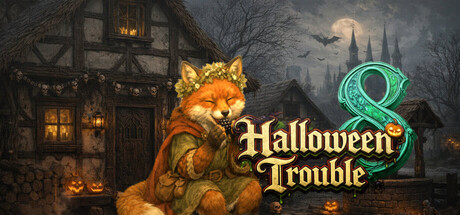
Halloween Trouble 8 utilizes generative artificial intelligence tools to assist in creating several elements of the game. Specifically, AI was used in the generation of:
Art & Visuals: Background environments, character portraits, and the in-game puzzle tiles and runes.
Audio: The game's musical soundtrack.
Narrative & Writing: The overarching story generation and descriptive in-game text.
Generative AI tools were used during development to create selected pre-generated textures, sound effects, and promotional artwork. These materials are used as individual components within the game and its marketing rather than being generated dynamically.
AI-assisted materials are selected, edited, adapted, composed, and integrated by the developer to fit the game's original visual and audio direction. The game's design, gameplay systems, implementation, world building, and overall creative direction are developed by the developer.
No generative AI is used during gameplay, and the game does not connect to external AI services while running.
Card illustrations, portraits, faction banners and store capsule artwork were created with generative AI image tools, then curated, edited and integrated by the developer. All game design, rules, card text, writing and music selection are human-made. No AI-generated content is produced at runtime.
Generative AI was used to assist in coding and translations for different languages.
Some graphical store assets also used AI in its design, mostly as a composition tool to combine game scenes with human made art.
Some non-interactive artwork was created with generative AI (Midjourney): the main menu, research, and codex background illustrations, the introduction portrait, and store capsule art derived from those illustrations.
This game's early development utilized local AI systems for generating initial ideas and imagery surrounding the stage layouts and the initial musical passages, then further edited manually through various pieces of software (Art software and DAWs + numerous VSTs).
Generative AI was used to assist in creating some visual artwork and environmental assets, including the sun, clouds, rainbow, and trees. These assets are pre-generated and included as part of the game's visuals. AI is not used to generate content dynamically during gameplay and does not affect the game's gameplay mechanics.
All code and art assets in this game are created with generative‑AI assistance and manually modified. Thanks to AI, I can realize my ideas without programming or art skills.
Generative AI was used to create musical compositions for fictional K-pop groups. All such content was created in advance; the AI does not generate new content during gameplay.
Generative AI tools were used during development to assist with programming, debugging, drafting and editing written content, and creating or developing some marketing and store-page artwork. All AI-assisted material is reviewed, edited, and integrated by the developer. The game does not use generative AI during gameplay or connect to external AI services while running.
Generative AI tools are used during development to write and revise game code, create artwork, music and sound effects, and assist with writing and localization. This includes content in the game and its store and promotional materials. The developer directs and reviews the work before inclusion. No content is generated using generative AI during gameplay.
The game's first trailer features images generated by artificial intelligence. The characters and map in the trailer, however, were created by our team and will also be used in the playable versions of the game.
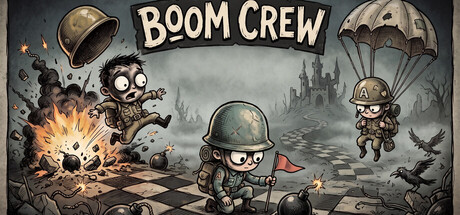
Some of the artwork in Boom Crew was created with the help of generative AI image tools. This covers character and object sprites, ground and paper textures, the game logo, and the capsule art on this store page. Every generated image was directed from hand-drawn mockups, then cut out, corrected and assembled by hand before it shipped. Code, level generation, on-screen text and audio contain no generative AI content, and nothing is generated live while you play.