Public Steam disclosure research25,714 disclosures tracked
Where do games disclose AI use?
Search developers’ Steam disclosures, compare classified AI use across
games, and follow recorded changes.
This index adds cross-game classifications and statistics to
statements published on individual store pages.
Groups reflect automatic analysis of public disclosures; mature records are excluded. These counts do not measure AI use across all of Steam.
Missing or unclear statements cannot establish whether a game uses AI.
During development, OpenAI image generation tools were used to create portions of the game's 2D artwork, including characters, monsters, backgrounds, UI elements, and icons. Suno was used to create portions of the background music, and ElevenLabs was used to create portions of the sound effects. Generative AI was also used as a drafting and editing aid for some in-game writing and localization.
All generated material was selected, edited, processed, and reviewed by the developer before inclusion in the game. The game does not connect to generative AI services at runtime and does not generate content from player input.
Some textures and audio assets were created using generative AI tools and then reviewed and edited by the developer. The game does not generate AI content during gameplay.
Some content was created with the help of neural networks; all materials were reviewed and edited by hand. The game does not generate anything with AI at runtime.
AI-generated content is used in this product. The store page capsule artwork was created using an AI image generation tool. Portions of the store page description text were drafted with the assistance of an AI writing tool and reviewed/edited by the developer.
During development, AI was used to refine some fixed ASCII pixel-art data and portions of the code-defined sound data embedded in the game's C# source. Deterministic rendering and synthesis functions convert this fixed data into sprites and audio at runtime. Some Steam store images use renders of the same sprites.
No generative AI is used while the game is running. The game does not contact an AI service, generate AI content during play, or send player input to an AI service.
Swarmvore was built by a solo developer using generative AI tools for the game's code, art, and text. Every piece of content went through many rounds of prompting, testing, and refining, and every creative decision, from mechanics to tone to visual style, was made by the developer.
This work incorporates the use of generative artificial intelligence (AI) in the following areas:
Parts of the artwork, parts of the sound, and localization.
I’m a normal guy, and making a game has been a dream of mine. I used generative AI as part of my development process, including helping with code and creating visual assets. Every asset included in the final game was personally selected, refined, placed, and directed by me to match the game’s overall vision.
I'm not a professional game developer or artist. Making my own game had been a dream for years, but I never knew how to turn that dream into reality. Generative AI became the tool that finally made it possible.
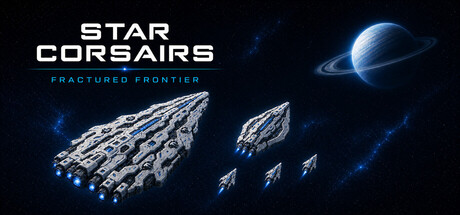
With its help, I created many of the game's visual and audio assets, including item, UI, skill, and module icons, character portraits, ships, space stations, backgrounds, the game icon, the Steam store artwork, and some of the sound effects. It also assisted me with programming.
But Star Corsairs is not a game that AI simply generated. Every asset was reviewed, rejected, refined, or replaced until it matched the vision I had in mind. Every gameplay system was designed, tested, and reworked repeatedly until it felt right. The economy, ship balance, pirate AI, combat, and progression were all shaped through countless hours of playtesting and manual iteration. The story, world, and all of the writing were created by me.
Without generative AI, this game would probably never have existed. But without the countless creative decisions, revisions, and work behind every part of it, Star Corsairs wouldn't exist either.
Generative AI was used exclusively as a programming assistant during development to help write and optimize the game's code. All creative elements, including the story, game design, and artwork, were entirely crafted by human hand.
Generative AI tools were used during development to assist with game code, localization, concept development, selected environmental and shop-interior images and textures, and store and marketing artwork. All AI-assisted outputs were reviewed, edited, and integrated by the developer before inclusion. The game does not use generative AI during runtime, and players cannot generate AI content within the game.
Some of the game's 2D artwork - was created using generative AI tools, then manually curated and edited by the developer. Text
localization into non-English languages is AI-assisted and reviewed by
the developer. A planned voice for one character will use AI speech
generation. All game design, level design, code, gameplay systems, and
the English text are human-made.
Some music, sound effects, and UI icons in this game were created with the assistance of generative AI tools during development. All AI-generated content has been directly reviewed, selected, and retouched for optimal integration.
Human solo dev made: writing, music, game design, game production, voice acting, SFX, and basically everything else. In addition, some 3D and VFX asset packs (plus additional SFX) were purchased from third-party marketplaces, where they are explicitly labeled as non-AI, human-made content, and credited in-game.
AI usage: AI helped with localization corrections, and was used to refine assets, strictly following human artistic direction and human-made examples — no generation from scratch. Example: Plum's character portraits are in-game mesh screenshots, inserted by me into pre-designed empty icon frames, then refined with AI for a more polished result.
Note: I would be happy to replace AI-refined assets with human artist's work, if this becomes financially possible in the future.
Generative AI tools were used to create some background assets used within the actual game client. All game assets created this way were pre-generated and fixed by the developer.
Generative AI tools were used to assist in creating initial visual assets (such as background textures and UI elements). All generated assets have been manually edited, refined, and integrated into the game by the developer.
Generative AI tools were used during development to assist with portions of the game's pre-generated 2D artwork, marketing artwork, localization drafts, and development code. All player-facing AI-assisted content was generated before release, selected, reviewed, edited where needed, tested, and integrated by the developer. The game does not generate or modify content with AI during gameplay and does not send player input to an external AI service.
Some in-game artwork (slot machine cabinet art, icons, and store page marketing images) was created with generative AI tools, then reviewed, selected, and post-processed by the developer. The game does not generate any content in real time.
Pre-generated AI-assisted content is used in some 2D artwork, including unit sprites, character portraits, card illustrations, battlefield backgrounds, visual effects, UI decorative elements, and store and marketing artwork. AI assistance was also used for portions of in-game text and English/Japanese localization. All such content is generated before release and curated and edited by the developer. The game does not generate content during gameplay and does not connect to a generative AI service at runtime.
Generative artwork is used in the creation of part or full of assets that can not be generated by the game engine. AI is used in the drafting of art and writing before it is reviewed and heavily edited.
Generative AI tools were used during development to assist with programming and localization. All AI-assisted code and text were reviewed, edited, tested, and integrated by the developer. No generative AI is used while the game is running.
This game includes pre-generated artwork and music created with the assistance of generative AI. All generated content was reviewed and curated by the developer. The game does not generate AI content during gameplay.
Generative AI tools were used during development for visual assets, 3D models, audio, and localization. Final assets were selected and integrated by the developer. Generative AI was also used to assist with translations. No AI content is generated during gameplay.
Generative AI was used during development to assist in the creation of certain pre-generated game content, including some in-game visual art assets, the game’s title logo, and promotional materials for the Steam store page. All final content was reviewed, curated, edited, and implemented by the developer. No generative AI is used at runtime, and the game does not generate live AI content for players.
The shipped game contains no AI-generated art, audio or written content, and uses no AI at runtime — it runs entirely offline. Some AI tools (like ChatGPT and Claud code) were used during the development of the game for research purposes and reviewing. All game source code is human-written, human-reviewed and occasionally reviewed/tested by AI tools.
The visual art in this game is primarily AI-generated. 3D models, textures, concept art, and UI art, along with the artwork used on this store page, were created with the assistance of generative AI tools, as were the game's sound effects. All AI-assisted assets were reviewed, edited, and approved by our team before use. Our trailers consist of actual in-game footage. The game does not generate any content in real time — there is no live AI generation of dialogue, voice, art, or any other content during gameplay.
This game was developed with substantial help from generative AI: the pixel art (in-game art, capsules and icons), the code, much of the text, and the translations were produced with AI assistance and then reviewed, refined, and directed by the developer.
Generative AI tools were used during development for limited coding assistance and as a starting point for some 3D assets. All AI-assisted content was reviewed, modified, and integrated by the developer. No generative AI is used during gameplay.
The majority of the game's programming was done by AI.
For the in-game text, AI is utilized as a supplementary tool to improve grammar, but all text is ultimately checked and adjusted manually. AI is also used for translating the game into other languages.
However, no AI is used whatsoever for the illustrations or UI.
During development, OpenAI image generation tools were used to create portions of the game's 2D artwork, including characters, monsters, backgrounds, UI elements, and icons. Suno was used to create portions of the background music, and ElevenLabs was used to create portions of the sound effects. Generative AI was also used as a drafting and editing aid for some in-game writing and localization.
All generated material was selected, edited, processed, and reviewed by the developer before inclusion in the game. The game does not connect to generative AI services at runtime and does not generate content from player input.
Some textures and audio assets were created using generative AI tools and then reviewed and edited by the developer. The game does not generate AI content during gameplay.
Some content was created with the help of neural networks; all materials were reviewed and edited by hand. The game does not generate anything with AI at runtime.
AI-generated content is used in this product. The store page capsule artwork was created using an AI image generation tool. Portions of the store page description text were drafted with the assistance of an AI writing tool and reviewed/edited by the developer.
During development, AI was used to refine some fixed ASCII pixel-art data and portions of the code-defined sound data embedded in the game's C# source. Deterministic rendering and synthesis functions convert this fixed data into sprites and audio at runtime. Some Steam store images use renders of the same sprites.
No generative AI is used while the game is running. The game does not contact an AI service, generate AI content during play, or send player input to an AI service.
Swarmvore was built by a solo developer using generative AI tools for the game's code, art, and text. Every piece of content went through many rounds of prompting, testing, and refining, and every creative decision, from mechanics to tone to visual style, was made by the developer.
This work incorporates the use of generative artificial intelligence (AI) in the following areas:
Parts of the artwork, parts of the sound, and localization.
I’m a normal guy, and making a game has been a dream of mine. I used generative AI as part of my development process, including helping with code and creating visual assets. Every asset included in the final game was personally selected, refined, placed, and directed by me to match the game’s overall vision.
I'm not a professional game developer or artist. Making my own game had been a dream for years, but I never knew how to turn that dream into reality. Generative AI became the tool that finally made it possible.
With its help, I created many of the game's visual and audio assets, including item, UI, skill, and module icons, character portraits, ships, space stations, backgrounds, the game icon, the Steam store artwork, and some of the sound effects. It also assisted me with programming.
But Star Corsairs is not a game that AI simply generated. Every asset was reviewed, rejected, refined, or replaced until it matched the vision I had in mind. Every gameplay system was designed, tested, and reworked repeatedly until it felt right. The economy, ship balance, pirate AI, combat, and progression were all shaped through countless hours of playtesting and manual iteration. The story, world, and all of the writing were created by me.
Without generative AI, this game would probably never have existed. But without the countless creative decisions, revisions, and work behind every part of it, Star Corsairs wouldn't exist either.
Generative AI was used exclusively as a programming assistant during development to help write and optimize the game's code. All creative elements, including the story, game design, and artwork, were entirely crafted by human hand.
Generative AI tools were used during development to assist with game code, localization, concept development, selected environmental and shop-interior images and textures, and store and marketing artwork. All AI-assisted outputs were reviewed, edited, and integrated by the developer before inclusion. The game does not use generative AI during runtime, and players cannot generate AI content within the game.
Some of the game's 2D artwork - was created using generative AI tools, then manually curated and edited by the developer. Text
localization into non-English languages is AI-assisted and reviewed by
the developer. A planned voice for one character will use AI speech
generation. All game design, level design, code, gameplay systems, and
the English text are human-made.
Some music, sound effects, and UI icons in this game were created with the assistance of generative AI tools during development. All AI-generated content has been directly reviewed, selected, and retouched for optimal integration.
Human solo dev made: writing, music, game design, game production, voice acting, SFX, and basically everything else. In addition, some 3D and VFX asset packs (plus additional SFX) were purchased from third-party marketplaces, where they are explicitly labeled as non-AI, human-made content, and credited in-game.
AI usage: AI helped with localization corrections, and was used to refine assets, strictly following human artistic direction and human-made examples — no generation from scratch. Example: Plum's character portraits are in-game mesh screenshots, inserted by me into pre-designed empty icon frames, then refined with AI for a more polished result.
Note: I would be happy to replace AI-refined assets with human artist's work, if this becomes financially possible in the future.
Generative AI tools were used to create some background assets used within the actual game client. All game assets created this way were pre-generated and fixed by the developer.
Generative AI tools were used to assist in creating initial visual assets (such as background textures and UI elements). All generated assets have been manually edited, refined, and integrated into the game by the developer.
Generative AI tools were used during development to assist with portions of the game's pre-generated 2D artwork, marketing artwork, localization drafts, and development code. All player-facing AI-assisted content was generated before release, selected, reviewed, edited where needed, tested, and integrated by the developer. The game does not generate or modify content with AI during gameplay and does not send player input to an external AI service.
Some in-game artwork (slot machine cabinet art, icons, and store page marketing images) was created with generative AI tools, then reviewed, selected, and post-processed by the developer. The game does not generate any content in real time.
Pre-generated AI-assisted content is used in some 2D artwork, including unit sprites, character portraits, card illustrations, battlefield backgrounds, visual effects, UI decorative elements, and store and marketing artwork. AI assistance was also used for portions of in-game text and English/Japanese localization. All such content is generated before release and curated and edited by the developer. The game does not generate content during gameplay and does not connect to a generative AI service at runtime.
Generative artwork is used in the creation of part or full of assets that can not be generated by the game engine. AI is used in the drafting of art and writing before it is reviewed and heavily edited.
Generative AI tools were used during development to assist with programming and localization. All AI-assisted code and text were reviewed, edited, tested, and integrated by the developer. No generative AI is used while the game is running.
This game includes pre-generated artwork and music created with the assistance of generative AI. All generated content was reviewed and curated by the developer. The game does not generate AI content during gameplay.
Generative AI tools were used during development for visual assets, 3D models, audio, and localization. Final assets were selected and integrated by the developer. Generative AI was also used to assist with translations. No AI content is generated during gameplay.
Generative AI was used during development to assist in the creation of certain pre-generated game content, including some in-game visual art assets, the game’s title logo, and promotional materials for the Steam store page. All final content was reviewed, curated, edited, and implemented by the developer. No generative AI is used at runtime, and the game does not generate live AI content for players.
The shipped game contains no AI-generated art, audio or written content, and uses no AI at runtime — it runs entirely offline. Some AI tools (like ChatGPT and Claud code) were used during the development of the game for research purposes and reviewing. All game source code is human-written, human-reviewed and occasionally reviewed/tested by AI tools.
The visual art in this game is primarily AI-generated. 3D models, textures, concept art, and UI art, along with the artwork used on this store page, were created with the assistance of generative AI tools, as were the game's sound effects. All AI-assisted assets were reviewed, edited, and approved by our team before use. Our trailers consist of actual in-game footage. The game does not generate any content in real time — there is no live AI generation of dialogue, voice, art, or any other content during gameplay.
This game was developed with substantial help from generative AI: the pixel art (in-game art, capsules and icons), the code, much of the text, and the translations were produced with AI assistance and then reviewed, refined, and directed by the developer.
Generative AI tools were used during development for limited coding assistance and as a starting point for some 3D assets. All AI-assisted content was reviewed, modified, and integrated by the developer. No generative AI is used during gameplay.
The majority of the game's programming was done by AI.
For the in-game text, AI is utilized as a supplementary tool to improve grammar, but all text is ultimately checked and adjusted manually. AI is also used for translating the game into other languages.
However, no AI is used whatsoever for the illustrations or UI.