Public Steam disclosure research25,714 disclosures tracked
Where do games disclose AI use?
Search developers’ Steam disclosures, compare classified AI use across
games, and follow recorded changes.
This index adds cross-game classifications and statistics to
statements published on individual store pages.
Groups reflect automatic analysis of public disclosures; mature records are excluded. These counts do not measure AI use across all of Steam.
Missing or unclear statements cannot establish whether a game uses AI.
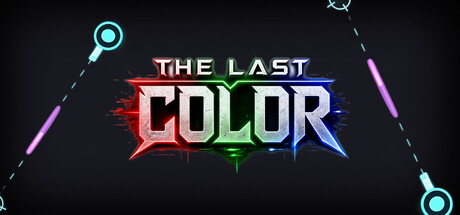
The Last Color was created with the assistance of AI-powered software in several areas of production, including technical development, early-stage ideation, visual experimentation, and selected artwork. These tools were used only as part of the development process. All content available to players is pre-made, and no artificial intelligence is used to create or modify content while the game is running.
In this game AI was used to generate a few abstract textures in 4th and 5th game worlds. Game's logo was also made partially with a help of image generation tooling.
Some visual assets were created with the assistance of generative AI tools and then curated and edited by the developer: story illustrations, character portraits, key art / capsule backgrounds, and a small number of decorative item images.
All gameplay sprites, animations, environments, music and sound effects are human-made assets used under CC0 / open licenses (credited in-game).
Voice-over lines (English and Turkish) were generated with ElevenLabs text-to-speech under a commercial license, from scripts written by the developer.
The game does not generate any content with AI at runtime. The developer has reviewed all AI-assisted content to ensure it is not illegal or infringing.
Generative AI was used in the following ways:
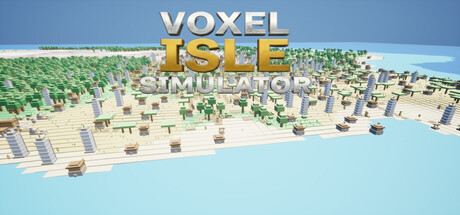
• The title logo on our store capsule images was created with an AI image
tool. Everything else in those images is real footage from the running game.
• The trailer narration was written with AI assistance and voiced using
ElevenLabs text-to-speech.
• Some in-game text event descriptions, help and interface copy was
written with AI assistance and edited by hand.
The game itself is not AI-generated. The world simulation, the voxel terrain
and its creatures, and all in-game art are hand-built. Sound effects and music
are licensed from stock audio libraries. Nothing is generated while you play.
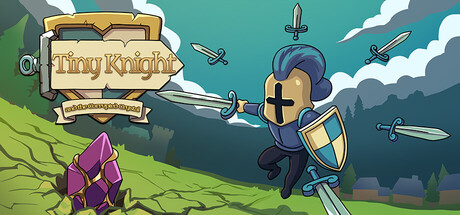
Tiny Knight and the Corrupted Crystal uses AI-generated music. All background music tracks were created with Suno, then edited, and mixed by the developer before being placed in the game.
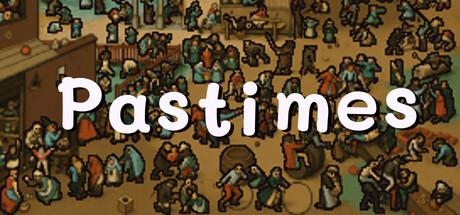
Generative AI was used during development for translations, some pixel art, and some music. AI-assisted content is human-reviewed before release. The main painting is historical public-domain art. Nothing is AI-generated during gameplay.
Pre-generated generative AI tools were used to create selected audio assets and Steam marketing artwork. All outputs were reviewed, curated, and edited by the developer. No content is generated live during gameplay.
The game uses pre-generated AI-assisted artwork created before release. It does not generate images, text, audio, or other content during runtime and does not connect to any external AI service.
AI tools were used during development to assist with coding and to create internal task, references and supporting documentation. The game does not include any player-facing generative AI features.
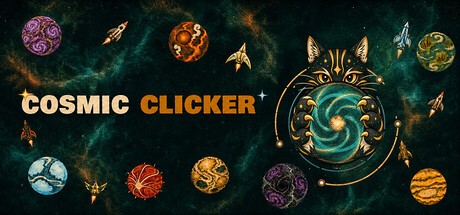
During development, we used generative AI tools to transform early sketches and visual concepts into functional 2D game assets and visual materials that help define Cosmic Clicker’s identity. This included selected in-game assets, Steam store capsules, library artwork, icons, and key art.
The generated results were reviewed, selected, refined, and integrated to maintain consistency with the game’s established art direction.
Image assets and some localized text were created with generative AI assistance, then manually processed and reviewed by the developer. No content is generated at runtime.
The pixel art was generated with PixelLab. The music was generated with Suno on a paid plan. I wrote the prompts, picked what worked, and threw out what didn't. The game itself, the economy, the systems, the design, the words on screen, I built. Nothing is generated while the game runs. Everything ships as files. There are no AI calls at play time, no AI voice, and no chatbots.
This is a one-person project — just me — and I used AI tools throughout development. All of it is pre-generated: the game doesn't make AI calls while you're playing, and it makes no network calls at all.
Most of the code was written with AI coding assistants. Some of the writing players see was drafted the same way and then edited by me: the word lists the game builds its procedural company names from, the achievement titles, and the templates behind the news items and company filings. Those get assembled in-game by ordinary seeded code, not by a model. The store page copy was drafted with AI help as well.
The app icon was made with an AI image generator. That same icon is also the Steam community icon, the Windows client icon, the store page background, and the base image for the achievement icons.
The rest of the art isn't AI-generated. The capsules and library assets are drawn programmatically from the game's own stylesheet and some seeded procedural drawing code, the screenshots are straight captures of the game running, and the audio is synthesized as you play rather than being generated audio files.
Scuttled was created by a solo developer working with an AI assistant. AI was used under the developer's direction to help write the game's code, its in-game text and story logs, the procedurally drawn artwork and music, and the store page materials, including the key art and trailer. All of it was reviewed, revised, and approved by the developer. The game does not use AI at runtime: nothing is generated while you play, and everything you see and hear ships with the game exactly as authored.
Portions of the text and visual materials on this Steam store page were partially generated with AI tools. All AI-generated content has been fully reviewed, edited and polished by our development team.
Cigar Tycoon includes pre-generated AI-assisted content created during development, including some promotional artwork, store capsule and library artwork, and a small amount of magazine-style written content. The developer reviewed and edited this content before release. The game does not generate new content with AI during gameplay, does not connect to an external AI service, and does not send player data to an AI service.
Generative AI was used during development to assist with the creation of 2D concept art and background textures. The loading screen video is also made with generative AI. All final assets were manually edited and (if necessary) refined by the developer to match the game's art style.
Voice lines for the characters were generated using AI voice tools based on licensed models. The scripts were entirely written by humans, and the generated audio was manually edited where necessary.
Generative AI was used to create and refine some pre-generated visual assets, including the game logo and Steam store capsule artwork. All AI-assisted assets are reviewed, edited, and curated by the developer before inclusion. The game does not generate content during gameplay and does not connect to external AI services.
This game uses pre-generated AI only for certain UI background images and promotional store visuals. These assets were created before release and remain fixed. The game does not include any live AI generation during gameplay.
Some 3D models and assets used in the game were created with the assistance of generative AI tools, then adapted, modified, and integrated into the game during development.
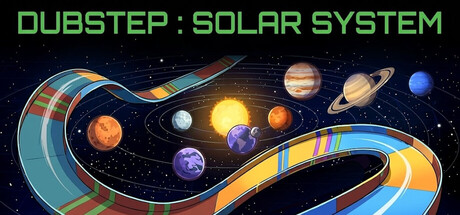
Dubstep: Solar System is an AI-assisted indie game — the studio name, Vibe Coded Reality, wears it proudly. Here is exactly how generative AI was used:
MUSIC: The entire 46-track original dubstep soundtrack was generated with Suno under a paid commercial license, from prompts written by the developer — every track hand-picked from multiple takes and play-tested against the game's beat-gate timing.
CODE: Much of the game's code was written with AI coding assistants working under the developer's direction; all game design, difficulty tuning, and play-testing are human work.
STORE ARTWORK: The cover and capsule artwork were created with AI image tools, then composed and typeset by the developer.
All in-game visuals are drawn procedurally by the game's own code — no AI-generated images appear inside the game itself, and nothing is generated by AI at runtime while you play.
Generative AI tools assisted with English Steam store-page copy, and were used to create pre-generated illustrative key art for Steam store capsules, library artwork, and the store-page background. All AI-assisted outputs are reviewed, edited, integrated, and tested by the developer. The artwork is promotional and is not presented as gameplay footage; screenshots and trailers are captured from the actual game. The game does not use generative AI at runtime or generate live player-facing content.
AI was used for localization, while being manually reviewed, and as a time-saving step in the development of some image and model assets, for retopology, concepting, and inbetweening.
The game contains no unmodified AI outputs.
Generative AI tools were used during development to assist with portions of the game's code, hand-drawn-style visual elements, original music and audio, written text, and some store and community marketing materials. All included material was reviewed, selected, edited, and integrated by the developer.
The game does not use generative AI during gameplay and does not connect to external AI services. Its randomized meadows are created through conventional procedural generation.
Generative AI was used during the development of this game to assist with portions of the artwork, programming, and translation. All generated content was reviewed and edited by the developer as necessary.
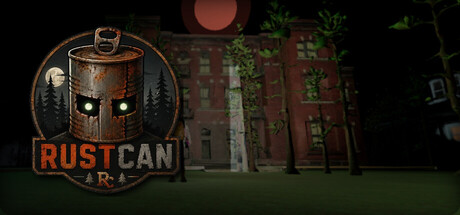
RUSTCAN includes an optional live-generated AI guide called the Gnome. Players can ask the Gnome questions about gameplay, controls, progression, and the in-game world. The Gnome generates text responses at runtime through a server-side AI service.
Responses may be inaccurate and are provided for entertainment and gameplay guidance only. The Gnome does not provide professional, financial, medical, or legal advice.
Players access the feature after signing in, entering Hollow Pines, and selecting Ask the Gnome or speaking with the Gnome in town.
Requests require an authenticated RUSTCAN account and server-side application verification. Requests are rate-limited and monitored. Server-side input moderation blocks or flags severe illegal, exploitative, violent, self-harm, and other prohibited requests.
Generated replies are sanitized before display, and fallback responses are used when the AI service fails or produces no usable response. Players can report problems through the in-game bug/report tools.
Generative Al was used only to assist in creating two small decorative images displayed in picture frames in the game. All other game content, including the story, dialogue, gameplay, environments, assets, artwork, and promotional materials, was created by TommyXplore."
Some visual assets, marketing materials, and/or text drafts may have been created or assisted with generative AI tools. All AI-assisted content is reviewed and edited by the developer before being included in the game or store page.
This game contains artwork and narrative content created with
the assistance of generative AI. All AI-generated materials
have been carefully reviewed, selected, and edited by the
development team to ensure quality and consistency with the
game's vision.
We believe AI tools can support and accelerate the creative
process when used responsibly, and we remain committed to
maintaining creative oversight and storytelling integrity
throughout development.
Most of the visual assets used in the game's promotional materials and Steam Store page were created with the assistance of AI image generation tools, and were subsequently selected and refined by the developer. The game's gameplay, level design, programming, and game logic were developed by the developer with input from AI throughout the development process. The game does not use AI to generate any content during gameplay.
This game is a solo project developed by a student. Due to limited resources and budget, Generative AI tools were utilized to create store page visuals and capsule designs, as well as to localize and draft store descriptions; these elements were personally edited, refined, and finalized by the developer.
Guild Management Simulator began as an AI-assisted prototype. Generative AI tools were used during early development to assist with portions of programming, written game content, interface copy, design iteration, and the current Steam marketing artwork. All AI-assisted material is pre-generated and reviewed before inclusion. The game does not generate content while running, connect players to an AI service, or send player data to an AI system. The long-term goal is to replace AI-assisted material with original, developer-created work as the project is rebuilt in a dedicated game engine.
During development we may use procedural and AI-based tools to assist with sound effects creation. The final result is always chosen and edited by the developer.
Most 2D art in this game — ships, enemies, bosses, icons and badges — was first created with AI image tools, then selected, edited and finalised by the developer. No AI is used during gameplay.
The Last Color was created with the assistance of AI-powered software in several areas of production, including technical development, early-stage ideation, visual experimentation, and selected artwork. These tools were used only as part of the development process. All content available to players is pre-made, and no artificial intelligence is used to create or modify content while the game is running.
In this game AI was used to generate a few abstract textures in 4th and 5th game worlds. Game's logo was also made partially with a help of image generation tooling.
Some visual assets were created with the assistance of generative AI tools and then curated and edited by the developer: story illustrations, character portraits, key art / capsule backgrounds, and a small number of decorative item images.
All gameplay sprites, animations, environments, music and sound effects are human-made assets used under CC0 / open licenses (credited in-game).
Voice-over lines (English and Turkish) were generated with ElevenLabs text-to-speech under a commercial license, from scripts written by the developer.
The game does not generate any content with AI at runtime. The developer has reviewed all AI-assisted content to ensure it is not illegal or infringing.
Generative AI was used in the following ways:
• The title logo on our store capsule images was created with an AI image
tool. Everything else in those images is real footage from the running game.
• The trailer narration was written with AI assistance and voiced using
ElevenLabs text-to-speech.
• Some in-game text event descriptions, help and interface copy was
written with AI assistance and edited by hand.
The game itself is not AI-generated. The world simulation, the voxel terrain
and its creatures, and all in-game art are hand-built. Sound effects and music
are licensed from stock audio libraries. Nothing is generated while you play.
Tiny Knight and the Corrupted Crystal uses AI-generated music. All background music tracks were created with Suno, then edited, and mixed by the developer before being placed in the game.
Generative AI was used during development for translations, some pixel art, and some music. AI-assisted content is human-reviewed before release. The main painting is historical public-domain art. Nothing is AI-generated during gameplay.
Pre-generated generative AI tools were used to create selected audio assets and Steam marketing artwork. All outputs were reviewed, curated, and edited by the developer. No content is generated live during gameplay.
The game uses pre-generated AI-assisted artwork created before release. It does not generate images, text, audio, or other content during runtime and does not connect to any external AI service.
AI tools were used during development to assist with coding and to create internal task, references and supporting documentation. The game does not include any player-facing generative AI features.
During development, we used generative AI tools to transform early sketches and visual concepts into functional 2D game assets and visual materials that help define Cosmic Clicker’s identity. This included selected in-game assets, Steam store capsules, library artwork, icons, and key art.
The generated results were reviewed, selected, refined, and integrated to maintain consistency with the game’s established art direction.
Image assets and some localized text were created with generative AI assistance, then manually processed and reviewed by the developer. No content is generated at runtime.
The pixel art was generated with PixelLab. The music was generated with Suno on a paid plan. I wrote the prompts, picked what worked, and threw out what didn't. The game itself, the economy, the systems, the design, the words on screen, I built. Nothing is generated while the game runs. Everything ships as files. There are no AI calls at play time, no AI voice, and no chatbots.
This is a one-person project — just me — and I used AI tools throughout development. All of it is pre-generated: the game doesn't make AI calls while you're playing, and it makes no network calls at all.
Most of the code was written with AI coding assistants. Some of the writing players see was drafted the same way and then edited by me: the word lists the game builds its procedural company names from, the achievement titles, and the templates behind the news items and company filings. Those get assembled in-game by ordinary seeded code, not by a model. The store page copy was drafted with AI help as well.
The app icon was made with an AI image generator. That same icon is also the Steam community icon, the Windows client icon, the store page background, and the base image for the achievement icons.
The rest of the art isn't AI-generated. The capsules and library assets are drawn programmatically from the game's own stylesheet and some seeded procedural drawing code, the screenshots are straight captures of the game running, and the audio is synthesized as you play rather than being generated audio files.
Scuttled was created by a solo developer working with an AI assistant. AI was used under the developer's direction to help write the game's code, its in-game text and story logs, the procedurally drawn artwork and music, and the store page materials, including the key art and trailer. All of it was reviewed, revised, and approved by the developer. The game does not use AI at runtime: nothing is generated while you play, and everything you see and hear ships with the game exactly as authored.
Portions of the text and visual materials on this Steam store page were partially generated with AI tools. All AI-generated content has been fully reviewed, edited and polished by our development team.
Cigar Tycoon includes pre-generated AI-assisted content created during development, including some promotional artwork, store capsule and library artwork, and a small amount of magazine-style written content. The developer reviewed and edited this content before release. The game does not generate new content with AI during gameplay, does not connect to an external AI service, and does not send player data to an AI service.
Generative AI was used during development to assist with the creation of 2D concept art and background textures. The loading screen video is also made with generative AI. All final assets were manually edited and (if necessary) refined by the developer to match the game's art style.
Voice lines for the characters were generated using AI voice tools based on licensed models. The scripts were entirely written by humans, and the generated audio was manually edited where necessary.
Generative AI was used to create and refine some pre-generated visual assets, including the game logo and Steam store capsule artwork. All AI-assisted assets are reviewed, edited, and curated by the developer before inclusion. The game does not generate content during gameplay and does not connect to external AI services.
This game uses pre-generated AI only for certain UI background images and promotional store visuals. These assets were created before release and remain fixed. The game does not include any live AI generation during gameplay.
Some 3D models and assets used in the game were created with the assistance of generative AI tools, then adapted, modified, and integrated into the game during development.
Dubstep: Solar System is an AI-assisted indie game — the studio name, Vibe Coded Reality, wears it proudly. Here is exactly how generative AI was used:
MUSIC: The entire 46-track original dubstep soundtrack was generated with Suno under a paid commercial license, from prompts written by the developer — every track hand-picked from multiple takes and play-tested against the game's beat-gate timing.
CODE: Much of the game's code was written with AI coding assistants working under the developer's direction; all game design, difficulty tuning, and play-testing are human work.
STORE ARTWORK: The cover and capsule artwork were created with AI image tools, then composed and typeset by the developer.
All in-game visuals are drawn procedurally by the game's own code — no AI-generated images appear inside the game itself, and nothing is generated by AI at runtime while you play.
Generative AI tools assisted with English Steam store-page copy, and were used to create pre-generated illustrative key art for Steam store capsules, library artwork, and the store-page background. All AI-assisted outputs are reviewed, edited, integrated, and tested by the developer. The artwork is promotional and is not presented as gameplay footage; screenshots and trailers are captured from the actual game. The game does not use generative AI at runtime or generate live player-facing content.
AI was used for localization, while being manually reviewed, and as a time-saving step in the development of some image and model assets, for retopology, concepting, and inbetweening.
The game contains no unmodified AI outputs.
Generative AI tools were used during development to assist with portions of the game's code, hand-drawn-style visual elements, original music and audio, written text, and some store and community marketing materials. All included material was reviewed, selected, edited, and integrated by the developer.
The game does not use generative AI during gameplay and does not connect to external AI services. Its randomized meadows are created through conventional procedural generation.
Generative AI was used during the development of this game to assist with portions of the artwork, programming, and translation. All generated content was reviewed and edited by the developer as necessary.
RUSTCAN includes an optional live-generated AI guide called the Gnome. Players can ask the Gnome questions about gameplay, controls, progression, and the in-game world. The Gnome generates text responses at runtime through a server-side AI service.
Responses may be inaccurate and are provided for entertainment and gameplay guidance only. The Gnome does not provide professional, financial, medical, or legal advice.
Players access the feature after signing in, entering Hollow Pines, and selecting Ask the Gnome or speaking with the Gnome in town.
Requests require an authenticated RUSTCAN account and server-side application verification. Requests are rate-limited and monitored. Server-side input moderation blocks or flags severe illegal, exploitative, violent, self-harm, and other prohibited requests.
Generated replies are sanitized before display, and fallback responses are used when the AI service fails or produces no usable response. Players can report problems through the in-game bug/report tools.
Generative Al was used only to assist in creating two small decorative images displayed in picture frames in the game. All other game content, including the story, dialogue, gameplay, environments, assets, artwork, and promotional materials, was created by TommyXplore."
Some visual assets, marketing materials, and/or text drafts may have been created or assisted with generative AI tools. All AI-assisted content is reviewed and edited by the developer before being included in the game or store page.
This game contains artwork and narrative content created with
the assistance of generative AI. All AI-generated materials
have been carefully reviewed, selected, and edited by the
development team to ensure quality and consistency with the
game's vision.
We believe AI tools can support and accelerate the creative
process when used responsibly, and we remain committed to
maintaining creative oversight and storytelling integrity
throughout development.
Most of the visual assets used in the game's promotional materials and Steam Store page were created with the assistance of AI image generation tools, and were subsequently selected and refined by the developer. The game's gameplay, level design, programming, and game logic were developed by the developer with input from AI throughout the development process. The game does not use AI to generate any content during gameplay.
This game is a solo project developed by a student. Due to limited resources and budget, Generative AI tools were utilized to create store page visuals and capsule designs, as well as to localize and draft store descriptions; these elements were personally edited, refined, and finalized by the developer.
Guild Management Simulator began as an AI-assisted prototype. Generative AI tools were used during early development to assist with portions of programming, written game content, interface copy, design iteration, and the current Steam marketing artwork. All AI-assisted material is pre-generated and reviewed before inclusion. The game does not generate content while running, connect players to an AI service, or send player data to an AI system. The long-term goal is to replace AI-assisted material with original, developer-created work as the project is rebuilt in a dedicated game engine.
During development we may use procedural and AI-based tools to assist with sound effects creation. The final result is always chosen and edited by the developer.
Most 2D art in this game — ships, enemies, bosses, icons and badges — was first created with AI image tools, then selected, edited and finalised by the developer. No AI is used during gameplay.