Public Steam disclosure research25,376 disclosures tracked
Where do games disclose AI use?
Search developers’ Steam disclosures, compare classified AI use across
games, and follow recorded changes.
This index adds cross-game classifications and statistics to
statements published on individual store pages.
Groups reflect automatic analysis of public disclosures; mature records are excluded. These counts do not measure AI use across all of Steam.
Missing or unclear statements cannot establish whether a game uses AI.
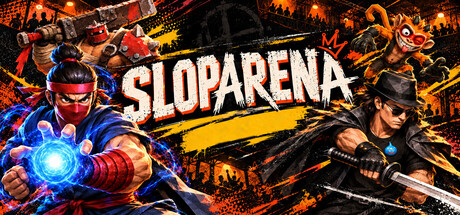
SlopArena is a non-profit open source game created by a solo developer. AI was used extensively during development for various tasks such as research, brainstorming, planning, coding, analysing. Some assets were bought, some were generated to reduce costs. Generated assets are seen as placeholder, especially character models.
Some visual assets in this game, including certain 3D models, textures, UI elements, icons, and character portraits, as well as background music and some sound effects, were created in advance with the help of generative AI tools. The developer reviewed and integrated the AI-generated assets. Some music and UI, victory, and defeat sound effects were generated with Google Gemini; other sound effects use third-party recordings or procedural synthesis. The game does not use generative AI at runtime, generate content while you play, or connect to AI services.
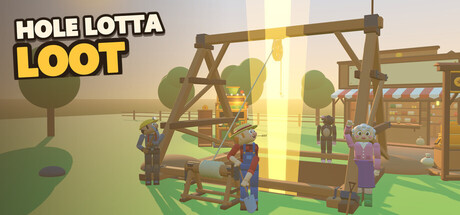
The promotional image of the game, as well as NPCs and a small number of scene components, are generated by AI.And the opening and closing of the promotional video
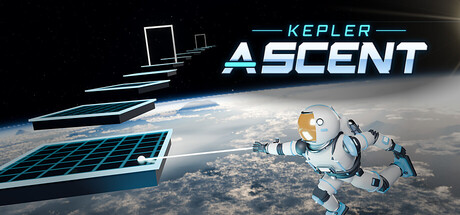
Kepler Ascent was made by an independent developer with the help of generative AI tools. AI was used to write part of the game's text (story and AURA's lines), to compose the music and create AURA's synthesized voice, to build some 3D models and cinematic sets (generated through scripts), and to produce the logo and artwork of this store page (rendered from the game's own models). All of this content was created ahead of time and reviewed by the developer. Nothing is generated by AI while you play.
Generative AI was used to create some of the game's content. The illustrations and the characters (character designs and artwork and models) were created with the help of generative AI tools, then selected, edited and integrated by the developer. Some English localization text (UI and character descriptions) and the store page description were also drafted with an AI assistant and reviewed and edited by the developer. The game does not generate any content with AI while it is running.
AI Disclosure:
Environment & Art: 20% AI-assisted — used for fixing minor 3D model anomalies and supplementing certain Unity assets.
Programming: 50% AI-assisted — used alongside custom coding to assist with code refactoring and feature development.
Music: 100% generated using SUNO AI.
Sound Effects: 20% generated via AI, with the majority sourced from licensed SFX libraries.
UI & User Interaction: 50% AI-assisted, 50% Unity Assets.
The core assets, music, 3D objects, and story of this game were entirely reviewed, refined, and crafted by the developer. However, generative AI tools were utilized to assist in creating certain sound effects and a few background/UI images. As this is my very first game developed entirely as a solo indie developer, these tools were used to help overcome the immense challenges of managing all aspects of production alone. All AI-assisted contents have been thoroughly checked to ensure quality and compliance.
Disclosure regarding Generative AI
This game utilizes artificial intelligence (AI) tools to assist in generating some of the promotional materials on the store page, as well as certain in-game visual assets.
Generative AI tools were used during development to assist with the creation of game content. All final content was reviewed and refined by the development team.
Atomica's translations into the thirteen languages other than English were made by an AI language model and have not yet been reviewed by native speakers. Much of the game's code and the store text were written with AI assistance. Nothing else is AI-generated. The cell is assembled by ordinary procedural code, not machine learning, from real data: Scripps Research's cellPACK model of Mycoplasma genitalium, protein structures from the Protein Data Bank (PDB), and ligands from the wwPDB Chemical Component Dictionary (CCD). The sounds are synthesized from the cell's real activity, and the store images are in-game screenshots.
Generative AI tools were used during development to assist in the creation of 3D models and other visual assets. AI-assisted development tools were also used extensively for programming and implementation. All generated and AI-assisted content was reviewed, directed, and integrated by the developer. No generative AI is used at runtime.
Generative AI was used during development to create some character models and visual assets, promotional artwork, and to assist with text and localization. These assets are prepared in advance and included with the game or its store and marketing materials. No AI-generated content is created during gameplay, and the game does not connect to external generative AI services.
This game's 3D models, music, sound effects, and in-game text (dialogue, item names and descriptions) were created with the help of generative AI, under the developer's direction and review. The store images and trailer use this in-game content.
Memory Access Violation was made by a solo developer working with an AI coding assistant, which was used during development:
Code and level design: much of the game's code, including the level-building tools, puzzle layouts, enemy behaviour and vehicle handling, was written with AI assistance. The developer directed, playtested and revised every level. Puzzle solutions were checked by automated solvers so each one is fair.
Visuals: the game's environments, vehicles, mechs and enemies are built in code from simple geometric shapes and custom shaders. No AI image generators were used for in-game art.
Generative AI was used during development to create some visual assets, including the title artwork and app icon. AI tools also assisted with some 3D models, in-game text, localization, and sound effects. The game does not use generative AI services to create content during play.
AI-assisted translation tools were used for some parts of the game's localization.
We are committed to improving translation quality and welcome feedback on any inaccuracies or unnatural phrasing you may encounter.
AI helped create promotional artwork and the main-menu background illustration, and draft the story, dialogue and Korean and English store descriptions. These assets are pre-generated; no AI content is generated or external AI service used during gameplay.
Generative AI was used during development to assist with the creation and refinement of some promotional artwork and marketing assets. AI tools were also used as part of the development workflow for coding assistance and troubleshooting. The game does not generate AI content during gameplay.
AI-assisted tools were used during development for selected artwork and audio, store page text, and localization. All content is included in the game or its promotional materials in a pre-generated form. No generative AI runs during gameplay, and the game does not connect to external AI services.
Generative AI was used to assist with the creation of the game logo and some promotional assets for the Steam store. The generated materials were selected, edited, and further processed by the developer before use.
Generative AI was also used during development to assist with programming and debugging.
No generative AI is used to generate content during gameplay.
Generative AI tools were used during the development of this game to help create some store artwork, user interface (UI) concepts, and cover designs. All AI-generated content was reviewed, edited, and finalized by humans. The game does not generate any AI content dynamically or in real time during gameplay.
Some of the store page description was drafted with generative AI writing assistance and then reviewed and edited by the developer. This game does not use generative AI to create content during gameplay.
This game uses generative AI for creating textures, assisting with coding, and localizing text. All of this was produced during development, and the game does not use AI to generate new content while you play.
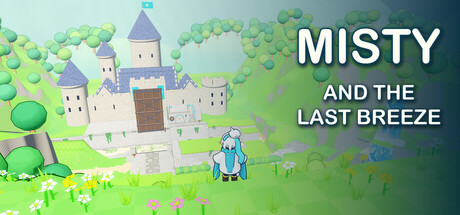
Misty and the Last Breeze is a solo-developed game made with a lot of AI assistance. Here is how AI was used.
Code. The game is built in Godot. Most of the gameplay code, tooling and automated tests were written with AI coding assistants (Claude Code and Codex), working from my design direction, and reviewed, playtested and revised by me. Design decisions, level layouts, movement feel and what ships are mine; the assistants do much of the typing.
3D models and art. Many in-game models and textures were made in Blender through scripts written with AI assistance, often rebuilt from concept images. Some of those reference images were generated with AI image tools. Other visuals, such as shaders, UI and effects, are authored in code. Painting and key-art images in the game that began as AI-generated images are kept as AI-assisted work.
Music. Music is generated with Suno and then selected, arranged and edited by me. Ambience and sound effects are mostly synthesized in code (procedural audio) rather than sampled from other artists.
Mockups and planning. I use ChatGPT's image generation for mockups, mood boards, UI layouts and promotional concepts while planning. These are for exploring ideas; they are not meant to ship as finished art unless noted above.
What is not AI. The game itself has no runtime AI: every enemy, NPC, line of dialogue and level is fixed content that I designed and authored. Nothing is generated or adapted while you play.
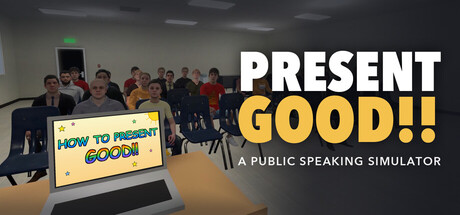
Generative AI was used to create some images, music, sound effects, and prerecorded synthetic chant voices. The game also uses on-device AI speech recognition to transcribe player recordings.
The store artwork (capsules and key art) was generated with an image model and then composed, cropped and combined with our own logo by hand. The game's ambient background music tracks were generated with an AI music tool and edited afterwards.
After a talk, audience questions are generated at runtime by a small open-weight language model (Qwen3) running locally on the player's computer, based on a transcript of what the player just said. Speech-to-text also runs locally (whisper.cpp). Nothing is sent to any server.
Generative AI was used to assist in the creation of some in-game images, textures, dialogue, store page text, and localization. All AI-assisted content was reviewed, edited, and implemented by the developer. No live-generated AI content is used during gameplay.
SlopArena is a non-profit open source game created by a solo developer. AI was used extensively during development for various tasks such as research, brainstorming, planning, coding, analysing. Some assets were bought, some were generated to reduce costs. Generated assets are seen as placeholder, especially character models.
Some visual assets in this game, including certain 3D models, textures, UI elements, icons, and character portraits, as well as background music and some sound effects, were created in advance with the help of generative AI tools. The developer reviewed and integrated the AI-generated assets. Some music and UI, victory, and defeat sound effects were generated with Google Gemini; other sound effects use third-party recordings or procedural synthesis. The game does not use generative AI at runtime, generate content while you play, or connect to AI services.
The promotional image of the game, as well as NPCs and a small number of scene components, are generated by AI.And the opening and closing of the promotional video
Kepler Ascent was made by an independent developer with the help of generative AI tools. AI was used to write part of the game's text (story and AURA's lines), to compose the music and create AURA's synthesized voice, to build some 3D models and cinematic sets (generated through scripts), and to produce the logo and artwork of this store page (rendered from the game's own models). All of this content was created ahead of time and reviewed by the developer. Nothing is generated by AI while you play.
Generative AI was used to create some of the game's content. The illustrations and the characters (character designs and artwork and models) were created with the help of generative AI tools, then selected, edited and integrated by the developer. Some English localization text (UI and character descriptions) and the store page description were also drafted with an AI assistant and reviewed and edited by the developer. The game does not generate any content with AI while it is running.
AI Disclosure:
Environment & Art: 20% AI-assisted — used for fixing minor 3D model anomalies and supplementing certain Unity assets.
Programming: 50% AI-assisted — used alongside custom coding to assist with code refactoring and feature development.
Music: 100% generated using SUNO AI.
Sound Effects: 20% generated via AI, with the majority sourced from licensed SFX libraries.
UI & User Interaction: 50% AI-assisted, 50% Unity Assets.
The core assets, music, 3D objects, and story of this game were entirely reviewed, refined, and crafted by the developer. However, generative AI tools were utilized to assist in creating certain sound effects and a few background/UI images. As this is my very first game developed entirely as a solo indie developer, these tools were used to help overcome the immense challenges of managing all aspects of production alone. All AI-assisted contents have been thoroughly checked to ensure quality and compliance.
Disclosure regarding Generative AI
This game utilizes artificial intelligence (AI) tools to assist in generating some of the promotional materials on the store page, as well as certain in-game visual assets.
Generative AI tools were used during development to assist with the creation of game content. All final content was reviewed and refined by the development team.
Atomica's translations into the thirteen languages other than English were made by an AI language model and have not yet been reviewed by native speakers. Much of the game's code and the store text were written with AI assistance. Nothing else is AI-generated. The cell is assembled by ordinary procedural code, not machine learning, from real data: Scripps Research's cellPACK model of Mycoplasma genitalium, protein structures from the Protein Data Bank (PDB), and ligands from the wwPDB Chemical Component Dictionary (CCD). The sounds are synthesized from the cell's real activity, and the store images are in-game screenshots.
Generative AI tools were used during development to assist in the creation of 3D models and other visual assets. AI-assisted development tools were also used extensively for programming and implementation. All generated and AI-assisted content was reviewed, directed, and integrated by the developer. No generative AI is used at runtime.
Generative AI was used during development to create some character models and visual assets, promotional artwork, and to assist with text and localization. These assets are prepared in advance and included with the game or its store and marketing materials. No AI-generated content is created during gameplay, and the game does not connect to external generative AI services.
This game's 3D models, music, sound effects, and in-game text (dialogue, item names and descriptions) were created with the help of generative AI, under the developer's direction and review. The store images and trailer use this in-game content.
Memory Access Violation was made by a solo developer working with an AI coding assistant, which was used during development:
Code and level design: much of the game's code, including the level-building tools, puzzle layouts, enemy behaviour and vehicle handling, was written with AI assistance. The developer directed, playtested and revised every level. Puzzle solutions were checked by automated solvers so each one is fair.
Visuals: the game's environments, vehicles, mechs and enemies are built in code from simple geometric shapes and custom shaders. No AI image generators were used for in-game art.
Generative AI was used during development to create some visual assets, including the title artwork and app icon. AI tools also assisted with some 3D models, in-game text, localization, and sound effects. The game does not use generative AI services to create content during play.
AI-assisted translation tools were used for some parts of the game's localization.
We are committed to improving translation quality and welcome feedback on any inaccuracies or unnatural phrasing you may encounter.
AI helped create promotional artwork and the main-menu background illustration, and draft the story, dialogue and Korean and English store descriptions. These assets are pre-generated; no AI content is generated or external AI service used during gameplay.
Generative AI was used during development to assist with the creation and refinement of some promotional artwork and marketing assets. AI tools were also used as part of the development workflow for coding assistance and troubleshooting. The game does not generate AI content during gameplay.
AI-assisted tools were used during development for selected artwork and audio, store page text, and localization. All content is included in the game or its promotional materials in a pre-generated form. No generative AI runs during gameplay, and the game does not connect to external AI services.
Generative AI was used to assist with the creation of the game logo and some promotional assets for the Steam store. The generated materials were selected, edited, and further processed by the developer before use.
Generative AI was also used during development to assist with programming and debugging.
No generative AI is used to generate content during gameplay.
Generative AI tools were used during the development of this game to help create some store artwork, user interface (UI) concepts, and cover designs. All AI-generated content was reviewed, edited, and finalized by humans. The game does not generate any AI content dynamically or in real time during gameplay.
Some of the store page description was drafted with generative AI writing assistance and then reviewed and edited by the developer. This game does not use generative AI to create content during gameplay.
This game uses generative AI for creating textures, assisting with coding, and localizing text. All of this was produced during development, and the game does not use AI to generate new content while you play.
Misty and the Last Breeze is a solo-developed game made with a lot of AI assistance. Here is how AI was used.
Code. The game is built in Godot. Most of the gameplay code, tooling and automated tests were written with AI coding assistants (Claude Code and Codex), working from my design direction, and reviewed, playtested and revised by me. Design decisions, level layouts, movement feel and what ships are mine; the assistants do much of the typing.
3D models and art. Many in-game models and textures were made in Blender through scripts written with AI assistance, often rebuilt from concept images. Some of those reference images were generated with AI image tools. Other visuals, such as shaders, UI and effects, are authored in code. Painting and key-art images in the game that began as AI-generated images are kept as AI-assisted work.
Music. Music is generated with Suno and then selected, arranged and edited by me. Ambience and sound effects are mostly synthesized in code (procedural audio) rather than sampled from other artists.
Mockups and planning. I use ChatGPT's image generation for mockups, mood boards, UI layouts and promotional concepts while planning. These are for exploring ideas; they are not meant to ship as finished art unless noted above.
What is not AI. The game itself has no runtime AI: every enemy, NPC, line of dialogue and level is fixed content that I designed and authored. Nothing is generated or adapted while you play.
Generative AI was used to create some images, music, sound effects, and prerecorded synthetic chant voices. The game also uses on-device AI speech recognition to transcribe player recordings.
The store artwork (capsules and key art) was generated with an image model and then composed, cropped and combined with our own logo by hand. The game's ambient background music tracks were generated with an AI music tool and edited afterwards.
After a talk, audience questions are generated at runtime by a small open-weight language model (Qwen3) running locally on the player's computer, based on a transcript of what the player just said. Speech-to-text also runs locally (whisper.cpp). Nothing is sent to any server.
Generative AI was used to assist in the creation of some in-game images, textures, dialogue, store page text, and localization. All AI-assisted content was reviewed, edited, and implemented by the developer. No live-generated AI content is used during gameplay.