Public Steam disclosure research25,376 disclosures tracked
Where do games disclose AI use?
Search developers’ Steam disclosures, compare classified AI use across
games, and follow recorded changes.
This index adds cross-game classifications and statistics to
statements published on individual store pages.
Groups reflect automatic analysis of public disclosures; mature records are excluded. These counts do not measure AI use across all of Steam.
Missing or unclear statements cannot establish whether a game uses AI.
Generative AI tools were used to create music and visual artwork, including store and promotional images. These assets were generated before release and selected by the developer. No AI content is generated during gameplay.
Generative AI tools were used during development to create pre-rendered visual assets, UI elements, and marketing materials. All generated assets were reviewed, finalized, and statically integrated into the game build prior to release. No content is generated in real-time or dynamically during gameplay.
Some visual assets were created with the assistance of generative AI during development, while others were created manually. AI-assisted assets were reviewed and adjusted by the developer. The game does not generate AI content during gameplay.
Generative AI supported the creation of parts of the artwork, sound effects and particular translations, all of which were carefully selected and refined by the developers. No AI content is generated during play.
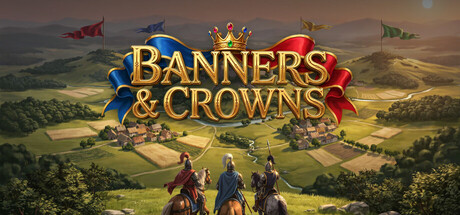
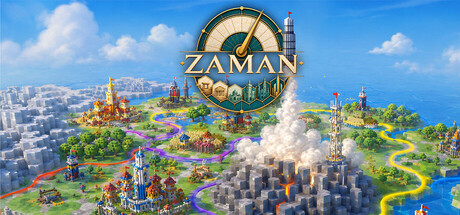
The key art, story illustrations, kingdom portraits, music, opening film, menu video and its narration were produced with generative AI tools (Ideogram, Lyria, Seedance, Kling and ElevenLabs, through Artlist) and then selected, edited and assembled by the developer. The 3D map, units and buildings are procedural low-poly models built in code, and the sound effects are synthesised in the game. The game was written with the help of an AI coding assistant. No content is generated while the game is running; everything is pre-generated and shipped in the build. No real people's likenesses or voices are used.
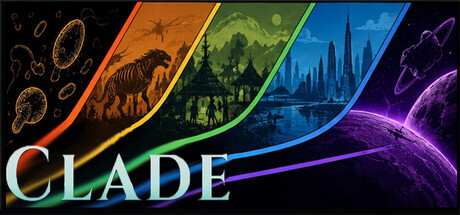
Clade is made by a small independent developer. During development, AI tools were used to help write some of the game's code, and to create some placeholder 3D models and text. All placeholder art is being replaced with handmade work, and this note will be updated as that happens. The game does not generate any content with AI while you play. The computer controlled empires are traditional game AI written for Clade, not generative AI.
Some visual assets in this game (such as illustrations, icons, and background images) were created with the assistance of generative AI tools. All AI-generated content was reviewed, edited, and curated by our development team before being included in the game.
Some icons and images in the game were created using generative AI. All AI-generated content is reviewed, edited, and curated by the developer. No live generative AI is used during gameplay.
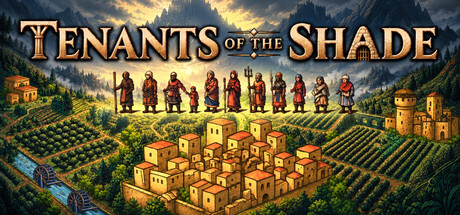
I've spent years developing *Tenants of the Shade*, and our team has devoted thousands of hours to programming, artwork, and music. We also use generative AI tools to assist with editing and creating select assets, including some in-game icons and 3D models, as well as promotional materials.
The game is still in development, and these assets may change before release. We welcome questions about our creative process on Discord or in the Steam Community forums.
FleetBane was created by a solo developer with assistance from generative AI tools. During development, these tools helped create and refine some visual assets, music, and written game content. All AI-assisted material was reviewed, selected, edited, polished, or substantially reworked by the developer before being integrated into the game. FleetBane does not use generative AI during gameplay and does not send player input or data to any AI service.
Generative AI-assisted tools were used during development to support the creation and refinement of some pre-generated visual assets. No AI content is generated during gameplay.
This product contains pre-generated content created with the assistance of generative AI tools during development. AI-assisted content includes selected 2D artwork, character portraits, unit illustrations, decorative interface imagery, trailer and store artwork, portions of the soundtrack, and some player-facing descriptive or localization text. All AI-assisted content was reviewed and edited by the developer and is fixed before release. The game does not generate text, images, audio, or any other content using generative AI while it is running. Computer-controlled opponents and procedural simulation systems use conventional game logic, not generative AI.
- AI is used to help write scripts that create or modify some 3D models. In addition to creating many, I also personally refine and finish all models in Blender.
All additional art is human-made:
- Artwork: Created by me and my niece, with some icons licensed from the Unity Asset Store.
- Steam capsule artwork is by @Camilieroart
- Sound effects were created by myself and Kris McNaney, with additional sounds licensed from Uppbeat’s human-made library.
- Original music by Kris McNaney, with additional tracks licensed from Uppbeat’s human-made library.
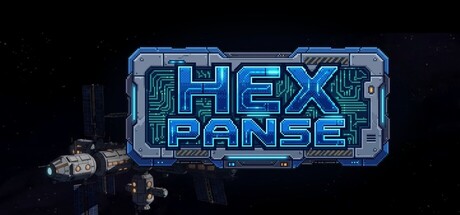
Hexpanse is a solo developer's experiment in building a game 100% with AI, and it is developed with AI assistance (including its source code). The game itself is built almost entirely from procedural, code-generated pixel art and synthesized audio — produced algorithmically by our own code, not by AI. Generative AI was used in two limited, pre-rendered ways: (1) as a starting point for some ship and station part illustrations, later cleaned up, processed and integrated by hand; and (2) to produce the neural text-to-speech voice-over of the intro cinematic. In Early Access, the community feedback I find relevant feeds the AI-assisted development. No generative AI runs while you play — nothing is generated live in-game.
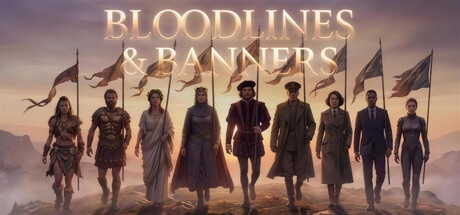
Bloodlines & Banners is designed, architected, and coded by one person. Generative AI is used as a production tool for volume, with portraits, illustration, music, cinematics, voice, and a share of the in-game prose, at a scale a solo developer could not otherwise afford or commission. It is not used to make creative decisions. The art direction is a single locked style anchor authored by hand and enforced across every asset. The game design, the systems architecture, the historical research, the balance, and every line of the server and client are human work. In-game text is a mixed case, and we set that out plainly rather than round it up to “human-written”. We are stating this up front, unprompted, because we would rather a partner evaluate the game knowing exactly what it is than discover it later.
This game includes AI-generated content created during development.
Character portraits, illustrations and store artwork were generated with an image model and curated by the developer. Background music was generated with Google Lyria and contains SynthID watermarking.
Translations were produced with AI assistance. No AI content is generated while you play.
Part of this game's written content was drafted with generative AI tools — some of the in-game text and the English and Japanese localisations — and was then reviewed and edited by the developer. All of it is pre-generated: the game calls no AI model at runtime, nothing is created live by AI while you play, and the computer-controlled opponents are a hand-written, rule-based system. In-game art is original procedural drawing or licensed third-party assets (a third-party icon library under CC BY 3.0); music is licensed from Kevin MacLeod (CC BY 3.0); sound effects are CC0; and the store capsule images are drawn procedurally inside the engine. Full asset credits are shown in the game's "Assets & License" screen.
AstralX uses generative AI only for some 2D illustrative images, primarily certain biome visuals and depictions of some races/species. The game contains well over 1,000 such visual elements, which is why generative AI was used to assist with part of this 2D artwork.
Generative AI is not used for the game's simulation, mathematical calculations, gameplay rules, mechanics, or underlying systems. These elements were designed and developed manually by the developer. 3D content is also not generated using AI.
The music was composed manually and performed by a real pianist. The sound design was likewise created through traditional human production rather than generative AI.
No generative AI is used dynamically during gameplay.
Designed and directed by one person. Every ship, station and planet is rendered in code, with no AI images. The soundtrack was made with Suno, an AI music tool, directed by the developer, and ships as fixed audio files. The story comes from the developer. AI helped turn it into text, tidy it up and translate the store page, like a very overqualified spell check. Nothing is generated by AI while you play.
Some of the content in Abyss Floors was created with the help of generative AI tools, always under the developer's direction and review:
Text — Portions of the game's descriptive and flavor text (item and ability descriptions, interface copy, and atmospheric lore lines) were drafted with AI assistance and edited by the developer.
Store & branding art — The store-page capsules, library images, and other branding graphics were produced with AI-assisted tools.
Abyss Floors is a text- and table-driven simulation, so there is no AI-generated illustrated art in actual gameplay, and all screenshots on this page are captured directly from the live game. The game's design, balance, systems, and code are the developer's own, with AI used as a development aid rather than to generate gameplay content.
Generative AI tools were used during the development process to assist in creating pre-rendered visual assets, including character portraits and certain user interface (UI) icons.
Store page capsule is temporary ai-generated placeholder, and will be replaced soon.
Cards, some leaders and UI-elements artwork is generated with AI tools, then hand-edited before it goes into the game. They will be phased out as budget and time allows.
AI tools were used during development to create pre-generated content. The game's text was translated from English into 16 additional languages using AI translation with automated consistency review. Game artwork and the soundtrack were created by the developer using generative AI tools; every asset was individually reviewed and curated before inclusion. Store page assets (screenshots, trailer, capsule art) depict or derive from this same game content. The game contains no live/runtime AI generation — all content is fixed at build time, and the game runs fully offline.
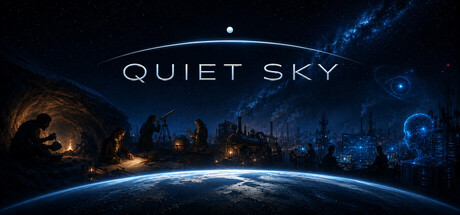
Quiet Sky uses generative AI during gameplay to simulate evolving societies and create narrative observation reports, summaries, Companion responses, and optional report illustrations based on the current simulation and the player’s decisions. The Steam desktop edition runs the included generative models locally on the player’s computer. Generated results vary between campaigns.
Generative AI tools were used to assist with the development and coding of the game, including generating, modifying, and troubleshooting code that ships with the game.
Generative AI was used to create some pre-rendered marketing artwork for the Steam store page and to assist with drafting and translating store-page text. No generative AI content is generated during gameplay.
As part of our early access work, we have used AI-generated images as placeholders for the illustrations on our cards and leader icons. This allows us to iterate quickly and see which game mechanics players like or dislike. We will replace these with human art once we've received enough feedback to finalize what we keep or discard.
Generative AI tools were used to assist in the creation and refinement of some visual assets, including illustrations, user interface elements, and marketing materials.
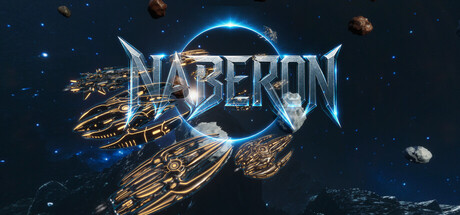
NABERON uses generative AI tools in the creation of some of its assets.
3D models and textures were generated with Meshy, then reworked, retextured
and assembled by hand for the game. Music was generated with Suno, and part
of the sound effects with ElevenLabs. Some store page artwork, including the
logo, was created with AI image tools.
All generated content was reviewed, edited and approved by the developer
before it shipped. The game does not generate any content live while you
play — nothing is created at runtime.
Generative AI tools are used during development to assist with selected art production and localization. All AI-assisted outputs are reviewed, edited, and approved by the development team before being integrated into the game. The game does not use generative AI at runtime, and no content is generated live or delivered directly to players as unreviewed AI output.
The packaged offline model generates diplomatic communications and makes faction decisions from structured game state with curated personalities. Generative AI was used to assist in creating some pre-rendered artwork, including environment backgrounds, menu and branding art, icons, and promotional/title-card images. These assets were reviewed and integrated by the developer. Game does not connect to external AI services.
AI image tools supported the creation of some 2D illustrations and promotional assets. Every asset was designed, reworked, and finished by our artists, and all writing, game design, and code are entirely human-made. Nothing in the game is AI-generated at runtime.
Generative AI tools were used during development to assist with visual artwork and programming. All AI-assisted outputs were reviewed, edited, and integrated by the developer before inclusion in the game. No generative AI content is created during gameplay.
The game uses a wide variety of artificial intelligence products in the art creation process. Ranging from 3d model generation to 2D art, music and sound effects.
Some of the game's background music was created using generative AI tools. Parts of the game's localization (text translations) were also produced with AI assistance and reviewed by the team. All other content — game design, artwork, and core systems — was created without generative AI.
Generative AI was used to assist in creating some UI elements. No AI-generated content was used as-is; all assets were manually reviewed, refined, and polished by our designers before inclusion in the game.
Some images in the current version were created with the assistance of generative AI. These assets are planned to be replaced with original artwork during development.
Generative AI tools were used to create music and visual artwork, including store and promotional images. These assets were generated before release and selected by the developer. No AI content is generated during gameplay.
Generative AI tools were used during development to create pre-rendered visual assets, UI elements, and marketing materials. All generated assets were reviewed, finalized, and statically integrated into the game build prior to release. No content is generated in real-time or dynamically during gameplay.
Some visual assets were created with the assistance of generative AI during development, while others were created manually. AI-assisted assets were reviewed and adjusted by the developer. The game does not generate AI content during gameplay.
Generative AI supported the creation of parts of the artwork, sound effects and particular translations, all of which were carefully selected and refined by the developers. No AI content is generated during play.
The key art, story illustrations, kingdom portraits, music, opening film, menu video and its narration were produced with generative AI tools (Ideogram, Lyria, Seedance, Kling and ElevenLabs, through Artlist) and then selected, edited and assembled by the developer. The 3D map, units and buildings are procedural low-poly models built in code, and the sound effects are synthesised in the game. The game was written with the help of an AI coding assistant. No content is generated while the game is running; everything is pre-generated and shipped in the build. No real people's likenesses or voices are used.
Clade is made by a small independent developer. During development, AI tools were used to help write some of the game's code, and to create some placeholder 3D models and text. All placeholder art is being replaced with handmade work, and this note will be updated as that happens. The game does not generate any content with AI while you play. The computer controlled empires are traditional game AI written for Clade, not generative AI.
Some visual assets in this game (such as illustrations, icons, and background images) were created with the assistance of generative AI tools. All AI-generated content was reviewed, edited, and curated by our development team before being included in the game.
Some icons and images in the game were created using generative AI. All AI-generated content is reviewed, edited, and curated by the developer. No live generative AI is used during gameplay.
I've spent years developing *Tenants of the Shade*, and our team has devoted thousands of hours to programming, artwork, and music. We also use generative AI tools to assist with editing and creating select assets, including some in-game icons and 3D models, as well as promotional materials.
The game is still in development, and these assets may change before release. We welcome questions about our creative process on Discord or in the Steam Community forums.
FleetBane was created by a solo developer with assistance from generative AI tools. During development, these tools helped create and refine some visual assets, music, and written game content. All AI-assisted material was reviewed, selected, edited, polished, or substantially reworked by the developer before being integrated into the game. FleetBane does not use generative AI during gameplay and does not send player input or data to any AI service.
Generative AI-assisted tools were used during development to support the creation and refinement of some pre-generated visual assets. No AI content is generated during gameplay.
This product contains pre-generated content created with the assistance of generative AI tools during development. AI-assisted content includes selected 2D artwork, character portraits, unit illustrations, decorative interface imagery, trailer and store artwork, portions of the soundtrack, and some player-facing descriptive or localization text. All AI-assisted content was reviewed and edited by the developer and is fixed before release. The game does not generate text, images, audio, or any other content using generative AI while it is running. Computer-controlled opponents and procedural simulation systems use conventional game logic, not generative AI.
- AI is used to help write scripts that create or modify some 3D models. In addition to creating many, I also personally refine and finish all models in Blender.
All additional art is human-made:
- Artwork: Created by me and my niece, with some icons licensed from the Unity Asset Store.
- Steam capsule artwork is by @Camilieroart
- Sound effects were created by myself and Kris McNaney, with additional sounds licensed from Uppbeat’s human-made library.
- Original music by Kris McNaney, with additional tracks licensed from Uppbeat’s human-made library.
Hexpanse is a solo developer's experiment in building a game 100% with AI, and it is developed with AI assistance (including its source code). The game itself is built almost entirely from procedural, code-generated pixel art and synthesized audio — produced algorithmically by our own code, not by AI. Generative AI was used in two limited, pre-rendered ways: (1) as a starting point for some ship and station part illustrations, later cleaned up, processed and integrated by hand; and (2) to produce the neural text-to-speech voice-over of the intro cinematic. In Early Access, the community feedback I find relevant feeds the AI-assisted development. No generative AI runs while you play — nothing is generated live in-game.
Bloodlines & Banners is designed, architected, and coded by one person. Generative AI is used as a production tool for volume, with portraits, illustration, music, cinematics, voice, and a share of the in-game prose, at a scale a solo developer could not otherwise afford or commission. It is not used to make creative decisions. The art direction is a single locked style anchor authored by hand and enforced across every asset. The game design, the systems architecture, the historical research, the balance, and every line of the server and client are human work. In-game text is a mixed case, and we set that out plainly rather than round it up to “human-written”. We are stating this up front, unprompted, because we would rather a partner evaluate the game knowing exactly what it is than discover it later.
This game includes AI-generated content created during development.
Character portraits, illustrations and store artwork were generated with an image model and curated by the developer. Background music was generated with Google Lyria and contains SynthID watermarking.
Translations were produced with AI assistance. No AI content is generated while you play.
Part of this game's written content was drafted with generative AI tools — some of the in-game text and the English and Japanese localisations — and was then reviewed and edited by the developer. All of it is pre-generated: the game calls no AI model at runtime, nothing is created live by AI while you play, and the computer-controlled opponents are a hand-written, rule-based system. In-game art is original procedural drawing or licensed third-party assets (a third-party icon library under CC BY 3.0); music is licensed from Kevin MacLeod (CC BY 3.0); sound effects are CC0; and the store capsule images are drawn procedurally inside the engine. Full asset credits are shown in the game's "Assets & License" screen.
AstralX uses generative AI only for some 2D illustrative images, primarily certain biome visuals and depictions of some races/species. The game contains well over 1,000 such visual elements, which is why generative AI was used to assist with part of this 2D artwork.
Generative AI is not used for the game's simulation, mathematical calculations, gameplay rules, mechanics, or underlying systems. These elements were designed and developed manually by the developer. 3D content is also not generated using AI.
The music was composed manually and performed by a real pianist. The sound design was likewise created through traditional human production rather than generative AI.
No generative AI is used dynamically during gameplay.
Designed and directed by one person. Every ship, station and planet is rendered in code, with no AI images. The soundtrack was made with Suno, an AI music tool, directed by the developer, and ships as fixed audio files. The story comes from the developer. AI helped turn it into text, tidy it up and translate the store page, like a very overqualified spell check. Nothing is generated by AI while you play.
Some of the content in Abyss Floors was created with the help of generative AI tools, always under the developer's direction and review:
Text — Portions of the game's descriptive and flavor text (item and ability descriptions, interface copy, and atmospheric lore lines) were drafted with AI assistance and edited by the developer.
Store & branding art — The store-page capsules, library images, and other branding graphics were produced with AI-assisted tools.
Abyss Floors is a text- and table-driven simulation, so there is no AI-generated illustrated art in actual gameplay, and all screenshots on this page are captured directly from the live game. The game's design, balance, systems, and code are the developer's own, with AI used as a development aid rather than to generate gameplay content.
Generative AI tools were used during the development process to assist in creating pre-rendered visual assets, including character portraits and certain user interface (UI) icons.
Store page capsule is temporary ai-generated placeholder, and will be replaced soon.
Cards, some leaders and UI-elements artwork is generated with AI tools, then hand-edited before it goes into the game. They will be phased out as budget and time allows.
AI tools were used during development to create pre-generated content. The game's text was translated from English into 16 additional languages using AI translation with automated consistency review. Game artwork and the soundtrack were created by the developer using generative AI tools; every asset was individually reviewed and curated before inclusion. Store page assets (screenshots, trailer, capsule art) depict or derive from this same game content. The game contains no live/runtime AI generation — all content is fixed at build time, and the game runs fully offline.
Quiet Sky uses generative AI during gameplay to simulate evolving societies and create narrative observation reports, summaries, Companion responses, and optional report illustrations based on the current simulation and the player’s decisions. The Steam desktop edition runs the included generative models locally on the player’s computer. Generated results vary between campaigns.
Generative AI tools were used to assist with the development and coding of the game, including generating, modifying, and troubleshooting code that ships with the game.
Generative AI was used to create some pre-rendered marketing artwork for the Steam store page and to assist with drafting and translating store-page text. No generative AI content is generated during gameplay.
As part of our early access work, we have used AI-generated images as placeholders for the illustrations on our cards and leader icons. This allows us to iterate quickly and see which game mechanics players like or dislike. We will replace these with human art once we've received enough feedback to finalize what we keep or discard.
Generative AI tools were used to assist in the creation and refinement of some visual assets, including illustrations, user interface elements, and marketing materials.
NABERON uses generative AI tools in the creation of some of its assets.
3D models and textures were generated with Meshy, then reworked, retextured
and assembled by hand for the game. Music was generated with Suno, and part
of the sound effects with ElevenLabs. Some store page artwork, including the
logo, was created with AI image tools.
All generated content was reviewed, edited and approved by the developer
before it shipped. The game does not generate any content live while you
play — nothing is created at runtime.
Generative AI tools are used during development to assist with selected art production and localization. All AI-assisted outputs are reviewed, edited, and approved by the development team before being integrated into the game. The game does not use generative AI at runtime, and no content is generated live or delivered directly to players as unreviewed AI output.
The packaged offline model generates diplomatic communications and makes faction decisions from structured game state with curated personalities. Generative AI was used to assist in creating some pre-rendered artwork, including environment backgrounds, menu and branding art, icons, and promotional/title-card images. These assets were reviewed and integrated by the developer. Game does not connect to external AI services.
AI image tools supported the creation of some 2D illustrations and promotional assets. Every asset was designed, reworked, and finished by our artists, and all writing, game design, and code are entirely human-made. Nothing in the game is AI-generated at runtime.
Generative AI tools were used during development to assist with visual artwork and programming. All AI-assisted outputs were reviewed, edited, and integrated by the developer before inclusion in the game. No generative AI content is created during gameplay.
The game uses a wide variety of artificial intelligence products in the art creation process. Ranging from 3d model generation to 2D art, music and sound effects.
Some of the game's background music was created using generative AI tools. Parts of the game's localization (text translations) were also produced with AI assistance and reviewed by the team. All other content — game design, artwork, and core systems — was created without generative AI.
Generative AI was used to assist in creating some UI elements. No AI-generated content was used as-is; all assets were manually reviewed, refined, and polished by our designers before inclusion in the game.
Some images in the current version were created with the assistance of generative AI. These assets are planned to be replaced with original artwork during development.