Public Steam disclosure research25,376 disclosures tracked
Where do games disclose AI use?
Search developers’ Steam disclosures, compare classified AI use across
games, and follow recorded changes.
This index adds cross-game classifications and statistics to
statements published on individual store pages.
Groups reflect automatic analysis of public disclosures; mature records are excluded. These counts do not measure AI use across all of Steam.
Missing or unclear statements cannot establish whether a game uses AI.
The game's code and its in-game text (UI strings, help text, achievement and mission descriptions) were written with an AI assistant. All visuals are procedurally built from simple shapes in code, and all sound effects and music are synthesized procedurally in code. No generative AI art, voice or music is used, and nothing is generated live during play.
Generative AI was used extensively during the development of this game, including assistance with game code, selected visual assets, text and translations, and store and library artwork. These materials were prepared in advance. The game does not generate AI content or connect to external AI services during gameplay.
Everything you see and hear in this game - the graphics, the sound effects, the music and the built-in tracks - is produced by our own hand-written generators: drawn and synthesised in code. No generative AI is involved in any of it, and nothing is generated by an AI while the game is running. The computer drivers race on ordinary, hand-written driving logic, not on an AI model.
Generative AI was used during development, as an assistant for code and for text: in writing the program code and those generators, in the menu and interface text, in the names of the computer drivers, and in the translation between German and English. Every line of it was reviewed and reworked before it went into the game.
The images and the video on this store page are captured from the running game.
Generative AI was used during development to create some vegetation textures and to assist with in-game text, quest descriptions, and store copy. This content is prepared in advance and included with the game. The game does not generate AI content during gameplay or connect to third-party AI services.
Generative AI tools were used to assist with the creation of some game and promotional content. All final content was reviewed and approved by the developer.
This game uses generative AI in parts of its content: the Spanish and Italian translations were produced with AI assistance and are pending a professional human review pass; the game's icon was also created with the help of generative AI tools during development. No content is generated in real time during gameplay — everything was produced during development.
Rally Dynasty's illustrations were produced with generative AI image tools and then chosen, cropped and composited by hand. That covers the key art the game's branding is built on, and the side-elevation drawing of each car in the catalogue. Nothing is generated while you play: the game runs offline, connects to no AI service, and the simulation itself - the era rules, the results, and every line of text you read - is written by hand.
Generative AI is being used during development solely to create character head portraits. It enabled us to create thousands of portrait variations across three age stages, helping the large cast of characters feel more varied, immersive and realistic while allowing characters to visibly age during long careers.
Every portrait is created in advance and checked by the Playsport art team before being included in the game. Nothing is generated while the game is running. No other artwork in the game, including vehicles, decals, logos or clothing uses generative AI. AI-generated portraits can be disabled in the preferences menu.
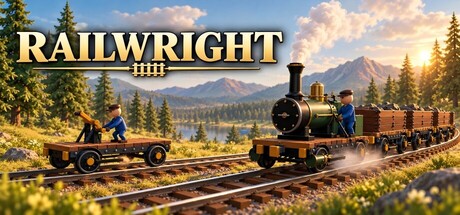
Generative AI tools were used to assist in creating and iterating on selected promotional artwork and graphical assets for Railwright, including materials used on the Steam store page and related marketing. Gameplay screenshots shown on the store page are captured from the actual game. Railwright does not use generative AI to generate content during gameplay.
Generative AI was used primarily to assist in the creation of some visual assets and images used in the game, including illustrations, UI artwork, and promotional materials. AI-generated images were manually reviewed, selected, edited, and adjusted by the developer before being integrated into the game.
The game does not use generative AI to create content in real time during gameplay.
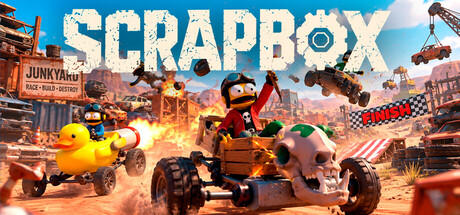
Generative AI tools were used during the development of SCRAPBOX to assist with programming, UI design, voice acting, music, and the creation of some 3D models and other game assets. The game does not generate AI content during gameplay.
This game contains content created with the assistance of AI tools. AI was used during development to assist with programming, visual assets, and other creative elements. All generated content was reviewed, edited, and integrated by the dev.
AI Disclosure Statement:Code Optimization: AI tools were used as an assistant during development to review the C# source code and optimize algorithms for better in-game performance (higher FPS).Localization: The translation of game texts into multiple languages was generated using AI translation tools and manually reviewed for quality.Visual Assets: The loading screens were created with the assistance of AI image generation tools and polished for in-game integration. All generated content has been verified to ensure it does not infringe on existing copyrights.
The store artwork (key art, capsule images, logo) was created with the help of generative AI and then selected and edited by hand. AI tools assisted with programming, in-game text and translations; all content was reviewed and revised by the developer. The in-game 3D models, textures and animations come from licensed asset packs and are not AI-generated. No content is generated by AI during gameplay.
Generative AI was used for some of the artwork and text: the 3D representation
of the motorcycles, the achievement icons, the artwork on this page, and text in
the game and store, including the English version. All of it is pre-rendered -
created during development, not while you play.
No AI runs while the game is running: the race simulation and vehicle physics
are computed on the server, the engine sound is synthesised in the game itself,
and the circuit layouts are based on real geodata from OpenStreetMap
contributors (ODbL).
Generative AI is used as a development aid for research, information analysis, routine technical tasks, and assistance with drafting and editing text for the Steam store page. No AI-generated 2D or 3D artwork, audio, or live-generated content is included in the game. The game's concept, creative direction, design, and implementation are the work of the developer.
Generative AI tools were used during development to assist with programming, debugging, drafting and editing written content, and creating or developing some marketing and store-page artwork. All AI-assisted material is reviewed, edited, and integrated by the developer. The game does not use generative AI during gameplay or connect to external AI services while running.
AI is not used for any aspect of music creation or sound. And no actual game art was created with AI (Inventory items, decals, portraits, etc. All of that was fully painted by a human.)
AI was used for code work and project management. ONLY a small amount of the textures (less than 10) used in the world were created with the help of AI.
Generative AI assisted with localization, text and promotional artwork during development. RaceLineCalc does not generate AI content at runtime or connect to generative AI services during use. Racing lines are calculated by numerical optimization using physical models.
Since we’re a very small team, we use generative AI for a small part of the development process, for example, to create graphical placeholders like icons or background images, or to localize newly added text. The vast majority of the game was localized by humans; only new text is machine-translated in order to include as many players as possible.
The voice in the game is text-to-speech, not AI.
We used AI as a “support tool” in the creation of in-store visuals and certain in-game UI elements. We use AI solely as a support tool. We never leave the entire process to AI for any task.
Some visual assets and promotional materials were created or assisted using generative AI tools and have been reviewed, modified, and integrated by the developer.
All gameplay, programming, level design, and game logic were created and implemented by the developer.
This game was developed with the assistance of generative AI tools during the development process. Generative AI was used to help produce elements of the game's code, artwork, and music. All AI-assisted output was reviewed, edited, and curated by our team before being included in the final game, ensuring it met our creative and quality standards.
AI assistance (a large language model) was used to translate the store page description into English. No in-game assets — 3D models, textures, music, or sound — were created using generative AI.
Some of PitWal's artwork and store images were made with help from AI tools and then finished by a person. PitWal's in-app commentary lines were also written with help from AI during development and ship as a fixed set. While you play, PitWal picks from those prewritten lines and fills in your own numbers from your own driving.
PitWal does not run any AI while you play and does not send your data to any AI service. If you want, PitWal lets you connect your own AI assistant, such as Claude or a coding agent local or paid, to read your own data on your own machine. That is optional, uses your own tool, and is never required to use PitWal.
Some user interface elements (including UI frames, buttons, panels, and HUD background art) were created with the assistance of generative AI image tools during development, then manually edited, composited, and integrated by the development team. Promotional artwork on the store page (capsule, library header/hero images) also used generative AI assistance and was human-reviewed before publication. No AI is used to generate content during gameplay.
his game uses generative AI during development to assist in the creation of certain visual assets, including but not limited to store promotional images, concept illustrations, and decorative graphics. All AI-generated images have been reviewed, selected, and post-processed by the developer to ensure consistency with the game's overall art direction. The core gameplay, programming code, written content, numerical systems, music, and sound effects were independently designed and authored by the developer without the use of generative AI. AI tools were used solely to improve the production efficiency of visual assets and are not involved in any real-time in-game content generation.
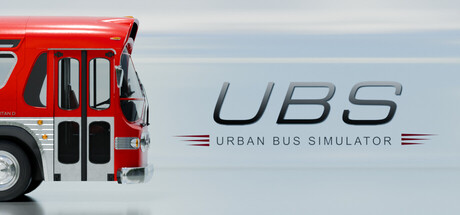
Urban Bus Simulator includes some content created with the assistance of generative AI. AI-generated content is used for certain HUD elements, menu/interface visuals, and promotional or illustrative images related to vehicle brands. These AI-generated assets are used as part of the game's visual presentation and user interface.
No Generative AI art was used in-game or in any of the promotional material. However, ai-assisted tools were used in development for coding assistance and image editing tasks such as upscaling and cleanup of screenshots to be used in capsule arts.
AI tools were used during development to assist with asset creation, texture generation, and development workflows. All AI-generated content was reviewed, modified, and curated by the development team.
The game's code and its in-game text (UI strings, help text, achievement and mission descriptions) were written with an AI assistant. All visuals are procedurally built from simple shapes in code, and all sound effects and music are synthesized procedurally in code. No generative AI art, voice or music is used, and nothing is generated live during play.
Generative AI was used extensively during the development of this game, including assistance with game code, selected visual assets, text and translations, and store and library artwork. These materials were prepared in advance. The game does not generate AI content or connect to external AI services during gameplay.
Everything you see and hear in this game - the graphics, the sound effects, the music and the built-in tracks - is produced by our own hand-written generators: drawn and synthesised in code. No generative AI is involved in any of it, and nothing is generated by an AI while the game is running. The computer drivers race on ordinary, hand-written driving logic, not on an AI model.
Generative AI was used during development, as an assistant for code and for text: in writing the program code and those generators, in the menu and interface text, in the names of the computer drivers, and in the translation between German and English. Every line of it was reviewed and reworked before it went into the game.
The images and the video on this store page are captured from the running game.
Generative AI was used during development to create some vegetation textures and to assist with in-game text, quest descriptions, and store copy. This content is prepared in advance and included with the game. The game does not generate AI content during gameplay or connect to third-party AI services.
Generative AI tools were used to assist with the creation of some game and promotional content. All final content was reviewed and approved by the developer.
This game uses generative AI in parts of its content: the Spanish and Italian translations were produced with AI assistance and are pending a professional human review pass; the game's icon was also created with the help of generative AI tools during development. No content is generated in real time during gameplay — everything was produced during development.
Rally Dynasty's illustrations were produced with generative AI image tools and then chosen, cropped and composited by hand. That covers the key art the game's branding is built on, and the side-elevation drawing of each car in the catalogue. Nothing is generated while you play: the game runs offline, connects to no AI service, and the simulation itself - the era rules, the results, and every line of text you read - is written by hand.
Generative AI is being used during development solely to create character head portraits. It enabled us to create thousands of portrait variations across three age stages, helping the large cast of characters feel more varied, immersive and realistic while allowing characters to visibly age during long careers.
Every portrait is created in advance and checked by the Playsport art team before being included in the game. Nothing is generated while the game is running. No other artwork in the game, including vehicles, decals, logos or clothing uses generative AI. AI-generated portraits can be disabled in the preferences menu.
Generative AI tools were used to assist in creating and iterating on selected promotional artwork and graphical assets for Railwright, including materials used on the Steam store page and related marketing. Gameplay screenshots shown on the store page are captured from the actual game. Railwright does not use generative AI to generate content during gameplay.
Generative AI was used primarily to assist in the creation of some visual assets and images used in the game, including illustrations, UI artwork, and promotional materials. AI-generated images were manually reviewed, selected, edited, and adjusted by the developer before being integrated into the game.
The game does not use generative AI to create content in real time during gameplay.
Generative AI tools were used during the development of SCRAPBOX to assist with programming, UI design, voice acting, music, and the creation of some 3D models and other game assets. The game does not generate AI content during gameplay.
This game contains content created with the assistance of AI tools. AI was used during development to assist with programming, visual assets, and other creative elements. All generated content was reviewed, edited, and integrated by the dev.
AI Disclosure Statement:Code Optimization: AI tools were used as an assistant during development to review the C# source code and optimize algorithms for better in-game performance (higher FPS).Localization: The translation of game texts into multiple languages was generated using AI translation tools and manually reviewed for quality.Visual Assets: The loading screens were created with the assistance of AI image generation tools and polished for in-game integration. All generated content has been verified to ensure it does not infringe on existing copyrights.
The store artwork (key art, capsule images, logo) was created with the help of generative AI and then selected and edited by hand. AI tools assisted with programming, in-game text and translations; all content was reviewed and revised by the developer. The in-game 3D models, textures and animations come from licensed asset packs and are not AI-generated. No content is generated by AI during gameplay.
Generative AI was used for some of the artwork and text: the 3D representation
of the motorcycles, the achievement icons, the artwork on this page, and text in
the game and store, including the English version. All of it is pre-rendered -
created during development, not while you play.
No AI runs while the game is running: the race simulation and vehicle physics
are computed on the server, the engine sound is synthesised in the game itself,
and the circuit layouts are based on real geodata from OpenStreetMap
contributors (ODbL).
Generative AI is used as a development aid for research, information analysis, routine technical tasks, and assistance with drafting and editing text for the Steam store page. No AI-generated 2D or 3D artwork, audio, or live-generated content is included in the game. The game's concept, creative direction, design, and implementation are the work of the developer.
Generative AI tools were used during development to assist with programming, debugging, drafting and editing written content, and creating or developing some marketing and store-page artwork. All AI-assisted material is reviewed, edited, and integrated by the developer. The game does not use generative AI during gameplay or connect to external AI services while running.
AI is not used for any aspect of music creation or sound. And no actual game art was created with AI (Inventory items, decals, portraits, etc. All of that was fully painted by a human.)
AI was used for code work and project management. ONLY a small amount of the textures (less than 10) used in the world were created with the help of AI.
Generative AI assisted with localization, text and promotional artwork during development. RaceLineCalc does not generate AI content at runtime or connect to generative AI services during use. Racing lines are calculated by numerical optimization using physical models.
Since we’re a very small team, we use generative AI for a small part of the development process, for example, to create graphical placeholders like icons or background images, or to localize newly added text. The vast majority of the game was localized by humans; only new text is machine-translated in order to include as many players as possible.
The voice in the game is text-to-speech, not AI.
We used AI as a “support tool” in the creation of in-store visuals and certain in-game UI elements. We use AI solely as a support tool. We never leave the entire process to AI for any task.
Some visual assets and promotional materials were created or assisted using generative AI tools and have been reviewed, modified, and integrated by the developer.
All gameplay, programming, level design, and game logic were created and implemented by the developer.
This game was developed with the assistance of generative AI tools during the development process. Generative AI was used to help produce elements of the game's code, artwork, and music. All AI-assisted output was reviewed, edited, and curated by our team before being included in the final game, ensuring it met our creative and quality standards.
AI assistance (a large language model) was used to translate the store page description into English. No in-game assets — 3D models, textures, music, or sound — were created using generative AI.
Some of PitWal's artwork and store images were made with help from AI tools and then finished by a person. PitWal's in-app commentary lines were also written with help from AI during development and ship as a fixed set. While you play, PitWal picks from those prewritten lines and fills in your own numbers from your own driving.
PitWal does not run any AI while you play and does not send your data to any AI service. If you want, PitWal lets you connect your own AI assistant, such as Claude or a coding agent local or paid, to read your own data on your own machine. That is optional, uses your own tool, and is never required to use PitWal.
Some user interface elements (including UI frames, buttons, panels, and HUD background art) were created with the assistance of generative AI image tools during development, then manually edited, composited, and integrated by the development team. Promotional artwork on the store page (capsule, library header/hero images) also used generative AI assistance and was human-reviewed before publication. No AI is used to generate content during gameplay.
his game uses generative AI during development to assist in the creation of certain visual assets, including but not limited to store promotional images, concept illustrations, and decorative graphics. All AI-generated images have been reviewed, selected, and post-processed by the developer to ensure consistency with the game's overall art direction. The core gameplay, programming code, written content, numerical systems, music, and sound effects were independently designed and authored by the developer without the use of generative AI. AI tools were used solely to improve the production efficiency of visual assets and are not involved in any real-time in-game content generation.
Urban Bus Simulator includes some content created with the assistance of generative AI. AI-generated content is used for certain HUD elements, menu/interface visuals, and promotional or illustrative images related to vehicle brands. These AI-generated assets are used as part of the game's visual presentation and user interface.
No Generative AI art was used in-game or in any of the promotional material. However, ai-assisted tools were used in development for coding assistance and image editing tasks such as upscaling and cleanup of screenshots to be used in capsule arts.
AI tools were used during development to assist with asset creation, texture generation, and development workflows. All AI-generated content was reviewed, modified, and curated by the development team.