Public Steam disclosure research25,376 disclosures tracked
Where do games disclose AI use?
Search developers’ Steam disclosures, compare classified AI use across
games, and follow recorded changes.
This index adds cross-game classifications and statistics to
statements published on individual store pages.
Groups reflect automatic analysis of public disclosures; mature records are excluded. These counts do not measure AI use across all of Steam.
Missing or unclear statements cannot establish whether a game uses AI.
Currently, AI‑assisted Photoshop image editing is only used for the Steam store‑page assets. No AI is utilized within the game itself. All image and audio assets are either sourced from free open‑source resources or purchased commercially.
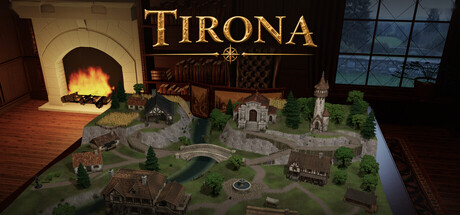
Tirona's development used AI tools for much of its 2D artwork (character portraits, card and scene illustrations, quest illustrations), some 3D models, the music (ElevenLabs) and the character voice performers' reference voices. All of it was selected, edited and placed by the developer, and ships as fixed game content.
While you play, a third-party large language model writes the narration and the dialogue of non-player characters in response to what you type or say. Character voices are synthesised locally on your PC from the generated text. You can optionally generate a portrait for your character from your creation choices.
The AI never decides the rules: dice, hit points, gold, items, experience, spells and quest progress change only through the game's own systems. Romance is opt-in, and anything sexual fades to black.
Generative AI was used to create some artwork and UI assets, summoning animation videos, and background music. Details of the tools used are listed under Settings > Credits in the game.
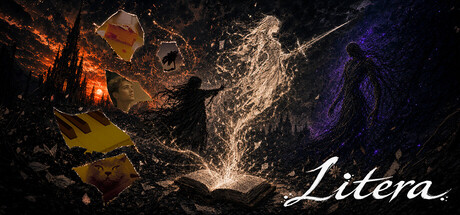
During gameplay, AI running on your PC uses the true name and essence you enter to generate Textus data, including abilities and moves, as well as artwork.
Generated results may vary. Depending on the outcome of the safety check, a placeholder explaining why the artwork is unavailable may appear instead of the generated image. The Textus's abilities and moves remain usable.
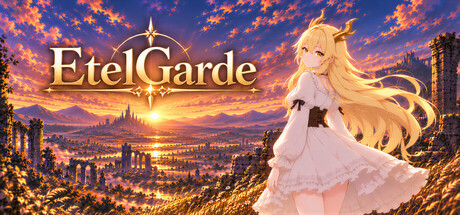
The title logo was generated with an AI image tool and then cropped and resized by the developer.
The store capsule artwork (the key art behind the logo) was generated with an AI image tool from text prompts only, then cropped and resized by the developer.
The in-game text in every language except English and Japanese is machine-translated with an AI language model from the developer's English and Japanese text, and has not yet been reviewed by native speakers.
Some English and Japanese interface text and the English and Japanese store description were drafted with an AI writing assistant and then reviewed and edited by the developer. The store description in the other languages is translated with an AI language model.
The majority of the code and the design was written by AI coding agents (Claude and Codex) under the developer's direction and review.
The in-game characters, items, maps, effects, music, sound effects and fonts are mostly purchased or licensed assets. The exceptions are 8 equipment icons, the slash and healing effects, the spectators in the stands, the crowd cheers and the app icon, which were drawn or synthesized by programs written by AI coding agents (no image or audio generation model was used). The cutting out, combining, recoloring and touching up of the purchased assets, and the shapes and light effects the game draws on screen during matches, are also done by programs written by AI.
Generative AI tools may be used during development to assist in creating certain pre-generated visual, written, audio, or marketing content. All such content is reviewed and curated by the development team before inclusion. The game does not use generative AI to generate content during gameplay.
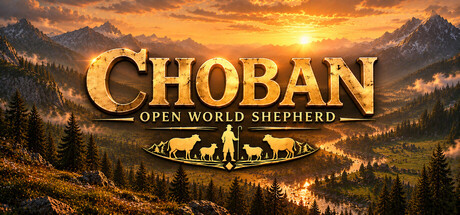
Choban uses generative AI to power conversations and interactions with certain NPCs. AI-generated dialogue is used to create more natural, dynamic, and context-aware responses during gameplay. All core gameplay systems, quests, progression, world generation, and game mechanics are designed by the developers and are not generated by AI. AI is used solely to enhance NPC interactions and player immersion.
This game contains content created with the assistance of AI tools. AI was used during development to assist with programming, visual assets, and other creative elements. All generated content was reviewed, edited, and integrated by the dev.
Generative AI was used during development to create some pre-generated background art, character portraits, promotional images, dialogue, and music. No AI content is generated while the game is running.
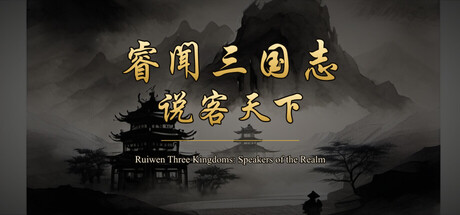
NPC dialogue in Ruiwen’s Romance of the Three Kingdoms: The Life of a Persuader is generated in real‑time by a locally‑running AI model. All content is computed offline on your own device, with no data uploaded to external servers.
The game’s story framework, directed plotlines, numerical judgement rules and ending conditions are all hand‑crafted. The AI is only responsible for generating character conversations.
Multiple safety guardrails are built‑in: automatic profanity detection, historical timeline checks to avoid anachronisms, character‑stance locking and fallback responses. These ensure every line of dialogue fits the character’s identity and historical context.
"Generative AI was used to create the game's cover art and the free scenario assets (such as character images). We plan to replace these art resources as soon as possible."
This game contains content created with the assistance of AI tools. AI was used during development to assist with programming, visual assets, and other creative elements. All generated content was reviewed, edited, and integrated by the dev.
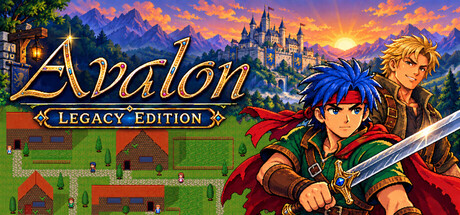
The original 1998 version of Avalon was created entirely by hand, including its graphics, music, story, gameplay, game engine and even its custom music software. Avalon: Legacy Edition retains many of these original assets. Generative AI was used to create or refine much of the updated visual, audio and written content. No content is generated live during gameplay.
All visual assets, music tracks, and programming code in this game have been created with the assistance of generative AI tools. No AI-generated content is produced in real-time during gameplay; all such elements are pre-generated and finalized in the game build. We are committed to transparency and clearly disclose our use of AI in development to ensure players are fully informed.
This game contains content created with the assistance of AI tools. AI was used during development to assist with programming, visual assets, and other creative elements. All generated content was reviewed, edited, and integrated by the dev.
Some of the game's content was created with the help of generative AI tools (some of the illustrations and the English translation), then reworked, curated and integrated by the developer. The game does not generate any AI content in real time.
AI tools were used only to check visual concepts, translate text into some languages, and create music placeholders. All such materials are currently significantly reworked by humans. By release, we plan to replace the music placeholders with original compositions and have the translations reviewed by human editors.
Part of the game's visual content (location backgrounds and some animated CG scenes) was created using generative neural networks based on references and artistic descriptions developed by the author.
The game includes pre-generated AI-assisted content, including some character and card illustrations, boss videos, and portions of localized text. These assets are produced during development and included with the game. The game does not request new images, text, or voices from generative AI services during play.
Pre-generated content: part of the game's art (backgrounds, character and enemy sprites, portraits, props, key art and capsule images) was created with generative image tools (Google Gemini, PixelLab) and then reviewed, cut, edited and assembled by hand by the developer. Some sound effects were produced with AI audio tools (ElevenLabs). Parts of the source code were written with the assistance of an AI coding assistant (Anthropic Claude) under the developer's direction and review. The story, game design, world, dialogue and puzzles are the developer's own work.
Live-generated content: none. The game does not generate any content with AI while it is running.
Generative AI was used during development for some visual and audio assets.
During gameplay, narrative text and character dialogue are generated in real time by a third-party AI model selected and configured by the player.
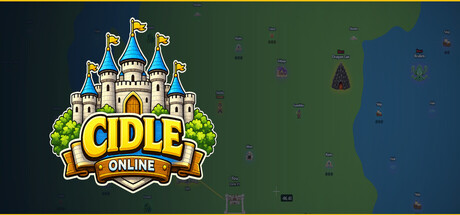
Some of the 2D art in Cidle Online was created with the help of generative AI
image tools. This includes parts of the sprite work for buildings, points of
interest and item icons, as well as some store page artwork. Every generated
image was reviewed, edited and adjusted by hand before it went into the game,
and assets are checked so they do not reproduce existing works.
All of this art is produced during development. Nothing is generated by AI
while you play, and the game does not send any of your data to an AI service.
Generative AI was used during development to assist with some visual assets, text, and audio. No generative AI is used to generate content during gameplay.
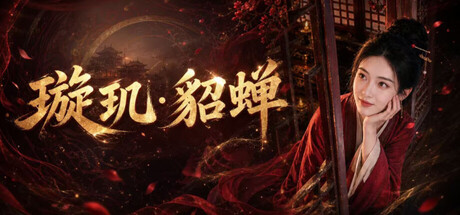
Xuanji · Diaochan uses a live generative AI to produce Diaochan's dialogue and spoken responses in real time. Every line of conversation and every spoken reply is generated by the model during play, not pre-written.
The character artwork, scene illustrations, music, and sound effects in this game are created by our team without generative AI.
Guardrails in place:
A historical-fiction persona that keeps Diaochan in character as a 2nd-century figure and prevents her from speaking as a modern AI assistant.
Retrieval-augmented responses grounded in a curated corpus of Han dynasty historical texts, so factual claims can be checked against primary sources.
Pre-filtering of user inputs and post-filtering of model outputs against blocklists for sexual, violent, and politically sensitive content.
An in-product report button on every response, plus mute and memory-reset controls.
Players can also report any in-game AI response they consider inappropriate through the Steam overlay.
Generative AI was used during development to create and assist with some of the game's visual assets, including character artwork, event illustrations, backgrounds, and other graphical elements, as well as some of the music used in the game. AI-generated materials were reviewed, selected, and edited by the developer before being included in the game.
Generative AI is not used to dynamically generate gameplay, dialogue, story content, visual assets, or music while the game is running.
Generative AI assists in creating some visual assets, music, sound effects and narrative text during development. The art assets currently shown are temporary placeholders used solely to test our technical pipeline and do not represent the final visuals.
We make extensive use of AI throughout this project, from coding and generating image/sound assets to planning, story concepts, and daily life improvements. We truly appreciate your understanding and support. Thanks a ton!
Slightly Random Dungeons prioritises human generated assets. Player-facing prose is constructed from bespoke human composed words (writer’s block pending).
We have engaged a human artist for our bestiary, portraits and scenery art, and use human developed icons and inventory assets, UI elements, music and effects made in house or under licence with a minority of AI generated pieces filling gaps until the alternative arrives.
Any AI agent use has been supervised by humans, these agents have not yet unionised.
We do not use AI generated images in the game. However, it's possible some images in the game could be interpreted as AI generated images. If you suspect some of images looks like AI generated images, please contact us through e-mail so we can make necessary adjustments.
Our workflow involves using store bought and legally acquired free 3D assets to render those assets into 2D images. We also use a few free photographs to serve as background images for certain scenes. Those 2D images are then touch-up using free image editing software. We also bought a few 2D art assets from reputable creators. We provide a list of most of 3D and 2D assets we used in the game in credits section in the game.
Generative AI tools were used during development to assist with the creation of some character illustrations, visual art assets, and portions of the game’s code. All AI-assisted content was reviewed, edited, and integrated by the development team before being included in the final product. The game does not use generative AI to create content in real time during gameplay.
Generative AI tools were used during development to assist in creating some visual artwork and graphical assets used in the game and its marketing materials. The generated assets were reviewed and selected by the developer before being included in the final product. No AI-generated content is created in real time while the game is running.
Assistance with the development of:
- Custom procedural 2D animation rig.
- Reinforcement learning (RL) layer for player and NPC animations in hand-authored 2D environments.
- Base designs for sprites and backgrounds (further iterated by hand using digital editing software like photoshop)
No ai tools were used in any capacity for writing or story elements, voice acting, music, or anywhere else.
This game uses pre-generated AI-assisted artwork for characters, scene backgrounds, and store promotional assets. All AI-generated content was created before release. No content is generated by AI during gameplay, and the game does not connect to external AI services.
AI was used only to help create a few marketing images (capsule art and header capsule). All store screenshots, written content, and in-game art, audio, and text are handcrafted. The game contains no live or runtime AI-generated content.
Currently, AI‑assisted Photoshop image editing is only used for the Steam store‑page assets. No AI is utilized within the game itself. All image and audio assets are either sourced from free open‑source resources or purchased commercially.
Tirona's development used AI tools for much of its 2D artwork (character portraits, card and scene illustrations, quest illustrations), some 3D models, the music (ElevenLabs) and the character voice performers' reference voices. All of it was selected, edited and placed by the developer, and ships as fixed game content.
While you play, a third-party large language model writes the narration and the dialogue of non-player characters in response to what you type or say. Character voices are synthesised locally on your PC from the generated text. You can optionally generate a portrait for your character from your creation choices.
The AI never decides the rules: dice, hit points, gold, items, experience, spells and quest progress change only through the game's own systems. Romance is opt-in, and anything sexual fades to black.
Generative AI was used to create some artwork and UI assets, summoning animation videos, and background music. Details of the tools used are listed under Settings > Credits in the game.
During gameplay, AI running on your PC uses the true name and essence you enter to generate Textus data, including abilities and moves, as well as artwork.
Generated results may vary. Depending on the outcome of the safety check, a placeholder explaining why the artwork is unavailable may appear instead of the generated image. The Textus's abilities and moves remain usable.
The title logo was generated with an AI image tool and then cropped and resized by the developer.
The store capsule artwork (the key art behind the logo) was generated with an AI image tool from text prompts only, then cropped and resized by the developer.
The in-game text in every language except English and Japanese is machine-translated with an AI language model from the developer's English and Japanese text, and has not yet been reviewed by native speakers.
Some English and Japanese interface text and the English and Japanese store description were drafted with an AI writing assistant and then reviewed and edited by the developer. The store description in the other languages is translated with an AI language model.
The majority of the code and the design was written by AI coding agents (Claude and Codex) under the developer's direction and review.
The in-game characters, items, maps, effects, music, sound effects and fonts are mostly purchased or licensed assets. The exceptions are 8 equipment icons, the slash and healing effects, the spectators in the stands, the crowd cheers and the app icon, which were drawn or synthesized by programs written by AI coding agents (no image or audio generation model was used). The cutting out, combining, recoloring and touching up of the purchased assets, and the shapes and light effects the game draws on screen during matches, are also done by programs written by AI.
Generative AI tools may be used during development to assist in creating certain pre-generated visual, written, audio, or marketing content. All such content is reviewed and curated by the development team before inclusion. The game does not use generative AI to generate content during gameplay.
Choban uses generative AI to power conversations and interactions with certain NPCs. AI-generated dialogue is used to create more natural, dynamic, and context-aware responses during gameplay. All core gameplay systems, quests, progression, world generation, and game mechanics are designed by the developers and are not generated by AI. AI is used solely to enhance NPC interactions and player immersion.
This game contains content created with the assistance of AI tools. AI was used during development to assist with programming, visual assets, and other creative elements. All generated content was reviewed, edited, and integrated by the dev.
Generative AI was used during development to create some pre-generated background art, character portraits, promotional images, dialogue, and music. No AI content is generated while the game is running.
NPC dialogue in Ruiwen’s Romance of the Three Kingdoms: The Life of a Persuader is generated in real‑time by a locally‑running AI model. All content is computed offline on your own device, with no data uploaded to external servers.
The game’s story framework, directed plotlines, numerical judgement rules and ending conditions are all hand‑crafted. The AI is only responsible for generating character conversations.
Multiple safety guardrails are built‑in: automatic profanity detection, historical timeline checks to avoid anachronisms, character‑stance locking and fallback responses. These ensure every line of dialogue fits the character’s identity and historical context.
"Generative AI was used to create the game's cover art and the free scenario assets (such as character images). We plan to replace these art resources as soon as possible."
This game contains content created with the assistance of AI tools. AI was used during development to assist with programming, visual assets, and other creative elements. All generated content was reviewed, edited, and integrated by the dev.
The original 1998 version of Avalon was created entirely by hand, including its graphics, music, story, gameplay, game engine and even its custom music software. Avalon: Legacy Edition retains many of these original assets. Generative AI was used to create or refine much of the updated visual, audio and written content. No content is generated live during gameplay.
All visual assets, music tracks, and programming code in this game have been created with the assistance of generative AI tools. No AI-generated content is produced in real-time during gameplay; all such elements are pre-generated and finalized in the game build. We are committed to transparency and clearly disclose our use of AI in development to ensure players are fully informed.
This game contains content created with the assistance of AI tools. AI was used during development to assist with programming, visual assets, and other creative elements. All generated content was reviewed, edited, and integrated by the dev.
Some of the game's content was created with the help of generative AI tools (some of the illustrations and the English translation), then reworked, curated and integrated by the developer. The game does not generate any AI content in real time.
AI tools were used only to check visual concepts, translate text into some languages, and create music placeholders. All such materials are currently significantly reworked by humans. By release, we plan to replace the music placeholders with original compositions and have the translations reviewed by human editors.
Part of the game's visual content (location backgrounds and some animated CG scenes) was created using generative neural networks based on references and artistic descriptions developed by the author.
The game includes pre-generated AI-assisted content, including some character and card illustrations, boss videos, and portions of localized text. These assets are produced during development and included with the game. The game does not request new images, text, or voices from generative AI services during play.
Pre-generated content: part of the game's art (backgrounds, character and enemy sprites, portraits, props, key art and capsule images) was created with generative image tools (Google Gemini, PixelLab) and then reviewed, cut, edited and assembled by hand by the developer. Some sound effects were produced with AI audio tools (ElevenLabs). Parts of the source code were written with the assistance of an AI coding assistant (Anthropic Claude) under the developer's direction and review. The story, game design, world, dialogue and puzzles are the developer's own work.
Live-generated content: none. The game does not generate any content with AI while it is running.
Generative AI was used during development for some visual and audio assets.
During gameplay, narrative text and character dialogue are generated in real time by a third-party AI model selected and configured by the player.
Some of the 2D art in Cidle Online was created with the help of generative AI
image tools. This includes parts of the sprite work for buildings, points of
interest and item icons, as well as some store page artwork. Every generated
image was reviewed, edited and adjusted by hand before it went into the game,
and assets are checked so they do not reproduce existing works.
All of this art is produced during development. Nothing is generated by AI
while you play, and the game does not send any of your data to an AI service.
Generative AI was used during development to assist with some visual assets, text, and audio. No generative AI is used to generate content during gameplay.
Xuanji · Diaochan uses a live generative AI to produce Diaochan's dialogue and spoken responses in real time. Every line of conversation and every spoken reply is generated by the model during play, not pre-written.
The character artwork, scene illustrations, music, and sound effects in this game are created by our team without generative AI.
Guardrails in place:
A historical-fiction persona that keeps Diaochan in character as a 2nd-century figure and prevents her from speaking as a modern AI assistant.
Retrieval-augmented responses grounded in a curated corpus of Han dynasty historical texts, so factual claims can be checked against primary sources.
Pre-filtering of user inputs and post-filtering of model outputs against blocklists for sexual, violent, and politically sensitive content.
An in-product report button on every response, plus mute and memory-reset controls.
Players can also report any in-game AI response they consider inappropriate through the Steam overlay.
Generative AI was used during development to create and assist with some of the game's visual assets, including character artwork, event illustrations, backgrounds, and other graphical elements, as well as some of the music used in the game. AI-generated materials were reviewed, selected, and edited by the developer before being included in the game.
Generative AI is not used to dynamically generate gameplay, dialogue, story content, visual assets, or music while the game is running.
Generative AI assists in creating some visual assets, music, sound effects and narrative text during development. The art assets currently shown are temporary placeholders used solely to test our technical pipeline and do not represent the final visuals.
We make extensive use of AI throughout this project, from coding and generating image/sound assets to planning, story concepts, and daily life improvements. We truly appreciate your understanding and support. Thanks a ton!
Slightly Random Dungeons prioritises human generated assets. Player-facing prose is constructed from bespoke human composed words (writer’s block pending).
We have engaged a human artist for our bestiary, portraits and scenery art, and use human developed icons and inventory assets, UI elements, music and effects made in house or under licence with a minority of AI generated pieces filling gaps until the alternative arrives.
Any AI agent use has been supervised by humans, these agents have not yet unionised.
We do not use AI generated images in the game. However, it's possible some images in the game could be interpreted as AI generated images. If you suspect some of images looks like AI generated images, please contact us through e-mail so we can make necessary adjustments.
Our workflow involves using store bought and legally acquired free 3D assets to render those assets into 2D images. We also use a few free photographs to serve as background images for certain scenes. Those 2D images are then touch-up using free image editing software. We also bought a few 2D art assets from reputable creators. We provide a list of most of 3D and 2D assets we used in the game in credits section in the game.
Generative AI tools were used during development to assist with the creation of some character illustrations, visual art assets, and portions of the game’s code. All AI-assisted content was reviewed, edited, and integrated by the development team before being included in the final product. The game does not use generative AI to create content in real time during gameplay.
Generative AI tools were used during development to assist in creating some visual artwork and graphical assets used in the game and its marketing materials. The generated assets were reviewed and selected by the developer before being included in the final product. No AI-generated content is created in real time while the game is running.
Assistance with the development of:
- Custom procedural 2D animation rig.
- Reinforcement learning (RL) layer for player and NPC animations in hand-authored 2D environments.
- Base designs for sprites and backgrounds (further iterated by hand using digital editing software like photoshop)
No ai tools were used in any capacity for writing or story elements, voice acting, music, or anywhere else.
This game uses pre-generated AI-assisted artwork for characters, scene backgrounds, and store promotional assets. All AI-generated content was created before release. No content is generated by AI during gameplay, and the game does not connect to external AI services.
AI was used only to help create a few marketing images (capsule art and header capsule). All store screenshots, written content, and in-game art, audio, and text are handcrafted. The game contains no live or runtime AI-generated content.