Public Steam disclosure research25,376 disclosures tracked
Where do games disclose AI use?
Search developers’ Steam disclosures, compare classified AI use across
games, and follow recorded changes.
This index adds cross-game classifications and statistics to
statements published on individual store pages.
Groups reflect automatic analysis of public disclosures; mature records are excluded. These counts do not measure AI use across all of Steam.
Missing or unclear statements cannot establish whether a game uses AI.
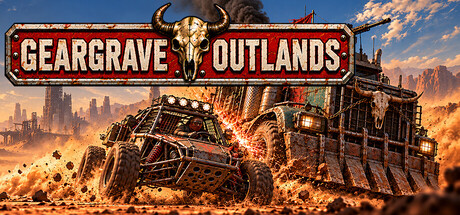
All artwork, music, and sound effects in Geargrave Outlands were created with generative AI tools (images: OpenAI image models; music: Suno; sound effects: ElevenLabs) and then selected, edited, and integrated by the developer. Story text was written with AI assistance and edited by the developer. All translations were produced with AI assistance. All of this content is pre-generated and ships as fixed files. The game does not generate any content with AI while you play.
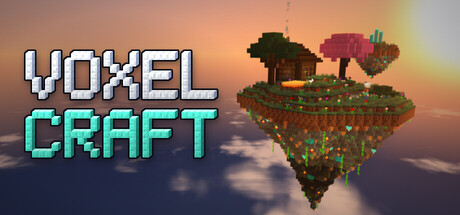
Generative AI tools were used to help create promotional artwork and store page images for VoxelCraft. AI is not used to generate in-game content, code, or gameplay at runtime.
The game's pixel art, sound effects and music, in-game text (including translation), program code, and the store page text and images were created using an AI tool (Anthropic's Claude) under the developer's direction and review. The game does not generate any content with AI while it is running.
Pre-generated AI was used to create some promotional artwork for the Steam store page. All such assets are reviewed and selected by the developer before publication. The game does not use live-generated AI content during gameplay.
Generative AI tools were used during development to create pre-generated artwork, audio content, and text/translations. These assets are included as fixed content in the game. No content is generated by generative AI during gameplay, and the game does not connect to external generative AI services.
AI Disclosure:
Environment & Art: 20% AI-assisted — used for fixing minor 3D model anomalies and supplementing certain Unity assets.
Programming: 50% AI-assisted — used alongside custom coding to assist with code refactoring and feature development.
Music: 100% generated using SUNO AI.
Sound Effects: 20% generated via AI, with the majority sourced from licensed SFX libraries.
UI & User Interaction: 50% AI-assisted, 50% Unity Assets.
The game's interface translations were made with AI translation tools, and AI tools helped draft some store page text. The game's art, animation, audio and gameplay were not made with generative AI, and no AI content is generated while you play.
This game was created with a lot of help from AI. Although I'm an experienced game developer a lot of the physics, graphic elements, and code were generate with the help of AI.
We’re two developers living on opposite sides of the world, who have been A LOT of sleepless nights building the game and world we wanted to see made possible.
Without AI, this game would not have been possible. Despite that, we know that the world would be portrayed much better with a dedicated team of designers and artists behind it. We've made it a massive priority ours to create all of our visual design with as much human touch as we can to stay true to how we envision the world.
The story, characters, worldbuilding, etc. Are all written by uS. A *very* generous friend is creating the soundtrack. We know everyone has different views on AI generated content and we are committed to being VERY clear of the when and where of it's used. In the long-term, we hope to grow to a point where we rely on AI less, and rely on people more for further development of Vorpus.
Generative AI-assisted tools were used during development to support programming, localization and store-page text, and the creation or refinement of some visual game assets. All AI-assisted output was reviewed, edited, tested and integrated by the developer. No content is generated by AI during gameplay, and the game does not connect to external AI services.
Generative AI tools were used during development to help create [name the specific assets, such as textures, character animations, or sound effects]. These assets are included as fixed content. The game does not generate AI content during gameplay.
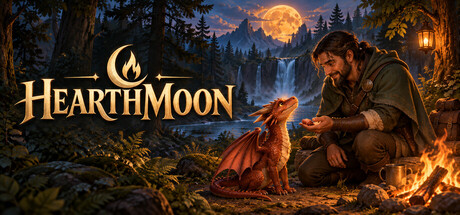
HearthMoon uses AI to generate NPC dialogue during gameplay and synthesize NPC voices. Spoken input is transcribed so villagers and the dragon companion can respond to the player. AI-assisted artwork and writing are also used in development and in store-page marketing. Conversations are experimental and responses may be inconsistent.
During the development of FOOTBALL EXECUTIVE 27, generative AI tools were used to assist with parts of the program code, localization, and the editorial review of user interface and in-game text. All AI-assisted content was manually reviewed and revised before being included in the game. No content is generated by generative AI during gameplay, and no player input is transmitted to any external AI service.
AI tools were used during development to assist in creating and iterating on some pre-generated assets. These assets were subsequently selected, edited, integrated, and reviewed by the developers before inclusion in the game. The game does not generate AI content during gameplay.
Brine & Brass is a solo project by Remoria, assisted by AI. GPT assisted with game programming, in-game writing, artwork-drawing scripts, and procedural music and sound code. The artwork is rendered from project drawing code, and the audio uses local waveform synthesis. No generative AI model or online AI service runs during gameplay.
Parts of the artwork and audio in Shred Inc. — including textures, images and sound effects — were created using generative AI tools and then reviewed and edited by hand. The same applies to some of the store page and marketing material. No content is generated by AI during gameplay, and the game does not connect to any external AI service.
Pre-generated: the game's code, its procedurally built 3D models, levels and effects, the synthesized in-game music, parts of the UI art, the store artwork and the store texts/translations were created with the help of AI tools (Anthropic Claude) under the developer's direction and review. The menu music tracks were generated by the developer with Google Gemini. Sound effects are edited recordings from Kenney (CC0) and Mixkit. No AI content is generated live while playing.
Generative AI tools were used to assist in creating and iterating on selected promotional artwork and graphical assets for Railwright, including materials used on the Steam store page and related marketing. Gameplay screenshots shown on the store page are captured from the actual game. Railwright does not use generative AI to generate content during gameplay.
Some of the visual assets in Twin Compass, including enemy and character illustrations, background art, and UI decoration, were created with the assistance of generative AI tools, then selected, edited, composited, and hand-tuned by the developer for use in the game. All game design, code, writing, systems, and final asset integration are human-authored. No AI is used at runtime, the game generates nothing on the player's machine and makes no external requests during play.
The developer uses generative AI during development for prototyping (placeholder models/assets), and some current store‑page marketing images are AI‑composed. No generative AI runs during gameplay.
Generative AI tools were used during the development of the game to create and assist with certain pieces of content.
AI was used to generate some visual elements, including individual icons, as well as some sound effects. Some generated assets were further edited and adapted for use in the game.
AI was also used as an assisting tool for creating text content and localizing the game into other languages.
Pre-generated content only; nothing is generated while playing. The painted room backgrounds, the doorway arches, character and creature sprites and the key art (title picture, also the basis of the store capsules) were created with a generative image model (OpenAI gpt-image-2) and then hand-composed, cropped, colour-matched and fitted with collision by the developer. Code, level design and texts were written with AI assistance (Anthropic Claude) under human direction and testing; music is synthesised by the game's own code (no AI audio). — DE: Ausschliesslich vorgenerierte Inhalte, nichts wird während des Spielens erzeugt. Die gemalten Raumhintergründe, Torbögen, Figuren- und Kreaturen-Sprites sowie die Schlüsselgrafik (Titelbild, Grundlage der Shop-Kapseln) wurden mit einem generativen Bildmodell (OpenAI gpt-image-2) erzeugt und anschliessend vom Entwickler von Hand komponiert, beschnitten, farblich abgestimmt und mit Kollision belegt. Code, Leveldesign und Texte sind mit KI-Unterstützung (Anthropic Claude) unter menschlicher Leitung und Prüfung entstanden; die Musik wird vom Spielcode selbst synthetisiert (kein KI-Audio).
Generative AI was used during development to create or refine some of the game’s visual assets and music, and to assist with localization. These assets were selected by the developer and edited and adapted as needed. The game does not generate AI content in real time during gameplay.
Some of the artwork in Clash of Crests was produced with generative AI image tools and then cropped, composited, retouched and finished by the developer. This includes unit and character portraits, faction crests, campaign banners and key art, and some environment and prop art. Parts of the in-game lore and flavour text were drafted with AI assistance and then edited by the developer. Nothing is generated by AI while you play: all content ships with the game as fixed, pre-made assets.
Generative AI was used during development to help create pre-rendered content that ships with the game: in-game text and narrative templates, store page copy, and 2D brand artwork - all reviewed by the developer. The simulation itself (players, teams, seasons, statistics) is produced at runtime by the game's own deterministic statistical engine, not by AI. No AI-generated content is created while you play.
This game was created with the assistance of AI tools in several areas of development.
Music: The songs were written and originally recorded by me, with AI tools used for additional processing and production.
Artwork: The visual concepts and creative direction were created by me, while AI tools were used to generate and develop some of the final artwork based on my concepts.
Programming: AI-assisted tools were used during development to help with coding and implementation.
All AI-assisted content was reviewed, selected, and integrated by me as part of the game's creative and development process.
Graphics & Concepts: Generative AI was used to design and refine initial concept art, textures, and UI elements.
Texts & Dialogues: Portions of the lore, background stories, and dialogue scripts were conceptualized using AI language models and subsequently revised manually.
Code & Optimization: AI-assisted tools were utilized to optimize programming code and assist in debugging.
Note: All final assets in the game have been thoroughly reviewed, edited, and curated by the developer.
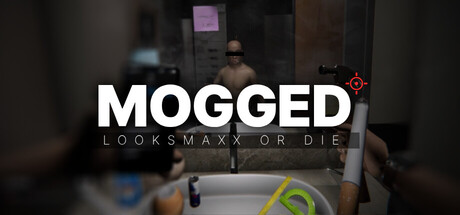
I built every environment, HUD and system in MOGGED by hand over months. I even placed the individual pingpong balls and the patches of grass myself.
But two things did involve AI: A few decals and icons, made for comedic effect. And several voice lines: narrator and NPC barks. If the game does well, I'm hiring proper voice acting.
Everything I did not make myself is properly licensed and credited to the people who did.
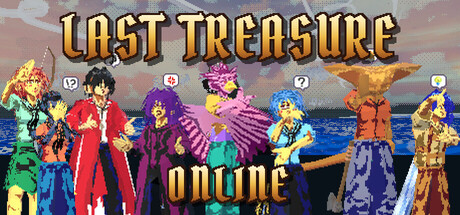
We build Last Treasure Online with AI tools. Much of the code is written with AI, including shaders, scripts that model props and furniture in Blender, and scripts that synthesize sound effects and ambience. Most text in the game is AI generated, but all names, personalities, schedules, stories, lore, knowledge, etc is strongly scaffolded and enforced by us as designers. In play, NPCs speak through an AI language model on our server in order to talk about hundreds of subjects in different ways depending on what they know about them, you, the world, etc.... The model only rewords lines and facts we wrote: it cannot invent places, items, prices or quests, and players never type text into it. No images, textures, 3D models, music or sounds come from diffusion image, 3D or audio models. Characters and clothing are hand-painted, and the world's textures are photographs.
Some character, enemy, and environment sprites in this game were created with the assistance of AI image generation tools during development. All AI-generated content was reviewed and edited by the developers before inclusion.
I use generative AI for some of the game’s visual assets, mainly things like ability icons, and for some of the promotional images on the Steam store page. I review and choose what actually gets used in the game. Nothing is generated by AI while the game is running.
We used AI as a “support tool” in the creation of in-store visuals and certain in-game UI elements. We use AI solely as a support tool. We never leave the entire process to AI for any task.
Pocket Beasts uses generative AI tools to assist in the creation of some visual assets, including creature and character artwork, in portions of the game's text and localization, and in some of the game's sound, including background music. Not all assets are AI-generated; some artwork is sourced from purchased assets. All AI-assisted content is reviewed and edited by the development team. No content is generated live during gameplay — all assets are pre-rendered — and the game does not connect to any external AI service at runtime.
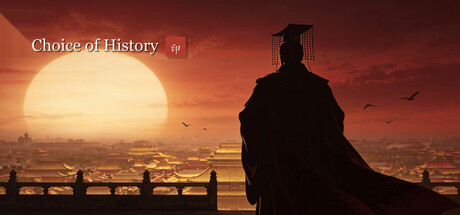
AI assistance was used in the development of this game. Players are strongly advised to play using mainstream free "flash" AI APIs such as Agnes API or Qwen API — simply fill in your API information in the game settings. For the sake of speed, enabling thinking mode is not recommended. This game contains optional generative AI features. In “AI-Enhanced Narrative Mode”, the game calls the third-party LLM API you provide yourself, generating more immersive event text in real time as you play. This mode is entirely optional: even without connecting any API, you can still fully experience all of the built-in, human-written historical content and the core gameplay. The game will not use your gameplay data to train any models. All AI-generated content is controlled by your own API key and quota, and you are responsible for your own usage.
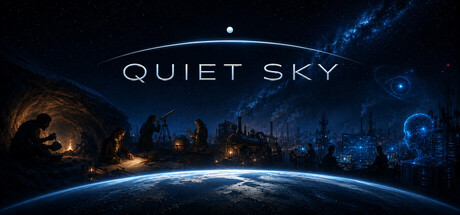
Quiet Sky uses generative AI during gameplay to simulate evolving societies and create narrative observation reports, summaries, Companion responses, and optional report illustrations based on the current simulation and the player’s decisions. The Steam desktop edition runs the included generative models locally on the player’s computer. Generated results vary between campaigns.
Some of the artwork was created using AI tools. The code was also reviewed with, or assisted by, AI.
If the concept finds its audience, we intend to pay an artist to produce artwork that is not AI-generated. Artists who would like to be part of the project are welcome to join us.
The ship and part artwork was generated with AI, then hand-edited and traced by me into the sprites and collision shapes the game actually uses.
Nothing generative runs while you play. There is no AI service wired into the build, and the game never calls one.
The music is licensed from real artists, and the sound effects come out of a script I wrote. Neither is AI.
I want to replace the AI art with work from real artists before Early Access ends. I am not going to promise a date for that, but it is what I am working toward.
Generative AI tools were used to assist in the creation of certain pre-generated 2D artwork and visual assets during development. AI-assisted artwork is reviewed, edited, and integrated by the development team to maintain the game's intended visual style and quality. No generative AI content is created live during gameplay
All artwork, music, and sound effects in Geargrave Outlands were created with generative AI tools (images: OpenAI image models; music: Suno; sound effects: ElevenLabs) and then selected, edited, and integrated by the developer. Story text was written with AI assistance and edited by the developer. All translations were produced with AI assistance. All of this content is pre-generated and ships as fixed files. The game does not generate any content with AI while you play.
Generative AI tools were used to help create promotional artwork and store page images for VoxelCraft. AI is not used to generate in-game content, code, or gameplay at runtime.
The game's pixel art, sound effects and music, in-game text (including translation), program code, and the store page text and images were created using an AI tool (Anthropic's Claude) under the developer's direction and review. The game does not generate any content with AI while it is running.
Pre-generated AI was used to create some promotional artwork for the Steam store page. All such assets are reviewed and selected by the developer before publication. The game does not use live-generated AI content during gameplay.
Generative AI tools were used during development to create pre-generated artwork, audio content, and text/translations. These assets are included as fixed content in the game. No content is generated by generative AI during gameplay, and the game does not connect to external generative AI services.
AI Disclosure:
Environment & Art: 20% AI-assisted — used for fixing minor 3D model anomalies and supplementing certain Unity assets.
Programming: 50% AI-assisted — used alongside custom coding to assist with code refactoring and feature development.
Music: 100% generated using SUNO AI.
Sound Effects: 20% generated via AI, with the majority sourced from licensed SFX libraries.
UI & User Interaction: 50% AI-assisted, 50% Unity Assets.
The game's interface translations were made with AI translation tools, and AI tools helped draft some store page text. The game's art, animation, audio and gameplay were not made with generative AI, and no AI content is generated while you play.
This game was created with a lot of help from AI. Although I'm an experienced game developer a lot of the physics, graphic elements, and code were generate with the help of AI.
We’re two developers living on opposite sides of the world, who have been A LOT of sleepless nights building the game and world we wanted to see made possible.
Without AI, this game would not have been possible. Despite that, we know that the world would be portrayed much better with a dedicated team of designers and artists behind it. We've made it a massive priority ours to create all of our visual design with as much human touch as we can to stay true to how we envision the world.
The story, characters, worldbuilding, etc. Are all written by uS. A *very* generous friend is creating the soundtrack. We know everyone has different views on AI generated content and we are committed to being VERY clear of the when and where of it's used. In the long-term, we hope to grow to a point where we rely on AI less, and rely on people more for further development of Vorpus.
Generative AI-assisted tools were used during development to support programming, localization and store-page text, and the creation or refinement of some visual game assets. All AI-assisted output was reviewed, edited, tested and integrated by the developer. No content is generated by AI during gameplay, and the game does not connect to external AI services.
Generative AI tools were used during development to help create [name the specific assets, such as textures, character animations, or sound effects]. These assets are included as fixed content. The game does not generate AI content during gameplay.
HearthMoon uses AI to generate NPC dialogue during gameplay and synthesize NPC voices. Spoken input is transcribed so villagers and the dragon companion can respond to the player. AI-assisted artwork and writing are also used in development and in store-page marketing. Conversations are experimental and responses may be inconsistent.
During the development of FOOTBALL EXECUTIVE 27, generative AI tools were used to assist with parts of the program code, localization, and the editorial review of user interface and in-game text. All AI-assisted content was manually reviewed and revised before being included in the game. No content is generated by generative AI during gameplay, and no player input is transmitted to any external AI service.
AI tools were used during development to assist in creating and iterating on some pre-generated assets. These assets were subsequently selected, edited, integrated, and reviewed by the developers before inclusion in the game. The game does not generate AI content during gameplay.
Brine & Brass is a solo project by Remoria, assisted by AI. GPT assisted with game programming, in-game writing, artwork-drawing scripts, and procedural music and sound code. The artwork is rendered from project drawing code, and the audio uses local waveform synthesis. No generative AI model or online AI service runs during gameplay.
Parts of the artwork and audio in Shred Inc. — including textures, images and sound effects — were created using generative AI tools and then reviewed and edited by hand. The same applies to some of the store page and marketing material. No content is generated by AI during gameplay, and the game does not connect to any external AI service.
Pre-generated: the game's code, its procedurally built 3D models, levels and effects, the synthesized in-game music, parts of the UI art, the store artwork and the store texts/translations were created with the help of AI tools (Anthropic Claude) under the developer's direction and review. The menu music tracks were generated by the developer with Google Gemini. Sound effects are edited recordings from Kenney (CC0) and Mixkit. No AI content is generated live while playing.
Generative AI tools were used to assist in creating and iterating on selected promotional artwork and graphical assets for Railwright, including materials used on the Steam store page and related marketing. Gameplay screenshots shown on the store page are captured from the actual game. Railwright does not use generative AI to generate content during gameplay.
Some of the visual assets in Twin Compass, including enemy and character illustrations, background art, and UI decoration, were created with the assistance of generative AI tools, then selected, edited, composited, and hand-tuned by the developer for use in the game. All game design, code, writing, systems, and final asset integration are human-authored. No AI is used at runtime, the game generates nothing on the player's machine and makes no external requests during play.
The developer uses generative AI during development for prototyping (placeholder models/assets), and some current store‑page marketing images are AI‑composed. No generative AI runs during gameplay.
Generative AI tools were used during the development of the game to create and assist with certain pieces of content.
AI was used to generate some visual elements, including individual icons, as well as some sound effects. Some generated assets were further edited and adapted for use in the game.
AI was also used as an assisting tool for creating text content and localizing the game into other languages.
Pre-generated content only; nothing is generated while playing. The painted room backgrounds, the doorway arches, character and creature sprites and the key art (title picture, also the basis of the store capsules) were created with a generative image model (OpenAI gpt-image-2) and then hand-composed, cropped, colour-matched and fitted with collision by the developer. Code, level design and texts were written with AI assistance (Anthropic Claude) under human direction and testing; music is synthesised by the game's own code (no AI audio). — DE: Ausschliesslich vorgenerierte Inhalte, nichts wird während des Spielens erzeugt. Die gemalten Raumhintergründe, Torbögen, Figuren- und Kreaturen-Sprites sowie die Schlüsselgrafik (Titelbild, Grundlage der Shop-Kapseln) wurden mit einem generativen Bildmodell (OpenAI gpt-image-2) erzeugt und anschliessend vom Entwickler von Hand komponiert, beschnitten, farblich abgestimmt und mit Kollision belegt. Code, Leveldesign und Texte sind mit KI-Unterstützung (Anthropic Claude) unter menschlicher Leitung und Prüfung entstanden; die Musik wird vom Spielcode selbst synthetisiert (kein KI-Audio).
Generative AI was used during development to create or refine some of the game’s visual assets and music, and to assist with localization. These assets were selected by the developer and edited and adapted as needed. The game does not generate AI content in real time during gameplay.
Some of the artwork in Clash of Crests was produced with generative AI image tools and then cropped, composited, retouched and finished by the developer. This includes unit and character portraits, faction crests, campaign banners and key art, and some environment and prop art. Parts of the in-game lore and flavour text were drafted with AI assistance and then edited by the developer. Nothing is generated by AI while you play: all content ships with the game as fixed, pre-made assets.
Generative AI was used during development to help create pre-rendered content that ships with the game: in-game text and narrative templates, store page copy, and 2D brand artwork - all reviewed by the developer. The simulation itself (players, teams, seasons, statistics) is produced at runtime by the game's own deterministic statistical engine, not by AI. No AI-generated content is created while you play.
This game was created with the assistance of AI tools in several areas of development.
Music: The songs were written and originally recorded by me, with AI tools used for additional processing and production.
Artwork: The visual concepts and creative direction were created by me, while AI tools were used to generate and develop some of the final artwork based on my concepts.
Programming: AI-assisted tools were used during development to help with coding and implementation.
All AI-assisted content was reviewed, selected, and integrated by me as part of the game's creative and development process.
Graphics & Concepts: Generative AI was used to design and refine initial concept art, textures, and UI elements.
Texts & Dialogues: Portions of the lore, background stories, and dialogue scripts were conceptualized using AI language models and subsequently revised manually.
Code & Optimization: AI-assisted tools were utilized to optimize programming code and assist in debugging.
Note: All final assets in the game have been thoroughly reviewed, edited, and curated by the developer.
I built every environment, HUD and system in MOGGED by hand over months. I even placed the individual pingpong balls and the patches of grass myself.
But two things did involve AI: A few decals and icons, made for comedic effect. And several voice lines: narrator and NPC barks. If the game does well, I'm hiring proper voice acting.
Everything I did not make myself is properly licensed and credited to the people who did.
We build Last Treasure Online with AI tools. Much of the code is written with AI, including shaders, scripts that model props and furniture in Blender, and scripts that synthesize sound effects and ambience. Most text in the game is AI generated, but all names, personalities, schedules, stories, lore, knowledge, etc is strongly scaffolded and enforced by us as designers. In play, NPCs speak through an AI language model on our server in order to talk about hundreds of subjects in different ways depending on what they know about them, you, the world, etc.... The model only rewords lines and facts we wrote: it cannot invent places, items, prices or quests, and players never type text into it. No images, textures, 3D models, music or sounds come from diffusion image, 3D or audio models. Characters and clothing are hand-painted, and the world's textures are photographs.
Some character, enemy, and environment sprites in this game were created with the assistance of AI image generation tools during development. All AI-generated content was reviewed and edited by the developers before inclusion.
I use generative AI for some of the game’s visual assets, mainly things like ability icons, and for some of the promotional images on the Steam store page. I review and choose what actually gets used in the game. Nothing is generated by AI while the game is running.
We used AI as a “support tool” in the creation of in-store visuals and certain in-game UI elements. We use AI solely as a support tool. We never leave the entire process to AI for any task.
Pocket Beasts uses generative AI tools to assist in the creation of some visual assets, including creature and character artwork, in portions of the game's text and localization, and in some of the game's sound, including background music. Not all assets are AI-generated; some artwork is sourced from purchased assets. All AI-assisted content is reviewed and edited by the development team. No content is generated live during gameplay — all assets are pre-rendered — and the game does not connect to any external AI service at runtime.
AI assistance was used in the development of this game. Players are strongly advised to play using mainstream free "flash" AI APIs such as Agnes API or Qwen API — simply fill in your API information in the game settings. For the sake of speed, enabling thinking mode is not recommended. This game contains optional generative AI features. In “AI-Enhanced Narrative Mode”, the game calls the third-party LLM API you provide yourself, generating more immersive event text in real time as you play. This mode is entirely optional: even without connecting any API, you can still fully experience all of the built-in, human-written historical content and the core gameplay. The game will not use your gameplay data to train any models. All AI-generated content is controlled by your own API key and quota, and you are responsible for your own usage.
Quiet Sky uses generative AI during gameplay to simulate evolving societies and create narrative observation reports, summaries, Companion responses, and optional report illustrations based on the current simulation and the player’s decisions. The Steam desktop edition runs the included generative models locally on the player’s computer. Generated results vary between campaigns.
Some of the artwork was created using AI tools. The code was also reviewed with, or assisted by, AI.
If the concept finds its audience, we intend to pay an artist to produce artwork that is not AI-generated. Artists who would like to be part of the project are welcome to join us.
The ship and part artwork was generated with AI, then hand-edited and traced by me into the sprites and collision shapes the game actually uses.
Nothing generative runs while you play. There is no AI service wired into the build, and the game never calls one.
The music is licensed from real artists, and the sound effects come out of a script I wrote. Neither is AI.
I want to replace the AI art with work from real artists before Early Access ends. I am not going to promise a date for that, but it is what I am working toward.
Generative AI tools were used to assist in the creation of certain pre-generated 2D artwork and visual assets during development. AI-assisted artwork is reviewed, edited, and integrated by the development team to maintain the game's intended visual style and quality. No generative AI content is created live during gameplay