Public Steam disclosure research25,376 disclosures tracked
Where do games disclose AI use?
Search developers’ Steam disclosures, compare classified AI use across
games, and follow recorded changes.
This index adds cross-game classifications and statistics to
statements published on individual store pages.
Groups reflect automatic analysis of public disclosures; mature records are excluded. These counts do not measure AI use across all of Steam.
Missing or unclear statements cannot establish whether a game uses AI.
Generative AI tools were used to assist with the creation and refinement of some pre-generated sound effects, 3D assets, 2D images, voice lines, and localization. All AI-assisted content was reviewed, edited, and integrated by the developer. The game does not use generative AI to create content during gameplay.
Generative AI tools were used during development to assist with some art assets, written content and localization, as well as store and marketing materials. This includes character portraits, cat and scene illustrations, selected textures and UI illustrations, store capsule artwork and promotional illustrations. These materials are generated, selected and integrated as fixed assets before release. The game does not use generative AI during play or generate dialogue, images or audio in real time.
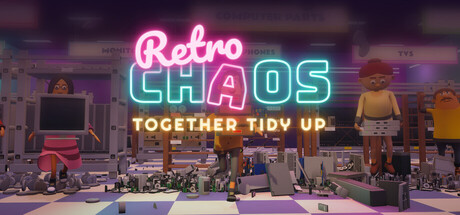
Pre-generated content: the character voices, some sound effects, ambience and the music were generated with AI audio tools (ElevenLabs), then selected, edited and mixed by the developer. Most 3D models (props, tools, vehicles) and some 2D artwork (signs, posters, in-game documents, interface illustrations and store art) were generated with AI tools and then integrated, adjusted and reviewed in the game by the developer. The people are built with the open-source MakeHuman tools and animated with motion capture (CMU), not with AI. Translations were made with AI assistance and reviewed. The levels and code were built with AI-assisted tools and reviewed and tested by the developer. No content is generated by AI while you play.
We are a team of 3 developers and everything you see in the game including 3D models, textures, and environments were crafted entirely by human hands. We used Generative AI for store capsule images, translations, and the soundtrack.
Character animations are generated with an AI motion model (Kimodo) and then cleaned up and retargeted by our team. Character voice-overs are created with AI text-to-speech and directed and edited by our team. All 3D models, buildings, textures and writing are made by us. No AI content is generated live during gameplay.
Generative AI tools were used during development to help create code, 2D art and text, including draft translations. The developer directed, selected and assembled all of it into the game.
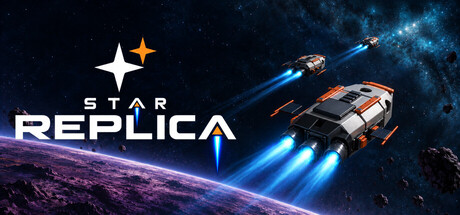
No generative AI runs while you play. Meridian, your companion, is scripted rather than a chatbot, and the game sends nothing to AI services. Planets come from the game's own procedural generator, not an AI model.
AI-GENERATED CONTENT
Parts of this game were created with generative AI tools during development. Character art, backgrounds and icons were generated with image models and then edited, composited and corrected by hand. The voice acting in Portuguese and English was produced with AI voice synthesis. Some sound effects and cutscene music were generated with AI audio tools. Much of the source code was written with the assistance of an AI coding tool, reviewed and tested by the developer.
All of this content was generated before release and ships as fixed audio and image files. Game design, economy, balancing, story and script are the developer's own work, as is the procedurally synthesized music and sound of the minigames, which uses no AI model.
Ransom Wave uses generative AI during gameplay.
The game uses AI models to generate fictional victim dialogue, spoken voice responses, selected narrative text, and limited in-game guidance in real time. These outputs react to the player's typed input or optional microphone input and can vary between playthroughs.
The game's setting, characters, gameplay rules, scenario structure, safety constraints, and core narrative direction are created and controlled by the development team. AI-generated outputs are constrained by developer-authored character profiles, gameplay states, and content rules. Player microphone audio may be transcribed only to enable the current voice conversation. The game provides a text-input alternative when the microphone is disabled.
This game contains content created with the assistance of AI tools. AI was used during development to assist with programming, visual assets, and other creative elements. All generated content was reviewed, edited, and integrated by the dev.
The English voice-over for story dialogue and prison PA announcements was generated with an open-source text-to-speech model (Kokoro) from scripts written for the game. Much of the game's code, dialogue text and localisation was written with AI assistance under the developer's direction. No AI generates content while you play. 3D models, textures, sound effects and music come from human-made asset libraries (CC0 sources and Mixamo).
AI-generated content was used in the development of this game. AI tools were used to help create some of the game's graphics and Steam Community items.
As a solo developer from a small town in Brazil, I used AI-assisted tools to help create some of the game’s visual assets. This allowed me to bring the project to life with limited resources while focusing my time on gameplay, systems, and the overall player experience.
In the development of this game, artificial intelligence was used in the following areas:
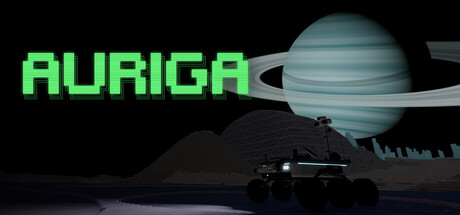
Code and Logic: Game algorithms (including the autopilot systems and the mission generator) were developed with the assistance of AI-powered programming tools and assistants.
Graphics and Audio: Selected graphic/visual elements and the audio design were generated using artificial intelligence tools.
The game does not use generative artificial intelligence to create content in real time during actual gameplay—all assets were pre-generated and are part of the static game content.
Pre-generated AI was used to create selected 2D artwork included in the game, including a painting and menu imagery. All generated content was reviewed and selected by the developer before inclusion. The game does not generate AI content during gameplay and does not connect to a live AI service.
Generative AI was used during development to create the galaxy illustration displayed in the game’s galaxy-map interface and menus, as well as promotional artwork used for Steam capsule and library images. Trailer production uses AI-generated music and selected transition sound effects. These materials are generated during development, rather than during gameplay. The game does not offer player-facing live AI content generation.
Generative AI was used as a development aid for drafting and refining some in-game text, English localization, the game logo, and certain visual design elements. The game does not use generative AI to create content during gameplay.
This game was created with a lot of help from AI. Although I'm an experienced game developer a lot of the physics, graphic elements, and code were generate with the help of AI.
I used an AI coding assistant while building the game, and it helped come up with the achievement names and descriptions, and some events which I edited. Nothing else in the game is AI generated: the soundtrack is licensed from its creators, the radio voices are my own recordings, and the art and sounds are produced by the game's code.
During early development and for the playable demo, Generative AI tools were used to create base templates and draft assets for certain 3D models, textures, and sound effects. All AI-generated placeholders and base models have been manually re-worked, polished, and edited. As development progresses, these draft assets are being actively replaced with fully custom, handcrafted art and audio.
Generative AI was used during development to create some visual assets, including the title artwork and app icon. AI tools also assisted with some 3D models, in-game text, localization, and sound effects. The game does not use generative AI services to create content during play.
As a solo developer, I used generative AI to help create the game’s 440 different jar labels and localization content. Every label was individually reviewed by me and edited where necessary.
AI SOUL uses generative AI for conversational text, synthesized speech and speech-driven facial animation. Character imagery and store artwork include AI-generated material. Core conversation models run locally. Xiaoya is a synthetic character, not a live human operator. Responses may be inaccurate.
It Wants You To Stay was developed using generative AI tools, including Claude Code, OpenAI Codex, Meta Muse, Meshy, Scenario, Eleven Labs, Suno AI, ChatGPT, and Seedance. AI was used to create code, many of the 3D models, sound effects, music, and videos. The game also includes free-to-use, human-made 3D models, with credit given to their authors.
I understand that some players feel strongly about AI in games, and I respect that. If you prefer not to support games made using AI, this title may not be for you. I’m sharing this openly so you can make an informed choice before buying.
If you choose to play, I hope you’ll judge the experience it delivers—its atmosphere, gameplay, performance, and value. Honest feedback, including negative reviews, is welcome. I take responsibility for the game’s quality and will use that feedback to help improve it.
This game uses Generative AI tools during development to assist with asset, text, or code generation. All AI-generated content has been manually reviewed, edited, and integrated by the developers.
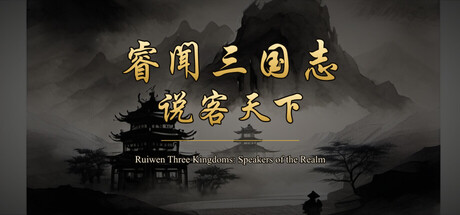
NPC dialogue in Ruiwen’s Romance of the Three Kingdoms: The Life of a Persuader is generated in real‑time by a locally‑running AI model. All content is computed offline on your own device, with no data uploaded to external servers.
The game’s story framework, directed plotlines, numerical judgement rules and ending conditions are all hand‑crafted. The AI is only responsible for generating character conversations.
Multiple safety guardrails are built‑in: automatic profanity detection, historical timeline checks to avoid anachronisms, character‑stance locking and fallback responses. These ensure every line of dialogue fits the character’s identity and historical context.
During the development of our game, generative AI tools were used to assist in creating certain 2D underwater background visuals, store page graphics. Additionally, AI-based language models were utilized for writing the store page descriptions and localizing the game into various languages. All AI-generated content was manually reviewed and edited before being implemented into the game or the store page.
Generative AI was used during development to create some of the game's 2D artwork, UI assets, sound effects, and localized text. This content was prepared before release and is included as part of the game.
This game uses generative AI tools to help create some of the visual assets displayed in the game and on its store page, including select images and icons. All gameplay systems, mechanics, and code are designed and implemented by the development team. AI-generated visuals are reviewed and curated before being included in the final product.
Pre-generated AI content: The four background music tracks were generated with Suno AI under the developer's paid subscription (commercial license per Suno's Terms of Service). The source image of the application icon was generated with an AI image tool and manually processed. All in-game 3D models, textures, chalk illustrations and sound effects are procedurally generated by in-house scripts without AI. The game contains no live-generated AI content.
Generative AI tools were used to assist with the creation and refinement of some pre-generated sound effects, 3D assets, 2D images, voice lines, and localization. All AI-assisted content was reviewed, edited, and integrated by the developer. The game does not use generative AI to create content during gameplay.
Generative AI tools were used during development to assist with some art assets, written content and localization, as well as store and marketing materials. This includes character portraits, cat and scene illustrations, selected textures and UI illustrations, store capsule artwork and promotional illustrations. These materials are generated, selected and integrated as fixed assets before release. The game does not use generative AI during play or generate dialogue, images or audio in real time.
Pre-generated content: the character voices, some sound effects, ambience and the music were generated with AI audio tools (ElevenLabs), then selected, edited and mixed by the developer. Most 3D models (props, tools, vehicles) and some 2D artwork (signs, posters, in-game documents, interface illustrations and store art) were generated with AI tools and then integrated, adjusted and reviewed in the game by the developer. The people are built with the open-source MakeHuman tools and animated with motion capture (CMU), not with AI. Translations were made with AI assistance and reviewed. The levels and code were built with AI-assisted tools and reviewed and tested by the developer. No content is generated by AI while you play.
We are a team of 3 developers and everything you see in the game including 3D models, textures, and environments were crafted entirely by human hands. We used Generative AI for store capsule images, translations, and the soundtrack.
Character animations are generated with an AI motion model (Kimodo) and then cleaned up and retargeted by our team. Character voice-overs are created with AI text-to-speech and directed and edited by our team. All 3D models, buildings, textures and writing are made by us. No AI content is generated live during gameplay.
Generative AI tools were used during development to help create code, 2D art and text, including draft translations. The developer directed, selected and assembled all of it into the game.
No generative AI runs while you play. Meridian, your companion, is scripted rather than a chatbot, and the game sends nothing to AI services. Planets come from the game's own procedural generator, not an AI model.
AI-GENERATED CONTENT
Parts of this game were created with generative AI tools during development. Character art, backgrounds and icons were generated with image models and then edited, composited and corrected by hand. The voice acting in Portuguese and English was produced with AI voice synthesis. Some sound effects and cutscene music were generated with AI audio tools. Much of the source code was written with the assistance of an AI coding tool, reviewed and tested by the developer.
All of this content was generated before release and ships as fixed audio and image files. Game design, economy, balancing, story and script are the developer's own work, as is the procedurally synthesized music and sound of the minigames, which uses no AI model.
Ransom Wave uses generative AI during gameplay.
The game uses AI models to generate fictional victim dialogue, spoken voice responses, selected narrative text, and limited in-game guidance in real time. These outputs react to the player's typed input or optional microphone input and can vary between playthroughs.
The game's setting, characters, gameplay rules, scenario structure, safety constraints, and core narrative direction are created and controlled by the development team. AI-generated outputs are constrained by developer-authored character profiles, gameplay states, and content rules. Player microphone audio may be transcribed only to enable the current voice conversation. The game provides a text-input alternative when the microphone is disabled.
This game contains content created with the assistance of AI tools. AI was used during development to assist with programming, visual assets, and other creative elements. All generated content was reviewed, edited, and integrated by the dev.
The English voice-over for story dialogue and prison PA announcements was generated with an open-source text-to-speech model (Kokoro) from scripts written for the game. Much of the game's code, dialogue text and localisation was written with AI assistance under the developer's direction. No AI generates content while you play. 3D models, textures, sound effects and music come from human-made asset libraries (CC0 sources and Mixamo).
AI-generated content was used in the development of this game. AI tools were used to help create some of the game's graphics and Steam Community items.
As a solo developer from a small town in Brazil, I used AI-assisted tools to help create some of the game’s visual assets. This allowed me to bring the project to life with limited resources while focusing my time on gameplay, systems, and the overall player experience.
In the development of this game, artificial intelligence was used in the following areas:
Code and Logic: Game algorithms (including the autopilot systems and the mission generator) were developed with the assistance of AI-powered programming tools and assistants.
Graphics and Audio: Selected graphic/visual elements and the audio design were generated using artificial intelligence tools.
The game does not use generative artificial intelligence to create content in real time during actual gameplay—all assets were pre-generated and are part of the static game content.
Pre-generated AI was used to create selected 2D artwork included in the game, including a painting and menu imagery. All generated content was reviewed and selected by the developer before inclusion. The game does not generate AI content during gameplay and does not connect to a live AI service.
Generative AI was used during development to create the galaxy illustration displayed in the game’s galaxy-map interface and menus, as well as promotional artwork used for Steam capsule and library images. Trailer production uses AI-generated music and selected transition sound effects. These materials are generated during development, rather than during gameplay. The game does not offer player-facing live AI content generation.
Generative AI was used as a development aid for drafting and refining some in-game text, English localization, the game logo, and certain visual design elements. The game does not use generative AI to create content during gameplay.
This game was created with a lot of help from AI. Although I'm an experienced game developer a lot of the physics, graphic elements, and code were generate with the help of AI.
I used an AI coding assistant while building the game, and it helped come up with the achievement names and descriptions, and some events which I edited. Nothing else in the game is AI generated: the soundtrack is licensed from its creators, the radio voices are my own recordings, and the art and sounds are produced by the game's code.
During early development and for the playable demo, Generative AI tools were used to create base templates and draft assets for certain 3D models, textures, and sound effects. All AI-generated placeholders and base models have been manually re-worked, polished, and edited. As development progresses, these draft assets are being actively replaced with fully custom, handcrafted art and audio.
Generative AI was used during development to create some visual assets, including the title artwork and app icon. AI tools also assisted with some 3D models, in-game text, localization, and sound effects. The game does not use generative AI services to create content during play.
As a solo developer, I used generative AI to help create the game’s 440 different jar labels and localization content. Every label was individually reviewed by me and edited where necessary.
AI SOUL uses generative AI for conversational text, synthesized speech and speech-driven facial animation. Character imagery and store artwork include AI-generated material. Core conversation models run locally. Xiaoya is a synthetic character, not a live human operator. Responses may be inaccurate.
It Wants You To Stay was developed using generative AI tools, including Claude Code, OpenAI Codex, Meta Muse, Meshy, Scenario, Eleven Labs, Suno AI, ChatGPT, and Seedance. AI was used to create code, many of the 3D models, sound effects, music, and videos. The game also includes free-to-use, human-made 3D models, with credit given to their authors.
I understand that some players feel strongly about AI in games, and I respect that. If you prefer not to support games made using AI, this title may not be for you. I’m sharing this openly so you can make an informed choice before buying.
If you choose to play, I hope you’ll judge the experience it delivers—its atmosphere, gameplay, performance, and value. Honest feedback, including negative reviews, is welcome. I take responsibility for the game’s quality and will use that feedback to help improve it.
This game uses Generative AI tools during development to assist with asset, text, or code generation. All AI-generated content has been manually reviewed, edited, and integrated by the developers.
NPC dialogue in Ruiwen’s Romance of the Three Kingdoms: The Life of a Persuader is generated in real‑time by a locally‑running AI model. All content is computed offline on your own device, with no data uploaded to external servers.
The game’s story framework, directed plotlines, numerical judgement rules and ending conditions are all hand‑crafted. The AI is only responsible for generating character conversations.
Multiple safety guardrails are built‑in: automatic profanity detection, historical timeline checks to avoid anachronisms, character‑stance locking and fallback responses. These ensure every line of dialogue fits the character’s identity and historical context.
During the development of our game, generative AI tools were used to assist in creating certain 2D underwater background visuals, store page graphics. Additionally, AI-based language models were utilized for writing the store page descriptions and localizing the game into various languages. All AI-generated content was manually reviewed and edited before being implemented into the game or the store page.
Generative AI was used during development to create some of the game's 2D artwork, UI assets, sound effects, and localized text. This content was prepared before release and is included as part of the game.
This game uses generative AI tools to help create some of the visual assets displayed in the game and on its store page, including select images and icons. All gameplay systems, mechanics, and code are designed and implemented by the development team. AI-generated visuals are reviewed and curated before being included in the final product.
Pre-generated AI content: The four background music tracks were generated with Suno AI under the developer's paid subscription (commercial license per Suno's Terms of Service). The source image of the application icon was generated with an AI image tool and manually processed. All in-game 3D models, textures, chalk illustrations and sound effects are procedurally generated by in-house scripts without AI. The game contains no live-generated AI content.