Public Steam disclosure research27,951 disclosures tracked
Where do games disclose AI use?
Search developers’ Steam disclosures, compare classified AI use across
games, and follow recorded changes.
This index adds cross-game classifications and statistics to
statements published on individual store pages.
Groups reflect automatic analysis of public disclosures; mature records are excluded. These counts do not measure AI use across all of Steam.
Missing or unclear statements cannot establish whether a game uses AI.
Generative AI tools were used during the development ofTotally Under Control to assist with the creation and refinement of visual assets, including artwork and interface elements. All AI-assisted content was produced during development and incorporated into the game as fixed assets, under the direction of the developer.
No generative AI is used during gameplay, and no content is generated dynamically for players.
Mars Gardener was made by one person with the help of AI tools: the code, the 3D models (built by the game's code), the sounds and music (synthesised by the game's code), and the texts in French and English and their translations into 28 other languages, under the author's direction. The screenshots, animations and gameplay video on this page come from the game; the cinematic trailer is staged with the game's own models, made the same way. The game generates nothing with AI while you play.
AIDA Space Program is made by AI under one developer's direction — the name itself comes from it: AI → AI'DA →
AIDA. AI tools write the code, the texts and the voice of IRIS and the department heads, and help make the music and
sound effects; the developer designs the game, directs every change, plays it and decides what ships. Everything is
made before release; nothing is generated while you play.
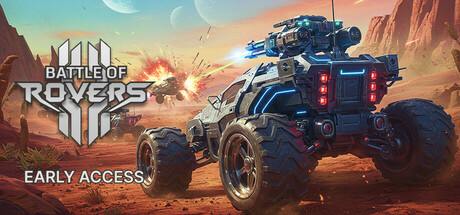
Storepage capsule images, sound effects, and localization are made with AI. Most assets in the game are originally made by human artists. However I still adjust 3D models and retexture them, this way the game has smaller file size and runs more smoothly. For example: a small mining rover was 1Gb in its source but now it is 12Mb and I generated a small laser turret on top of that.
Generative AI tools were used to help create some building, character and environment artwork, promotional art, and drafts of some descriptions and localized text. These assets and text are reviewed and edited during development before inclusion in the game and its marketing materials. The game does not generate content during play or connect to external generative AI services.
This product includes some visual assets and background music generated using AI during development. Some visual assets provide illustrative fills for missing celestial surface data or artistic representations and do not represent actual observations. No generative AI content is generated during gameplay.
Some visual assets, branding exploration, and first-pass localization drafts were created or assisted with generative AI tools. All content is reviewed, edited, and integrated by the developer before being included in the game or store materials. The game does not generate AI content in real time during gameplay.
Some 2D art was made with generative AI as a starting point, cards are renders of our real 3D models with painted backgrounds. No in-game AI, no AI voices, no real people's likenesses. Art may be replaced during Early Access.
During the development of this game, generative AI tools were used to assist the developer in several areas:
- Music & Audio: The game's soundtrack and musical scores were entirely generated using AI audio tools.
- Visual Assets: AI tools were used to assist in the texturing process for a selection of 3D models.
- Localization & Text: AI assisted in the translation and localization of the game's text, as well as refining marketing materials and store descriptions.
- Coding: AI coding agents were utilized to assist with programming, code optimization, and debugging.
All AI-assisted assets and code have been carefully reviewed, curated, and integrated by the developer to ensure a cohesive and high-quality player experience.
This game makes use of generative AI as part of the creative pipeline across art, text, sound, and voice. None of it is dumped in raw — every asset is curated, edited, and reworked by hand, and every line of dialogue is agonized over until it earns its place. AI is a tool here, not the author; the taste, the pacing, and the final call on what stays are all made by people. The codebase, in the interest of full honesty, is held together with AI-assisted spaghetti and sheer willpower — but it works, and every line is reviewed before shipping.
Some portions of the game's source code were developed with the assistance of generative AI tools. All gameplay design, story, puzzles, dialogue, creative direction, and final implementation decisions were created, reviewed, and controlled by the developer.
Some promotional artwork and marketing materials may also have been created with the assistance of generative AI tools and subsequently reviewed and edited by the developer.
No generative AI is used during gameplay, and no content is generated dynamically for players.
We used generative AI mainly for generating code. It has also been used for writing flavour text, many interface descriptions and some lines for an AI character. Finally it has also been used for proofreading.
Some visual assets in this game were created with the help of generative AI tools. As a solo developer with a programming background I used AI to generate graphics. This allowed me to develop and present the game despite not having access to a dedicated graphic designer. All AI-generated content has been reviewed and integrated into the game by the developer.
Some text content prepared in advance, including descriptions and localized text, may be created, translated, or improved with the assistance of AI-based tools.
I'm a game/level designer so I used visual scripting to make games. AI was used to generate the code of some elements of the game that were too complicated to do in visual scripting. SFX and Voices were also generated by AI.
AI tools were used to assist in the conceptualization of store page art and background art. The final in-game assets are hand-crafted pixel art based on these AI-generated concepts.
AI was used only for limited assistance, such as refining some logos, helping with music production, and translating texts into other languages.
All core game content — including ships, designs, graphics, 3D models, sound effects, and more — is handcrafted. Overall, the game was created using traditional development methods.
This game includes content created with generative AI during development. No content is generated live during gameplay.
Music: Some background music tracks were created using music generation AI (e.g. Suno AI).
Images: Some illustrations and background images were created using image generation AI.
This includes works created by the developer as well as works submitted by third parties through an open call and individual commissions. For submitted works, contributors confirmed the AI tools and external assets used, their ownership of necessary rights, that no third-party rights are infringed, and that commercial use is permitted.
Some store assets are put together by human hands but use images generated by AI. All in-game assets, screenshots, and videos are human-made with love.
Some in-game assets are purchased from artists on itch.io, the rest are handmade.
A-Genro is an AI-powered rover that learns from the way you play. Whether it’s your strategy, movement, or combat style, it picks up on your habits and adapts to help you play smarter. Over time, it becomes a personal assistant in the game, giving you support when things get tough and even taking over in auto-pilot mode when needed.
The more you play, the better A-Genro gets—becoming a powerful ally that matches your skills and helps you level up your game. Train it, trust it, and let it take your gameplay to the next level!