Public Steam disclosure research27,951 disclosures tracked
Where do games disclose AI use?
Search developers’ Steam disclosures, compare classified AI use across
games, and follow recorded changes.
This index adds cross-game classifications and statistics to
statements published on individual store pages.
Groups reflect automatic analysis of public disclosures; mature records are excluded. These counts do not measure AI use across all of Steam.
Missing or unclear statements cannot establish whether a game uses AI.
DarkSpace uses generative AI in two ways.
During development, some of the game's newer music was made with MusicGPT, and the translations of the game and its website into other languages were made with Anthropic's Claude, which people correct where they are wrong.
During play, an AI Game Master, also built on Claude, watches the state of the war and starts or designs missions for the factions, writing their titles and briefings. When a war ends, it writes the opening of the war report on our website. It produces text only, never images or audio. It works from the game's own data, such as faction standings and planet names, and does not read player chat. Every mission it designs is checked by the game before it runs, and our staff can review or stop it at any time
Connects to 3rd-Party Service for AI Content Generation: Anthropic Claude (Claude Sonnet 5.5; staff may switch it to Opus 5.5 or Haiku 5.5)
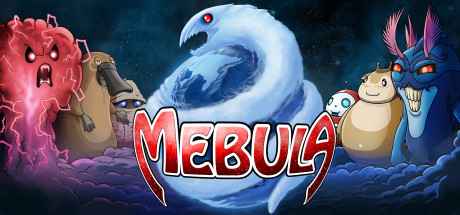
Mebula has been around for a long time: we have been developing the game since 2013, and it launched in 2017. The Mebulys and the game world are carefully drawn by hand. Today we use generative AI to translate the game texts into other languages. AI tools also help us write, revise and proofread texts for the game, the store page and announcements. The short intro and ending of our trailer (clouds, motion and sound) were created with AI. All content was selected, edited and reviewed by our team.
Midgard Arena is created, developed and run by one person. The world, the story, the game systems, the balance and every decision in the game are mine, and I review everything that goes into it. And that is the goal: Midgard Arena will stay a one-developer game, made by me, chasing my dream.
As a solo developer, I use generative AI tools as production tools: they let one person do work that would normally take a whole studio. Character and monster art, animations, 3D props, voices, music and parts of the text and translations started in AI tools; then I directed, selected, edited and refined each piece, often over many rounds, before it went into the game.
No AI generates content while you play. Everything you see was made and approved before it reached you.
Parts of this game's content were made with generative AI tools: the in-game texts and the wiki were written or drafted with AI, and the translations into languages other than English were written with AI and have not yet been reviewed by native speakers. Parts of the game's code and tools were written with AI assistance. The game does not use AI to generate content while you play and does not connect to any AI service.
Some of the game’s art, including sprites, items and title art, was created with generative AI tools.
Some of the music was also generated with AI.
All of this content was made during development, and no AI content is generated while you play.
AI is used only in (as human retouched starting point):
- Some background/location images
- 2D animation (of human made characters)
- Character voices, and narration
- Some unique player sprites (by supporter request)
(No AI content is generated during gameplay. All normal character sprites, UI icons, and item sprites are human made. Willing to replace all AI assets with human made assets with enough support of the game, voice acting and 2D animation are expensive and I'm solo dev.)
Some of the art was made with AI image tools, then picked and edited by the developer: the app icon, the logo, the cockpit panels' artwork and some textures. The trailer's music was made with an AI music tool. The radio voices are spoken by a text-to-speech model that runs on your computer and only reads lines the game writes: air traffic phrases, airport names and call signs.
Name of AI model included with the game: Piper text-to-speech (LibriTTS-R voices), running on the player's computer
Generative AI was used to help write the game's code, to speed up development, and to create the key art used on the store page and in the Steam library (capsule, header and hero images).
AI-assisted tools helped create a pipeline for procedural 3D items, some pixel art, music, and sound effects. The pixel art and 3D items were further refined by the developer. The game’s design, gameplay mechanics, and progression systems were created by the developer. No generative AI is used during gameplay.
This game contains AI-generated content: artwork, audio, dialogue, and localization. All AI assets were reviewed and edited before release.
Name of AI model included with the game: MiniMax-M3, Piper TTS
AI tools were used during development to help with code, art (backgrounds, portraits, creatures and items), translations and some sound effects. Every asset was reviewed and edited by the developer. The books, crafting minigames and music were made without AI. No content is generated while the game is running.
The store artwork and some 3D models, such as a few landmark buildings, were first generated with AI tools and then edited, textured and placed by hand. AI tools also assisted with programming. No content is generated by AI while you play.
Store and library images were made with the help of generative AI, then corrected and converted to the game's own pixel-art palette. The game's models, animations, levels, effects and music come from licensed asset packs and the developer's own work. Nothing is generated by AI while you play.
Generative AI tools may be used during development to assist in creating certain pre-generated visual, written, audio, or marketing content. All such content is reviewed and curated by the development team before inclusion. The game does not use generative AI to generate content during gameplay.
Asharven's code, in-game text, logo and store text were created with the help of AI tools and reviewed by the developer. 3D models, animations, textures, icons, effects and music are licensed assets made by people. The game does not generate content with AI while it is running.
We use AI as a production tool in areas of development, with all creative direction, concepts, and final assembly done by humans:
Code assistance: AI tools help us write and debug GDScript/shader code for our Godot 4.5 engine. All architecture, game design decisions, and systems design are human-led.
3D models and art assets: Some 3D models and textures are AI-generated or AI-assisted, then manually cleaned up, retopologized, and integrated by hand. Final visual style and direction are decided by us.
Audio: Some sound effects and audio elements are AI-generated, then curated, edited, and mixed to fit the game.
Everything else — the game concept, world design, story, gameplay systems, and the process of bringing all elements together into the final game — is entirely human-made.
The 2D art in Mimic2 (item icons, character and boss sprites, and map backgrounds) was created with the help of generative AI tools during development, then selected, edited and assembled by hand. The background music in the trailers is also AI-generated. No AI-generated content is produced while the game is running.
Some of the game's music and sound effects were created with the help of generative AI tools. Generative AI was also used to assist with in-game text and its translations into other languages. All AI-assisted content was produced during development and reviewed by the team. The game does not generate any content with AI during gameplay.
Valdrys uses AI-generated content in one place: the login screen
background, a single static image of a moonlit ridge over a conifer
forest, generated with Google Gemini. It does not appear in gameplay.
Everything else in the game is hand-drawn, generated procedurally by
our own tools, or licensed from third-party artists under CC0, CC-BY
or commercial licences. All of it is credited on the in-game Credits
screen.
Parts of the game's code were written with the help of an AI coding
assistant. No AI-generated art, audio or written content ships in
Valdrys beyond the single background image described above.
Nothing in Valdrys generates content while the game is running.
We used generative AI tools during development for two kinds of content: item and UI icons, and character voice-over with some sound effects. All of it was reviewed, edited and placed in the game by the developer by hand. Everything else in the game, including the 3D ships and models, the world, the music, the gameplay, quests and story, was made, carefully selected or licensed by the developer. The game itself does not generate any content with AI while it runs.
Generative AI tools were used to assist with English localization/translation of text originally written by the developer. No AI-generated content is created dynamically during gameplay. We do our best to rely on high-quality human translations whenever possible.
This game uses generative AI in a limited capacity on the game server in real time. The AI is used solely to generate narrative text: mission names and descriptions, in-world news broadcasts, and some NPC dialogue. All game logic — including mission mechanics, rewards, and balance — is governed by deterministic code and is never decided by AI. If the AI service is unavailable, the game automatically falls back to pre-written text templates.
Portions of imagery were produced with the assistance of generative AI.
Some 3D character and creature models in this game were created with AI-assisted generation tools (Meshy) as a starting point, then hand-finished, rigged, textured, and integrated by the developer in Blender and Unity. Some quest dialogue text was also written with AI assistance and edited by the developer before being included in the game. No content is generated in real time during gameplay — everything players see is fixed at build time and has been reviewed and edited by hand.
Generative AI tools were used in creating and refining promotional artwork and marketing assets for this game's Steam store page. The game does not use live-generated AI during gameplay.
We use AI as a technical tool to support our human developers. While all of our 3D game models, environments, and core game art are hand-crafted by our artists, we use AI to assist with 2D rendering and localization. For 2D promotional art, AI is used to composite, light, and polish images based strictly on our original in-game assets. We also utilize AI-assisted translation pipelines to help localize our massive world into multiple languages for our global community.
Art: AI image tools assisted with some 2D assets; all final art was produced by our artists based on original designs.
Localization: Core languages were translated by our team; additional languages use AI-assisted translation.
Some of the assets in this game were created with the help of generative AI tools: part of the background music and sound effects, some of the 2D images and textures used in the game and on the store page, some of the 3D models, and part of the source code. Every AI-assisted asset was reviewed and adjusted by the developer before it was included in the game, and we do not knowingly use material that infringes the rights of third parties. This game does not generate any content with AI while it is running; NPC dialogue is randomly selected from text written in advance by the developer.
Parts of this game's source code and in-game text were produced with the assistance of generative AI tools during development.
The planet itself is not AI-generated. It is built by conventional deterministic algorithms : noise functions, Voronoi tessellation, plate tectonics, erosion and climate simulation (the same family of techniques used in procedural generation for decades. Every world is reproducible from its seed).
No AI runs while you play, and the game never connects to an external AI service.
Many of the game's visual assets were initially created with the assistance of generative AI as part of the concepting and asset production process. All AI-generated content was reviewed, curated, and refined by the developer to ensure it matched the game's artistic style and quality standards. Gameplay systems, design, balance, writing, and overall creative direction were developed by the developer.
This game uses AI in two ways.(1) Pre-generated: the following content was created with the help ofgenerative AI tools during development and was reviewed, selected andedited by the developer before inclusion:- Music - created with Suno- Sound effects - created with ElevenLabs- Visual assets (in-game and store/marketing images) - created withFLUX.2 [klein] (Black Forest Labs)(2) Live-generated: some features use live AI while the game is running.First, an AI chat NPC - "KAL", a radio operator. When a player mentionsKAL in the in-game text chat, a short reply is generated live,server-side, via the Google Gemini API (text only). KAL also sends shortgreetings and event-related chat lines. KAL is locked to a fixed,developer-written persona and curated game data; replies are clearlylabeled as NPC messages, limited to three short sentences, strictlyrate-limited, ephemeral, and never affect gameplay, balance orpurchases. Second, clan emblems: when a clan is founded, a singleposter-style emblem image is generated server-side via the GoogleGemini image API from a fixed, developer-written prompt template. Thefounder's clan name, tag and description only set the mood of theimage; the only text allowed in the image is the short clan tag.Regeneration is limited to once per week per clan. Third, AI pilots:players and developers can connect AI models that fly their own pilotin the same online world as human players, including a personal"AI BUDDY" linked to a player's account. These pilots can take gameplayactions and send chat messages. They are clearly marked with a robotbadge, their model is listed in the pilot profile, and they do not earnPvP or dungeon ranking points. Players can disable AI chat and AI groupinvitations in their settings.
Connects to 3rd-Party Service for AI Content Generation: Google Gemini API: gemini-2.5-flash-lite for KAL chat text and gemini-2.5-flash-image for clan emblems. AI pilots use models chosen and connected by their operators (for example OpenAI, Anthropic, Google or locally hosted models) through our MCP/API interface. Pre-generated assets: Suno (music), ElevenLabs (sound effects), FLUX.2 [klein] by Black Forest Labs (visual assets).