Public Steam disclosure research27,951 disclosures tracked
Where do games disclose AI use?
Search developers’ Steam disclosures, compare classified AI use across
games, and follow recorded changes.
This index adds cross-game classifications and statistics to
statements published on individual store pages.
Groups reflect automatic analysis of public disclosures; mature records are excluded. These counts do not measure AI use across all of Steam.
Missing or unclear statements cannot establish whether a game uses AI.
Zero Defects TD is made by me, a solo developer. I designed the game and directed every part of it. I have used generative AI heavily to build it: all 3D models (towers, enemies, props and the environment) were generated with AI tools in Blender under my direction, the music is AI-generated, the game's text was written with AI assistance and translated into other languages with AI, and much of the code was written with AI coding tools. Sound effects and icons come from licensed asset packs.
AI-generated images were used only as placeholders in the early stages of development and have since been replaced with work by our artists. Our artists may use AI tools to render their own sketches, which are then refined by hand, or to create material for photobashing.
AI tools helped with translations. Animations and sounds are made without AI. In code, AI is used mainly to write automated tests.
AI tools helped make this game, including its levels and store text. The pieces and sounds are drawn and synthesised by the game's own code. There are no AI-generated images or recordings, and nothing is generated by AI while you play.
Generative AI tools were used during development to help create artwork and other content for the game and its store page. No AI content is generated during gameplay.
Hello there! I’m a 3D artist and the solo developer of this game. Based on my own vision of turning the toy into a game, I work with AI agents that assist me with coding, music, and a portion of the art, including shading techniques.
AI tools were also used for the trailer voice-over (a clone of my own voice, made from my own recordings)
It’s a hybrid workflow: the AI and I split the work like coworkers, while I direct the overall concept through dozens of refinements. With the help of these agents, I’m able to keep developing new games with unique ideas after my day job.
No AI content is generated in real time while you play.
Hope you enjoy the game for a chill moment. Cheers! :D
During development, generative AI was used to assist in creating some scene backgrounds, which were then manually edited and adjusted by the developer. All item illustrations were hand-drawn. The game does not use generative AI during gameplay or generate any content in real time.
Generative AI is used to create and improve marketing artwork, and to draft and translate store descriptions and interface text. No AI content is generated during gameplay.
AI tools assisted generate Steam capsule artwork and the title logo were created with a generative image tool using our own game captures as reference. Gameplay screenshots and trailer footage are captures of the game. No generative AI service runs during gameplay, and no player input is sent to an AI service.
The dog in the game appears in real photos and videos. The illustrations and animations of props and backgrounds (on the title screen, in the ending, etc.), the BGM and sound effects, and all translations were created using AI. The store images and trailer were designed and edited using AI, based on real photos and gameplay footage.
This game uses generative AI in the creation of images, backgrounds, music, translations, and some scripts. All generated assets were produced in advance and are included in the game; no content is generated by AI during gameplay, and the game does not connect to any external AI services.
Kinetile is an expanded successor to Leadball, the iOS puzzle game released in 2015. Generative AI tools helped create the music, sound effects, and some of the in-game artwork and text for this new PC edition. All AI-assisted content was prepared during development and is included as finished assets. Nothing is generated by AI during play, and the game does not connect to AI services.
Generative AI was used to create some of the images in the game. As a solo developer working on my first game, I chose this approach. In the future, I intend to avoid using AI whenever possible.
Some assets in this game were created with the help of generative AI tools during development. All such content is pre-generated: it was produced during development, reviewed and edited by the developer, and shipped as static files. The game does not call any AI model at runtime.
- Art: character standing illustrations and expressions, portraits, item icons, badges, chapter cards, key art, title backgrounds, UI backgrounds, HUD frames, window borders, button plates and rims, ground decals and ground textures were generated with OpenAI image models (gpt-image) and then hand-selected, cropped and colour-corrected by the developer.
- Video: the opening and ending cinematics, the animated chapter cards and title screen backgrounds, and the cinematic shots in the trailer were generated with a video model (ByteDance Seedance 2.0) from developer-authored keyframes and storyboards.
- Music: the cinematic scores were generated with ElevenLabs Music, and the trailer score with Google Lyria 3. The in-game background music was generated with Google Lyria 3 from developer-written prompts, then loop-edited and loudness-matched by the developer.
- Voice: all spoken dialogue lines and the narration of the opening and ending cinematics, in Korean, English and Spanish, are text-to-speech synthesised with Google Gemini 3.8 Flash TTS from scripts written by the developer. Every speaker uses the model's built-in voices; no real person's voice is cloned and no reference recording of any person was used. No AI model is called while the game is running.
- Expression tagging: during development a text model (gpt-6-luna) was used to pick which of the pre-made portrait expressions is shown for each dialogue line. It did not write or change any dialogue or other player-facing content.
- Translation: the English and Spanish text was translated from the developer's Korean script with Anthropic Claude.
Game design, the original Korean writing, level design, code and all gameplay systems are authored by the developer. Historical text quoted in game is public domain.
Ravel: Golden Thread includes content made with generative AI during development, all reviewed and refined by our team:
- Art: the chapter backdrops, maps, board skins, reward, rune and Daily art, the chapter story paintings and the key art were generated with AI image tools (OpenAI image generation and Scenario), then art-directed and refined by Lucky Dreamer.
- Music: the soundtrack is our own, created with Suno.
- Translations: 21 of the game's 23 languages, and the localized store text, were drafted with AI and reviewed by us.
- Store media: some trailer sound effects were generated with ElevenLabs, and the key art was upscaled with Topaz.
The campaign's 200+ levels are handcrafted. Nothing is generated by AI while you play.
The game’s music and store artwork were created with AI assistance, and AI was also used to help with the translations. No content is generated by AI while the game is running.
AI tools were used as assistants in the development of CLACKPOT. Some code was written with the help of AI coding tools, and translations were drafted with AI tools and then reviewed by the developer. Some images began as AI-generated drafts that the developer then redrew and refined by hand, pixel by pixel. All game design, rules, balance and final art direction were decided and made by the developer. The game does not generate any AI content while you play, and no AI music or AI voices were used.
Pre-generated AI content: most of the 2D pixel art (the cat companion with its outfits and in-between animation frames, fortune-game icons, tarot cards, items and backgrounds) was first generated with AI image tools (PixelLab and an image-generation model), then retouched by our designer, who redraws, recolors and cleans up the pixels by hand. The background music tracks were generated with an AI music model (ACE-Step) and selected and edited by our developer. The fortune logic and game rules were designed by the developer; fonts are used under their own licenses (mostly SIL OFL). AI was used only during development, to help make the art and music. The finished game simply contains those files. While you play, no AI runs inside the game, nothing new is generated, and the game never connects to an AI service or sends your data to one.
Some graphics and sound assets included in this game were created with the assistance of Generative AI and were subsequently reviewed and retouched by humans.
I'm a solo developer and not experienced with 3D art, so I used AI tools for parts of this game: some sound effects were generated with an AI audio tool, the logo and key art (also used for the store artwork and icons) were created with an AI image generator, and about half of the item artwork was made with AI-assisted tools and then reworked. Item names and descriptions and the store page text were written with the help of AI tools and reviewed by me; the translations were also created with the help of AI tools. With support from others, I would like to gradually replace the AI-assisted item artwork with assets made by people.
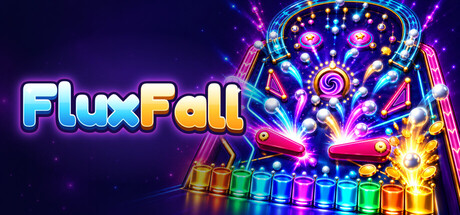
Generative AI tools assisted with creating content for FluxFall and its promotional materials. The developer revied and refined the results, guiding the creative direction, gameplay design, and final presentation.
Generative AI was used to create the background artwork in the Steam store and library images, and the Drift Quest logo, which also appears in the game. AI tools were also used during development: AI coding assistants helped write the game's code, the store description was written with AI assistance, and the game and store texts were translated into 29 languages and reviewed with AI. AI also helped write some of the game's English text, such as quest, item and spell names. The in-game interface and icon art comes from licensed asset packs, and the music is licensed from Phat Phrog Studios. No content is generated by AI while you play.
Parts of this game were made with the help of generative AI during development.
- Artwork (item illustrations, backgrounds and interface graphics) was generated with AI tools and then edited and adjusted by hand.
- Music and sound effects were created with AI tools.
- The source code and the in-game text translations were written with AI assistance.
All of it was reviewed by the developer before release.
This game does not use generative AI while you play. No content is generated at runtime, and no player data is sent to any AI service.
Pre-generated content (created during development, not generated while playing):
- All music — the background music, the title theme "静かな残響" and the ending theme "さくら色の上履き" — was created with Suno.
- Game artwork (scenes, characters, memory illustrations and title logos) was created with the help of AI image generation, upscaled with Real-ESRGAN, then selected and edited by the developer. Store and marketing images use the same artwork.
- AI assistants (Codex, Claude) were used to help write code and to draft/translate some text; all story text was reviewed by the developer.
The game does not generate any content with AI at runtime.
AI is used solely to assist with development, such as for some localization and the creation of internal tools.
The game does not include any features that automatically generate content in real-time during gameplay.
Gemini was used to create two backgrounds that I later blurred and two non-blurred backgrounds for the game's menus.
I'm a one-person developer. That means I do everything; and some of it I'm just bad at. I use AI as a tool to cover the gaps: the tasks I hate, the stuff I'd waste hours on just to replace later. The tools don't make the art. Every idea and decision, everything that made it into this game came from me.
Generative AI tools were used during development to assist with programming, debugging, and development iteration. No generative AI is used during gameplay, no live AI-generated content is produced, and the game does not connect to external AI services during play.
This game uses generative AI to assist with multilingual translation and to create some of its in-game music. All related content was generated in advance during development and reviewed and edited by the development team.
We used AI to assist in creating portions of the game text, and leveraged AI tools to translate in-game content into English. All AI-generated content has been manually reviewed and vetted before being finalized for inclusion in the game.
Some sprites started as AI-generated references before being rebuilt in the game's palette and resolution. All English writing is my own; the other nine languages are machine translated. No AI runs in the game itself. Nothing is generated while you play, and it never connects to an AI service.
This game uses generative AI as part of its development process.
AI-assisted tools were used to help create and refine some visual assets, UI elements, icons, text drafts, and localization drafts. These materials were reviewed, edited, and integrated by the developer before being included in the game.
The game does not generate new AI content in real time during gameplay. All content shown to players is pre-made, reviewed, and included as part of the game build.
Generative AI tools were used only to assist with localization and the writing of text for the Steam store page. No content is generated while the product is running.
Some of the art in this game was made with the help of generative AI. The voxel character portraits were generated from written prompts using an AI image generator, then cut out, colour-corrected, posed and animated by hand by the developer. The store page capsules and the achievement icons are composed from that same character art. Parts of the store page text, and the game's translations into its eight supported languages, were produced with AI assistance and reviewed by the developer.
No generative AI runs while you play — nothing is generated in real time. The patrons' behaviour is ordinary game AI: hand-written rules and probability tables. The music and every sound effect are not AI-generated; they are synthesised procedurally.
Petrivore uses AI-assisted tools in parts of its development: some icons and steam assets were made with AI image generation, the in-game text and steam page was translated with AI translation tools. All of it was reviewed and edited by the developer.
Generative AI was used to create and refine some pre-generated visual assets, including the game logo and Steam store capsule artwork. All AI-assisted assets are reviewed, edited, and curated by the developer before inclusion. The game does not generate content during gameplay and does not connect to external AI services.
Coin Cleaner is made by a solo developer with the help of AI tools. Generative AI was used during development to assist in creating some of the game's content - including artwork, music, sound effects, and code - all of which was directed, curated, and reviewed by the developer, and used with appropriate commercial licensing. All AI-assisted content is created ahead of time (pre-generated). The game does not use AI to generate any content or code during gameplay, and does not connect to any external AI service while you play.