Public Steam disclosure research25,376 disclosures tracked
Where do games disclose AI use?
Search developers’ Steam disclosures, compare classified AI use across
games, and follow recorded changes.
This index adds cross-game classifications and statistics to
statements published on individual store pages.
Groups reflect automatic analysis of public disclosures; mature records are excluded. These counts do not measure AI use across all of Steam.
Missing or unclear statements cannot establish whether a game uses AI.
Artwork: cards, lobby illustrations and achievement icons were pregenerated with AI image tools and rewritten by hand. The visual style was reviewed and rewritten artist.
Text: The German and Italian localizations were made with AI translation.
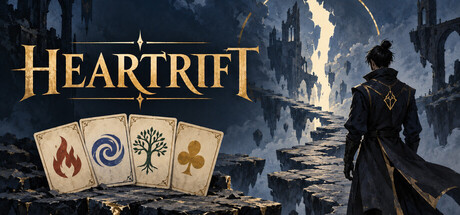
Generative AI was used during development to create artwork, UI and promotional assets, as well as audio content, including character voices. AI tools also assisted with writing and refining the game’s code. All AI-generated content is pre-generated; HEARTRIFT does not generate content or code with AI during gameplay or connect to an external AI service.
The game is made by a single developer, with help from two friends. I used generative AI for some of the artwork (backgrounds, portraits, icons, book covers, record sleeves, skies) and for some of the music, selecting, editing and integrating every asset by hand. 3D models were bought from their creators, taken from free libraries or made in Blender, and sound effects come from free sound libraries: all authors are credited in the game.
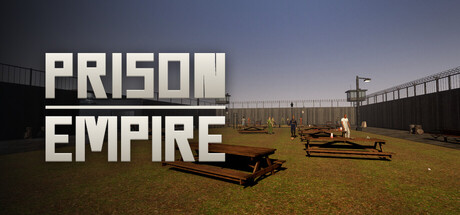
The English voice-over for story dialogue and prison PA announcements was generated with an open-source text-to-speech model (Kokoro) from scripts written for the game. Much of the game's code, dialogue text and localisation was written with AI assistance under the developer's direction. No AI generates content while you play. 3D models, textures, sound effects and music come from human-made asset libraries (CC0 sources and Mixamo).
Generative AI tools were used to create store artwork and portions of in-game text, customer support dialogue, and German/English localization during development. Development also used AI-assisted programming. The current build does not generate content during gameplay or connect to an external AI service.
Some assets in this game were created with the assistance of generative AI tools. All AI-assisted assets were reviewed, edited, and integrated into the game by our team.
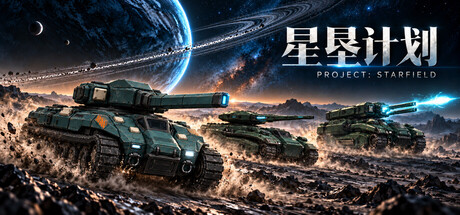
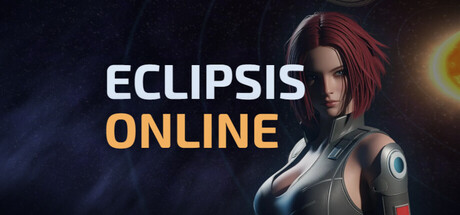
Generative AI was used during development to create the galaxy illustration displayed in the game’s galaxy-map interface and menus, as well as promotional artwork used for Steam capsule and library images. Trailer production uses AI-generated music and selected transition sound effects. These materials are generated during development, rather than during gameplay. The game does not offer player-facing live AI content generation.
3D models were made with Meshy and the radio and trailer music with ElevenLabs, all then selected and edited by the developer. Code was written with AI assistance. Nothing is generated while you play.
1) Artwork: card illustrations and other visual assets were created with the help of AI image generation tools, then selected and edited by the developer.
2) Music: the soundtrack was created with the help of AI music generation tools.
Generative AI was used to help create some of the game's art assets, concept art, and promotional images, which were then selected, refined, and integrated by the developer.
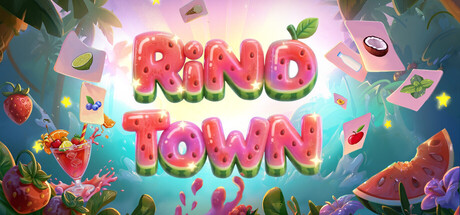
All 2D visual assets in RindTown—including characters, backgrounds, fruit, icons, machines, and UI elements—were created using generative AI image tools. These generated images were then manually curated, cut, edited, and post-processed by the developer to ensure a strict and consistent "crisp digital anime" art style across the entire game.
Generative AI was used exclusively for creating static art assets during development. No generative AI is used for real-time gameplay logic or text generation while playing.
Sound effects and music were created with AI audio tools (ElevenLabs) and selected and edited by the developer. Parts of the in-game text, villager dialogue and translations were written with the help of AI and reviewed by the developer. AI coding assistants were used during development, including scripts that build the game's 3D models. No AI generates content while you play.
Generative AI tools were used during development to assist with the creation and refinement of certain in-game visual assets, promotional artwork, and portions of text/localization. All AI-assisted content was reviewed, edited, and integrated by the developer. No generative AI is used during gameplay, and no content is generated live for players.
Some of the promotional and storefront images were created with AI tools and then refined by hand. All of the in-game assets were designed by a Pixel Art artist.
This game was made by a solo developer with the help of generative AI tools. The world, buildings and 3D scenes are built and composed by hand. AI was used to produce:
some character voices (text written by me, spoken with AI voice synthesis),
some of the sound effects
Generative AI tools were used during development to assist with localization and the creation of some game assets. Generative AI is not used to generate content during gameplay, and the game does not connect to external AI services during execution.
AI-assisted tools were used during the development of some visual assets, music, and localization. All AI-assisted content has been reviewed, edited, and integrated by the development team, and is used under licenses that permit commercial use.
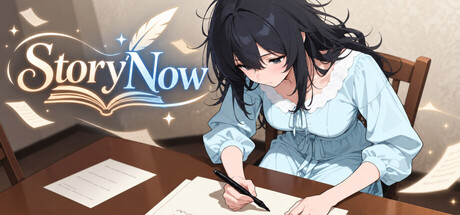
StoryNow uses generative AI locally during gameplay. Llama.cpp generates prompts that ComfyUI uses to create visual-novel artwork on the player's device. The game does not connect to an external AI generation service.
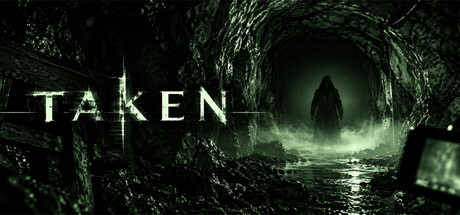
Generative AI was used to create promotional and store-page artwork for TAKEN during development. No AI-generated content or code is generated during gameplay.
We use generative AI tools during development to create some concept art and supporting images, as well as certain materials for the store page. All in-game content, including final assets, models, and text, is created and reviewed by hand.
This game utilizes generative AI for a significant portion of its art assets. Many AI-assisted elements underwent manual editing and modification by the developer before being integrated into the final game.
The original story was written by a human author. AI was used to write AI speech in the game. It was also used in localization as a supportive tool. We gladly work with the community to bring the game to more languages.
The key art, store capsules and library artwork were created with an AI image generator and edited by the developer. The trailer music was generated with Suno under a paid plan. No AI-generated content is included in the game itself, and the game runs no AI generation and requires no AI service.
Generative AI was used during development to create and refine some of the game's 2d and 3d artwork and music. All AI-generated content was reviewed, selected, and edited by the developer before being included in the game. Generative AI is not used during gameplay, and no content is generated in real time.
During development, AI tools were used to assist with code generation, debugging, and drafting of game documentation. Voice callouts were generated using AI text-to-speech and processed with radio filters to simulate authentic ATC communications.
Parts of this game were made with the help of generative AI tools:
- 3,928 of the 6,608 character portraits were created with generative AI tools and then selected and retouched by a person. The other 2,404 are historical images from public archives such as Wikimedia Commons, and 276 reuse an existing picture.
- The title-screen key art was created with generative AI.
- The character biographies and historical event texts were written with the assistance of generative AI, based on historical sources, and edited by the developer.
- The English, Japanese and Traditional Chinese translations were produced with the assistance of generative AI.
No content is generated by AI while the game is running.
Some pre-generated artwork used in the game and on its Steam store page, including title, introduction, event illustration, and capsule artwork, was created using OpenAI image generation tools. One music track was generated using Google Gemini from a developer-written prompt. All generated assets were reviewed and selected by the developer before release. The game does not generate AI content during gameplay or connect to external AI services.
Generative AI was used to assist with English texts, localizations, and some pre-generated 3D character models, with all content manually reviewed and edited by the developer.
Artificial intelligence has been used to create localisations in languages other than Polish and English.
If you spot any errors in the translation, please let us know on our Steam discussion forums so that we can correct them!
Whilst working on the game in Early Access, we occasionally use AI technology to generate a small number of missing graphical elements in order to speed up game updates.
This is a temporary solution, and we will replace all generated images by the time the full version of the game is released.
Pre-generated content only; nothing is generated while playing. The painted room backgrounds, the doorway arches, character and creature sprites and the key art (title picture, also the basis of the store capsules) were created with a generative image model (OpenAI gpt-image-2) and then hand-composed, cropped, colour-matched and fitted with collision by the developer. Code, level design and texts were written with AI assistance (Anthropic Claude) under human direction and testing; music is synthesised by the game's own code (no AI audio). — DE: Ausschliesslich vorgenerierte Inhalte, nichts wird während des Spielens erzeugt. Die gemalten Raumhintergründe, Torbögen, Figuren- und Kreaturen-Sprites sowie die Schlüsselgrafik (Titelbild, Grundlage der Shop-Kapseln) wurden mit einem generativen Bildmodell (OpenAI gpt-image-2) erzeugt und anschliessend vom Entwickler von Hand komponiert, beschnitten, farblich abgestimmt und mit Kollision belegt. Code, Leveldesign und Texte sind mit KI-Unterstützung (Anthropic Claude) unter menschlicher Leitung und Prüfung entstanden; die Musik wird vom Spielcode selbst synthetisiert (kein KI-Audio).
We use AI as a production tool in areas of development, with all creative direction, concepts, and final assembly done by humans:
Code assistance: AI tools help us write and debug GDScript/shader code for our Godot 4.5 engine. All architecture, game design decisions, and systems design are human-led.
3D models and art assets: Some 3D models and textures are AI-generated or AI-assisted, then manually cleaned up, retopologized, and integrated by hand. Final visual style and direction are decided by us.
Audio: Some sound effects and audio elements are AI-generated, then curated, edited, and mixed to fit the game.
Everything else — the game concept, world design, story, gameplay systems, and the process of bringing all elements together into the final game — is entirely human-made.
AI tools were used only to check visual concepts, translate text into some languages, and create music placeholders. All such materials are currently significantly reworked by humans. By release, we plan to replace the music placeholders with original compositions and have the translations reviewed by human editors.
Generative AI was used during development to create or refine some of the game’s visual assets and music, and to assist with localization. These assets were selected by the developer and edited and adapted as needed. The game does not generate AI content in real time during gameplay.
Artwork: cards, lobby illustrations and achievement icons were pregenerated with AI image tools and rewritten by hand. The visual style was reviewed and rewritten artist.
Text: The German and Italian localizations were made with AI translation.
Generative AI was used during development to create artwork, UI and promotional assets, as well as audio content, including character voices. AI tools also assisted with writing and refining the game’s code. All AI-generated content is pre-generated; HEARTRIFT does not generate content or code with AI during gameplay or connect to an external AI service.
The game is made by a single developer, with help from two friends. I used generative AI for some of the artwork (backgrounds, portraits, icons, book covers, record sleeves, skies) and for some of the music, selecting, editing and integrating every asset by hand. 3D models were bought from their creators, taken from free libraries or made in Blender, and sound effects come from free sound libraries: all authors are credited in the game.
The English voice-over for story dialogue and prison PA announcements was generated with an open-source text-to-speech model (Kokoro) from scripts written for the game. Much of the game's code, dialogue text and localisation was written with AI assistance under the developer's direction. No AI generates content while you play. 3D models, textures, sound effects and music come from human-made asset libraries (CC0 sources and Mixamo).
Generative AI tools were used to create store artwork and portions of in-game text, customer support dialogue, and German/English localization during development. Development also used AI-assisted programming. The current build does not generate content during gameplay or connect to an external AI service.
Some assets in this game were created with the assistance of generative AI tools. All AI-assisted assets were reviewed, edited, and integrated into the game by our team.
Generative AI was used during development to create the galaxy illustration displayed in the game’s galaxy-map interface and menus, as well as promotional artwork used for Steam capsule and library images. Trailer production uses AI-generated music and selected transition sound effects. These materials are generated during development, rather than during gameplay. The game does not offer player-facing live AI content generation.
3D models were made with Meshy and the radio and trailer music with ElevenLabs, all then selected and edited by the developer. Code was written with AI assistance. Nothing is generated while you play.
1) Artwork: card illustrations and other visual assets were created with the help of AI image generation tools, then selected and edited by the developer.
2) Music: the soundtrack was created with the help of AI music generation tools.
Generative AI was used to help create some of the game's art assets, concept art, and promotional images, which were then selected, refined, and integrated by the developer.
All 2D visual assets in RindTown—including characters, backgrounds, fruit, icons, machines, and UI elements—were created using generative AI image tools. These generated images were then manually curated, cut, edited, and post-processed by the developer to ensure a strict and consistent "crisp digital anime" art style across the entire game.
Generative AI was used exclusively for creating static art assets during development. No generative AI is used for real-time gameplay logic or text generation while playing.
Sound effects and music were created with AI audio tools (ElevenLabs) and selected and edited by the developer. Parts of the in-game text, villager dialogue and translations were written with the help of AI and reviewed by the developer. AI coding assistants were used during development, including scripts that build the game's 3D models. No AI generates content while you play.
Generative AI tools were used during development to assist with the creation and refinement of certain in-game visual assets, promotional artwork, and portions of text/localization. All AI-assisted content was reviewed, edited, and integrated by the developer. No generative AI is used during gameplay, and no content is generated live for players.
Some of the promotional and storefront images were created with AI tools and then refined by hand. All of the in-game assets were designed by a Pixel Art artist.
This game was made by a solo developer with the help of generative AI tools. The world, buildings and 3D scenes are built and composed by hand. AI was used to produce:
some character voices (text written by me, spoken with AI voice synthesis),
some of the sound effects
Generative AI tools were used during development to assist with localization and the creation of some game assets. Generative AI is not used to generate content during gameplay, and the game does not connect to external AI services during execution.
AI-assisted tools were used during the development of some visual assets, music, and localization. All AI-assisted content has been reviewed, edited, and integrated by the development team, and is used under licenses that permit commercial use.
StoryNow uses generative AI locally during gameplay. Llama.cpp generates prompts that ComfyUI uses to create visual-novel artwork on the player's device. The game does not connect to an external AI generation service.
Generative AI was used to create promotional and store-page artwork for TAKEN during development. No AI-generated content or code is generated during gameplay.
We use generative AI tools during development to create some concept art and supporting images, as well as certain materials for the store page. All in-game content, including final assets, models, and text, is created and reviewed by hand.
This game utilizes generative AI for a significant portion of its art assets. Many AI-assisted elements underwent manual editing and modification by the developer before being integrated into the final game.
The original story was written by a human author. AI was used to write AI speech in the game. It was also used in localization as a supportive tool. We gladly work with the community to bring the game to more languages.
The key art, store capsules and library artwork were created with an AI image generator and edited by the developer. The trailer music was generated with Suno under a paid plan. No AI-generated content is included in the game itself, and the game runs no AI generation and requires no AI service.
Generative AI was used during development to create and refine some of the game's 2d and 3d artwork and music. All AI-generated content was reviewed, selected, and edited by the developer before being included in the game. Generative AI is not used during gameplay, and no content is generated in real time.
During development, AI tools were used to assist with code generation, debugging, and drafting of game documentation. Voice callouts were generated using AI text-to-speech and processed with radio filters to simulate authentic ATC communications.
Parts of this game were made with the help of generative AI tools:
- 3,928 of the 6,608 character portraits were created with generative AI tools and then selected and retouched by a person. The other 2,404 are historical images from public archives such as Wikimedia Commons, and 276 reuse an existing picture.
- The title-screen key art was created with generative AI.
- The character biographies and historical event texts were written with the assistance of generative AI, based on historical sources, and edited by the developer.
- The English, Japanese and Traditional Chinese translations were produced with the assistance of generative AI.
No content is generated by AI while the game is running.
Some pre-generated artwork used in the game and on its Steam store page, including title, introduction, event illustration, and capsule artwork, was created using OpenAI image generation tools. One music track was generated using Google Gemini from a developer-written prompt. All generated assets were reviewed and selected by the developer before release. The game does not generate AI content during gameplay or connect to external AI services.
Generative AI was used to assist with English texts, localizations, and some pre-generated 3D character models, with all content manually reviewed and edited by the developer.
Artificial intelligence has been used to create localisations in languages other than Polish and English.
If you spot any errors in the translation, please let us know on our Steam discussion forums so that we can correct them!
Whilst working on the game in Early Access, we occasionally use AI technology to generate a small number of missing graphical elements in order to speed up game updates.
This is a temporary solution, and we will replace all generated images by the time the full version of the game is released.
Pre-generated content only; nothing is generated while playing. The painted room backgrounds, the doorway arches, character and creature sprites and the key art (title picture, also the basis of the store capsules) were created with a generative image model (OpenAI gpt-image-2) and then hand-composed, cropped, colour-matched and fitted with collision by the developer. Code, level design and texts were written with AI assistance (Anthropic Claude) under human direction and testing; music is synthesised by the game's own code (no AI audio). — DE: Ausschliesslich vorgenerierte Inhalte, nichts wird während des Spielens erzeugt. Die gemalten Raumhintergründe, Torbögen, Figuren- und Kreaturen-Sprites sowie die Schlüsselgrafik (Titelbild, Grundlage der Shop-Kapseln) wurden mit einem generativen Bildmodell (OpenAI gpt-image-2) erzeugt und anschliessend vom Entwickler von Hand komponiert, beschnitten, farblich abgestimmt und mit Kollision belegt. Code, Leveldesign und Texte sind mit KI-Unterstützung (Anthropic Claude) unter menschlicher Leitung und Prüfung entstanden; die Musik wird vom Spielcode selbst synthetisiert (kein KI-Audio).
We use AI as a production tool in areas of development, with all creative direction, concepts, and final assembly done by humans:
Code assistance: AI tools help us write and debug GDScript/shader code for our Godot 4.5 engine. All architecture, game design decisions, and systems design are human-led.
3D models and art assets: Some 3D models and textures are AI-generated or AI-assisted, then manually cleaned up, retopologized, and integrated by hand. Final visual style and direction are decided by us.
Audio: Some sound effects and audio elements are AI-generated, then curated, edited, and mixed to fit the game.
Everything else — the game concept, world design, story, gameplay systems, and the process of bringing all elements together into the final game — is entirely human-made.
AI tools were used only to check visual concepts, translate text into some languages, and create music placeholders. All such materials are currently significantly reworked by humans. By release, we plan to replace the music placeholders with original compositions and have the translations reviewed by human editors.
Generative AI was used during development to create or refine some of the game’s visual assets and music, and to assist with localization. These assets were selected by the developer and edited and adapted as needed. The game does not generate AI content in real time during gameplay.