Public Steam disclosure research25,376 disclosures tracked
Where do games disclose AI use?
Search developers’ Steam disclosures, compare classified AI use across
games, and follow recorded changes.
This index adds cross-game classifications and statistics to
statements published on individual store pages.
Groups reflect automatic analysis of public disclosures; mature records are excluded. These counts do not measure AI use across all of Steam.
Missing or unclear statements cannot establish whether a game uses AI.
Some game artwork was created with the assistance of AI-generated concept art or reference images during development. These were used solely as creative references, and all artwork used in the final game was manually redrawn and processed. AI-generated images are not used directly.
Some game text and its corresponding localized translations were generated using AI.
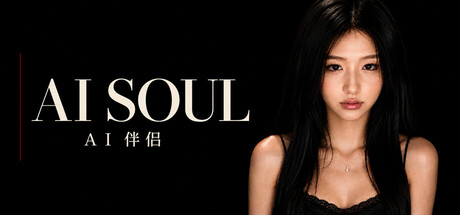
AI SOUL uses generative AI for conversational text, synthesized speech and speech-driven facial animation. Character imagery and store artwork include AI-generated material. Core conversation models run locally. Xiaoya is a synthetic character, not a live human operator. Responses may be inaccurate.
This game utilizes generative AI in the creation of some images, background music, and sound effects. All such content is reviewed and edited before being incorporated into the game.
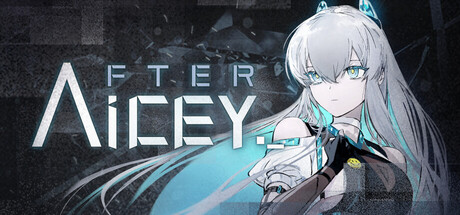
Our AI assistance is mainly focused on copy polishing (e.g., correcting typos and logical errors), a small amount of scene refinement and VFX for the second part of the game (the second part is a redesign of some original scenes from ICEY; after handcrafting the concept design and finishing the demo, we use AI to batch-reduce repetitive work), and some programming implementation and test cases.
In all other areas—such as concept design, character design (character illustrations), scene design and related design work, combat animation and VFX, and scene implementation (from hand-drawn 2D animation to final implementation)—there is no AI content at all. The specific iteration details are basically all in the development VLOG; if you're interested, feel free to look through it.
This game makes extensive use of generative AI during development to assist with visual, music, and written content, including background artwork, visual assets, game music, and discussion, revision, and polishing of the script.
Generated content is reviewed, selected, edited, and integrated by the developer before being used in the game.
The script, character settings, and overall creative direction are led by the developer and developed through an iterative collaboration with generative AI.
The character illustrations and their animation frames were created with the assistance of image-generation AI (Stable Diffusion), then manually layered, retouched and reviewed by the developer. All other content — game design, code, music, sound effects and text — is made by humans. No AI content is generated at runtime.
This game uses content created or assisted by generative AI. Generative AI was used to help create and edit some visual assets, music/sound materials, and scripts. All final content was reviewed, selected, and adjusted by the developer before being included in the game.
Generative AI tools were used only as an editing and proofreading aid for selected portions of the final game text. The original scenario, characters, direction, and final text review were created and handled by the developer.
The English localization of Channel 453 was produced through a combination of human translation and editing.
Some sections of the game, including portions of the demo, were translated by a human translator.
For a limited number of sections in the full game, generative AI tools were used only as a first-pass aid for English localization and language editing. These tools were not used to create the original scenario or characters.
All AI-assisted English text was subsequently reviewed, revised, and polished by humans before being included in the final game.
We are providing this information on Steam in the interest of transparency and to help players make an informed decision about the game.
To avoid any misunderstanding: this refers to a test-stage build. The final release will be provided with fully human-translated localization alongside the finalized store page update.
Generative AI Usage
- Reference for some backgrounds and CG compositions
- Editing and proofreading of some text
- Assistance with English and Japanese localization
All final content was created, reviewed, and/or revised by the developer.
Character portraits are entirely hand-drawn by artists. Background assets are created using AI as preliminary sketches, then comprehensively revised and manually reworked to achieve consistent art style.
This game uses content created or assisted by generative AI. Generative AI was used to help create and edit some visual assets, music/sound materials, and scripts. All final content was reviewed, selected, and adjusted by the developer before being included in the game.
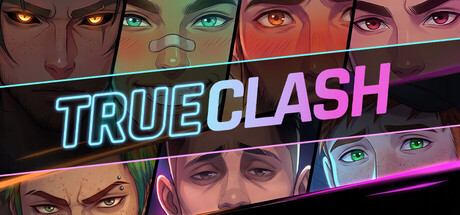
TrueClash uses generative AI as part of its art workflow: character art and backgrounds are initially generated with AI tools, then manually reviewed, edited, and refined by our team in order to maintain the game's consistent visual style.
AI tools were also used to assist with translation and as a development aid for coding.
Some of the licensed music tracks featured in the game may have been created with AI assistance by their respective artists.
The game includes pre-generated visual and audio assets created with the assistance of generative AI tools. These include character artwork, environmental backgrounds, music, and singing vocals. All lyrics were written entirely by the developer without the use of generative AI, while the music and vocals were created through a collaborative process involving human creative direction and generative AI tools. All AI-assisted outputs were reviewed, selected, edited, and integrated by the developer. The game does not generate content during gameplay and does not send player input to any AI service.
Generative AI video tools were used to assist in creating some trailer and marketing video materials. The game itself does not use live-generated AI content.
The art assets, source code, and portions of the related content in this game were primarily created with the assistance of artificial intelligence (AI), including but not limited to character designs, environment assets, UI elements, text assistance, and programming development. The developer reviewed, adjusted, and integrated the generated content for the final production and release of the game.
[AI-Generated Content Disclosure]This game uses AI-assisted tools during development for content generation and optimization. All AI-generated content has been reviewed, revised, and finalized by the human development team. Specific usage is disclosed below:[Text]· Portions of script drafts and dialogue have been refined with AI assistance, with all final versions rewritten and proofread by human writers.· Multi-language localization (English, Japanese, Russian, French, Spanish) was produced via AI translation followed by human proofreading and correction.[Art]· Some character portraits, CG illustrations, and background concepts were initially drafted with AI assistance, then redrawn, retouched, colored, and finalized by human artists.· Certain UI elements and icons were AI-assisted and subsequently adjusted by hand.[Audio]· Some background music (BGM) tracks were generated with AI assistance, then curated and post-processed by humans.· All character voice acting is performed by real human voice actors. No AI voice synthesis is used.
AI tools are used in a limited capacity for language polishing and coding support. All story content, characters, and creative direction are created by the development team. No AI-generated voice acting, art, or music is used.
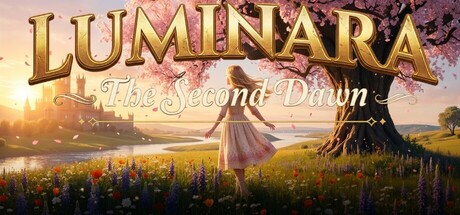
Luminara: The Second Dawn was created by a solo developer with the help of AI tools to bring the game to life. Every piece of content—art, music, story, and code—has been personally reviewed, curated, and directed by me to ensure it fits the game's vision and quality standards.
This game uses generative AI to produce real-time, dialogue-based explanations, narrative content, and key summaries during gameplay (with optional AI-generated voice output).
The generated content dynamically adapts based on player inputs, such as uploaded papers or text, as well as in-game choices, and is used solely for in-game presentation.
Players are advised not to input sensitive personal information and to independently verify any important information.
Some visible in-game assets, including but not limited to cutscenes, characters, environments, and UI elements, were created or visually enhanced with the help of AI, including generation based on white model references.
Some store page assets were also created or visually enhanced with the help of AI, including generation based on white model references.
Some music and sound effects were generated with the help of AI.
Some localized language content was translated with the help of AI.
All characters, CG, and UI resources in the game were either commissioned or self-drawn by the developer.
Currently, the background resources are placeholders generated using commercial AI to match the overall artistic style. All content is reviewed and finalized by the developer.
Once developers secure sufficient budget, these AI-generated contents will be replaced.
Every character, story, and animation in this game is handcrafted. AI was only used, albeit reluctantly, to help create some background music — the only magic not coming from the author’s quill.
The development of this game was handled by a team of just two people. To create a rich and engaging visual novel despite our small size, we used artificial intelligence (AI) as an assistive tool. AI was involved in the initial generation of several elements, including background images, sound effects, and provided a base for editing the character sprites.
Every AI-generated asset was then carefully selected, thoroughly edited, and integrated by us to ensure it fits the game's style and delivers a consistent, high-quality experience. This approach allowed us to bring our idea to life efficiently.
Some game artwork was created with the assistance of AI-generated concept art or reference images during development. These were used solely as creative references, and all artwork used in the final game was manually redrawn and processed. AI-generated images are not used directly.
Some game text and its corresponding localized translations were generated using AI.
AI SOUL uses generative AI for conversational text, synthesized speech and speech-driven facial animation. Character imagery and store artwork include AI-generated material. Core conversation models run locally. Xiaoya is a synthetic character, not a live human operator. Responses may be inaccurate.
This game utilizes generative AI in the creation of some images, background music, and sound effects. All such content is reviewed and edited before being incorporated into the game.
Our AI assistance is mainly focused on copy polishing (e.g., correcting typos and logical errors), a small amount of scene refinement and VFX for the second part of the game (the second part is a redesign of some original scenes from ICEY; after handcrafting the concept design and finishing the demo, we use AI to batch-reduce repetitive work), and some programming implementation and test cases.
In all other areas—such as concept design, character design (character illustrations), scene design and related design work, combat animation and VFX, and scene implementation (from hand-drawn 2D animation to final implementation)—there is no AI content at all. The specific iteration details are basically all in the development VLOG; if you're interested, feel free to look through it.
This game makes extensive use of generative AI during development to assist with visual, music, and written content, including background artwork, visual assets, game music, and discussion, revision, and polishing of the script.
Generated content is reviewed, selected, edited, and integrated by the developer before being used in the game.
The script, character settings, and overall creative direction are led by the developer and developed through an iterative collaboration with generative AI.
The character illustrations and their animation frames were created with the assistance of image-generation AI (Stable Diffusion), then manually layered, retouched and reviewed by the developer. All other content — game design, code, music, sound effects and text — is made by humans. No AI content is generated at runtime.
This game uses content created or assisted by generative AI. Generative AI was used to help create and edit some visual assets, music/sound materials, and scripts. All final content was reviewed, selected, and adjusted by the developer before being included in the game.
Generative AI tools were used only as an editing and proofreading aid for selected portions of the final game text. The original scenario, characters, direction, and final text review were created and handled by the developer.
The English localization of Channel 453 was produced through a combination of human translation and editing.
Some sections of the game, including portions of the demo, were translated by a human translator.
For a limited number of sections in the full game, generative AI tools were used only as a first-pass aid for English localization and language editing. These tools were not used to create the original scenario or characters.
All AI-assisted English text was subsequently reviewed, revised, and polished by humans before being included in the final game.
We are providing this information on Steam in the interest of transparency and to help players make an informed decision about the game.
To avoid any misunderstanding: this refers to a test-stage build. The final release will be provided with fully human-translated localization alongside the finalized store page update.
Generative AI Usage
- Reference for some backgrounds and CG compositions
- Editing and proofreading of some text
- Assistance with English and Japanese localization
All final content was created, reviewed, and/or revised by the developer.
Character portraits are entirely hand-drawn by artists. Background assets are created using AI as preliminary sketches, then comprehensively revised and manually reworked to achieve consistent art style.
This game uses content created or assisted by generative AI. Generative AI was used to help create and edit some visual assets, music/sound materials, and scripts. All final content was reviewed, selected, and adjusted by the developer before being included in the game.
TrueClash uses generative AI as part of its art workflow: character art and backgrounds are initially generated with AI tools, then manually reviewed, edited, and refined by our team in order to maintain the game's consistent visual style.
AI tools were also used to assist with translation and as a development aid for coding.
Some of the licensed music tracks featured in the game may have been created with AI assistance by their respective artists.
The game includes pre-generated visual and audio assets created with the assistance of generative AI tools. These include character artwork, environmental backgrounds, music, and singing vocals. All lyrics were written entirely by the developer without the use of generative AI, while the music and vocals were created through a collaborative process involving human creative direction and generative AI tools. All AI-assisted outputs were reviewed, selected, edited, and integrated by the developer. The game does not generate content during gameplay and does not send player input to any AI service.
Generative AI video tools were used to assist in creating some trailer and marketing video materials. The game itself does not use live-generated AI content.
The art assets, source code, and portions of the related content in this game were primarily created with the assistance of artificial intelligence (AI), including but not limited to character designs, environment assets, UI elements, text assistance, and programming development. The developer reviewed, adjusted, and integrated the generated content for the final production and release of the game.
[AI-Generated Content Disclosure]This game uses AI-assisted tools during development for content generation and optimization. All AI-generated content has been reviewed, revised, and finalized by the human development team. Specific usage is disclosed below:[Text]· Portions of script drafts and dialogue have been refined with AI assistance, with all final versions rewritten and proofread by human writers.· Multi-language localization (English, Japanese, Russian, French, Spanish) was produced via AI translation followed by human proofreading and correction.[Art]· Some character portraits, CG illustrations, and background concepts were initially drafted with AI assistance, then redrawn, retouched, colored, and finalized by human artists.· Certain UI elements and icons were AI-assisted and subsequently adjusted by hand.[Audio]· Some background music (BGM) tracks were generated with AI assistance, then curated and post-processed by humans.· All character voice acting is performed by real human voice actors. No AI voice synthesis is used.
AI tools are used in a limited capacity for language polishing and coding support. All story content, characters, and creative direction are created by the development team. No AI-generated voice acting, art, or music is used.
Luminara: The Second Dawn was created by a solo developer with the help of AI tools to bring the game to life. Every piece of content—art, music, story, and code—has been personally reviewed, curated, and directed by me to ensure it fits the game's vision and quality standards.
This game uses generative AI to produce real-time, dialogue-based explanations, narrative content, and key summaries during gameplay (with optional AI-generated voice output).
The generated content dynamically adapts based on player inputs, such as uploaded papers or text, as well as in-game choices, and is used solely for in-game presentation.
Players are advised not to input sensitive personal information and to independently verify any important information.
Some visible in-game assets, including but not limited to cutscenes, characters, environments, and UI elements, were created or visually enhanced with the help of AI, including generation based on white model references.
Some store page assets were also created or visually enhanced with the help of AI, including generation based on white model references.
Some music and sound effects were generated with the help of AI.
Some localized language content was translated with the help of AI.
All characters, CG, and UI resources in the game were either commissioned or self-drawn by the developer.
Currently, the background resources are placeholders generated using commercial AI to match the overall artistic style. All content is reviewed and finalized by the developer.
Once developers secure sufficient budget, these AI-generated contents will be replaced.
Every character, story, and animation in this game is handcrafted. AI was only used, albeit reluctantly, to help create some background music — the only magic not coming from the author’s quill.
The development of this game was handled by a team of just two people. To create a rich and engaging visual novel despite our small size, we used artificial intelligence (AI) as an assistive tool. AI was involved in the initial generation of several elements, including background images, sound effects, and provided a base for editing the character sprites.
Every AI-generated asset was then carefully selected, thoroughly edited, and integrated by us to ensure it fits the game's style and delivers a consistent, high-quality experience. This approach allowed us to bring our idea to life efficiently.