Public Steam disclosure research25,376 disclosures tracked
Where do games disclose AI use?
Search developers’ Steam disclosures, compare classified AI use across
games, and follow recorded changes.
This index adds cross-game classifications and statistics to
statements published on individual store pages.
Groups reflect automatic analysis of public disclosures; mature records are excluded. These counts do not measure AI use across all of Steam.
Missing or unclear statements cannot establish whether a game uses AI.
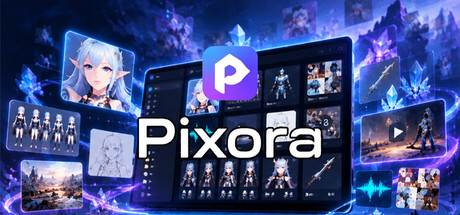
Pixora was developed with AI-assisted tools, which were used to support certain aspects of coding and the creation of promotional materials for the store page. All AI-generated content used in the project is permitted for commercial use under the applicable licenses.
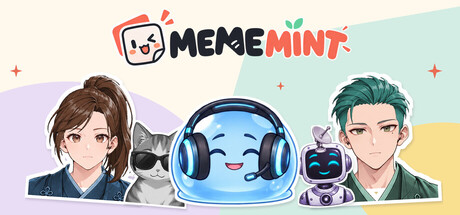
Some included character, animal, creature and sample images were created with generative AI and then edited and prepared for the product. Generative AI also assisted with localization. MEMEMINT does not generate new images or text with generative AI during use and does not connect to a third-party generative AI service. Its local background-removal feature uses a non-generative segmentation model.
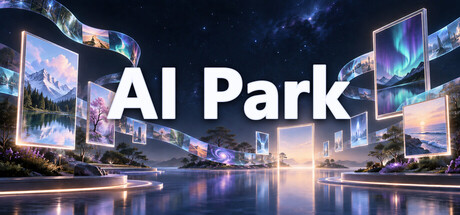
AI Park includes optional local AI workflows that can generate images and short videos on the user's own computer using separately installed compatible AI runtimes and models. Generation model weights are not included with the base application, and AI Park does not provide a bundled cloud AI generation service. AI generation is user initiated. AI Park does not support generating sexually explicit content: prompts are checked before generation, and generated media must pass local safety checks before it can be displayed, kept, or published. AI features are optional; browsing, viewing, importing, and organizing existing media do not require an AI model.
The app itself is coded with AI tools and harnesses (primarily gpt-codex models and the OpenCode desktop application).
The marketing visuals and trailer were all created with varying other models, the trailer was made with Opus 5.5.
NONE of the wallpapers are AI generated. They are all creative commons images available free to anyone online, I simply took the time to collect and bundle them into the app for local use.
Everything is done under complete human-in-the-loop from start to finish.
Generative AI was used during development to create some store page artwork and in-game icons. All generated content was reviewed before being included in the final product.
Some source code used in Game Goose was created with the assistance of generative AI tools during development. All AI-assisted code was reviewed, modified, and tested by the developer. Game Goose itself does not provide generative AI features to users and does not generate AI content at runtime.
AI tools were used during development to assist with code, artwork, music, and other production tasks. All creative direction, design decisions, implementation, integration, testing, and final selection of content were handled by the developer.
This software incorporates a local AI model, which is used solely to provide an "intelligent semantic search" service. When you enter a text description, the AI analyzes the semantics in real time and searches your local image library to display the most relevant image results. All search results are sourced from your local image library; the AI does not generate or create any new image or video content. Users can choose whether to enable this feature.
The application icon and the promotional artwork on this store page were created with the assistance of generative AI tools, then selected and reviewed by a human. The application itself does not generate any content during use: it bundles open-source, pre-trained AI models (Qwen3-VL-Embedding-2B and Qwen3-VL-Reranker-2B, Apache-2.0) that run entirely locally and offline on your PC. These models are used solely to analyze your own photos and videos — converting them into numeric feature vectors — to enable private, offline semantic search. No images, text, audio or other content is generated, and no data ever leaves your device.
During the development of the application, artificial intelligence was utilized to generate supporting utility code and translate user interface localization options into different languages.
Epoch Studio is a private writing and worldbuilding studio. When you ask it to, it can generate text suggestions and illustrations to help you develop your own manuscript. All generation runs locally on your own machine using bundled, permissively-licensed AI models — or optional cloud providers you connect with your own API key. Nothing is generated on its own: every suggestion is a deliberate action you take, and you review, edit, and decide what becomes part of your book. Your writing never leaves your device and is never used to train any AI model.
The optional cursor-buddy 3D character included in this application was pre-generated with Meshy AI under a paid commercial license. No other shipped content is AI-generated, and this application does not generate AI content during use. Built-in tools such as automatic subtitles run local machine-learning models on this device to process the user's own media only.
This software does not include any AI features or AI integration services. AI was used to create the promotional posters for the store, as the software interface alone was not suitable for poster design.
AI used to assist in creating some pre-generated promotional artwork and visual assets used in snapWR and its store presentation. snapWR does not use generative AI to generate content during use.
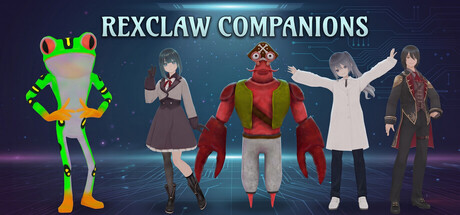
Rexclaw's companions are powered by generative AI, conversations (text and voice), along with files you create together are generated on demand by third party AI models. Some promotional artwork, including store banners, was created with AI assistance.
A2GD does NOT use AI to convert images whatsoever. It is purely algorithmic software.
AI was used for the user interface designs—I wish I could have done it myself, but I have very little experience with web design.
AI tool assisted in translating the store page into 15 different languages.
We do NOT use AI-generated art, and we never intentionally include AI assets in our game. We sometimes buy assets and use stock photos. We do our best to verify them, but nowadays, distinguishing AI from human-made art can be hard.
That said, if there is any specific artwork that you believe looks like AI or raises concerns, we would appreciate it if you could point it out on our Discord server. We will investigate and replace anything that might have slipped through.
AI-generated art is NOT something we want to include in our game.
This software does NOT use Generative AI to generate images, artwork, audio, or text. All visual elements, templates, and store assets are 100% original, hand-crafted art and photography created directly by the developer.
Machine Learning and AI technologies are strictly limited to technical functionality and development:
- Background Removal Tool: A local, non-generative Machine Learning feature accessed by users to instantly remove image backgrounds and create striking visual compositions.
- Software Development: AI-assisted coding tools (vibe-coding / LLM assistance) were used during the programming process.
No AI-generated content is included in the software or produced during runtime.
Art assets (pre-generated): In-game scene backgrounds, UI icons, and store page promotional images are generated using Doubao as initial drafts. After manual screening, modification, and style unification, they are packaged into the game. All AI-generated art assets have been reviewed manually one by one, confirming that they do not contain any violations such as violence or pornography, and no copyrighted third-party assets have been used as input for generation. The AI tools used all have commercial use licenses.
Code (pre-generated): Some game logic code is generated with AI assistance during the development stage. After manual review, testing, and modification, it is compiled and packaged. The game does not call AI to generate code in real-time during runtime.
During the game's runtime, there is no AI-generated content in real-time. All AI-generated content visible to players are pre-generated static resources.
LumaEdge does NOT contain generative AI.
LumaEdge was born in an RV going down the oregon coast (legit, lol), and its real-world test setup is not quite Steam-capsule material.
Generative AI was used to help create and composite some multi-monitor environments shown in LumaEdge's trailers and the Steam store artwork (capsules, etc). All reactive gradients displayed within those environments were captured using LumaEdge itself and composited into those images. No LumaEdge gradient, on any image, was generated by AI.
LumaEdge contains no generative AI features. No generative AI content is delivered with, or created by LumaEdge at any time.
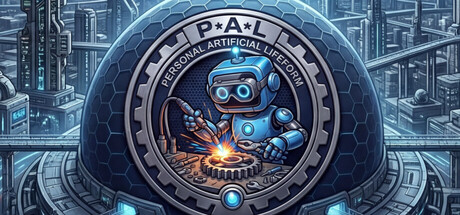
P·A·L - Personal Artificial Lifeform is a generative AI software suite. P·A·L generates written word, spoken word, voice to text, generative images, generative music and sound, game code, and is capable of learning through user choices.
Always use AI responsibly.
PyxelAid includes optional AI-assisted image processing filters that users can apply to their own imported images. These filters may enhance, clean, upscale, simplify, recolor, or restore pixel-art images based on the user's input. The app does not generate text, code, dialogue, or autonomous content during use. Users control the input images and decide whether to save or share the resulting outputs.
Bot or Brush uses generative artificial intelligence as a core part of the game. Players guess whether drawings were created by AI or by a human. In-game content includes AI-generated sketches, pre-drawn AI images, and similar visual assets, as well as human-created drawings.
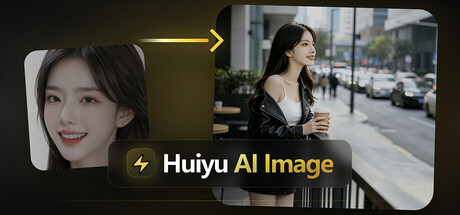
Huiyu AI Image is a creative image editor and generator powered by local AI models running on the user's own hardware. All content — including edited images and AI-generated images — is produced by diffusion-based models executed locally on the user's GPU. No content is uploaded to external servers, and all generation remains private to the user's device.
Elftia is an AI agent platform. Through an included service, it connects to leading third-party AI models - large language models and image, video, music and speech generators - to power its agents. Elftia does not bundle, train or fine-tune any model of its own; all content is generated in real time by those models in response to the user's input. New users receive free starter credits, and additional usage can be purchased through Steam. Conversations and generated content are saved to the user's local library on their device.
Manga Archive Translator can use local AI translation models to translate text from manga archive files provided by the user. It does not generate original artwork, audio, characters, story content, or executable code.
Hagicode is a software tool for code development that interfaces with third-party CLI tools. Accordingly, it invokes third-party CLI tools for content generation. These CLI tools, including Claude Code, Codex, Gemini CLI and others, are installed and used by users on their own computers independently.
Users utilizing these CLI tools are generally professional developers. Hagicode does not invoke any third-party AI generation services other than the aforementioned CLI tools. It merely acts as a caller to coordinate and display outputs returned by the CLI tools.
Therefore, Hagicode shall not be liable for the generated results and content. Hagicode is not the actual generator and implementer, but only a caller.
Game development was accelerated through use of AI code assistants to help create and test the software code.
Language translations were provided by AI.
Some store trailer audio, including voice and music, was generated or assisted by generative AI. The application itself does not include AI-generated assets and does not generate AI content during use.
Wallpaper Animator uses generative AI. Your prompt creates a still image, which you can then animate into a looping video. Both run on third-party AI services.
Divookoa is primarily handcrafted, next-generation software and does not rely on AI-generated content as part of the player-facing experience.
Generative AI is used selectively within the development process in the following areas:
- Refinement of marketing materials (written content, visual compositions)
- Research and prototyping during R&D phases
- Limited graphical asset generation (e.g., icons, non-core UI elements)
- Localization support (translation and adaptation of text)
No AI-generated content is directly shipped as part of the core gameplay experience.
This app uses live generative AI to create dynamic in-game content such as dialogue and voice output. AI features are processed through developer-managed servers. Players are not required to provide API keys or maintain third-party accounts.
This AI code helper uses generative AI technology to assist developers in code generation, editing, and debugging. All generated content is for reference only, and users are responsible for compliance with relevant licenses and laws.
This software employs several speech synthesis models trained on open-source large-scale models, whose training datasets are curated to intentionally exclude extreme or inappropriate content. We have built a generative synthesis system based on these models; however, all generated speech content is entirely determined by the user. Therefore, our terms of use explicitly stipulate that this software must be used in a lawful and ethical manner.
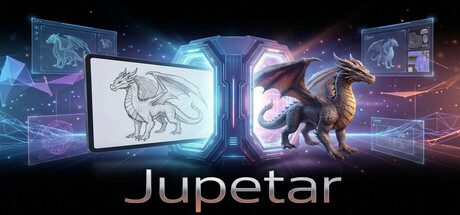
Jupetar is a dedicated 2D-to-3D asset generation engine powered entirely by generative artificial intelligence. The software utilizes localized, open-weights AI networks (including diffusion and 3D generation models) running directly on the user's hardware to convert user-provided 2D concept art and images into 3D meshes and textures. All AI processing is performed offline on your local GPU. Jupetar does not connect to external cloud generation services, and your personal assets, images, and prompts are never uploaded, collected, or used to train external AI models.
Some reference images were originally AI-generated.
The final pixel art was manually created, edited, and upscaled using Ref2Pixel.
No AI-generated assets are directly included in the product.
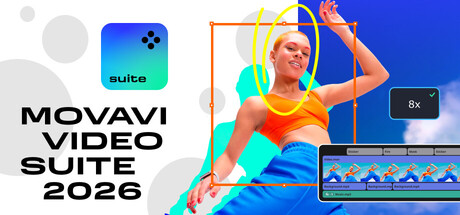
Movavi Video Suite comes packed with smart AI tools that make video editing even easier:
-Automatic subtitle creation saves loads of time by generating captions for you in almost any language.
-The AI denoiser automatically cleans up background noise in your audio, so you get clear sound without any hassle.
-If you need to remove background, AI does it in just a few clicks – no green screen required!
-With motion tracking, you can easily follow objects or people through your footage, making it a breeze to add text, effects, or animations that stay locked onto your moving subject.
-AI Upscaling. Use the program’s AI to up the resolution of grainy shots by 4 or even 8 times. Make every detail count!
Pixora was developed with AI-assisted tools, which were used to support certain aspects of coding and the creation of promotional materials for the store page. All AI-generated content used in the project is permitted for commercial use under the applicable licenses.
Some included character, animal, creature and sample images were created with generative AI and then edited and prepared for the product. Generative AI also assisted with localization. MEMEMINT does not generate new images or text with generative AI during use and does not connect to a third-party generative AI service. Its local background-removal feature uses a non-generative segmentation model.
AI Park includes optional local AI workflows that can generate images and short videos on the user's own computer using separately installed compatible AI runtimes and models. Generation model weights are not included with the base application, and AI Park does not provide a bundled cloud AI generation service. AI generation is user initiated. AI Park does not support generating sexually explicit content: prompts are checked before generation, and generated media must pass local safety checks before it can be displayed, kept, or published. AI features are optional; browsing, viewing, importing, and organizing existing media do not require an AI model.
The app itself is coded with AI tools and harnesses (primarily gpt-codex models and the OpenCode desktop application).
The marketing visuals and trailer were all created with varying other models, the trailer was made with Opus 5.5.
NONE of the wallpapers are AI generated. They are all creative commons images available free to anyone online, I simply took the time to collect and bundle them into the app for local use.
Everything is done under complete human-in-the-loop from start to finish.
Generative AI was used during development to create some store page artwork and in-game icons. All generated content was reviewed before being included in the final product.
Some source code used in Game Goose was created with the assistance of generative AI tools during development. All AI-assisted code was reviewed, modified, and tested by the developer. Game Goose itself does not provide generative AI features to users and does not generate AI content at runtime.
AI tools were used during development to assist with code, artwork, music, and other production tasks. All creative direction, design decisions, implementation, integration, testing, and final selection of content were handled by the developer.
This software incorporates a local AI model, which is used solely to provide an "intelligent semantic search" service. When you enter a text description, the AI analyzes the semantics in real time and searches your local image library to display the most relevant image results. All search results are sourced from your local image library; the AI does not generate or create any new image or video content. Users can choose whether to enable this feature.
The application icon and the promotional artwork on this store page were created with the assistance of generative AI tools, then selected and reviewed by a human. The application itself does not generate any content during use: it bundles open-source, pre-trained AI models (Qwen3-VL-Embedding-2B and Qwen3-VL-Reranker-2B, Apache-2.0) that run entirely locally and offline on your PC. These models are used solely to analyze your own photos and videos — converting them into numeric feature vectors — to enable private, offline semantic search. No images, text, audio or other content is generated, and no data ever leaves your device.
During the development of the application, artificial intelligence was utilized to generate supporting utility code and translate user interface localization options into different languages.
Epoch Studio is a private writing and worldbuilding studio. When you ask it to, it can generate text suggestions and illustrations to help you develop your own manuscript. All generation runs locally on your own machine using bundled, permissively-licensed AI models — or optional cloud providers you connect with your own API key. Nothing is generated on its own: every suggestion is a deliberate action you take, and you review, edit, and decide what becomes part of your book. Your writing never leaves your device and is never used to train any AI model.
The optional cursor-buddy 3D character included in this application was pre-generated with Meshy AI under a paid commercial license. No other shipped content is AI-generated, and this application does not generate AI content during use. Built-in tools such as automatic subtitles run local machine-learning models on this device to process the user's own media only.
This software does not include any AI features or AI integration services. AI was used to create the promotional posters for the store, as the software interface alone was not suitable for poster design.
AI used to assist in creating some pre-generated promotional artwork and visual assets used in snapWR and its store presentation. snapWR does not use generative AI to generate content during use.
Rexclaw's companions are powered by generative AI, conversations (text and voice), along with files you create together are generated on demand by third party AI models. Some promotional artwork, including store banners, was created with AI assistance.
A2GD does NOT use AI to convert images whatsoever. It is purely algorithmic software.
AI was used for the user interface designs—I wish I could have done it myself, but I have very little experience with web design.
AI tool assisted in translating the store page into 15 different languages.
We do NOT use AI-generated art, and we never intentionally include AI assets in our game. We sometimes buy assets and use stock photos. We do our best to verify them, but nowadays, distinguishing AI from human-made art can be hard.
That said, if there is any specific artwork that you believe looks like AI or raises concerns, we would appreciate it if you could point it out on our Discord server. We will investigate and replace anything that might have slipped through.
AI-generated art is NOT something we want to include in our game.
This software does NOT use Generative AI to generate images, artwork, audio, or text. All visual elements, templates, and store assets are 100% original, hand-crafted art and photography created directly by the developer.
Machine Learning and AI technologies are strictly limited to technical functionality and development:
- Background Removal Tool: A local, non-generative Machine Learning feature accessed by users to instantly remove image backgrounds and create striking visual compositions.
- Software Development: AI-assisted coding tools (vibe-coding / LLM assistance) were used during the programming process.
No AI-generated content is included in the software or produced during runtime.
Art assets (pre-generated): In-game scene backgrounds, UI icons, and store page promotional images are generated using Doubao as initial drafts. After manual screening, modification, and style unification, they are packaged into the game. All AI-generated art assets have been reviewed manually one by one, confirming that they do not contain any violations such as violence or pornography, and no copyrighted third-party assets have been used as input for generation. The AI tools used all have commercial use licenses.
Code (pre-generated): Some game logic code is generated with AI assistance during the development stage. After manual review, testing, and modification, it is compiled and packaged. The game does not call AI to generate code in real-time during runtime.
During the game's runtime, there is no AI-generated content in real-time. All AI-generated content visible to players are pre-generated static resources.
LumaEdge does NOT contain generative AI.
LumaEdge was born in an RV going down the oregon coast (legit, lol), and its real-world test setup is not quite Steam-capsule material.
Generative AI was used to help create and composite some multi-monitor environments shown in LumaEdge's trailers and the Steam store artwork (capsules, etc). All reactive gradients displayed within those environments were captured using LumaEdge itself and composited into those images. No LumaEdge gradient, on any image, was generated by AI.
LumaEdge contains no generative AI features. No generative AI content is delivered with, or created by LumaEdge at any time.
P·A·L - Personal Artificial Lifeform is a generative AI software suite. P·A·L generates written word, spoken word, voice to text, generative images, generative music and sound, game code, and is capable of learning through user choices.
Always use AI responsibly.
PyxelAid includes optional AI-assisted image processing filters that users can apply to their own imported images. These filters may enhance, clean, upscale, simplify, recolor, or restore pixel-art images based on the user's input. The app does not generate text, code, dialogue, or autonomous content during use. Users control the input images and decide whether to save or share the resulting outputs.
Bot or Brush uses generative artificial intelligence as a core part of the game. Players guess whether drawings were created by AI or by a human. In-game content includes AI-generated sketches, pre-drawn AI images, and similar visual assets, as well as human-created drawings.
Huiyu AI Image is a creative image editor and generator powered by local AI models running on the user's own hardware. All content — including edited images and AI-generated images — is produced by diffusion-based models executed locally on the user's GPU. No content is uploaded to external servers, and all generation remains private to the user's device.
Elftia is an AI agent platform. Through an included service, it connects to leading third-party AI models - large language models and image, video, music and speech generators - to power its agents. Elftia does not bundle, train or fine-tune any model of its own; all content is generated in real time by those models in response to the user's input. New users receive free starter credits, and additional usage can be purchased through Steam. Conversations and generated content are saved to the user's local library on their device.
Manga Archive Translator can use local AI translation models to translate text from manga archive files provided by the user. It does not generate original artwork, audio, characters, story content, or executable code.
Hagicode is a software tool for code development that interfaces with third-party CLI tools. Accordingly, it invokes third-party CLI tools for content generation. These CLI tools, including Claude Code, Codex, Gemini CLI and others, are installed and used by users on their own computers independently.
Users utilizing these CLI tools are generally professional developers. Hagicode does not invoke any third-party AI generation services other than the aforementioned CLI tools. It merely acts as a caller to coordinate and display outputs returned by the CLI tools.
Therefore, Hagicode shall not be liable for the generated results and content. Hagicode is not the actual generator and implementer, but only a caller.
Game development was accelerated through use of AI code assistants to help create and test the software code.
Language translations were provided by AI.
Some store trailer audio, including voice and music, was generated or assisted by generative AI. The application itself does not include AI-generated assets and does not generate AI content during use.
Wallpaper Animator uses generative AI. Your prompt creates a still image, which you can then animate into a looping video. Both run on third-party AI services.
Divookoa is primarily handcrafted, next-generation software and does not rely on AI-generated content as part of the player-facing experience.
Generative AI is used selectively within the development process in the following areas:
- Refinement of marketing materials (written content, visual compositions)
- Research and prototyping during R&D phases
- Limited graphical asset generation (e.g., icons, non-core UI elements)
- Localization support (translation and adaptation of text)
No AI-generated content is directly shipped as part of the core gameplay experience.
This app uses live generative AI to create dynamic in-game content such as dialogue and voice output. AI features are processed through developer-managed servers. Players are not required to provide API keys or maintain third-party accounts.
This AI code helper uses generative AI technology to assist developers in code generation, editing, and debugging. All generated content is for reference only, and users are responsible for compliance with relevant licenses and laws.
This software employs several speech synthesis models trained on open-source large-scale models, whose training datasets are curated to intentionally exclude extreme or inappropriate content. We have built a generative synthesis system based on these models; however, all generated speech content is entirely determined by the user. Therefore, our terms of use explicitly stipulate that this software must be used in a lawful and ethical manner.
Jupetar is a dedicated 2D-to-3D asset generation engine powered entirely by generative artificial intelligence. The software utilizes localized, open-weights AI networks (including diffusion and 3D generation models) running directly on the user's hardware to convert user-provided 2D concept art and images into 3D meshes and textures. All AI processing is performed offline on your local GPU. Jupetar does not connect to external cloud generation services, and your personal assets, images, and prompts are never uploaded, collected, or used to train external AI models.
Some reference images were originally AI-generated.
The final pixel art was manually created, edited, and upscaled using Ref2Pixel.
No AI-generated assets are directly included in the product.
Movavi Video Suite comes packed with smart AI tools that make video editing even easier:
-Automatic subtitle creation saves loads of time by generating captions for you in almost any language.
-The AI denoiser automatically cleans up background noise in your audio, so you get clear sound without any hassle.
-If you need to remove background, AI does it in just a few clicks – no green screen required!
-With motion tracking, you can easily follow objects or people through your footage, making it a breeze to add text, effects, or animations that stay locked onto your moving subject.
-AI Upscaling. Use the program’s AI to up the resolution of grainy shots by 4 or even 8 times. Make every detail count!