Public Steam disclosure research25,376 disclosures tracked
Where do games disclose AI use?
Search developers’ Steam disclosures, compare classified AI use across
games, and follow recorded changes.
This index adds cross-game classifications and statistics to
statements published on individual store pages.
Groups reflect automatic analysis of public disclosures; mature records are excluded. These counts do not measure AI use across all of Steam.
Missing or unclear statements cannot establish whether a game uses AI.
Artwork: cards, lobby illustrations and achievement icons were pregenerated with AI image tools and rewritten by hand. The visual style was reviewed and rewritten artist.
Text: The German and Italian localizations were made with AI translation.
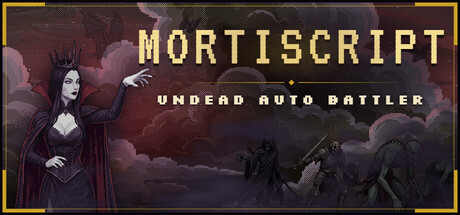
Art and sound within the game and trailer were created with the help of AI tools. In-game text was edited with AI assistance. All puzzles were hand-designed by the developer.
The images in this game (in-game assets and store artwork) were created with image-generation AI, then selected and edited by a human. The original draft of the scenario and dialogue was written with Google Gemini, and the implementation and dialogue revisions were done with Claude Code (Anthropic). All of it was supervised and tested by a human. No content is generated by AI while the game is running.
AI-generated artwork includes the MMA menu image, Steam capsules, library art and store background. No live AI generation or external AI service is used during gameplay.
Generative AI tools were used during development to create pre-generated character voices, music, and store artwork, and to assist with writing. These assets are prepared in advance. The game does not generate AI content or connect to third-party AI services during gameplay.
Artificial intelligence was used to assist in development, primarily for the front end, and AI generated content is used in game for text and voices via local models ran on the player's system or external models provided by the player.
Generative AI was used to create some of the visual artwork used in the application and on the Steam Store page. AI-assisted tools were also used during development to help generate and refine portions of the application's code. No generative AI is used during runtime, and all AI-assisted content was reviewed and integrated as part of the development process.
Selected visual and audio assets were created with generative AI tools. AI was also used to assist with English and Italian localization, with all localized text reviewed and edited by the developer. No generative AI is used during gameplay.
AI models have been used to validate, optimize, rank and test the puzzles and the simulation engine. Soundtrack is procedurally generated music using the same engine that simulates the electronics, powered by the C~ language.
Generative AI tools were used for selected visual assets, promotional artwork, trailer voices, and text/localization drafts. This content is pre-generated and reviewed during development. The game does not generate AI content during play or connect to an external AI service.
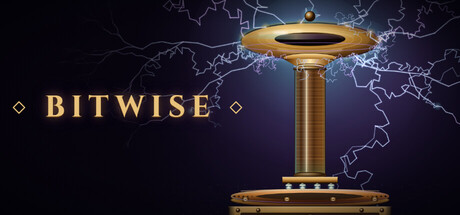
BitWise was made by a single developer with AI assistance, under the developer's direction and review. It contains no AI-generated images or voices: the game draws all of its art and synthesizes all of its sound with its own code. Nothing is generated by AI while you play.
AI tools were used during development to help translate the user interface into its 14 languages and to produce the voice-over in the store trailer. All translations and marketing materials were reviewed by the developer. MacroPilot itself does not generate content with AI; users can optionally connect their own third-party AI assistant through the built-in MCP connection.
AI was used only for localization and for generating some assets outside the game. The game itself does not use or integrate AI. Any AI use described in the game refers to players using their own external tools.
AI tools assist with programming, translation, and creating selected visual assets and marketing materials. All AI-assisted content is reviewed and edited by the developer before inclusion.
AI-based coding assistants were used to help write this game's source code during development. The game contains no generative AI at runtime: the entire simulated world is created by deterministic, hand-authored procedural generation from a seed, not by AI.
Some visual assets and all story voice-over audio in this game were generated using AI tools, then curated and edited by the developer. Some store page and marketing assets were also AI-assisted.
Generative AI was used to assist in the creation of character illustrations and some in-game text. All AI-assisted content was reviewed, edited, and integrated by the developer. No generative AI is used during gameplay or at runtime.
This app includes an optional AI assistant that helps interpret game server console output and error logs. When you send it a log fragment or a question, the text goes to our backend, which forwards it to Anthropic's Claude API and returns a generated explanation with suggested fixes.
The assistant runs only when you invoke it — nothing is sent automatically, and the feature is off by default. Responses are generated by a language model and may be inaccurate, so verify any suggestion before applying it to a live server. No other content in this app is AI-generated.
Parts of this product were produced with the help of generative AI. The HTML, CSS, JavaScript and shader code of the bundled wallpapers, the store page text and its translations were drafted with AI assistance and reviewed by a person before release.
The application itself does not use generative AI at runtime. It generates no content while you use it, and nothing you do in Wallpaper — hardware readings, settings, your own photos and videos — is sent to any AI model or to any server. Everything stays on your PC.
Generative AI tools were used during development to assist with brainstorming and editing some mission and other written content. All generated suggestions were reviewed and edited by me before inclusion in the game.
AI was used on this game: to assist with the programming, and to produce the translations. If a line reads wrong in your language, report it on the Steam community hub.
The game uses static images and UI elements (including a cryptocurrency exchange chart) generated with AI tools. These assets were manually post-processed and integrated into the game. All game code, mechanics, audio, and original level design were created by the studio without AI generation.
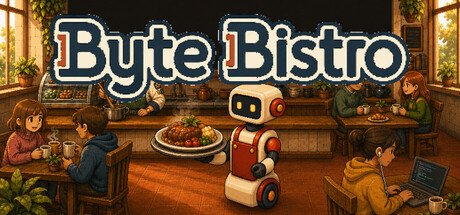
Byte Bistro was developed with assistance from generative AI tools (such as Large Language Models) to help write and structure the source code and draft store descriptions. All AI-generated content was reviewed, edited, and integrated manually. The game does not feature live, runtime generative AI or external API connections during gameplay.
Parts of Fluxgates were built with AI assistance, and all of it is fixed content baked into the build - nothing is generated while you play.
Code: Some of the game's source was written with an AI coding assistant, reviewed, edited and tested by the developer before shipping.
Text: English and French interface strings and node descriptions were drafted with AI help and edited by hand.
No AI generated art or audio. Every visual is drawn by the interface itself, and every sound and music track is synthesised procedurally by a script in the project.
The game runs fully offline. No AI model runs at runtime, and no data leaves your machine.
AI is used as a translation aid for localizing in-game text and Steam store page text into the supported languages. All original Japanese text is written by the developer.
Generative AI was used as a development tool for this game. An AI assistant helped with programming, game design iteration, and text translation, always under the developer's direction and review. Some 3D models, such as mech parts, are based on assets created with generative AI tools and then adjusted and integrated by the developer. No content is generated by AI during gameplay: enemy behavior is not generative AI, but the same deterministic node-based algorithms that players build themselves.
The game was developed with the help of AI. The background music soundtrack is AI-generated: the pieces were created with a locally run music model, then curated and edited by hand. Puzzles, game design and gameplay are human-made.
Despite game is simulating the AI, all conversations are hard coded and written by person.
AI was used to generate the names and descriptions for some items, but it was manually reviewed by developer.
Pre-rendered Content:
Generative AI tools and agentic AI development workflows were utilized during the creation of this game to assist in:
- Code & Systems: Writing and optimizing core gameplay logic, typescript structures, and simulation algorithms.
- Visual Assets: Creating and pre-rendering all visual assets used in-game, including boot screen artworks, drive interfaces, and graphical components.
- Localization: Translating and reviewing in-game text and UI labels.
Please note that all AI-assisted assets and code were pre-rendered and compiled during the development phase. The game runs entirely locally and does not perform any real-time (live) AI generation, nor does it connect to any external AI APIs or services during gameplay.
The AI coworkers in this game are voiced by a machine (TTS), and their dialogue was really written by AI together with self portraits, on purpose and under human review. The slop is diegetic. The code was written with AI agents and reviewed by the last human in that loop, the developer. That is also the plot. No AI runs at runtime. Everything was baked and reviewed before shipping.
Generative AI tools were used during development to assist with programming and to create some pre-generated 2D visual assets, including icons and promotional artwork. All AI-assisted code and generated assets were reviewed, tested, edited, and integrated by the developer. No generative AI is used while the game is running, and no content is generated live.
AI-assisted tools were used during the development of this game to help with portions of the programming process, the creation of some visual assets, and certain audio assets. All AI-assisted content was reviewed, refined, and integrated by the development team before release. The game does not use generative AI to create content during gameplay and does not rely on external AI services while running.
Artwork: cards, lobby illustrations and achievement icons were pregenerated with AI image tools and rewritten by hand. The visual style was reviewed and rewritten artist.
Text: The German and Italian localizations were made with AI translation.
Art and sound within the game and trailer were created with the help of AI tools. In-game text was edited with AI assistance. All puzzles were hand-designed by the developer.
The images in this game (in-game assets and store artwork) were created with image-generation AI, then selected and edited by a human. The original draft of the scenario and dialogue was written with Google Gemini, and the implementation and dialogue revisions were done with Claude Code (Anthropic). All of it was supervised and tested by a human. No content is generated by AI while the game is running.
AI-generated artwork includes the MMA menu image, Steam capsules, library art and store background. No live AI generation or external AI service is used during gameplay.
Generative AI tools were used during development to create pre-generated character voices, music, and store artwork, and to assist with writing. These assets are prepared in advance. The game does not generate AI content or connect to third-party AI services during gameplay.
Artificial intelligence was used to assist in development, primarily for the front end, and AI generated content is used in game for text and voices via local models ran on the player's system or external models provided by the player.
Generative AI was used to create some of the visual artwork used in the application and on the Steam Store page. AI-assisted tools were also used during development to help generate and refine portions of the application's code. No generative AI is used during runtime, and all AI-assisted content was reviewed and integrated as part of the development process.
Selected visual and audio assets were created with generative AI tools. AI was also used to assist with English and Italian localization, with all localized text reviewed and edited by the developer. No generative AI is used during gameplay.
AI models have been used to validate, optimize, rank and test the puzzles and the simulation engine. Soundtrack is procedurally generated music using the same engine that simulates the electronics, powered by the C~ language.
Generative AI tools were used for selected visual assets, promotional artwork, trailer voices, and text/localization drafts. This content is pre-generated and reviewed during development. The game does not generate AI content during play or connect to an external AI service.
BitWise was made by a single developer with AI assistance, under the developer's direction and review. It contains no AI-generated images or voices: the game draws all of its art and synthesizes all of its sound with its own code. Nothing is generated by AI while you play.
AI tools were used during development to help translate the user interface into its 14 languages and to produce the voice-over in the store trailer. All translations and marketing materials were reviewed by the developer. MacroPilot itself does not generate content with AI; users can optionally connect their own third-party AI assistant through the built-in MCP connection.
AI was used only for localization and for generating some assets outside the game. The game itself does not use or integrate AI. Any AI use described in the game refers to players using their own external tools.
AI tools assist with programming, translation, and creating selected visual assets and marketing materials. All AI-assisted content is reviewed and edited by the developer before inclusion.
AI-based coding assistants were used to help write this game's source code during development. The game contains no generative AI at runtime: the entire simulated world is created by deterministic, hand-authored procedural generation from a seed, not by AI.
Some visual assets and all story voice-over audio in this game were generated using AI tools, then curated and edited by the developer. Some store page and marketing assets were also AI-assisted.
Generative AI was used to assist in the creation of character illustrations and some in-game text. All AI-assisted content was reviewed, edited, and integrated by the developer. No generative AI is used during gameplay or at runtime.
This app includes an optional AI assistant that helps interpret game server console output and error logs. When you send it a log fragment or a question, the text goes to our backend, which forwards it to Anthropic's Claude API and returns a generated explanation with suggested fixes.
The assistant runs only when you invoke it — nothing is sent automatically, and the feature is off by default. Responses are generated by a language model and may be inaccurate, so verify any suggestion before applying it to a live server. No other content in this app is AI-generated.
Parts of this product were produced with the help of generative AI. The HTML, CSS, JavaScript and shader code of the bundled wallpapers, the store page text and its translations were drafted with AI assistance and reviewed by a person before release.
The application itself does not use generative AI at runtime. It generates no content while you use it, and nothing you do in Wallpaper — hardware readings, settings, your own photos and videos — is sent to any AI model or to any server. Everything stays on your PC.
Generative AI tools were used during development to assist with brainstorming and editing some mission and other written content. All generated suggestions were reviewed and edited by me before inclusion in the game.
AI was used on this game: to assist with the programming, and to produce the translations. If a line reads wrong in your language, report it on the Steam community hub.
The game uses static images and UI elements (including a cryptocurrency exchange chart) generated with AI tools. These assets were manually post-processed and integrated into the game. All game code, mechanics, audio, and original level design were created by the studio without AI generation.
Byte Bistro was developed with assistance from generative AI tools (such as Large Language Models) to help write and structure the source code and draft store descriptions. All AI-generated content was reviewed, edited, and integrated manually. The game does not feature live, runtime generative AI or external API connections during gameplay.
Parts of Fluxgates were built with AI assistance, and all of it is fixed content baked into the build - nothing is generated while you play.
Code: Some of the game's source was written with an AI coding assistant, reviewed, edited and tested by the developer before shipping.
Text: English and French interface strings and node descriptions were drafted with AI help and edited by hand.
No AI generated art or audio. Every visual is drawn by the interface itself, and every sound and music track is synthesised procedurally by a script in the project.
The game runs fully offline. No AI model runs at runtime, and no data leaves your machine.
AI is used as a translation aid for localizing in-game text and Steam store page text into the supported languages. All original Japanese text is written by the developer.
Generative AI was used as a development tool for this game. An AI assistant helped with programming, game design iteration, and text translation, always under the developer's direction and review. Some 3D models, such as mech parts, are based on assets created with generative AI tools and then adjusted and integrated by the developer. No content is generated by AI during gameplay: enemy behavior is not generative AI, but the same deterministic node-based algorithms that players build themselves.
The game was developed with the help of AI. The background music soundtrack is AI-generated: the pieces were created with a locally run music model, then curated and edited by hand. Puzzles, game design and gameplay are human-made.
Despite game is simulating the AI, all conversations are hard coded and written by person.
AI was used to generate the names and descriptions for some items, but it was manually reviewed by developer.
Pre-rendered Content:
Generative AI tools and agentic AI development workflows were utilized during the creation of this game to assist in:
- Code & Systems: Writing and optimizing core gameplay logic, typescript structures, and simulation algorithms.
- Visual Assets: Creating and pre-rendering all visual assets used in-game, including boot screen artworks, drive interfaces, and graphical components.
- Localization: Translating and reviewing in-game text and UI labels.
Please note that all AI-assisted assets and code were pre-rendered and compiled during the development phase. The game runs entirely locally and does not perform any real-time (live) AI generation, nor does it connect to any external AI APIs or services during gameplay.
The AI coworkers in this game are voiced by a machine (TTS), and their dialogue was really written by AI together with self portraits, on purpose and under human review. The slop is diegetic. The code was written with AI agents and reviewed by the last human in that loop, the developer. That is also the plot. No AI runs at runtime. Everything was baked and reviewed before shipping.
Generative AI tools were used during development to assist with programming and to create some pre-generated 2D visual assets, including icons and promotional artwork. All AI-assisted code and generated assets were reviewed, tested, edited, and integrated by the developer. No generative AI is used while the game is running, and no content is generated live.
AI-assisted tools were used during the development of this game to help with portions of the programming process, the creation of some visual assets, and certain audio assets. All AI-assisted content was reviewed, refined, and integrated by the development team before release. The game does not use generative AI to create content during gameplay and does not rely on external AI services while running.