Public Steam disclosure research25,376 disclosures tracked
Where do games disclose AI use?
Search developers’ Steam disclosures, compare classified AI use across
games, and follow recorded changes.
This index adds cross-game classifications and statistics to
statements published on individual store pages.
Groups reflect automatic analysis of public disclosures; mature records are excluded. These counts do not measure AI use across all of Steam.
Missing or unclear statements cannot establish whether a game uses AI.
The game's code, some in-game text (English/Turkish dialogue and UI) and some poster artwork were created with the help of generative AI and then reviewed and edited by the developer. The game does not generate any AI content at runtime.
This game uses AI as a writing assistant during development. The story, characters, world, game systems, and overall creative direction are original work by the developer, drawn from personal experience and extensive planning. AI was used to help draft, translate, edit, and refine dialogue based on the developer's outlines, ideas, and direction, with the developer reviewing, revising, and making final creative decisions on all text that appears in the game. AI was not used to generate any art, music, or audio assets.
Generative AI tools were used to assist with the creation of some pre-generated marketing text and promotional content for the game. The game does not use live-generated AI during gameplay.
Some voices, music, sound effects, 3D models, images, text, translations and code were made with AI tools and then edited by the developer. Nothing is generated by AI while you play.
The art, animation, voice acting and music in this game were pre-generated with generative AI tools, then selected, edited and corrected shot by shot by hand. The script, all dialogue and the story structure are human-written. No AI generation happens at runtime.
During early development and for the playable demo, Generative AI tools were used to create base templates and draft assets for certain 3D models, textures, and sound effects. All AI-generated placeholders and base models have been manually re-worked, polished, and edited. As development progresses, these draft assets are being actively replaced with fully custom, handcrafted art and audio.
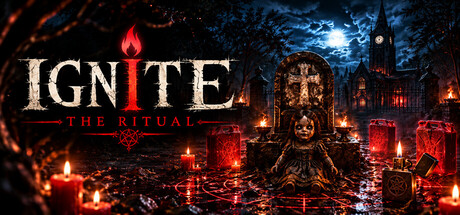
Generative AI tools were used to assist with drafting and refining the Steam store page description for Ignite: The Ritual. No generative AI content is used as an in-game asset or generated during gameplay.
Some source code and internal editor tooling were written with the assistance of AI coding tools during development. All of it was reviewed, edited and tested by the developer. The game's story, dialogue, characters and design are human-written. Visual and audio assets come from licensed asset packs and human-made content. No content is generated by AI while the game is running.
Generative AI was used to assist with creating selected promotional artwork and drafting or editing some written marketing content for the Steam store page. No generative AI is used during gameplay.
Generative AI was used only to assist with localization and translation into English, Simplified Chinese, Traditional Chinese, and Korean. The original story, artwork, audio, and other game assets were not generated using AI. No live-generated AI content is used in the game.
Generative AI tools were used during development to assist with the creation of certain 2D visual assets, animations and sound effects. AI tools were also used as development assistance for programming and implementation. All generated content was reviewed and curated by the developer before inclusion in the final game.
Please note that non-Japanese localization is currently generated by AI. I plan to replace this with professional human localization in the future.
Furthermore, one sound effect was created using AI.
All other elements have been meticulously crafted by myself.
Unwritten uses generative AI as part of its core gameplay. AI systems interpret the player's freely written actions and generate narrative responses within an authored world, story and set of rules. AI inference runs locally on the player's computer.
This game utilizes pre-rendered content assisted by generative AI tools exclusively for a few specific background songs, character voice acting, and minor conceptual art references.
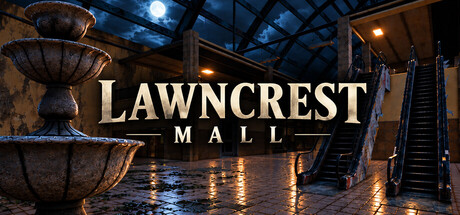
The ambient sound design, audio effects, and liminal soundscapes were crafted by human artists. Certain 3D models and environmental props were acquired under license from creators on the Unreal Engine Marketplace. All narrative writing, game design, level composition, programming, story, and creative direction are original works created and directed entirely by the author.
AI-Generated Content Disclosure – CONJURARIUN
CONJURARIUN uses AI-generated content in certain elements of the game. AI-generated images were used for some visual assets, including artwork featured in the game. Additionally, AI-generated music was used in the main menu.
All AI-generated content was reviewed, selected, and integrated by the development team as part of the game's creative process. The gameplay, programming, mechanics, and overall game development were created and implemented by the developer.
Artificial intelligence was used to generate our Steam achievement icons and some of our localizations.
We're a small independent team of two self-taught developers. If you'd like to help us replace this content on a voluntary basis, please contact us on Discord or email us at contact@milkycocogames.com.
We don’t particularly like using AI.
Unfortunately, we are a small indie studio made of programmers and designers who are currently somewhere between “making a game” and “having existential crises”.
So, for now, we use AI to help us with some parts of our daily work and to bring some of our music, ideas, and inspirations to life.
But don’t worry, we haven’t handed over the steering wheel to the robots just yet.
Our project, its identity, and its originality are still created and directed by us. AI is simply one of the tools helping us survive the development process while our budget is busy pretending it doesn’t exist.
As soon as we have the resources to replace AI with our own human made work, we absolutely intend to do so.
Until then, we’re just a bunch of indie developers trying to make something cool before our refrigerators become purely decorative objects.
Generative AI was used during development to create select environmental artwork, including some fictional posters and signage appearing within the game. These assets were reviewed and curated by the developers before inclusion in the final game.
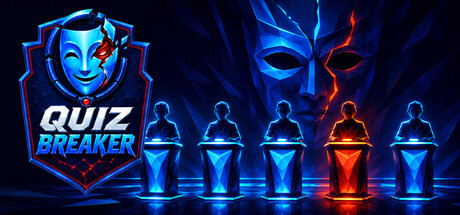
Generative AI was used during development to help create some pre-generated quiz questions and visual artwork used in the game and its promotional materials. These are fixed assets prepared before release. The game does not generate content with AI during gameplay.
The original story was written by a human author. AI was used to write AI speech in the game. It was also used in localization as a supportive tool. We gladly work with the community to bring the game to more languages.
Parts of the store-page text and a few short interface lines were drafted with an AI writing assistant and reviewed and edited by the developer. The game's literary text, English narration, music, sound design and visual design are human-made.
Generative AI tools were used during development to assist in creating pre-generated audio and other selected content. These assets are reviewed and integrated by the developer before being included in the game or its promotional materials. The game does not use real-time generative AI during gameplay.
The altered paintings ("forgeries") were made by editing public-domain museum scans with generative AI image tools. Each one was reviewed by hand, colour-matched to its original scan and, where possible, composited back onto that scan so that only the altered detail differs. Some in-game English text (the questions that appear beside the paintings) and parts of this store description were drafted with an AI writing assistant and edited by the developer. The capsule art and screenshots are frames rendered by the game itself; the capsule art shows one of the AI-edited paintings. Nothing is generated by AI while the game runs.
Generative AI tools were used during development to create some character, environment, and object visuals, 3D assets, and promotional materials. All AI-generated content was created in advance during development. No new content is generated by AI during gameplay, and the game does not connect to any external AI services.
Generative AI tools were used during development to assist in the creation of some visual and 3D assets. All generated content was reviewed, edited, and integrated by the developer.
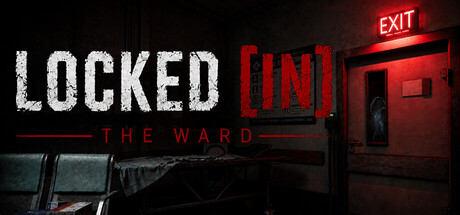
Generative AI was used during development as an assistive tool for code prototyping and localization, and to create some pre-generated visual content, including fictional patient photographs used as environmental and narrative elements in the game. AI-generated concept art is used only as internal visual reference and is not included as game assets.
All AI-generated content included in the game is pre-generated. No generative AI runs during gameplay. Final level design, asset placement, gameplay systems, narrative implementation, and asset integration are created and assembled by the developer.
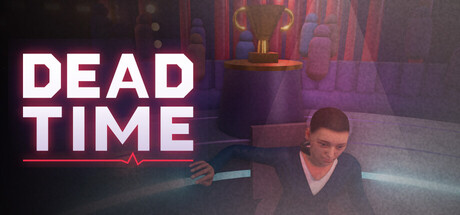
No art or audio in DEAD TIME is AI-generated: the music and sound effects are CC0 files from Freesound and Kenney, the characters and animations come from Adobe Mixamo, and every set, prop and the logo itself are drawn procedurally by the game's own code.
Generative AI was used as a writing assistant for text: the host's lines, the rules manual, the interface strings, their translation into the game's 12 languages, and this store description. Nothing is generated while you play, and the game never connects to an AI service.
The use of AI is limited to select visual assets, which were manually reviewed, repainted, and integrated to fit the art direction. The project features original artwork hand-drawn by my artistic partner alongside an original acoustic piano score, entirely composed and performed by me.
This is an independent, completely free passion project with zero monetization, made out of a genuine love for game development. Thank you for playing.
I am a solo developer with no budget. This game (my first) has been a passion project of about two years. I have developed it in between work and life. During that time, I made the decision to use a text-to-speech program to generate some NPC dialogue. Someday I hope to be working with a budget; but for now, since I don't have one, I believe that my current solution delivers the best experience for the player.
AI tools assisted in developing certain visual and audio elements, design references, and translations. The development team reviewed and finalized all published content.
This game uses generative AI in the creation of some 2D and 3D artwork, images and videos used for visual presentation, as well as assets for the Steam store page and marketing materials. Generative AI-assisted tools were also used for some text creation and localization. All generated content has been reviewed and edited by the developer before use. The game does not use generative AI to generate content in real time during gameplay.
The developer used generative AI tools during the development process to assist in creating pre-generated 2D visual assets (such as backgrounds and promotional art) and to help generate programming code. All AI-generated content was heavily modified, curated, and reviewed by the developer to fit the game's cyberpunk setting. There is no live-generated AI content in this game.
AI tools were used during development, including code assistance and design iteration. All creative direction, game design, and final decisions are the work of the developer. The game contains no live/runtime AI-generated content.
The game's code, some in-game text (English/Turkish dialogue and UI) and some poster artwork were created with the help of generative AI and then reviewed and edited by the developer. The game does not generate any AI content at runtime.
This game uses AI as a writing assistant during development. The story, characters, world, game systems, and overall creative direction are original work by the developer, drawn from personal experience and extensive planning. AI was used to help draft, translate, edit, and refine dialogue based on the developer's outlines, ideas, and direction, with the developer reviewing, revising, and making final creative decisions on all text that appears in the game. AI was not used to generate any art, music, or audio assets.
Generative AI tools were used to assist with the creation of some pre-generated marketing text and promotional content for the game. The game does not use live-generated AI during gameplay.
Some voices, music, sound effects, 3D models, images, text, translations and code were made with AI tools and then edited by the developer. Nothing is generated by AI while you play.
The art, animation, voice acting and music in this game were pre-generated with generative AI tools, then selected, edited and corrected shot by shot by hand. The script, all dialogue and the story structure are human-written. No AI generation happens at runtime.
During early development and for the playable demo, Generative AI tools were used to create base templates and draft assets for certain 3D models, textures, and sound effects. All AI-generated placeholders and base models have been manually re-worked, polished, and edited. As development progresses, these draft assets are being actively replaced with fully custom, handcrafted art and audio.
Generative AI tools were used to assist with drafting and refining the Steam store page description for Ignite: The Ritual. No generative AI content is used as an in-game asset or generated during gameplay.
Some source code and internal editor tooling were written with the assistance of AI coding tools during development. All of it was reviewed, edited and tested by the developer. The game's story, dialogue, characters and design are human-written. Visual and audio assets come from licensed asset packs and human-made content. No content is generated by AI while the game is running.
Generative AI was used to assist with creating selected promotional artwork and drafting or editing some written marketing content for the Steam store page. No generative AI is used during gameplay.
Generative AI was used only to assist with localization and translation into English, Simplified Chinese, Traditional Chinese, and Korean. The original story, artwork, audio, and other game assets were not generated using AI. No live-generated AI content is used in the game.
Generative AI tools were used during development to assist with the creation of certain 2D visual assets, animations and sound effects. AI tools were also used as development assistance for programming and implementation. All generated content was reviewed and curated by the developer before inclusion in the final game.
Please note that non-Japanese localization is currently generated by AI. I plan to replace this with professional human localization in the future.
Furthermore, one sound effect was created using AI.
All other elements have been meticulously crafted by myself.
Unwritten uses generative AI as part of its core gameplay. AI systems interpret the player's freely written actions and generate narrative responses within an authored world, story and set of rules. AI inference runs locally on the player's computer.
This game utilizes pre-rendered content assisted by generative AI tools exclusively for a few specific background songs, character voice acting, and minor conceptual art references.
The ambient sound design, audio effects, and liminal soundscapes were crafted by human artists. Certain 3D models and environmental props were acquired under license from creators on the Unreal Engine Marketplace. All narrative writing, game design, level composition, programming, story, and creative direction are original works created and directed entirely by the author.
AI-Generated Content Disclosure – CONJURARIUN
CONJURARIUN uses AI-generated content in certain elements of the game. AI-generated images were used for some visual assets, including artwork featured in the game. Additionally, AI-generated music was used in the main menu.
All AI-generated content was reviewed, selected, and integrated by the development team as part of the game's creative process. The gameplay, programming, mechanics, and overall game development were created and implemented by the developer.
Artificial intelligence was used to generate our Steam achievement icons and some of our localizations.
We're a small independent team of two self-taught developers. If you'd like to help us replace this content on a voluntary basis, please contact us on Discord or email us at contact@milkycocogames.com.
We don’t particularly like using AI.
Unfortunately, we are a small indie studio made of programmers and designers who are currently somewhere between “making a game” and “having existential crises”.
So, for now, we use AI to help us with some parts of our daily work and to bring some of our music, ideas, and inspirations to life.
But don’t worry, we haven’t handed over the steering wheel to the robots just yet.
Our project, its identity, and its originality are still created and directed by us. AI is simply one of the tools helping us survive the development process while our budget is busy pretending it doesn’t exist.
As soon as we have the resources to replace AI with our own human made work, we absolutely intend to do so.
Until then, we’re just a bunch of indie developers trying to make something cool before our refrigerators become purely decorative objects.
Generative AI was used during development to create select environmental artwork, including some fictional posters and signage appearing within the game. These assets were reviewed and curated by the developers before inclusion in the final game.
Generative AI was used during development to help create some pre-generated quiz questions and visual artwork used in the game and its promotional materials. These are fixed assets prepared before release. The game does not generate content with AI during gameplay.
The original story was written by a human author. AI was used to write AI speech in the game. It was also used in localization as a supportive tool. We gladly work with the community to bring the game to more languages.
Parts of the store-page text and a few short interface lines were drafted with an AI writing assistant and reviewed and edited by the developer. The game's literary text, English narration, music, sound design and visual design are human-made.
Generative AI tools were used during development to assist in creating pre-generated audio and other selected content. These assets are reviewed and integrated by the developer before being included in the game or its promotional materials. The game does not use real-time generative AI during gameplay.
The altered paintings ("forgeries") were made by editing public-domain museum scans with generative AI image tools. Each one was reviewed by hand, colour-matched to its original scan and, where possible, composited back onto that scan so that only the altered detail differs. Some in-game English text (the questions that appear beside the paintings) and parts of this store description were drafted with an AI writing assistant and edited by the developer. The capsule art and screenshots are frames rendered by the game itself; the capsule art shows one of the AI-edited paintings. Nothing is generated by AI while the game runs.
Generative AI tools were used during development to create some character, environment, and object visuals, 3D assets, and promotional materials. All AI-generated content was created in advance during development. No new content is generated by AI during gameplay, and the game does not connect to any external AI services.
Generative AI tools were used during development to assist in the creation of some visual and 3D assets. All generated content was reviewed, edited, and integrated by the developer.
Generative AI was used during development as an assistive tool for code prototyping and localization, and to create some pre-generated visual content, including fictional patient photographs used as environmental and narrative elements in the game. AI-generated concept art is used only as internal visual reference and is not included as game assets.
All AI-generated content included in the game is pre-generated. No generative AI runs during gameplay. Final level design, asset placement, gameplay systems, narrative implementation, and asset integration are created and assembled by the developer.
No art or audio in DEAD TIME is AI-generated: the music and sound effects are CC0 files from Freesound and Kenney, the characters and animations come from Adobe Mixamo, and every set, prop and the logo itself are drawn procedurally by the game's own code.
Generative AI was used as a writing assistant for text: the host's lines, the rules manual, the interface strings, their translation into the game's 12 languages, and this store description. Nothing is generated while you play, and the game never connects to an AI service.
The use of AI is limited to select visual assets, which were manually reviewed, repainted, and integrated to fit the art direction. The project features original artwork hand-drawn by my artistic partner alongside an original acoustic piano score, entirely composed and performed by me.
This is an independent, completely free passion project with zero monetization, made out of a genuine love for game development. Thank you for playing.
I am a solo developer with no budget. This game (my first) has been a passion project of about two years. I have developed it in between work and life. During that time, I made the decision to use a text-to-speech program to generate some NPC dialogue. Someday I hope to be working with a budget; but for now, since I don't have one, I believe that my current solution delivers the best experience for the player.
AI tools assisted in developing certain visual and audio elements, design references, and translations. The development team reviewed and finalized all published content.
This game uses generative AI in the creation of some 2D and 3D artwork, images and videos used for visual presentation, as well as assets for the Steam store page and marketing materials. Generative AI-assisted tools were also used for some text creation and localization. All generated content has been reviewed and edited by the developer before use. The game does not use generative AI to generate content in real time during gameplay.
The developer used generative AI tools during the development process to assist in creating pre-generated 2D visual assets (such as backgrounds and promotional art) and to help generate programming code. All AI-generated content was heavily modified, curated, and reviewed by the developer to fit the game's cyberpunk setting. There is no live-generated AI content in this game.
AI tools were used during development, including code assistance and design iteration. All creative direction, game design, and final decisions are the work of the developer. The game contains no live/runtime AI-generated content.