Public Steam disclosure research27,109 disclosures tracked
Where do games disclose AI use?
Search developers’ Steam disclosures, compare classified AI use across
games, and follow recorded changes.
This index adds cross-game classifications and statistics to
statements published on individual store pages.
Groups reflect automatic analysis of public disclosures; mature records are excluded. These counts do not measure AI use across all of Steam.
Missing or unclear statements cannot establish whether a game uses AI.
Similar to technologies such as AI-powered noise cancellation or NVIDIA DLSS, this application relies on AI models as part of how it works.
These two AI models (Band-Split Roformer and MDX23C) were created by the Audio Separation Community and are used to separate your source audio files into stems.
I cannot guarantee that in the future these models will remain available as the rules for AI models may change. You have the option to back up this application as it can run offline and doesn't have any DRM.
The artworks required by Steam (store, library, icons) were created with AI assistance.
Name of AI model included with the game: Band-Split Roformer and MDX23C
All visual artwork in this game (story illustrations, characters, backgrounds, minigame sprites and obstacles) was created with the help of AI image generation (ChatGPT) and then selected, edited and assembled by hand by the developer using GIMP.
The background music was generated with the AI music tool Suno, text is from the developer.
The story was written by the developer, and all voice narration was recorded by a real person. No AI-generated voices are used.
The game does not generate any AI content while it is being played. All content is pre-made and the same for every player.
Character, monster, boss and tile art was generated with Grok (xAI) from text prompts, aiming for the look of classic early-2000s handheld pixel games, then downscaled to a small pixel grid and edited by hand. Our store artwork was made the same way, and the first drafts of the non-Korean translations were written with AI help and then reviewed. Music and sound effects are generated by the game's own code. No AI is used while you play.
Created with Grok.
Music is the engine of Afterglow Interstate, so we made the soundtrack with Suno, an AI music tool, and treated it like an instrument. We iterated heavily on style and pacing, listened through countless generations, and kept only the songs that fit the game’s rhythm and mood. We then edited and mixed them by hand to fit the game. No AI content is generated while you play.
Generative AI was used during development to create some of the music included in the game. AI tools were also used to assist with portions of the game's internal programming code. No generative AI is used during gameplay, and no content is generated dynamically for players.
Our hand-drawn 2D artwork was converted into 3D models with AI tools and then edited by hand. The main soundtrack is licensed from Epidemic Sound. Streamer Mode, an optional music set that’s safe to stream and record, uses AI-generated songs. Nothing is generated by AI while you play.
Some of this game's content was made with the help of generative AI: the live-action video in the opening sequence (provisional) and the translations of the game's text.
We use AI to create stylized versions of original artwork, generate character videos, and assist with translation and localization. These assets and translations are prepared during development. No AI content is generated during gameplay, and the game does not connect to external AI services during gameplay.
Some artwork and visual assets were created with generative AI. AI assisted with localized text. The promotional trailer includes AI-generated music. Assets were selected and edited during development. The app does not generate AI content or connect to AI services while running.
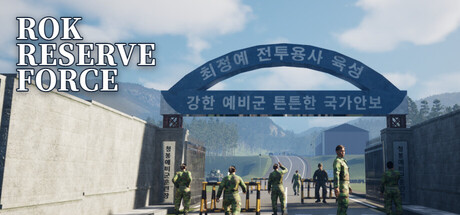
Generative AI tools were used during development for some 3D models (statues and a creature base model), the voices of instructors and the sergeant major, the song in the CPR minigame, and the game icon (the cap illustration). No content is generated by AI while the game is running.
Generative AI tools were used during development to assist in creating some pre-generated visual assets, audio, and localized text. The game does not generate content with AI during gameplay.
Generative AI was used during development to create some art assets and to assist with store text and localization. These materials are prepared in advance. The game does not generate AI content during gameplay or connect to external AI services.
Pre-generated AI tools were used during development to assist with the creation and refinement of selected visual assets, localization text, and marketing materials. All AI-assisted content was reviewed, edited, and integrated by the developer before inclusion in the game or store materials. The game does not generate AI content in real time during gameplay.
BROKEN CHORD uses generative AI in the creation of selected music and visual assets used in the game and its presentation. AI-generated material is curated, edited, and integrated into the game’s overall artistic and audiovisual direction by the developer.
Some graphics and sound assets included in this game were created with the assistance of Generative AI and were subsequently reviewed and retouched by humans.
Parts of the game's code and in-game text were written with AI assistance and edited by hand. The store capsule art was generated with AI image tools from the game's own visual style and then edited. No AI-generated image or audio files ship inside the game itself: every graphic is drawn in code while it runs, and all music and sound are synthesised live.
Generative AI assisted in creating some artwork, dialogue, descriptions, and translations during development. No AI content is generated during gameplay.
AI tools were used to assist with programming and generate a small number of textures and menu illustrations. These visual assets were adjusted by hand before being included in the game.
Generative AI was used during development to create the mascot and some promotional artwork, and to help prepare written content and interface translations. Earthwind does not generate AI content during use or send microphone audio or imported scores to an AI service.
Generative AI tools were used during development to assist with portions of programming and store-page text. All AI-assisted material was reviewed, edited, tested, and integrated by the developer. No generative AI is used during gameplay.
This game includes assets created with generative AI during development (official music, song artwork, and drum animations). Nothing is generated while you play, and the game does not connect to an AI service at runtime. Players cannot send prompts to any AI.
AI tools assisted with pre-rendered artwork, character illustrations, UI, achievement icons, narrative and marketing materials. No AI content is generated during gameplay.
Levels, game design, boss patterns and story are entirely hand-made in a custom level editor built by the developer. The game code is written with AI coding assistants under the developer's direction. Character and environment sprites started as AI-generated sprite sheets and were hand-retouched frame by frame. Music is created with Suno. Most sound effects are synthesized procedurally by code written with an AI coding assistant, then selected and tuned by the developer; a few come from CC0 and royalty-free libraries (Kenney, OpenGameArt, Mixkit). No AI runs at play time.
This game uses a locally running AI model to analyze music added by the player and generate playable rhythm-game note charts. The AI generates only note timing, lanes, types, and durations; it does not generate music, images, voices, text, or code. Music added by the player is not sent to any external AI service or developer-operated server.
This game was created with the assistance of AI tools in several areas of development.
Music: The songs were written and originally recorded by me, with AI tools used for additional processing and production.
Artwork: The visual concepts and creative direction were created by me, while AI tools were used to generate and develop some of the final artwork based on my concepts.
Programming: AI-assisted tools were used during development to help with coding and implementation.
All AI-assisted content was reviewed, selected, and integrated by me as part of the game's creative and development process.
The application itself does not use generative AI. Maps are produced by a deterministic, rule-based algorithm from signal analysis of the user's own audio file (tempo, beat grid, onsets, song structure); no machine-learning models are involved, and nothing is generated at runtime by AI.
Generative AI was used only for marketing: the animated scenes in the store trailer were produced with AI image and video tools from our own storyboard and prompts. Store screenshots are real captures of the application, and the capsule artwork was designed by hand.
Almost all of the game’s content has been handmade by our art team. A small number of textures were generated with generative AI tools, then edited and integrated into the final assets by the development team.
Generative AI tools were used in the development of this game, including character art and sprites, backgrounds and environment art, sound effects and music, in-game text and narrative content, and store page assets such as screenshots and marketing images. All AI-assisted content was reviewed and curated by the developer before being included in the game.
Generative AI tools were used for pre-rendered character portraits, title/key artwork and other game illustrations, portions of promotional video and audio, marketing artwork, and assistance with localized text. These assets and text were reviewed and edited for the game. Orderfall does not generate AI content during gameplay or connect to an external AI service. The live-action-style Captain Cook teaser is dramatized promotional footage; the game itself uses pixel-art graphics.
The game uses AI tools to assist in generating background graphics and supporting the artistic process. AI is also used to aid in translation and localization, making the game available in multiple regions and languages.
Dystopia uses AI to generate its radio: all music, DJ voices, lyrics, song titles, and artist names are created by AI and streamed from our servers to every player. Music is generated using ElevenLabs Music v2.5. Our 3D environments render as Gaussian splats and were AI generated using World Labs' Marble.
Generative AI tools were used during development to assist in the creation of selected background images, illustrations, character assets, UI assets, rhythm game music, and background music. These are pre-generated assets included with the game. No generative AI is used to create content during gameplay, and the game does not connect to external AI services while being played.