Public Steam disclosure research25,376 disclosures tracked
Where do games disclose AI use?
Search developers’ Steam disclosures, compare classified AI use across
games, and follow recorded changes.
This index adds cross-game classifications and statistics to
statements published on individual store pages.
Groups reflect automatic analysis of public disclosures; mature records are excluded. These counts do not measure AI use across all of Steam.
Missing or unclear statements cannot establish whether a game uses AI.
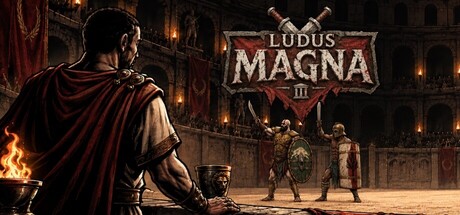
Ludus Magna uses pre-generated, AI-assisted content created during development. This includes parts of the game's visual content such as character portraits, backgrounds and other illustrations, as well as AI-assisted text and localization. All content is selected, edited and reviewed by the developer before being included in the game. No generative AI content is created while the game is running.
Generative AI supported the creation of parts of the artwork, sound effects and particular translations, all of which were carefully selected and refined by the developers. No AI content is generated during play.
I've wanted to make games for as long as I can remember but could never learn to code, so AI helped write the code. Some 3D models started as AI-generated base meshes that were then reshaped and repainted by hand, and the arena announcer is an AI voice reading lines we wrote. Everything else is hand-made or licensed.
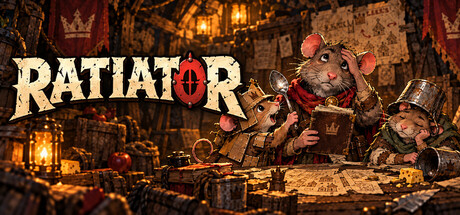
Ratiator is made by a small independent studio, and generative AI is one of the tools that lets a tiny team build a world this big. Every piece of AI-assisted content was directed, selected and refined by us to match our own art direction and design.
Artwork: backgrounds, UI elements, event illustrations, icons and key art were created with AI image tools from our concepts and art direction, then curated, edited and assembled by hand.
3D models: our rats and their household-junk weapons and armour started as AI-generated 3D models built from our concept art. We then rigged, fitted, animated and tuned them with our own tools, so every rat moves and fights the way we designed it.
Animation: a few short cinematic clips and the living light in some backgrounds (flickering lanterns, flowing water) were made with AI video tools and blended into our original paintings.
Writing: story and event texts were drafted with the help of an AI writing assistant, then edited and shaped by us to fit the world and its humour.
Nothing in the game is generated by AI while you play. Every fight, rat and story event is driven by the game's own systems, and no player data is sent to any AI service.
Parts of this game were made with the help of generative AI tools:
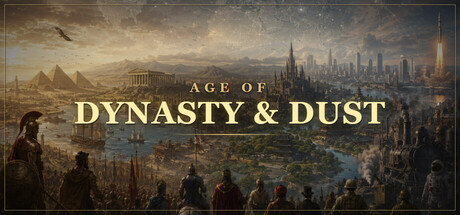
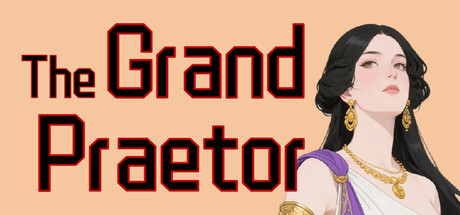
- 3,928 of the 6,608 character portraits were created with generative AI tools and then selected and retouched by a person. The other 2,404 are historical images from public archives such as Wikimedia Commons, and 276 reuse an existing picture.
- The title-screen key art was created with generative AI.
- The character biographies and historical event texts were written with the assistance of generative AI, based on historical sources, and edited by the developer.
- The English, Japanese and Traditional Chinese translations were produced with the assistance of generative AI.
No content is generated by AI while the game is running.
Coding was done with help of generative artificial intelligence. Music was downloaded online from copyright free assets. Art was done by myself with some vfx done with help of generative artificial intelligence.
All translations were done by AI, because I don't speak that many languages... I hope in future people can help me translate all these
During the development of this game, AI tools were used to assist in creating some game assets and promotional materials for the store, as well as to assist in writing and optimizing some program codes. All the AI-assisted content was manually screened, adjusted, integrated, tested, and finally reviewed by the developers.
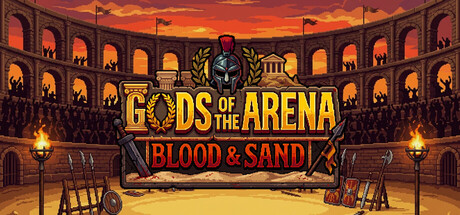
Developer Note on AI Assistance: Gods of the Arena: Blood & Sand is crafted using a hybrid development approach, combining human game design, rigorous combat programming, and hand-tuned mechanics with generative AI tools for concept ideation and visual asset workflows.
Generative AI tools were used to create and edit selected pre-rendered visual assets, animations, and marketing materials. The game does not use live-generated AI content during gameplay.
Generative AI tools were used during development to generate some 3D model assets, textures, and sounds. All AI-generated content was pre-rendered and reviewed before being included in the game build. No live generative AI is used during gameplay.
For complete transparency with our players, here is our stance on how this game is built:
1. Human Craftsmanship First
Human creativity and hands-on talent are always our highest priority. Where development is handled by skilled creators and artists, the work is crafted traditionally. AI is never used to replace active human contribution.
2. Bridging the Resource Gap
Where specialized resources, budgets, or personnel are missing, we use AI tools to bridge the gaps and keep development moving forward. As an independent project, we do not have the luxury of waiting on corporate budgets; we use every tool available to ensure the game actually gets finished and delivered to you.
3. Moving Forward, Never Backward
Our development philosophy is built on momentum. We will never delay updates, halt progress, or backtrack to remove or replace AI-assisted elements just to appease online discourse. If the game secures funding or high sales down the line, those resources will be used exclusively to hire real people to build new features, content, and expansions. We only move forward.
The Bottom Line
We refuse to let a lack of corporate backing stop us from making a great game. We choose to embrace the tools of the future to deliver a unique RTS experience today. If you value raw independent drive, transparency, and a studio focused entirely on delivering great gameplay "by any means necessary," thank you for your support.
Generative AI tools are used during development for the creation and refinement of certain visual assets, animations, music, sound effects and voice content.
AI-assisted workflows are also utilized for localization support, historical research, narrative iteration and code review.
All AI-generated material is manually reviewed, edited and integrated into the final game experience by the developer.
All visual assets and sound effects in this game were created with the assistance of AI generation tools, then curated and integrated by the developer.
AI-assisted tools were used for all of the game visuals, audio, and code. No AI generation occurs during gameplay, and no external AI services are used while playing.
Generative AI has been used only for the following things but will be replaced before the full release:
-Voice announcements at the start of the battle
-A few GUI elements and buttons
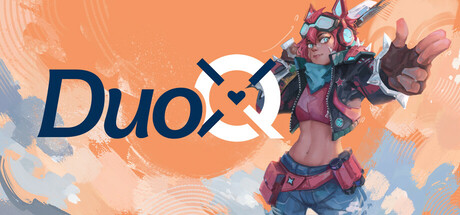
DuoQ. uses on-device transcription, activated by the player via push-to-talk, to transcribe the player's voice. That transcription is sent directly to a cloud LLM, which tells Tala what action to take next. All transcription data is discarded immediately after use.
Soundtrack: The game's soundtrack was composed using generative AI technology to create immersive and dynamic music that enhances the player's experience.
Trailer Voiceover: The voice narration featured in the official game trailer was synthesized using AI-driven voice generation.
Store Assets: The logo and background imagery for the game's store assets were created using AI-assisted image generation tools.
While AI has been utilized to assist in asset creation, all final creative decisions, refinements, and implementations were made by the development team to ensure quality and alignment with the game's vision.
There some images generated by AI, prompted by the creative lead with the aim to showcase the concept he imagined. They are mainly placeholders for future artworks.
Art and visual assets were created with AI-assisted tools as part of a custom development pipeline. All assets are manually reviewed, edited, and refined to meet the game’s creative vision and maintain stylistic consistency. The game does not use AI to generate content at runtime.
I did some loading screen of the games with DALL-E with a paid + program of OpenAI.
Voices of the character are using "Replica Studios" Characters https://www.replicastudios.com/smart-npc
This game utilizes AI-generated imagery only event pop-up illustrations (approximately 10~15 images) depicting scenarios like theft and plagues.
All other visual assets, including key art and god depictions, are hand-crafted.
The game features a small local language model used to generate dynamic storylines and events based on character traits and relationships. Generative AI is also used to assist in the creation of various 2D textures, marketing materials, portraits and UI elements.
Localizations to languages with an in-game marking "BETA" (French, Spanish, Italian, Swedish) have been created using generative artificial intelligence.
Ludus Magna uses pre-generated, AI-assisted content created during development. This includes parts of the game's visual content such as character portraits, backgrounds and other illustrations, as well as AI-assisted text and localization. All content is selected, edited and reviewed by the developer before being included in the game. No generative AI content is created while the game is running.
Generative AI supported the creation of parts of the artwork, sound effects and particular translations, all of which were carefully selected and refined by the developers. No AI content is generated during play.
I've wanted to make games for as long as I can remember but could never learn to code, so AI helped write the code. Some 3D models started as AI-generated base meshes that were then reshaped and repainted by hand, and the arena announcer is an AI voice reading lines we wrote. Everything else is hand-made or licensed.
Ratiator is made by a small independent studio, and generative AI is one of the tools that lets a tiny team build a world this big. Every piece of AI-assisted content was directed, selected and refined by us to match our own art direction and design.
Artwork: backgrounds, UI elements, event illustrations, icons and key art were created with AI image tools from our concepts and art direction, then curated, edited and assembled by hand.
3D models: our rats and their household-junk weapons and armour started as AI-generated 3D models built from our concept art. We then rigged, fitted, animated and tuned them with our own tools, so every rat moves and fights the way we designed it.
Animation: a few short cinematic clips and the living light in some backgrounds (flickering lanterns, flowing water) were made with AI video tools and blended into our original paintings.
Writing: story and event texts were drafted with the help of an AI writing assistant, then edited and shaped by us to fit the world and its humour.
Nothing in the game is generated by AI while you play. Every fight, rat and story event is driven by the game's own systems, and no player data is sent to any AI service.
Parts of this game were made with the help of generative AI tools:
- 3,928 of the 6,608 character portraits were created with generative AI tools and then selected and retouched by a person. The other 2,404 are historical images from public archives such as Wikimedia Commons, and 276 reuse an existing picture.
- The title-screen key art was created with generative AI.
- The character biographies and historical event texts were written with the assistance of generative AI, based on historical sources, and edited by the developer.
- The English, Japanese and Traditional Chinese translations were produced with the assistance of generative AI.
No content is generated by AI while the game is running.
Coding was done with help of generative artificial intelligence. Music was downloaded online from copyright free assets. Art was done by myself with some vfx done with help of generative artificial intelligence.
All translations were done by AI, because I don't speak that many languages... I hope in future people can help me translate all these
During the development of this game, AI tools were used to assist in creating some game assets and promotional materials for the store, as well as to assist in writing and optimizing some program codes. All the AI-assisted content was manually screened, adjusted, integrated, tested, and finally reviewed by the developers.
Developer Note on AI Assistance: Gods of the Arena: Blood & Sand is crafted using a hybrid development approach, combining human game design, rigorous combat programming, and hand-tuned mechanics with generative AI tools for concept ideation and visual asset workflows.
Generative AI tools were used to create and edit selected pre-rendered visual assets, animations, and marketing materials. The game does not use live-generated AI content during gameplay.
Generative AI tools were used during development to generate some 3D model assets, textures, and sounds. All AI-generated content was pre-rendered and reviewed before being included in the game build. No live generative AI is used during gameplay.
For complete transparency with our players, here is our stance on how this game is built:
1. Human Craftsmanship First
Human creativity and hands-on talent are always our highest priority. Where development is handled by skilled creators and artists, the work is crafted traditionally. AI is never used to replace active human contribution.
2. Bridging the Resource Gap
Where specialized resources, budgets, or personnel are missing, we use AI tools to bridge the gaps and keep development moving forward. As an independent project, we do not have the luxury of waiting on corporate budgets; we use every tool available to ensure the game actually gets finished and delivered to you.
3. Moving Forward, Never Backward
Our development philosophy is built on momentum. We will never delay updates, halt progress, or backtrack to remove or replace AI-assisted elements just to appease online discourse. If the game secures funding or high sales down the line, those resources will be used exclusively to hire real people to build new features, content, and expansions. We only move forward.
The Bottom Line
We refuse to let a lack of corporate backing stop us from making a great game. We choose to embrace the tools of the future to deliver a unique RTS experience today. If you value raw independent drive, transparency, and a studio focused entirely on delivering great gameplay "by any means necessary," thank you for your support.
Generative AI tools are used during development for the creation and refinement of certain visual assets, animations, music, sound effects and voice content.
AI-assisted workflows are also utilized for localization support, historical research, narrative iteration and code review.
All AI-generated material is manually reviewed, edited and integrated into the final game experience by the developer.
All visual assets and sound effects in this game were created with the assistance of AI generation tools, then curated and integrated by the developer.
AI-assisted tools were used for all of the game visuals, audio, and code. No AI generation occurs during gameplay, and no external AI services are used while playing.
Generative AI has been used only for the following things but will be replaced before the full release:
-Voice announcements at the start of the battle
-A few GUI elements and buttons
DuoQ. uses on-device transcription, activated by the player via push-to-talk, to transcribe the player's voice. That transcription is sent directly to a cloud LLM, which tells Tala what action to take next. All transcription data is discarded immediately after use.
Soundtrack: The game's soundtrack was composed using generative AI technology to create immersive and dynamic music that enhances the player's experience.
Trailer Voiceover: The voice narration featured in the official game trailer was synthesized using AI-driven voice generation.
Store Assets: The logo and background imagery for the game's store assets were created using AI-assisted image generation tools.
While AI has been utilized to assist in asset creation, all final creative decisions, refinements, and implementations were made by the development team to ensure quality and alignment with the game's vision.
There some images generated by AI, prompted by the creative lead with the aim to showcase the concept he imagined. They are mainly placeholders for future artworks.
Art and visual assets were created with AI-assisted tools as part of a custom development pipeline. All assets are manually reviewed, edited, and refined to meet the game’s creative vision and maintain stylistic consistency. The game does not use AI to generate content at runtime.
I did some loading screen of the games with DALL-E with a paid + program of OpenAI.
Voices of the character are using "Replica Studios" Characters https://www.replicastudios.com/smart-npc
This game utilizes AI-generated imagery only event pop-up illustrations (approximately 10~15 images) depicting scenarios like theft and plagues.
All other visual assets, including key art and god depictions, are hand-crafted.
The game features a small local language model used to generate dynamic storylines and events based on character traits and relationships. Generative AI is also used to assist in the creation of various 2D textures, marketing materials, portraits and UI elements.
Localizations to languages with an in-game marking "BETA" (French, Spanish, Italian, Swedish) have been created using generative artificial intelligence.