Public Steam disclosure research27,951 disclosures tracked
Where do games disclose AI use?
Search developers’ Steam disclosures, compare classified AI use across
games, and follow recorded changes.
This index adds cross-game classifications and statistics to
statements published on individual store pages.
Groups reflect automatic analysis of public disclosures; mature records are excluded. These counts do not measure AI use across all of Steam.
Missing or unclear statements cannot establish whether a game uses AI.
AI was used in helping me learn how to code the game, and to spot issues, it helped me correct my mistakes and spot errors I would have otherwise missed. Some art is also generative until an artist can be acquired for commissioned artwork
Keep On Truckin' is made by one developer working with various AI models. AI wrote the game’s code, its dialogue and story, and the scripts that draw its pixel art and make its sound effects, and helped with the store page and its art. All of it was directed and reviewed by me. The music is all 100% human made: all eight tracks were written without AI. Nothing in the game is generated by AI while you play.
BELLATRIX is directed, designed and built with care by the BFS Team. We do use AI as one of our creative tools, for visual art, music, voices and some sound effects. Every piece of art, every decision and every characteristic is meticulously crafted to fit one coherent world, and the music is used under a commercial license. The vision, the game design and the systems are our own, and every detail was carefully chosen and tailored by us.
The game was developed entirely with generative AI (Claude by Anthropic): program code, shaders, sound synthesis, game text, translations and store text. Development was led by a human developer who reviewed the results. In-game graphics and sound are generated procedurally in code; the game contains no files created with image, voice or music generators. No AI is used while the game is running. The music in the trailers was generated with Suno.
Some 3D models, 2D artwork, music, sound effects, and prerecorded officer voice lines in Void Privateers were created with the help of generative AI tools during development. These assets are reviewed and integrated by the developer. The game does not use generative AI to create content during gameplay.
Generationship was built entirely by hand until 2026, over more than five years of development, and that work is still the foundation of the game. Since then, generative AI has been part of our daily development:
- 3D models: newer models are AI-generated.
- Voice: voice lines are created with text-to-speech.
- Images and text: artwork, translations and news posts are AI-assisted.
AI also assists with programming and testing. Everything is carefully reviewed by hand, using custom tools we built for this and often over many iterations. Nothing is generated by AI while you play.
Hell of Stars uses AI-generated content created during development. Character, enemy, environment, icon, logo and key-art images were generated with image models (OpenAI GPT Image) and then selected, cut out, retouched, rigged, animated and assembled into the game by the developer. Store capsules and library artwork are based on the same key art and were extended with an AI image model (Google Gemini image model) and finished by the developer. Story texts, dialogue and the Chinese, Japanese and Korean translations were written with the help of AI language models and edited by the developer. Voice lines for characters, bosses and enemies were generated with ElevenLabs text-to-speech and mastered by the developer. The music was generated with Suno from prompts written for each world, boss and mode, then selected, trimmed, looped and mastered by the developer. Short musical stingers were generated with ElevenLabs Eleven Music. Sound effects are synthesized in code without AI. The game generates no content with AI while it runs.
The background music was made with Suno, a generative AI music tool, from a written brief, and the tracks were selected and looped by the developers. The Hungarian, Indonesian, Portuguese (Portugal) and Ukrainian translations were made with AI translation tools. The game does not use AI to generate any content while you play.
The music was generated with an AI music tool (ElevenLabs), then selected, edited and looped by the developer. The guide voice and a few sound effects were also generated with ElevenLabs and edited by the developer. Some 3D models (the player ship, enemy drones and creatures) started from AI-generated meshes (Tripo) and were rebuilt and repainted by hand. The title logo was redrawn by hand from an AI-generated sketch. Parts of the store text and its translations were written with AI assistance. No content is generated by AI while you play.
Character voices in the current build are generated with AI text-to-speech from scripts written by our team.
Every ship, station, and effect is hand-designed and drawn as procedural vector art in code by Gecko Cove Studio. The game generates no AI content while you play. We also use AI coding assistants as development tools; the game’s design, writing and testing are done by our team.
Asteroid Forge was developed with the help of generative AI tools. AI assisted in writing the game’s code (including the code that draws the graphics and composes the music), the in-game and store texts, and their translations into English, Portuguese, German and French. All content was directed, reviewed and edited by the developer. No AI is used to generate content while you play.
The game began in 2017 as a very rough prototype in Unity and grew from there. Later I tried several proofs of concept with very different designs, and then rebuilt it in Godot. I made the planets from about twenty drawings I did in pencil and in Paint, and I laid out every map by hand in the game's editor. Part of the art was made with OpenAI's image tools under my direction: the player's ship, which I refined over several rounds; the game icon, which is also used for the store artwork; and the alien ships, buildings and defenses and some alien plants and rocks, which I then touched up. The five music tracks started from an AI model running locally (Stable Audio); I generated about sixty versions, editing and reworking them until I had the ones in the game. The translations from Spanish were made with AI, and an AI assistant helped me revise the story and the game and store text. No AI content is generated while you play, and the game doesn't connect to any AI service.
Generative AI is used in this game to create some illustrations, assist with programming, and help revise and translate text. The creator makes the decisions about the concept, world and game design, and reviews and adjusts the content.
Assets such as 3D models and music are used with permission obtained through purchases, licensing agreements or other authorized arrangements.
If sales provide enough funding, the creator plans to add illustrations commissioned from illustrators and let players choose which illustrations to use.
Sidera Imperii is being developed using a combination of traditional development methods and AI-assisted tools.
The game combines original, licensed, and AI-generated assets. Most, but not all, of the current 3D models are AI-generated. AI is also used for some textures, character portraits, selected UI elements, synthetic voices, some sound effects, and selected music tracks. Other assets are created through traditional methods or licensed from third parties. AI tools also assist with writing and localization.
The game is currently in pre-alpha, and its visual presentation is not representative of the final quality target. Development continues with a focus on improving visual quality, consistency, and detail, while exploring new techniques and possibilities.
No AI content is generated during gameplay.
While creating this game, I used AI to help improve the graphics and ship visuals. I also used AI to render the voices based on my own voice. All ideas, visuals and concepts are my own. There is no generative AI built into the game. Randomized maps and loot come from math tables, and in-game tables decide combat outcomes.
Promotional Art: Store capsules, banners, and promotional assets were created with the assistance of generative AI tools.
Localization: In-game text translation and localization across multiple languages were aided by AI linguistic tools.
Soundtrack (OST): The pre-recorded music tracks featured in the game's tape player and official soundtrack package were pre-generated using the FlowMusic app, then curated and integrated into the project. (Note: Procedural FM chiptune tracks and in-game sound effects are generated in real-time by the game's internal audio engine).
- Graphics in the game are human-made, however, some of those are color-graded and re-coloured with AI tools.
- All in-game text is proof-read by AI to safeguard against typos and grammar issues.
- Sound and music volume(db) balance, as well as mixer balance, was handled by AI tools.
Generative AI was used for writing, translation and music (Suno). The art was designed by the developer and made with Claude as a coding tool, without image-generation models.
The majority of the music tracks were created from my original sketches and references, with AI assisting in arrangement and mastering. A smaller number of tracks were generated from scratch based on author-defined tags, styles, and lyrics, followed by my manual refinement and selection. The trailer features musical fragments produced using the same AI tools.
AIDA Space Program is made by AI under one developer's direction — the name itself comes from it: AI → AI'DA →
AIDA. AI tools write the code, the texts and the voice of IRIS and the department heads, and help make the music and
sound effects; the developer designs the game, directs every change, plays it and decides what ships. Everything is
made before release; nothing is generated while you play.
This game contains AI-generated content: artwork, audio, dialogue, and localization. All AI assets were reviewed and edited before release.
Name of AI model included with the game: MiniMax-M3, Piper TTS
AI was used solely for automatically translating interface text into other languages, possibly voiceovers as well (which is still under consideration), and a couple of textures (2) that I reworked anyway.
A few visual assets (UI), translations and promotional materials for Desktop Space Battles were created with the assistance of generative AI tools. All AI-generated content was reviewed, refined, and integrated by the developer to ensure consistency with the game's artistic direction and quality standards.
Space Defender is the work of a solo developer. Generative AI was used for the voices, the character portraits, some illustrations and the translations, all reviewed and edited by me; several languages are also proofread by native speakers.
During development, we used generative AI image tools to produce base images for some of our 2D art assets. Our artist then worked on them to create the final assets in the game and on the store page. Some voice lines in the game are generated with AI voice tools.
The 3D models of the buildings, the ships and the crashed colony ship started as AI-generated drafts. We made concept reference images with an AI image tool, turned them into 3D drafts with AI 3D generation services (Tripo and Meshy), then reworked every model in Blender — fixing broken parts, simplifying the meshes and recoloring them to the game's own palette. Our store capsules and library art are renders of these same in-game models.
The in-game English text and the store description were drafted with the help of an AI writing assistant and edited by us. The store page translations (Simplified Chinese, Japanese, German, French, Spanish, Brazilian Portuguese and Russian) were made with an AI assistant and checked by back-translation.
The floating island, sky, visual effects, interface, icons, logo and sound effects were not made with generative AI.
Starwrit's character voices (Captain Kade Varro, WREN, Magistrate Karr, Skarr Vel'Qhan and the prologue's supporting roles) were generated with ElevenLabs text-to-speech from our own script, and many of the game's sound effects were generated with ElevenLabs Sound Effects from our own descriptions. All of them were directed, selected and edited by the developer. The music and some sound effects in our trailers were also generated with ElevenLabs. Nothing is generated by AI while you play: the voices and sounds are fixed recordings.
This game was created by a single indie developer over months of planning, designing, and passionate development. However, multiple AI models were used in the creation of this game in the form of: 3D Models, Graphics, Music, Dialogue, and AI-assisted coding.
This game is NOT a one-shot AI built game. Rather, AI has been used as a tool to bring the game to life along with countless hours of intentional and passionate development.
Generative AI was used as part of the creation process for some pre-generated 2D ship artwork. All such assets were reviewed and integrated by the developer. The game does not generate AI content during gameplay or connect to external AI services.
Rise of Sectors includes a limited amount of pre-generated AI-assisted 2D artwork used as in-game visual assets, such as graphics and icons. The game does not use live-generated AI during gameplay and does not connect to external AI services.
Generative AI tools were used during development to create music, some sound effects and 3D models, and to assist with localization. The game does not generate AI content during gameplay or connect to external AI services.
The game’s visuals and some localized text were created with the help of AI tools during development.
Elyria, the in-game knowledge assistant, uses the OpenAI API to generate some answers to questions about Aleryos gameplay while the game is running. It is limited to publicly available game information: rules, mechanics and documentation. Its answers are based on these sources and include references. It has no access to players’ private data and cannot take actions on their accounts. Its answers may contain errors.
Connects to 3rd-Party Service for AI Content Generation: API OpenAI
Pre-generated voice audio in the game was created using VOICEPEAK speech synthesis. Generative AI was used for brainstorming and idea development during scenario creation. No AI-generated artwork or visual assets are used in the game.
Generative AI tools were used during development to create pre-rendered visual assets, UI elements, and marketing materials. All generated assets were reviewed, finalized, and statically integrated into the game build prior to release. No content is generated in real-time or dynamically during gameplay.
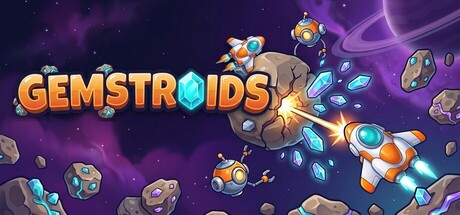
Gemstroids is a solo project, designed and directed by the developer. Art, music, sound effects, the in-game and store page texts and all translations were made with AI tools, then selected, edited and brought into one style by the developer.