Public Steam disclosure research24,658 disclosures tracked
Where do games disclose AI use?
Search developers’ Steam disclosures, compare classified AI use across
games, and follow recorded changes.
This index adds cross-game classifications and statistics to
statements published on individual store pages.
Groups reflect automatic analysis of public disclosures; mature records are excluded. These counts do not measure AI use across all of Steam.
Missing or unclear statements cannot establish whether a game uses AI.
The in-game Japanese and Simplified Chinese translations were created with the help of AI tools. AI coding assistants were also used during development. All artwork, from pitches to character designs, was made by hand, and the music was created by the credited artists.
3D models: the AfterPub models (plushies, items, props) come from an AI 3D generator; the files are named like Tripo exports.
2D assets: mix between AI and an Actual Human Designer and Artist.
Commentator voice: produced by Piper, an AI text-to-speech engine, while the game runs.
Music: Pixabay tracks.
Some sound effects in the game (court ambience, crowd reactions and some impact sounds) were generated with an AI audio tool and then selected and edited by the developer. Some background images used in the store page and marketing materials were generated with an AI image tool. AI coding assistants were used as a development aid, including help drafting some in-game explanatory text, which the developer reviewed and edited. All game design, simulation, data and player content were created by the developer. The game does not generate any content with AI while it runs.
The player portraits, mascots, team emblems, box paintings and a few event images were generated with image models from the developer's prompts, then hand-keyed and placed. All other art is drawn in the game's own code. No live generation: the game contacts no service.
The music is synthesized from hand-written scores and is not AI audio.
Generative AI was used during development to create some pre-generated background art, character portraits, promotional images, dialogue, and music. No AI content is generated while the game is running.
This game contains content created with the assistance of AI tools. AI was used during development to assist with programming, visual assets, and other creative elements. All generated content was reviewed, edited, and integrated by the dev.
Alpine Fall uses generative AI tools during development to assist with the creation of pre-generated visual, 3D, voice/audio, cinematic, and promotional content. All AI-assisted content is reviewed, curated, and integrated by the developer before inclusion in the game or its marketing materials. The game does not generate AI content during gameplay.
Generative AI was used during development to create in-game artwork, music, sound effects, text, and translations, as well as store and promotional artwork. The game does not generate AI content during gameplay.
Some of the promotional and storefront images were created with AI tools and then refined by hand. All of the in-game assets were designed by a Pixel Art artist.
During the development of FOOTBALL EXECUTIVE 27, generative AI tools were used to assist with parts of the program code, localization, and the editorial review of user interface and in-game text. All AI-assisted content was manually reviewed and revised before being included in the game. No content is generated by generative AI during gameplay, and no player input is transmitted to any external AI service.
The track announcer and color commentator voices, including the horse-name calls, use AI text-to-speech voices (ElevenLabs), pre-generated during development and built into the game - no AI voice generation happens while you play. All game design, race simulation, wagering math, career systems, UI, code, and the horse and track roster were built by the developer.
AI tools (Anthropic Claude) assisted the developer with the code, the vector art, the texts and translations, and the synthesized music and sound effects. Everything was directed and reviewed by the developer. No AI runs in the game and nothing is generated at runtime.
Generative AI was used to assist with writing and translating in-game text and Steam store page descriptions. It was not used to generate artwork, music, sound effects, voice acting, or promotional visuals.
Some content in this game was created with the help of generative AI during development.
- Drafts of in-game text such as news articles, interviews and guidance messages
- Translations into languages other than Korean
- Some graphic elements, such as karts and maps
During development, we used generative AI tools to create some of the content included in the game, such as images, text, and audio.
During gameplay, generative AI may create audio content in response to race events. We have implemented safeguards to prevent or reduce the generation of illegal or inappropriate content.
Generative AI was used as a tool during production. AI assisted with portions of the game's script writing, some of the original music (vocal music only), voice production, and some images used in the game and store materials. All AI-generated content was reviewed, edited, integrated, and approved by the developer before inclusion in the final product.
Kana Cross uses generative AI in the following ways, all reviewed by a person before release:
• Music: the game's background music was created using generative AI music tools.
• Localization: some of the Visual Novel and game's dictionary word meanings and translations.
Generative AI tools were used during development to assist in creating some of the content included in this game. This content is prepared in advance. The game does not generate AI content during gameplay or connect to external AI services.
Skate N Chill uses pre-generated AI artwork and instrumental music created with Suno. AI-generated artwork is also used in store and promotional materials. These assets are prepared before release; no AI content is generated during gameplay.
Generative AI tools were used during development to assist with the game's code, the logo and store artwork, the in-game tournament posters, the synthesized sound effects, the store texts and the trailer edit. All content was reviewed and directed by the developer. No AI-generated content is created at runtime.
Generative AI was used to create promotional artwork and to assist with store-page text and in-game localization. The game does not generate AI content during gameplay or connect to an external AI service.
Some character portraits, club scene illustrations, and store artwork were created with generative AI and selected or edited for Matchday. The game does not generate content during play.
Generative AI was used to assist in creating one or two background 3D assets during the development process. All other 3D models, visual effects, and environmental assets were custom-made or sourced entirely from standard digital asset marketplaces like Fab.
Generative AI tools were used during development to create part of what you see and hear: the portraits of the fictional players and their faces at different ages, background illustrations, the short ambient videos, the music, the commentator's recorded calls and the surnames he calls out —a synthetic voice that does not belong to any real person— and part of the art on this page. Everything was reviewed, trimmed and edited by hand before going in, and every commentator line was checked with speech recognition to make sure it says what it should. The sound effects are real public-domain recordings. The game does not generate anything with AI while you play.
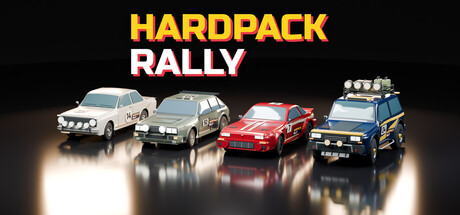
Hardpack Rally is made by solo developer Andre Gomes with assistance from AI tools, including Claude, ChatGPT and Codex. These tools help write game code and scripts that create the cars and scenery. No AI generates content while you play.
Hero Football Manager was made by one developer working with AI tools. AI helped write the game's code, including the code that draws the pixel art and synthesizes many of the sounds and music tracks. AI also helped write and translate the in-game text and this store page. The developer directed, reviewed and tested all of it. The game does not use AI while you play.
AI writing assistants were used to draft and refine in-game text during development; all text has been manually proofread, edited, and verified by the developers.
Generative AI tools were used during development to assist with programming and some written/game content. All generated material was reviewed and integrated by the developer. The game does not generate AI content during gameplay.
This game uses generative AI in parts of its content: the Spanish and Italian translations were produced with AI assistance and are pending a professional human review pass; the game's icon was also created with the help of generative AI tools during development. No content is generated in real time during gameplay — everything was produced during development.
Rally Dynasty's illustrations were produced with generative AI image tools and then chosen, cropped and composited by hand. That covers the key art the game's branding is built on, and the side-elevation drawing of each car in the catalogue. Nothing is generated while you play: the game runs offline, connects to no AI service, and the simulation itself - the era rules, the results, and every line of text you read - is written by hand.
Some of the game's 3D models, some of its music tracks and parts of the user interface were created with the help of generative AI tools, then selected, edited and integrated by our team. Some of the artwork on this store page (capsule and promotional images) was also created with the help of generative AI and edited by our team. AI coding assistants were also used during programming, with all code reviewed and directed by our team. Everything else (game design, level design and the remaining art, music and sound effects) was made by the Domp Studio team. No AI is used to generate content while you play.
Some of the pixel art in this game started from initial references (the first version you can find in newgrounds, was not pixel art) or silhouettes created with generative AI tools. This only is done to: Islands + main menu frog and clouds.
Those references were then redrawn and refined by hand, pixel by pixel, into the final art you see in the game.
Everything else is handcrafted, including the tiles & obstacles, which were painful to make them connect :(
No other player-facing content uses generative AI, and the game does not generate any content with AI while you play.
This game uses generative artificial intelligence to assist in the creation of its original soundtrack.
All tracks were composed with AI support, resulting in a music selection inspired by J-Rock, K-Pop, electronic music, and classic football games from the 90s/2000s. The goal was to deliver an energetic, nostalgic, and vibrant atmosphere that perfectly matches the 2.5D pixel art aesthetic of Free Kick.
Artificial intelligence was used exclusively as a production tool during development. The soundtrack is not generated in real time and does not dynamically adapt to match conditions — all tracks are fixed, curated, and manually integrated to ensure quality and consistency throughout the experience.
Generative AI is being used during development solely to create character head portraits. It enabled us to create thousands of portrait variations across three age stages, helping the large cast of characters feel more varied, immersive and realistic while allowing characters to visibly age during long careers.
Every portrait is created in advance and checked by the Playsport art team before being included in the game. Nothing is generated while the game is running. No other artwork in the game, including vehicles, decals, logos or clothing uses generative AI. AI-generated portraits can be disabled in the preferences menu.