Public Steam disclosure research25,376 disclosures tracked
Where do games disclose AI use?
Search developers’ Steam disclosures, compare classified AI use across
games, and follow recorded changes.
This index adds cross-game classifications and statistics to
statements published on individual store pages.
Groups reflect automatic analysis of public disclosures; mature records are excluded. These counts do not measure AI use across all of Steam.
Missing or unclear statements cannot establish whether a game uses AI.
Generative AI tools were used to assist with the creation and refinement of some pre-generated sound effects, 3D assets, 2D images, voice lines, and localization. All AI-assisted content was reviewed, edited, and integrated by the developer. The game does not use generative AI to create content during gameplay.
The capsule and logo artwork was created with an AI image generator. Some of the game's code and parts of the written dialogue were produced with the help of an AI assistant, then reviewed and edited by the developer. No content is generated by AI while the game is running.
Character animations are generated with an AI motion model (Kimodo) and then cleaned up and retargeted by our team. Character voice-overs are created with AI text-to-speech and directed and edited by our team. All 3D models, buildings, textures and writing are made by us. No AI content is generated live during gameplay.
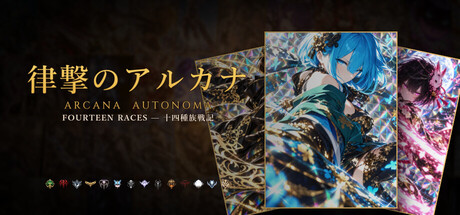
This game was made using generative AI. Generative AI was used for card illustrations, backgrounds, character videos, music, the story and other text, translations, and promotional materials such as the store page and trailer. All of this content was created in advance; no content is generated by AI during gameplay.
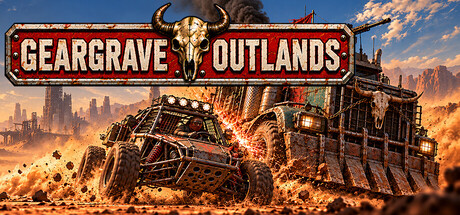
All artwork, music, and sound effects in Geargrave Outlands were created with generative AI tools (images: OpenAI image models; music: Suno; sound effects: ElevenLabs) and then selected, edited, and integrated by the developer. Story text was written with AI assistance and edited by the developer. All translations were produced with AI assistance. All of this content is pre-generated and ships as fixed files. The game does not generate any content with AI while you play.
The voices, music and sound effects were generated with AI audio tools (ElevenLabs) and then edited and mixed by the developer. The 3D world and the game itself were built with the help of an AI coding assistant. The trailers' narration also uses AI-generated voices. Nothing is generated by AI while you play.
This game contains pre-generated AI content, all reviewed and edited by the developer:
- Voice acting: every radio and PA line, in English and Turkish, is text-to-speech generated with ElevenLabs.
- Audio: most sound effects and the three music beds were generated with ElevenLabs.
- 3D art: some organic growth props were shaped with an image-to-3D pipeline (SDXL + Hunyuan3D), then UV-unwrapped, baked and finished by hand in Blender.
- 2D art: the still images in the narrated opening were made with an image model.
The game generates nothing with AI while it runs. The trailer, screenshots and capsule art on this page are in-game footage and in-engine captures.
Generative AI tools are used during the development of MASSVEIL to assist with the creation and refinement of certain pre-generated materials, including selected visual elements, sound effects, voice lines, and text content.
All AI-assisted content is reviewed and, where necessary, edited by the developer before being included in the game.
Generative AI is not used to create new content during gameplay, and the game does not connect to third-party AI services while running.
The images in this game (in-game assets and store artwork) were created with image-generation AI, then selected and edited by a human. The original draft of the scenario and dialogue was written with Google Gemini, and the implementation and dialogue revisions were done with Claude Code (Anthropic). All of it was supervised and tested by a human. No content is generated by AI while the game is running.
Currently, AI‑assisted Photoshop image editing is only used for the Steam store‑page assets. No AI is utilized within the game itself. All image and audio assets are either sourced from free open‑source resources or purchased commercially.
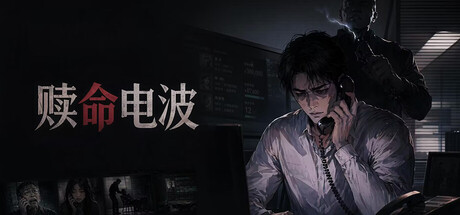
Ransom Wave uses generative AI during gameplay.
The game uses AI models to generate fictional victim dialogue, spoken voice responses, selected narrative text, and limited in-game guidance in real time. These outputs react to the player's typed input or optional microphone input and can vary between playthroughs.
The game's setting, characters, gameplay rules, scenario structure, safety constraints, and core narrative direction are created and controlled by the development team. AI-generated outputs are constrained by developer-authored character profiles, gameplay states, and content rules. Player microphone audio may be transcribed only to enable the current voice conversation. The game provides a text-input alternative when the microphone is disabled.
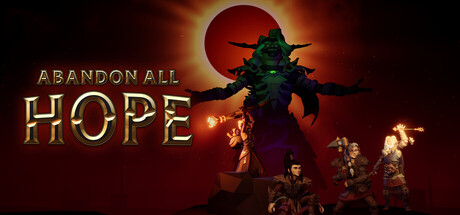
Custom Built LLM & Vertex DB, 100% home made AI model built by developer of Abandon All Hope was used to aid in padding out Dialog for the game, as well as the store page description. All Other content has been hand crafted.
Generative AI was used to create background music, paintings displayed throughout the motel, and selected 3D assets, including sequence props, keys, relics, and pedestals. AI assistance was also used to draft portions of the store page text.
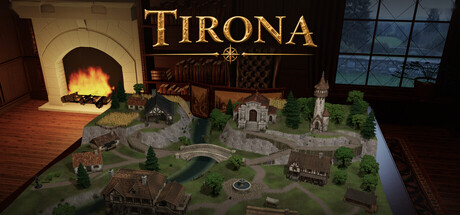
Tirona's development used AI tools for much of its 2D artwork (character portraits, card and scene illustrations, quest illustrations), some 3D models, the music (ElevenLabs) and the character voice performers' reference voices. All of it was selected, edited and placed by the developer, and ships as fixed game content.
While you play, a third-party large language model writes the narration and the dialogue of non-player characters in response to what you type or say. Character voices are synthesised locally on your PC from the generated text. You can optionally generate a portrait for your character from your creation choices.
The AI never decides the rules: dice, hit points, gold, items, experience, spells and quest progress change only through the game's own systems. Romance is opt-in, and anything sexual fades to black.
Some of the in-game text (dialogue and descriptions) was written with the help of AI and reviewed and edited line by line by the developer. All pixel art and music are drawn and synthesized in real time by the game's own code, which was written with AI assistance; no AI image or audio generation models were used.
Se han utilizado herramientas de inteligencia artificial generativa durante el desarrollo para ayudar en la creación y adaptación de algunos recursos del juego, como modelos 3D, imágenes, audio y otros elementos gráficos. Todo el contenido generado con IA ha sido revisado y preparado previamente antes de incluirse en el juego. El juego no genera contenido mediante IA en tiempo real ni se conecta a servicios externos de IA durante la partida.
AI tools were used to create artwork and assist with coding. The game's writing and planning were created by the developer. No generative AI runs during gameplay.
NBD2 is an AI game development studio. As a solo indie dev who is unlikely to ever make a dime from any of my games, there's no other way I could bring my ideas to life.
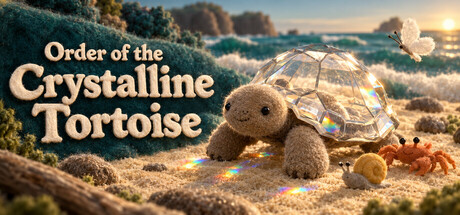
Order of the Crystalline Tortoise was created using generative AI throughout development, including its game code, 3D models, interface art, sound and text. The models were built by AI agents writing Blender scripts, the poster is drawn by code, and the music and sound effects were synthesized by code, with gull calls from a CC0 field recording. All AI generation took place during development. The game does not generate AI content or code during play or connect to an external AI service.
I recognize AI in game development is an extremely sensitive topic and I appreciate both sides. I only hope the game is fun.
The goal should always be making something that human beings will enjoy.
Generative AI tools were used for parts of this game during development: some story and dialogue text, the English localization, store page text, and some of the code that draws patterns and shapes. The developer directed all of it, chose what to keep, and reviewed and edited every piece. The music and sound effects were not made with AI, and nothing is generated by AI while you play.
Some images in the game were generated using AI tools and then refined by the game's developer. All the music in the game was written by the game's developer, but the mastering was done using AI tools. The 3D character models (all except the zombie mutants) were initially generated via AI and later refined and adapted by the game's developer.
Generative AI was used during development to assist with artwork and localization, including some store and promotional materials. The game does not generate AI content during gameplay or connect to external AI services.
Several 3D assets in this game — including some character models and props — were created with generative AI tools (Meshy) and then converted, cleaned up and hand-adjusted before being used in the game. Textures are either hand-made or generated procedurally with our own code.
Generative AI was used to create or edit some images, generate English voice audio, and assist with translation. All content was prepared before release. No content is generated and no external AI services are accessed during gameplay.
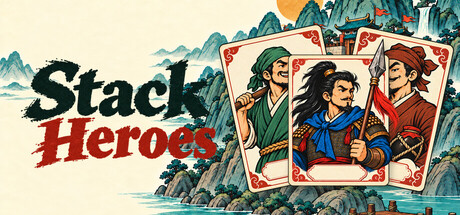
All content in Stack Heroes is generated using AI, including artwork, character and scene illustrations, UI graphics, music, sound effects, story and dialogue, other text, localization, and game program code. This content is generated during development and included in the game. The game does not generate AI content during gameplay or connect to external AI services.
Game source code, videos, images, and music in some parts of the game are initially generated using generative AI and then manually edited and refined.
AI was used to assist with the localization of some language versions. The translations were reviewed by the developer through proofreading and back-translation checks.
AI-generated images were used as composition references during the creation of a small number of CG illustrations. The image generation was based on the developer's own original hand-drawn character illustrations, provided as input references. All final character illustrations, CG illustrations, and other art assets were drawn entirely by hand. All characters are original designs.
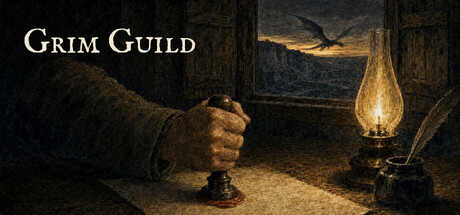
The scenes, portraits and item pictures in this game, and the store art, were made with AI image-generation tools under the developer's direction. The paper and dark of the screens and the guild's red seal come from public-domain prints of the 15th to 17th centuries. Most of the written text, including the Japanese translation, was drafted with an AI model under the developer's direction and revised by hand. Music and sound effects were synthesised procedurally without AI. Nothing is generated by AI while you play.
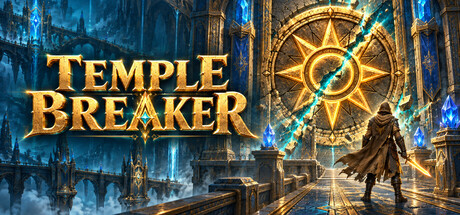
Generative AI tools were used to create visual artwork for the game and its marketing, and to assist with store-page text. These materials are prepared in advance. Temple Breaker does not generate content with AI during gameplay.
The game includes 2D illustrations created with generative AI during development, including characters, enemies and backgrounds. These images were then manually cleaned up, edited and integrated into the game. The game does not generate AI content during gameplay.
This game uses generative AI tools during development to assist with the following content: text translation, sound effects, and background artwork assets
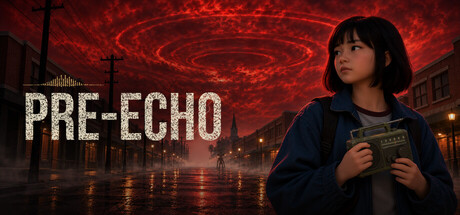
Some content in PRE-ECHO was created with the help of generative AI tools during development and was then integrated, adjusted and art-directed by the developer:
- 3D models: the character and creature models, and many prop and vehicle models, were generated with Tripo from original reference images made for this project, then rigged, adjusted and textured in Blender and Unreal Engine.
- 2D art: some textures and interface images (such as the main-menu background, the workshop investigation board, journal and map paper, and inventory icons) were generated with image-generation tools from original prompts.
- Voices: all spoken lines are synthesized with the open-source Kokoro text-to-speech model using generic voices. No real person's voice was recorded or cloned.
- Text: the script, in-game text and English/Spanish localization were written with an AI assistant under the developer's direction.
- Store art: the store and library artwork was generated with AI image tools from the project's own character and creature references, then retouched by the developer. The logo was made without AI. The screenshots are unedited captures of the game.
No content is generated by AI while the game is running.
Generative AI tools were used to assist with the creation and refinement of some pre-generated sound effects, 3D assets, 2D images, voice lines, and localization. All AI-assisted content was reviewed, edited, and integrated by the developer. The game does not use generative AI to create content during gameplay.
The capsule and logo artwork was created with an AI image generator. Some of the game's code and parts of the written dialogue were produced with the help of an AI assistant, then reviewed and edited by the developer. No content is generated by AI while the game is running.
Character animations are generated with an AI motion model (Kimodo) and then cleaned up and retargeted by our team. Character voice-overs are created with AI text-to-speech and directed and edited by our team. All 3D models, buildings, textures and writing are made by us. No AI content is generated live during gameplay.
This game was made using generative AI. Generative AI was used for card illustrations, backgrounds, character videos, music, the story and other text, translations, and promotional materials such as the store page and trailer. All of this content was created in advance; no content is generated by AI during gameplay.
All artwork, music, and sound effects in Geargrave Outlands were created with generative AI tools (images: OpenAI image models; music: Suno; sound effects: ElevenLabs) and then selected, edited, and integrated by the developer. Story text was written with AI assistance and edited by the developer. All translations were produced with AI assistance. All of this content is pre-generated and ships as fixed files. The game does not generate any content with AI while you play.
The voices, music and sound effects were generated with AI audio tools (ElevenLabs) and then edited and mixed by the developer. The 3D world and the game itself were built with the help of an AI coding assistant. The trailers' narration also uses AI-generated voices. Nothing is generated by AI while you play.
This game contains pre-generated AI content, all reviewed and edited by the developer:
- Voice acting: every radio and PA line, in English and Turkish, is text-to-speech generated with ElevenLabs.
- Audio: most sound effects and the three music beds were generated with ElevenLabs.
- 3D art: some organic growth props were shaped with an image-to-3D pipeline (SDXL + Hunyuan3D), then UV-unwrapped, baked and finished by hand in Blender.
- 2D art: the still images in the narrated opening were made with an image model.
The game generates nothing with AI while it runs. The trailer, screenshots and capsule art on this page are in-game footage and in-engine captures.
Generative AI tools are used during the development of MASSVEIL to assist with the creation and refinement of certain pre-generated materials, including selected visual elements, sound effects, voice lines, and text content.
All AI-assisted content is reviewed and, where necessary, edited by the developer before being included in the game.
Generative AI is not used to create new content during gameplay, and the game does not connect to third-party AI services while running.
The images in this game (in-game assets and store artwork) were created with image-generation AI, then selected and edited by a human. The original draft of the scenario and dialogue was written with Google Gemini, and the implementation and dialogue revisions were done with Claude Code (Anthropic). All of it was supervised and tested by a human. No content is generated by AI while the game is running.
Currently, AI‑assisted Photoshop image editing is only used for the Steam store‑page assets. No AI is utilized within the game itself. All image and audio assets are either sourced from free open‑source resources or purchased commercially.
Ransom Wave uses generative AI during gameplay.
The game uses AI models to generate fictional victim dialogue, spoken voice responses, selected narrative text, and limited in-game guidance in real time. These outputs react to the player's typed input or optional microphone input and can vary between playthroughs.
The game's setting, characters, gameplay rules, scenario structure, safety constraints, and core narrative direction are created and controlled by the development team. AI-generated outputs are constrained by developer-authored character profiles, gameplay states, and content rules. Player microphone audio may be transcribed only to enable the current voice conversation. The game provides a text-input alternative when the microphone is disabled.
Custom Built LLM & Vertex DB, 100% home made AI model built by developer of Abandon All Hope was used to aid in padding out Dialog for the game, as well as the store page description. All Other content has been hand crafted.
Generative AI was used to create background music, paintings displayed throughout the motel, and selected 3D assets, including sequence props, keys, relics, and pedestals. AI assistance was also used to draft portions of the store page text.
Tirona's development used AI tools for much of its 2D artwork (character portraits, card and scene illustrations, quest illustrations), some 3D models, the music (ElevenLabs) and the character voice performers' reference voices. All of it was selected, edited and placed by the developer, and ships as fixed game content.
While you play, a third-party large language model writes the narration and the dialogue of non-player characters in response to what you type or say. Character voices are synthesised locally on your PC from the generated text. You can optionally generate a portrait for your character from your creation choices.
The AI never decides the rules: dice, hit points, gold, items, experience, spells and quest progress change only through the game's own systems. Romance is opt-in, and anything sexual fades to black.
Some of the in-game text (dialogue and descriptions) was written with the help of AI and reviewed and edited line by line by the developer. All pixel art and music are drawn and synthesized in real time by the game's own code, which was written with AI assistance; no AI image or audio generation models were used.
Se han utilizado herramientas de inteligencia artificial generativa durante el desarrollo para ayudar en la creación y adaptación de algunos recursos del juego, como modelos 3D, imágenes, audio y otros elementos gráficos. Todo el contenido generado con IA ha sido revisado y preparado previamente antes de incluirse en el juego. El juego no genera contenido mediante IA en tiempo real ni se conecta a servicios externos de IA durante la partida.
AI tools were used to create artwork and assist with coding. The game's writing and planning were created by the developer. No generative AI runs during gameplay.
NBD2 is an AI game development studio. As a solo indie dev who is unlikely to ever make a dime from any of my games, there's no other way I could bring my ideas to life.
Order of the Crystalline Tortoise was created using generative AI throughout development, including its game code, 3D models, interface art, sound and text. The models were built by AI agents writing Blender scripts, the poster is drawn by code, and the music and sound effects were synthesized by code, with gull calls from a CC0 field recording. All AI generation took place during development. The game does not generate AI content or code during play or connect to an external AI service.
I recognize AI in game development is an extremely sensitive topic and I appreciate both sides. I only hope the game is fun.
The goal should always be making something that human beings will enjoy.
Generative AI tools were used for parts of this game during development: some story and dialogue text, the English localization, store page text, and some of the code that draws patterns and shapes. The developer directed all of it, chose what to keep, and reviewed and edited every piece. The music and sound effects were not made with AI, and nothing is generated by AI while you play.
Some images in the game were generated using AI tools and then refined by the game's developer. All the music in the game was written by the game's developer, but the mastering was done using AI tools. The 3D character models (all except the zombie mutants) were initially generated via AI and later refined and adapted by the game's developer.
Generative AI was used during development to assist with artwork and localization, including some store and promotional materials. The game does not generate AI content during gameplay or connect to external AI services.
Several 3D assets in this game — including some character models and props — were created with generative AI tools (Meshy) and then converted, cleaned up and hand-adjusted before being used in the game. Textures are either hand-made or generated procedurally with our own code.
Generative AI was used to create or edit some images, generate English voice audio, and assist with translation. All content was prepared before release. No content is generated and no external AI services are accessed during gameplay.
All content in Stack Heroes is generated using AI, including artwork, character and scene illustrations, UI graphics, music, sound effects, story and dialogue, other text, localization, and game program code. This content is generated during development and included in the game. The game does not generate AI content during gameplay or connect to external AI services.
Game source code, videos, images, and music in some parts of the game are initially generated using generative AI and then manually edited and refined.
AI was used to assist with the localization of some language versions. The translations were reviewed by the developer through proofreading and back-translation checks.
AI-generated images were used as composition references during the creation of a small number of CG illustrations. The image generation was based on the developer's own original hand-drawn character illustrations, provided as input references. All final character illustrations, CG illustrations, and other art assets were drawn entirely by hand. All characters are original designs.
The scenes, portraits and item pictures in this game, and the store art, were made with AI image-generation tools under the developer's direction. The paper and dark of the screens and the guild's red seal come from public-domain prints of the 15th to 17th centuries. Most of the written text, including the Japanese translation, was drafted with an AI model under the developer's direction and revised by hand. Music and sound effects were synthesised procedurally without AI. Nothing is generated by AI while you play.
Generative AI tools were used to create visual artwork for the game and its marketing, and to assist with store-page text. These materials are prepared in advance. Temple Breaker does not generate content with AI during gameplay.
The game includes 2D illustrations created with generative AI during development, including characters, enemies and backgrounds. These images were then manually cleaned up, edited and integrated into the game. The game does not generate AI content during gameplay.
This game uses generative AI tools during development to assist with the following content: text translation, sound effects, and background artwork assets
Some content in PRE-ECHO was created with the help of generative AI tools during development and was then integrated, adjusted and art-directed by the developer:
- 3D models: the character and creature models, and many prop and vehicle models, were generated with Tripo from original reference images made for this project, then rigged, adjusted and textured in Blender and Unreal Engine.
- 2D art: some textures and interface images (such as the main-menu background, the workshop investigation board, journal and map paper, and inventory icons) were generated with image-generation tools from original prompts.
- Voices: all spoken lines are synthesized with the open-source Kokoro text-to-speech model using generic voices. No real person's voice was recorded or cloned.
- Text: the script, in-game text and English/Spanish localization were written with an AI assistant under the developer's direction.
- Store art: the store and library artwork was generated with AI image tools from the project's own character and creature references, then retouched by the developer. The logo was made without AI. The screenshots are unedited captures of the game.
No content is generated by AI while the game is running.