Public Steam disclosure research27,951 disclosures tracked
Where do games disclose AI use?
Search developers’ Steam disclosures, compare classified AI use across
games, and follow recorded changes.
This index adds cross-game classifications and statistics to
statements published on individual store pages.
Groups reflect automatic analysis of public disclosures; mature records are excluded. These counts do not measure AI use across all of Steam.
Missing or unclear statements cannot establish whether a game uses AI.
Day of the Smudgies was directed by Michael Jonsson and built on his Smudge characters, using AI tools throughout. Anthropic's Claude generated the game code, pixel art and synth score, and drafted the dialogue, from his direction. He rewrote the dialogue, and picked, cut, fixed and playtested what made it into the game. Character voices are ElevenLabs AI voices. Cinematic stills, character portraits and the end-credits music video "Verny's Cut" (song and video) were made with AI image, video and music tools.
We used AI tools during development to help create some of the game, including: limited sound effects, a limited amount of 3D models and art, most voice lines, and translations. Our team directs, selects and edits this work, and the final game reflects our own creative decisions. We used AI to assist with making marketing assets.
Back in Time is designed, built and directed by a human developer. AI tools assist with parts of the work: some character voice lines, the key art and store images, item icons and crew portraits, parts of the in-game text, and production of the music, which is composed by Jon Cheney. Every piece is directed, edited and reviewed by hand. Nothing is generated by AI while you play.
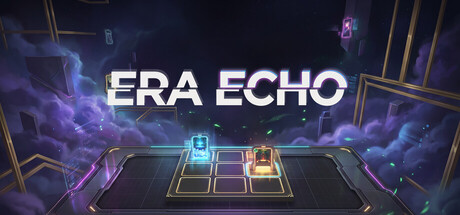
Each creature (Echo) is inspired by real animals, objects and myths of its era, following real evolution: the Greek lion is a descendant of the prehistoric sabre-tooth, the Gaulish bull of the aurochs. Some creature and character sprites and animations started from AI pixel-art generators (PixelLab, SpriteCook). Others were drawn procedurally with code or adapted from CC0 resources. All were hand-edited and refined by the developer.
Buildings and environments are based on real-world historical architecture and on permissively licensed open-source assets (CC0, CC-BY and other non-copyleft licenses), adapted, recreated and hand-edited into pixel art. No AI tools were used to generate the architectural artwork.
The soundtrack is built upon open-source and Creative Commons compositions sourced from OpenGameArt, transformed, given new timbres and procedurally processed with custom Python scripts and algorithmic audio tools to fit each historical era.
The storyline, dialogues, creature descriptions and English translation were drafted with the assistance of AI writing tools, then directed, manually reviewed and rewritten by the developer.
No AI content is generated while the game runs.
Name of AI model included with the game: PixelLab and SpriteCook (pixel-art sprites and animations); Claude by Anthropic (writing assistance and English translation)
In this game, AI analyzes the drawings created by players and generates feedback based on their content. This feature is designed to create an interactive experience where players can receive a variety of responses to their creative expression.
Connects to 3rd-Party Service for AI Content Generation: OpenAI API
The game logo, the app icon, the story illustrations in the intro, some user interface artwork and some translated texts were created with the help of generative AI tools. The key art, characters, environments, story and gameplay were made without generative AI. No AI content is generated while you play.
AI-assisted tools were used for some background art assets and for the English, Simplified Chinese, Traditional Chinese, and Korean localization. These assets were reviewed and adjusted during development.
Game Over: Spring is a solo-developed project created and directed by Jaewook Lee.
Tripo and Meshy 3D models used during early prototyping have been replaced in the current demo with purchased, licensed or manually modeled 3D assets.
The demo still includes prerecorded AI-generated background music and narration, along with some AI-generated 2D artwork, including document illustrations and decorative imagery. These assets were created in advance; no AI content is generated during gameplay, and the game does not connect to an AI service.
Before the full release, we plan to replace the demo's AI-generated audio through work with professional musicians, sound designers and voice performers.
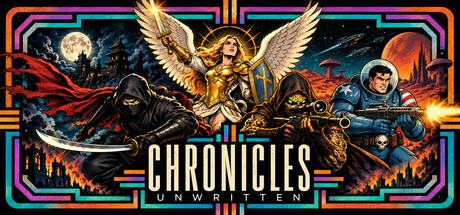
Chronicles Unwritten uses pre-generated AI-assisted card artwork, promotional artwork, music, and promotional video. These assets were created using ChatGPT, Suno, and Grok and selected by the development team. No AI content is generated during gameplay.
Sound effects, some character voices and music in the game were made with generative AI tools (ElevenLabs). Everything is pre-generated during development; nothing is generated while you play.
Generative AI tools were used during development to assist with the creation and refinement of certain in-game visual assets, promotional artwork, and portions of text/localization. All AI-assisted content was reviewed, edited, and integrated by the developer. No generative AI is used during gameplay, and no content is generated live for players.
Character illustrations, backgrounds, cutscene videos, voice acting and music were created with generative AI tools, then selected and edited by our team. The story, dialogue and game systems were written and designed by the developer with AI assistance. No content is generated by AI during gameplay.
Solis Chronicles uses generative AI for pre-rendered content. Character art, backgrounds, event illustrations, video sequences, the title artwork, and the logo were created with generative AI tools (Flux, Nano Banana, Seedream, PixVerse, WAN) under human art direction, with reference-locked character designs. The music was generated locally with ACE-Step under human direction. The story, characters, and game design are human-authored. Dialogue was written with substantial AI assistance and edited by the developer. No AI content is generated during gameplay; everything is pre-rendered and human-reviewed.
Pre-generated content: some character and venue artwork, some 3D props, the cast voice lines, the intro films and the translations were created with AI tools and reviewed by the developer. No content is generated at runtime.
Era Echo is developed by a solo developer. Generative AI tools are used to assist with development and production (for example concepting, drafts, and iteration), which has helped make shipping a solo project practical. All shipped content is reviewed and directed by the developer.
The visual assets in Eras Showdown were created using generative AI: the icons for units, items and materials, the background images, and the user-interface graphics. Every result was selected, reworked and integrated into the game by hand.
This content is pre-generated in full and ships with the installation. Eras Showdown does not generate any content via AI while playing, and it does not connect to any AI service.
Generative AI was used to assist in creating some of the game's character illustrations, environment and UI artwork, music, sound effects, and written content. These materials were selected and edited by the developer.
Some 3D models, UI assets and background music of the game were initially created with generative AI tools, and then fully revised, refined and adjusted manually by our development team.
Some 2D visual assets and videos in the game may have been produced using AI‑assisted tools. Every AI‑generated element has been manually inspected, verified, and approved to ensure quality and consistency. All remaining content — such as 3D models, audio, effects, and programming — is fully handcrafted by human creators.
Handmade paper stop-motion: real paper sets and characters, animated frame by frame. Some images were extended with generative AI from the author's own paper sets; sound effects, voices and translations use generative AI tools.
Some of the images, music, and song lyrics in this game were created with the
assistance of generative AI tools. The creator performed all prompt design,
selection, editing, arrangement, and integration; every asset was reviewed and
adjusted by hand before being included in the game. The script, game design,
systems, and code were written by the creator.
During our creative processes, we may use modern digital tools that include AI-based features to assist with content creation, such as language translation or voice acting. This helps us stay innovative without losing sight of what makes our games truly unique, while ensuring the final product preserves the distinctive style and quality our development team strives for.
Generative AI tools were used to create the Steam capsule artwork and other promotional images, and to assist with drafting and editing portions of the Steam store page text. All final text was reviewed and revised by the developer, and all promotional artwork was reviewed and selected by the developer. The game does not use generative AI at runtime, and no AI content is generated during gameplay.
Some of the promotional artwork, store page banners, and/or trailer visuals for Ascend Idle: Chronicles were created with the assistance of Generative AI tools. The core game code and design were developed entirely by hand as a solo project.
Generative AI tools were used to assist with the localization of this game into English, Simplified Chinese, Traditional Chinese, and Korean. 本作は、英語、簡体字中国語、繁体字中国語、韓国語へのローカライズの補助として生成AIツールを使用しました。
Generative AI was used for programming assistance and to create some BGM. The generated music was edited and remastered by the developer. All visual assets were created manually without generative AI. No live-generated AI is used during gameplay.
Generative AI was used as an assistive tool for translating parts of the scenario and in-game text. All translated content has been thoroughly reviewed, refined, and proofread manually by the developer to ensure natural phrasing and quality.
Generative AI was used to translate some in-game text, such as the interface and the contents of letters, and to generate some of the music used in the game.
1. Game Logo (Marketing / Store Page Asset)
The game's logo was created using generative AI tools. This logo appears on the store page, marketing materials, and within the game itself
2. Player Battle Armor Voice (In-Game Audio)
The player's battle armor uses voice samples generated using the ElevenLabs AI voice synthesis platform. This voice is heard in-game when the player receives feedback from the armor system (e.g., status alerts, warnings, or interactions).
Some of concept art and in-game promotional materials on the game's Steam store page were created using generative artificial intelligence tools. The game's coding and script were entirely written by developer.
Generative AI tools were used during development to assist in the creation of some pre-generated visual assets, character voices, translations, and promotional materials. All AI-assisted content was reviewed, edited, and curated by the developer. The game does not generate AI content in real time during gameplay.
The game uses generative artificial intelligence to create some of its images, and a portion of the visual content was produced with AI tools, but all such assets have been reviewed to ensure they do not infringe copyrights and comply with Steam’s rules.
Some background elements were partially generated using AI.
Localization into languages other than German was carried out with the help of AI.
AI was used as a development aid (to help implement certain systems in the game).
I am a solo indie developer and wanted to tell an engaging horror story set in an anime/Japanese-inspired world. Without AI, I unfortunately would never have been able to create a project like this!
This game was developed with the assistance of generative AI tools. Specifically, generative AI was used to assist with the creation and refinement of some background art assets, the creation of some music assets, and the production of some promotional animation materials.
Some visual assets in Singularity Echoes and on this store page were created with generative AI tools during development, then reviewed and edited by the developer. This includes artwork for buildings, celestial bodies, and the Earth strategic map, as well as menu and store marketing imagery. Gameplay systems, UI logic, balance, and narrative text were implemented by the development team. The game does not use generative AI to create new content during play and does not connect to third-party AI services while you are playing.
Generative AI video tools were used to assist in creating some trailer and marketing video materials. The game itself does not use live-generated AI content.
Generative AI tools were used to assist in the creation of certain promotional images, store page artwork and trailer visuals. All gameplay systems, game design decisions, implementation and final game content were created, reviewed and integrated by the developer.