Public Steam disclosure research25,376 disclosures tracked
Where do games disclose AI use?
Search developers’ Steam disclosures, compare classified AI use across
games, and follow recorded changes.
This index adds cross-game classifications and statistics to
statements published on individual store pages.
Groups reflect automatic analysis of public disclosures; mature records are excluded. These counts do not measure AI use across all of Steam.
Missing or unclear statements cannot establish whether a game uses AI.
Pre-generated content: Many 3D models and textures used in the game, including cakes, fruit, items, tools, and environmental/shop assets, were generated using Meshy AI and then edited and integrated by the developer. Generative AI was also used to assist in drafting some store-page text, which was reviewed and edited by the developer. No generative AI is used at runtime. No AI-generated voice or music is used.
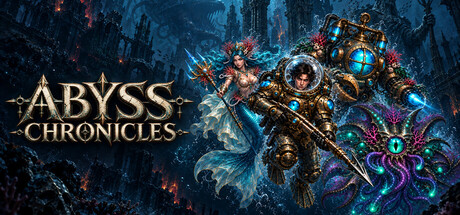
AI-assisted tools were used during development to create and edit visual assets, including characters, equipment, creatures, environments, UI and store illustrations, and to assist with story text and localization. Music and sound effects were made using AI-assisted synthesis code and composition rules. The game uses prepared assets and predefined effects; it does not generate AI content or connect to generative AI services during play.
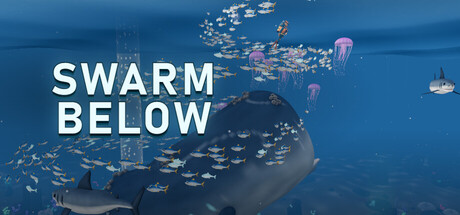
Swarm Below was built with help from an AI assistant. Its 3D models (built by scripts in Blender), its synthesized music and sound effects, and parts of the store page text and art were created with AI assistance under the developer's direction. Nothing is generated by AI while you play.
AI was used in the production of some visual assets in the game. All AI-assisted content was carefully reviewed and refined to ensure quality, consistency, and suitability for the game.
During the development of our game, generative AI tools were used to assist in creating certain 2D underwater background visuals, store page graphics. Additionally, AI-based language models were utilized for writing the store page descriptions and localizing the game into various languages. All AI-generated content was manually reviewed and edited before being implemented into the game or the store page.
Some artwork in the game and its Steam store and marketing materials was created or refined with generative AI tools before release. Some music tracks were generated offline with ACE-Step. These are fixed, pre-generated assets. The game does not generate AI content during gameplay or connect to an external AI service.
※ AI was used as a supplementary tool for English translation, spell checking, and programming code writing in this game. Illustrations, pixel art, Live2D, music, and voice acting were created entirely by humans.
Generative AI was used during development to create some store page artwork and in-game icons. All generated content was reviewed before being included in the final product.
The audio in the game is not produced by machine learning models. The game images are divided into two categories: ① The vast majority are generated programmatically and not by machine learning models; ② The character illustrations are generated by machine learning and then selected, cropped, and post-processed by humans. The game text (environmental narration, entry descriptions, achievement descriptions) is drafted by AI with assistance and then revised by humans before being included; developers conduct fact and expression reviews of all game images and text before release. The game does not have an AI system for real-time generation of content, and player input will not be used for training or content generation.
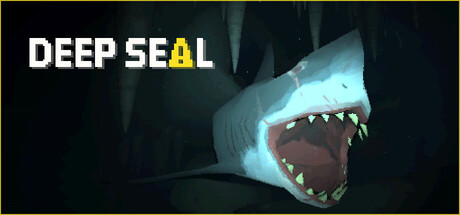
Shark Bait was made with AI assistance. AI assistants wrote the game's code, including the code that creates its 3D models, sound effects and music, so those were made by AI too. They also helped write the in-game text. The developer directed, played and reviewed all of it.
Generative AI was used to create various visual assets, character and environment designs, UI elements, promotional materials, and written content. Music was not generated using AI.
ARIA's dialogue and speech are generated on the player's own machine at runtime by a language model and a text-to-speech voice that ship with the game. Nothing is sent to an external service and no player data leaves the machine. What ARIA says is constrained to the station's fiction and to evidence the player has actually found in-game. Some art, audio and text assets in the game were produced with AI tools and reviewed by the developer before shipping.
Generative AI tools were used to help create some store and promotional artwork, including capsule images and Steam library artwork. These assets were prepared before release. The game does not generate AI content during gameplay or connect to external AI services.
Generative AI was used to assist in creating pre-generated in-game content, including visual assets, text, and audio, as well as certain Steam store and marketing materials. The game does not use generative AI to generate content in real time during gameplay.
Generative AI tools were used to assist in creating selected store and promotional artwork. All such assets were subsequently edited, modified and finalized by a human artist. The game itself does not generate AI content at runtime.
・Some of the posters were created using generative AI (ChatGPT and Gemini).
・Some of the voices were created using generative AI (Ondoku).
・The translations were created using generative AI (Gemini).
Generative AI was used during development for some cabin and promotional artwork, written text, and localization. The marine-life videos are real underwater footage from NOAA Ocean Exploration. No AI content is generated and no external AI services are connected during play.
Generative AI was used for part of this game's content production (background art, music, and text), as well as for part of this store page's text (description and translation).
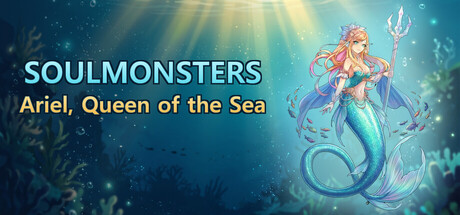
AI-assisted tools were used during development to create fixed assets that are baked into the build and the store page:
- Pixel-art sprites for the sea creatures, the guardians, battle effects and Ariel
- Store page art (capsules, library images, logo)
- Drafts of some in-game text and the EN / RU / JA localization, reviewed by the developer
Game design, code, level layouts and music are human-authored. All music and sound effects are generated procedurally by the game's own code at runtime - there are no audio files and no AI model is involved.
No AI model runs while the game is playing. The build is fully offline.
Generative AI was used to assist in creating artwork for marine creatures, plants, decorations, underwater environments, and Steam store and marketing images, as well as portions of descriptive text. This content is pre-generated and included as fixed assets or text. The game does not generate content during play and does not connect to external AI services.
Generative AI was used as a design assistant for the title logo. The generated layout was reviewed, edited, and incorporated by the developer. No content is generated during gameplay.
FishyFox includes pre-generated visual assets created with the assistance of generative AI tools. These assets were selected, edited, refined, composited, and integrated by the developer. No content is generated by AI while the game is running.
Generative AI was used during development to create selected 2D visual assets, including menu and loading-screen artwork, interface icons and patterns, and the game's wordmark. AI tools also assist with store-page writing. This content is prepared in advance; the game does not generate AI content or connect to an AI service during gameplay.
Art assets in this game - the fish, environments, UI icons, achievement icons
and store page artwork - were created with the help of generative AI tools.
Every asset was then hand-picked, edited, resized and colour-corrected before
being brought into the game, and all of it was checked against a fixed art
direction and a locked colour palette.
Some of the code was written with AI assistance. All of it was reviewed by the
developer and is covered by automated tests.
The game itself never generates anything while you play, and never connects to
an AI service. Everything you see ships with the build and is the same for
every player.
No AI-generated images, models, or audio appear in the game or on this Steam page. Music is composed and arranged by me in BandLab. UI and VFX are handmade or generated procedurally with code, including the breaking waves shaped by hand.
Otherwise, I code Shorebreaker with AI assistance: the design decisions are mine, and AI helps me work through, implement, and debug them. For self-marketing, some of my social media videos use AI voiceover from CapCut because I can't wake the baby.
Some of this game's dialogue was refined with the help of a generative AI tool during revision. Every line in the finished game was reviewed and edited by the developer.
No generative AI was used to create the artwork, sound, or music, and no content is generated during gameplay.
Some 2D art in Kyle Coral — including certain background/scene art and store and marketing images — is created with the help of generative AI image tools and then reviewed and edited by the developer. The game's core gameplay visuals are generated procedurally in code.
A small number of static meshes in this demo were generated using AI tools. This AI-generated content is temporary and will be fully replaced with original, non-AI assets in future updates. By the time the full game is released, it will contain no AI-generated content.
Generative AI tools were used in creating and refining promotional artwork and marketing assets for this game's Steam store page. The game does not use live-generated AI during gameplay.
Generative AI was used to create some pre-generated artwork and music included in the game and its promotional materials. AI-generated content was reviewed and selected by the developer before being included. The game does not use generative AI to generate content live during gameplay.
Some title and UI illustration assets were created with image generation tools during development, then selected and implemented by the developer. Audio is procedurally synthesized in-engine and is not generative-AI music. The game does not generate AI content at runtime.
Pre-generated content: Many 3D models and textures used in the game, including cakes, fruit, items, tools, and environmental/shop assets, were generated using Meshy AI and then edited and integrated by the developer. Generative AI was also used to assist in drafting some store-page text, which was reviewed and edited by the developer. No generative AI is used at runtime. No AI-generated voice or music is used.
AI-assisted tools were used during development to create and edit visual assets, including characters, equipment, creatures, environments, UI and store illustrations, and to assist with story text and localization. Music and sound effects were made using AI-assisted synthesis code and composition rules. The game uses prepared assets and predefined effects; it does not generate AI content or connect to generative AI services during play.
Swarm Below was built with help from an AI assistant. Its 3D models (built by scripts in Blender), its synthesized music and sound effects, and parts of the store page text and art were created with AI assistance under the developer's direction. Nothing is generated by AI while you play.
AI was used in the production of some visual assets in the game. All AI-assisted content was carefully reviewed and refined to ensure quality, consistency, and suitability for the game.
During the development of our game, generative AI tools were used to assist in creating certain 2D underwater background visuals, store page graphics. Additionally, AI-based language models were utilized for writing the store page descriptions and localizing the game into various languages. All AI-generated content was manually reviewed and edited before being implemented into the game or the store page.
Some artwork in the game and its Steam store and marketing materials was created or refined with generative AI tools before release. Some music tracks were generated offline with ACE-Step. These are fixed, pre-generated assets. The game does not generate AI content during gameplay or connect to an external AI service.
※ AI was used as a supplementary tool for English translation, spell checking, and programming code writing in this game. Illustrations, pixel art, Live2D, music, and voice acting were created entirely by humans.
Generative AI was used during development to create some store page artwork and in-game icons. All generated content was reviewed before being included in the final product.
The audio in the game is not produced by machine learning models. The game images are divided into two categories: ① The vast majority are generated programmatically and not by machine learning models; ② The character illustrations are generated by machine learning and then selected, cropped, and post-processed by humans. The game text (environmental narration, entry descriptions, achievement descriptions) is drafted by AI with assistance and then revised by humans before being included; developers conduct fact and expression reviews of all game images and text before release. The game does not have an AI system for real-time generation of content, and player input will not be used for training or content generation.
Shark Bait was made with AI assistance. AI assistants wrote the game's code, including the code that creates its 3D models, sound effects and music, so those were made by AI too. They also helped write the in-game text. The developer directed, played and reviewed all of it.
Generative AI was used to create various visual assets, character and environment designs, UI elements, promotional materials, and written content. Music was not generated using AI.
ARIA's dialogue and speech are generated on the player's own machine at runtime by a language model and a text-to-speech voice that ship with the game. Nothing is sent to an external service and no player data leaves the machine. What ARIA says is constrained to the station's fiction and to evidence the player has actually found in-game. Some art, audio and text assets in the game were produced with AI tools and reviewed by the developer before shipping.
Generative AI tools were used to help create some store and promotional artwork, including capsule images and Steam library artwork. These assets were prepared before release. The game does not generate AI content during gameplay or connect to external AI services.
Generative AI was used to assist in creating pre-generated in-game content, including visual assets, text, and audio, as well as certain Steam store and marketing materials. The game does not use generative AI to generate content in real time during gameplay.
Generative AI tools were used to assist in creating selected store and promotional artwork. All such assets were subsequently edited, modified and finalized by a human artist. The game itself does not generate AI content at runtime.
・Some of the posters were created using generative AI (ChatGPT and Gemini).
・Some of the voices were created using generative AI (Ondoku).
・The translations were created using generative AI (Gemini).
Generative AI was used during development for some cabin and promotional artwork, written text, and localization. The marine-life videos are real underwater footage from NOAA Ocean Exploration. No AI content is generated and no external AI services are connected during play.
Generative AI was used for part of this game's content production (background art, music, and text), as well as for part of this store page's text (description and translation).
AI-assisted tools were used during development to create fixed assets that are baked into the build and the store page:
- Pixel-art sprites for the sea creatures, the guardians, battle effects and Ariel
- Store page art (capsules, library images, logo)
- Drafts of some in-game text and the EN / RU / JA localization, reviewed by the developer
Game design, code, level layouts and music are human-authored. All music and sound effects are generated procedurally by the game's own code at runtime - there are no audio files and no AI model is involved.
No AI model runs while the game is playing. The build is fully offline.
Generative AI was used to assist in creating artwork for marine creatures, plants, decorations, underwater environments, and Steam store and marketing images, as well as portions of descriptive text. This content is pre-generated and included as fixed assets or text. The game does not generate content during play and does not connect to external AI services.
Generative AI was used as a design assistant for the title logo. The generated layout was reviewed, edited, and incorporated by the developer. No content is generated during gameplay.
FishyFox includes pre-generated visual assets created with the assistance of generative AI tools. These assets were selected, edited, refined, composited, and integrated by the developer. No content is generated by AI while the game is running.
Generative AI was used during development to create selected 2D visual assets, including menu and loading-screen artwork, interface icons and patterns, and the game's wordmark. AI tools also assist with store-page writing. This content is prepared in advance; the game does not generate AI content or connect to an AI service during gameplay.
Art assets in this game - the fish, environments, UI icons, achievement icons
and store page artwork - were created with the help of generative AI tools.
Every asset was then hand-picked, edited, resized and colour-corrected before
being brought into the game, and all of it was checked against a fixed art
direction and a locked colour palette.
Some of the code was written with AI assistance. All of it was reviewed by the
developer and is covered by automated tests.
The game itself never generates anything while you play, and never connects to
an AI service. Everything you see ships with the build and is the same for
every player.
No AI-generated images, models, or audio appear in the game or on this Steam page. Music is composed and arranged by me in BandLab. UI and VFX are handmade or generated procedurally with code, including the breaking waves shaped by hand.
Otherwise, I code Shorebreaker with AI assistance: the design decisions are mine, and AI helps me work through, implement, and debug them. For self-marketing, some of my social media videos use AI voiceover from CapCut because I can't wake the baby.
Some of this game's dialogue was refined with the help of a generative AI tool during revision. Every line in the finished game was reviewed and edited by the developer.
No generative AI was used to create the artwork, sound, or music, and no content is generated during gameplay.
Some 2D art in Kyle Coral — including certain background/scene art and store and marketing images — is created with the help of generative AI image tools and then reviewed and edited by the developer. The game's core gameplay visuals are generated procedurally in code.
A small number of static meshes in this demo were generated using AI tools. This AI-generated content is temporary and will be fully replaced with original, non-AI assets in future updates. By the time the full game is released, it will contain no AI-generated content.
Generative AI tools were used in creating and refining promotional artwork and marketing assets for this game's Steam store page. The game does not use live-generated AI during gameplay.
Generative AI was used to create some pre-generated artwork and music included in the game and its promotional materials. AI-generated content was reviewed and selected by the developer before being included. The game does not use generative AI to generate content live during gameplay.
Some title and UI illustration assets were created with image generation tools during development, then selected and implemented by the developer. Audio is procedurally synthesized in-engine and is not generative-AI music. The game does not generate AI content at runtime.